
LANScientific PeDX 980 Series Portable Energy Dispersive X-Ray Fluorescence (ED-XRF) Spectrometer
| Brand | LANScientific |
|---|---|
| Origin | Jiangsu, China |
| Manufacturer Type | Direct Manufacturer |
| Regional Classification | Domestic (China) |
| Model | PeDX 980 / 980S / 980CS |
| Application Form Factor | Handheld / Portable |
| Instrument Type | General-Purpose ED-XRF |
| Elemental Analysis Range | Br, Cr, Pb, Hg, Cd, Cl |
| Quantitative Detection Range | 1 ppm – 99.99% |
| Energy Resolution | <140 eV (at Mn Kα) |
| Repeatability | ≤0.1% RSD (for major elements under standardized conditions) |
Overview
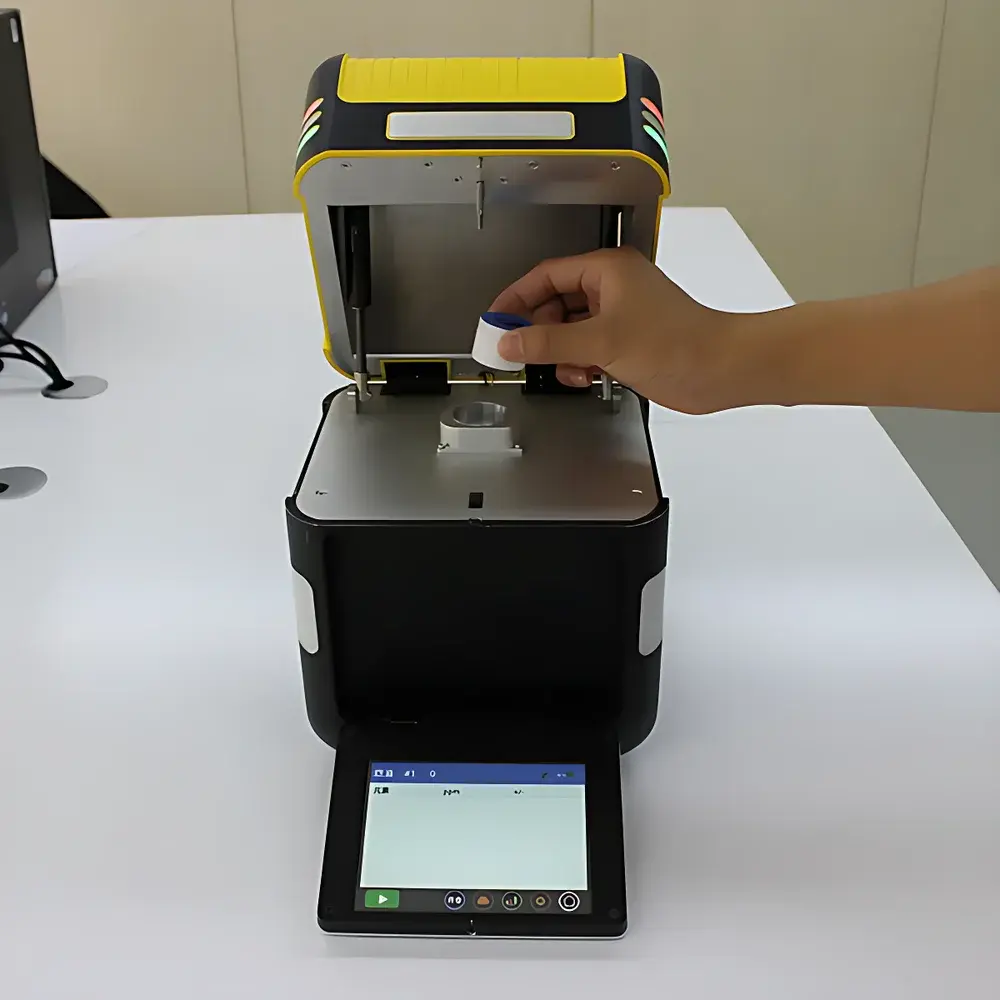
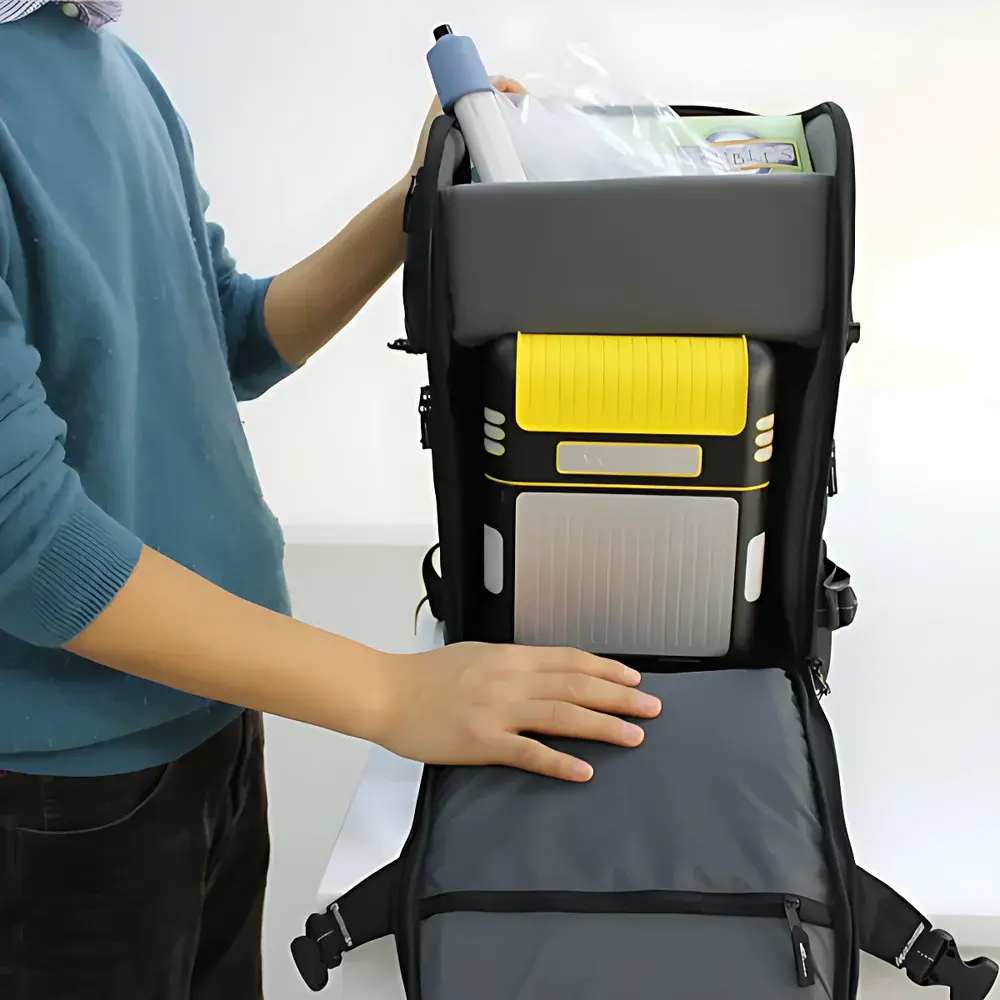
The LANScientific PeDX 980 Series is a handheld energy dispersive X-ray fluorescence (ED-XRF) spectrometer engineered for field-deployable elemental analysis across industrial, environmental, and regulatory compliance applications. Operating on the fundamental principle of X-ray fluorescence—where primary X-rays from a miniature Rh or Ag anode tube excite inner-shell electrons in sample atoms—the instrument detects characteristic secondary (fluorescent) X-rays emitted during electron relaxation. These spectral peaks are element-specific and chemically independent, enabling robust qualitative identification and quantitative determination without matrix-dependent calibration for many applications. The PeDX 980 Series integrates a high-resolution silicon drift detector (SDD) with <140 eV energy resolution at Mn Kα (5.89 keV), ensuring clear peak separation for adjacent elements such as Cr–Fe–Mn and Pb–Hg–Cl in complex matrices. Its lightweight ergonomic design (<1.5 kg), integrated Li-ion battery (≥8 h operation), and rugged IP54-rated housing support continuous use in demanding outdoor and production-line environments.
Key Features
- True handheld form factor with intuitive trigger-activated measurement—analysis completes in 1–5 seconds depending on required precision and element concentration.
- Dual-mode operation: Fast screening mode (3–5 s) for pass/fail compliance checks; high-sensitivity mode (10–30 s) for low-level quantification down to 1 ppm for regulated elements (Pb, Cd, Hg, Cr, Br, Cl).
- Advanced Super-FP fundamental parameters algorithm combined with empirical calibration curves—enabling accurate quantification across heterogeneous samples without mandatory matrix-matched standards.
- Real-time spectrum visualization with peak identification overlay, automatic background subtraction, and interference correction for overlapping L-lines (e.g., Pb Lα vs. As Kα) and sum peaks.
- On-device data management: Internal storage for ≥10,000 test records with timestamp, GPS coordinates (optional), operator ID, and full spectral files (.spc format).
- Hot-swappable battery system and USB-C/Bluetooth 5.0 connectivity for seamless synchronization with desktop software or LIMS integration.
Sample Compatibility & Compliance
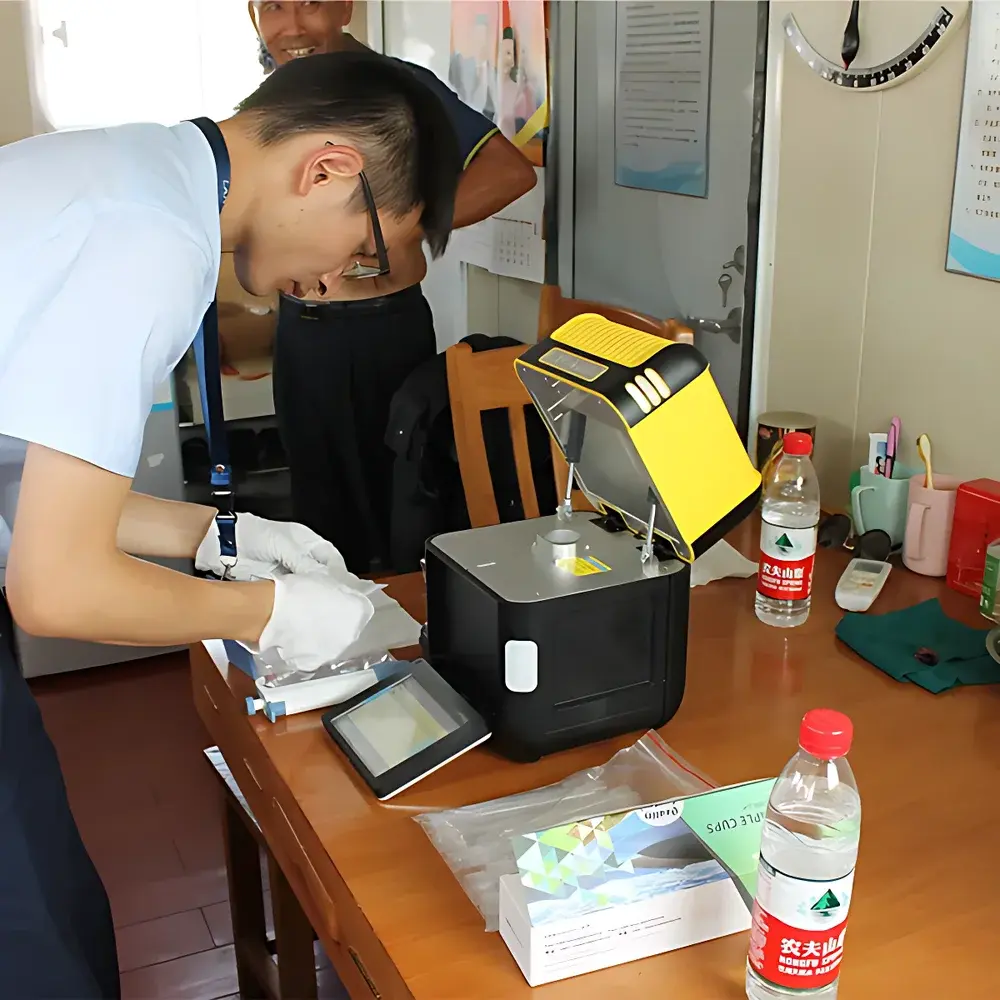
The PeDX 980 Series supports direct analysis of solids (metals, soils, plastics, ceramics, ores), thin films, and powders—requiring no sample preparation for most routine applications. It complies with international regulatory frameworks including IEC 62321-5:2013 (RoHS screening), ASTM E1621 (XRF analysis of electronic materials), and EPA Method 6200 (field screening of metals in soils). While not certified for GLP or ISO/IEC 17025 accreditation out-of-the-box, its audit-ready data structure—including full spectral archives, operator logs, calibration history, and firmware version tracking—supports validation under FDA 21 CFR Part 11 when deployed with LANScientific’s optional secure software suite. All models meet CE, FCC, and RoHS directives for electromagnetic compatibility and restricted substance control.
Software & Data Management
Data acquisition and reporting are managed via LANScientific’s proprietary PeDX Control Suite (Windows/macOS compatible), which provides full spectral processing, method development, multi-layer analysis, and statistical batch evaluation. Reports export natively to PDF (with embedded spectra, calibration certificates, and QA/QC metrics) and Excel (.xlsx) with raw intensity counts, net peak areas, detection limits (DLs), and uncertainty estimates per element. Users may embed company logos, custom headers, sample metadata fields (batch ID, location, analyst name), and configurable pass/fail thresholds aligned with EU RoHS, China RoHS, or CPSC limits. Audit trails record all parameter changes, calibration events, and report generation actions—fully traceable for internal quality audits or third-party verification.
Applications
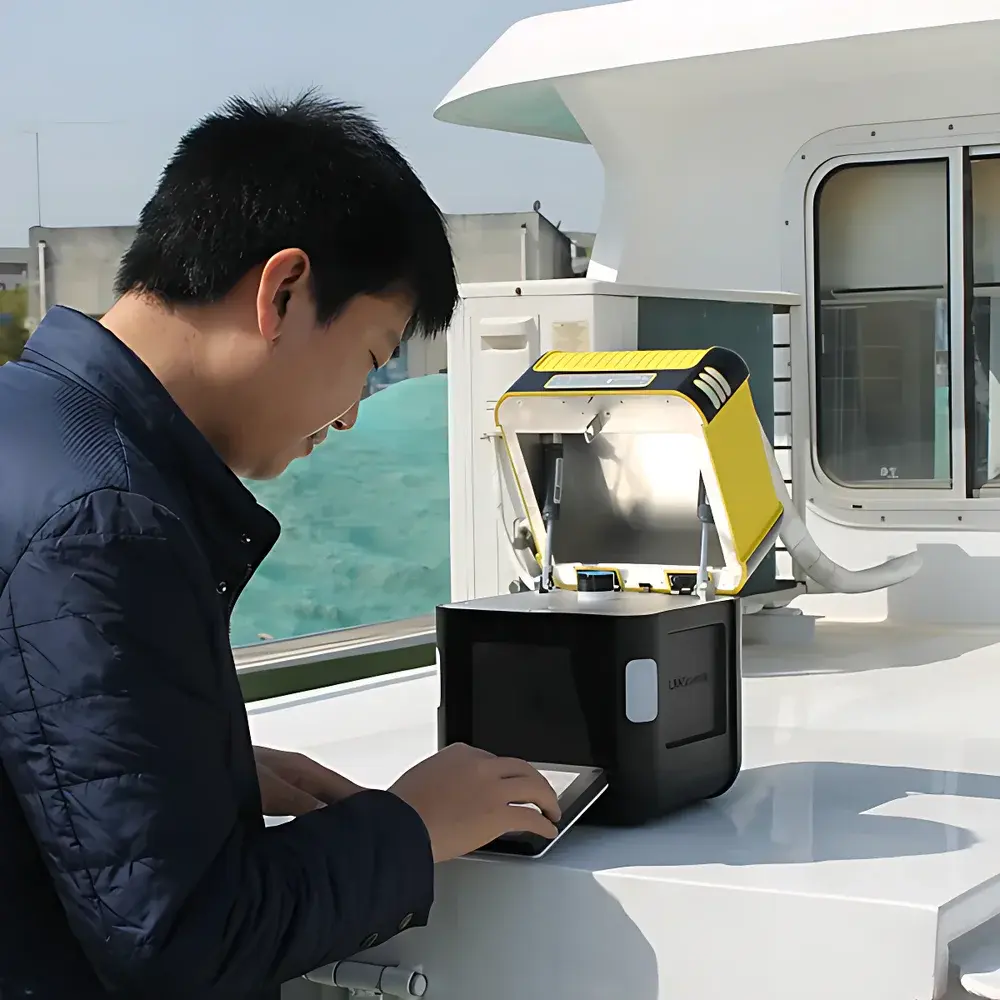
- Environmental Monitoring: Rapid in-situ screening of contaminated soils, sediments, and fly ash for heavy metals (Pb, Cr, Hg, Cd) and halogens (Cl, Br) per EPA 6200 and ISO 12847.
- Consumer Product Safety: RoHS/REACH-compliant screening of electronics, toys, packaging, and textiles for restricted substances—validated against IEC 62321-5 protocols.
- Metallurgy & Recycling: Alloy grade identification (stainless steels, Al/Mg/Cu alloys), catalyst recovery (Pd/Pt/Rh in automotive three-way catalysts), and scrap metal sorting.
- Geoscience & Mining: Field-based ore grade estimation (Cu, Zn, Ni, Fe), lithological mapping, and exploration geochemistry using portable multi-element profiling.
- Manufacturing QA/QC: Incoming material verification, plating thickness estimation (Ni/Cr/Zn), and coating composition analysis without destructive sampling.
FAQ
Does the PeDX 980 require annual recalibration?
No—each unit undergoes factory calibration with NIST-traceable reference materials. Field recalibration is optional and performed only when environmental conditions change significantly (e.g., temperature shift >15°C) or after hardware maintenance. Calibration stability is verified daily using built-in check sources.
Can it analyze light elements below sodium (Na)?
The standard configuration detects elements from bromine (Br, Z=35) upward. Chlorine (Cl, Z=17) is measurable in favorable matrices (e.g., PVC, salts) with optimized vacuum/purge mode (PeDX 980S/980CS variants). Elements lighter than Cl (e.g., Mg, Al, Si) require helium purge or vacuum chamber accessories not included in base models.
Is spectral data export compatible with third-party chemometric tools?
Yes—raw spectral files (.spc) contain channel-intensity arrays, detector parameters, and acquisition metadata, supporting import into MATLAB, Python (SciPy/NumPy), or commercial multivariate analysis platforms for custom PLS or PCA modeling.
What safety certifications does the device hold?
It carries IEC 61010-1 (electrical safety), IEC 62471 (LED/X-ray radiation safety), and meets ANSI N43.3 Class II radiation-producing device requirements. Operator exposure remains well below 1 µSv/h at 5 cm—compliant with ALARA principles for handheld XRF use.
How is data integrity ensured during wireless transfer?
Bluetooth 5.0 pairing uses AES-128 encryption; all transmitted spectra and reports include SHA-256 checksums. When connected to LANScientific’s cloud-enabled platform (optional), end-to-end TLS 1.3 encryption secures data in transit and at rest.





