
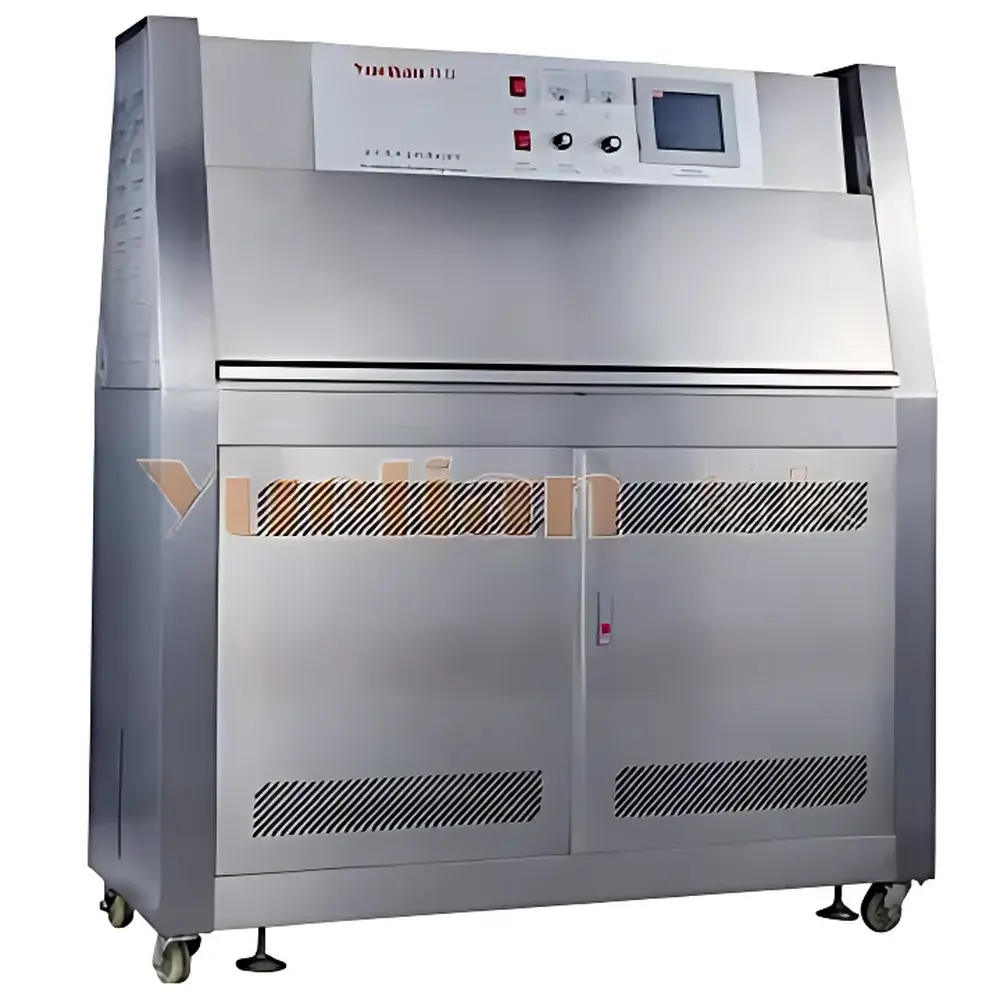
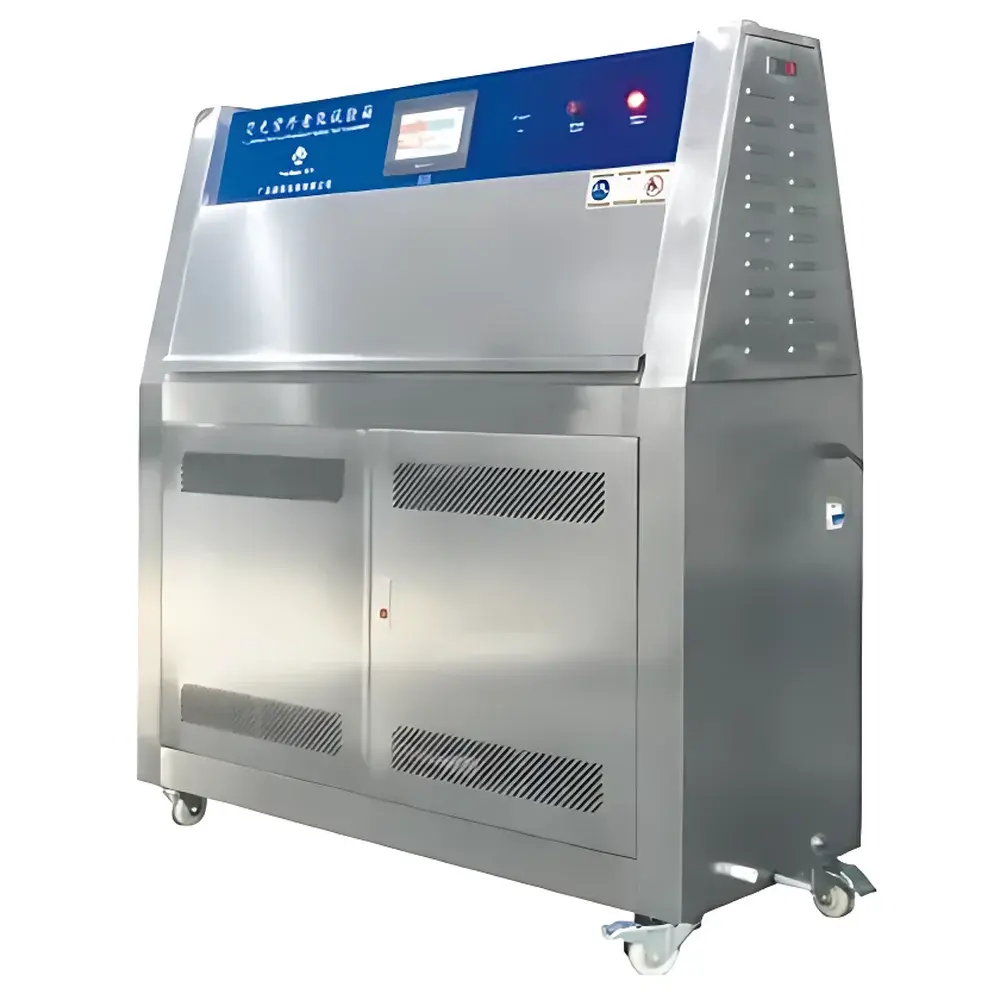
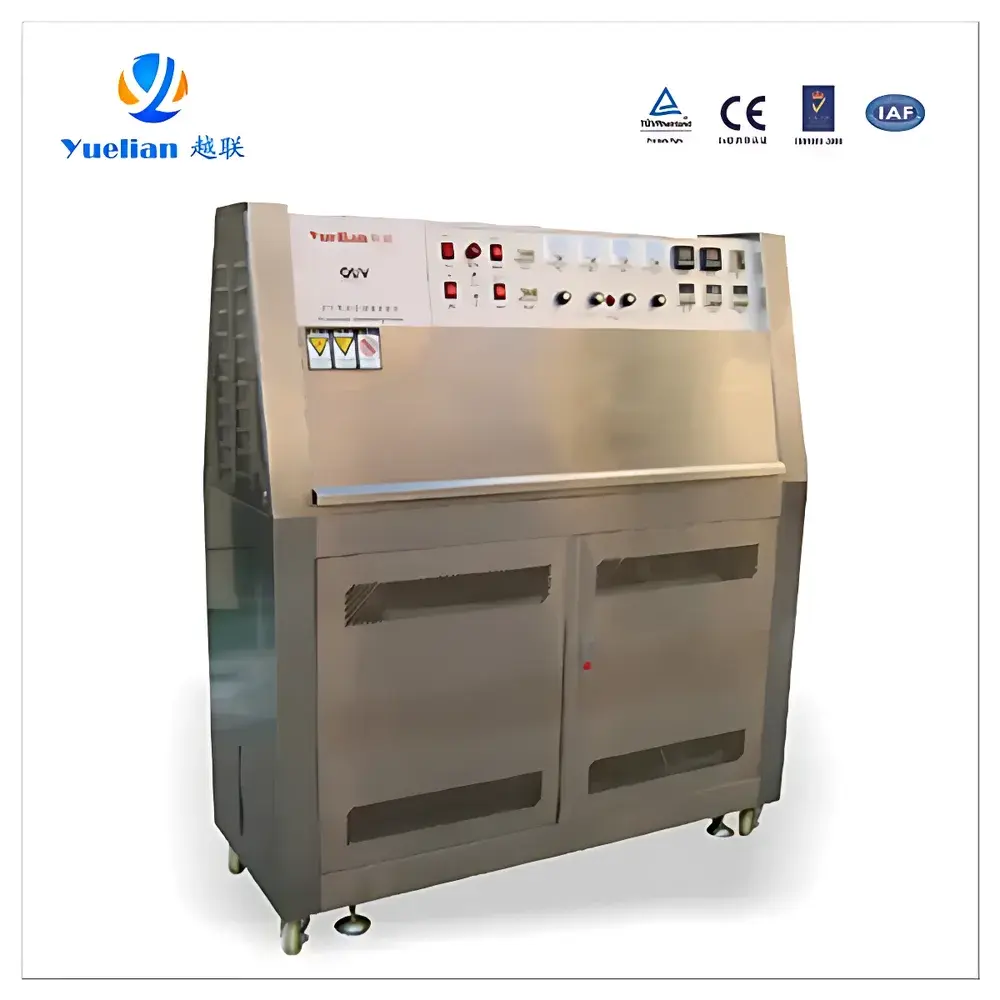
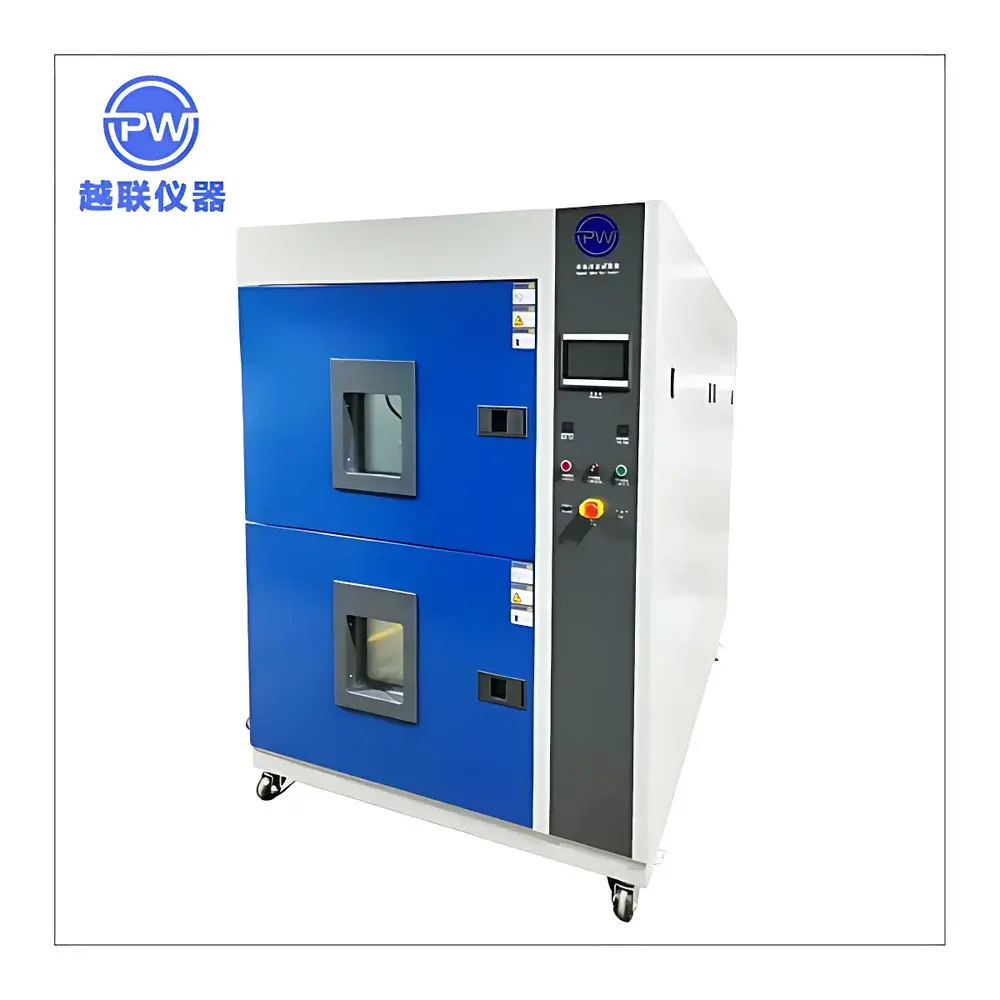
Yuelian PW-UV40LR UV Aging Test Chamber
| Brand | Yuelian |
|---|---|
| Origin | Guangdong, China |
| Manufacturer Type | Authorized Distributor |
| Country of Origin | China |
| Model | PW-UV40LR |
| Humidity Range | ≥90% RH |
| UV Lamp Power | 40 W per lamp |
| Irradiance Range | ≤50 W/m² |
| Exposure Time Range | 1–99999 h |
| Light Exposure Temperature Range | 70 °C |
| Black Panel Temperature Range | 40–65 °C |
| UV Wavelength Range | 290–400 nm |
| Chamber Internal Volume | 1000 L (450 × 1170 × 500 mm) |
Overview
The Yuelian PW-UV40LR UV Aging Test Chamber is an engineered environmental test system designed to accelerate material degradation through controlled ultraviolet radiation and condensation cycling. It operates on the principle of fluorescent UV irradiation—specifically leveraging UVA-340 or UVB-313 lamp spectra—to replicate the photochemical effects of natural sunlight in the critical 290–400 nm range. Unlike broad-spectrum xenon arc or carbon arc systems, this chamber isolates UV-driven photodegradation mechanisms, making it ideal for comparative durability assessment of organic polymers, coatings, elastomers, and plastic composites under standardized accelerated aging conditions. The unit integrates precise black panel temperature control (40–65 °C), high-humidity condensation simulation (≥90% RH), and uniform irradiance distribution—enabling reproducible, correlation-validated weathering data aligned with international material stability protocols.
Key Features
- Eight individually replaceable 40 W UV fluorescent lamps (UVA-340 or UVB-313 selectable), arranged symmetrically across dual vertical banks for uniform specimen exposure
- Dynamic lamp replacement strategy: one lamp replaced every 25% of rated service life (500 h standard; up to 1800 h with imported lamps), maintaining stable irradiance output over extended test cycles
- Water-jacketed stainless steel inner chamber (SUS 304) with automatic water-level replenishment and corrosion-resistant exterior finish
- Black panel temperature sensor with ±0.5 °C control accuracy and ≤±2 °C uniformity across the test plane
- Programmable condensation cycle (0–99 h) synchronized with UV exposure, replicating diurnal dew formation via controlled surface cooling
- Touchscreen-based controller with real-time monitoring of irradiance, temperature, humidity, and elapsed exposure time
- Adjustable sample mounting rack (26 positions) accommodating 150 × 75 mm specimens at fixed 50 mm distance from lamp plane—ensuring consistent radiant flux density
- Integrated drainage system with vortex-type sediment trap and U-shaped sump for reliable condensate removal
Sample Compatibility & Compliance
The PW-UV40LR accommodates flat, rigid, or semi-flexible non-metallic specimens—including paints, varnishes, automotive clearcoats, PVC compounds, silicone elastomers, textile laminates, and printed packaging films. Specimen thickness is constrained only by fixture clearance (max. ~10 mm). All structural materials meet ISO 9001-compliant fabrication standards, with SUS 304 stainless steel conforming to ASTM A240. The chamber satisfies key regulatory and industry test method requirements including GB/T 14522–1993 (mechanical fasteners), GB/T 16422.3–1997 (plastics—method for exposure to UV), and GB/T 16585–1996 (rubber—artificial weathering). While not certified for FDA 21 CFR Part 11 compliance out-of-box, audit-ready data logging (with timestamped event records and user-access logs) supports GLP/GMP-aligned validation when configured with external data archiving.
Software & Data Management
The embedded touchscreen controller provides local configuration of exposure profiles (UV intensity, condensation duration, temperature ramp rates), real-time graphing of black panel temperature and relative humidity, and password-protected parameter locking. All operational events—including lamp replacements, door openings, and alarm triggers—are logged with ISO 8601 timestamps. Exportable CSV reports include irradiance history (integrated W·h/m²), thermal cycling data, and cumulative condensation minutes. Optional RS-485/Modbus RTU interface enables integration into centralized laboratory management systems (LIMS) for automated data ingestion and long-term trend analysis. Firmware updates are delivered via USB—maintaining traceability per IEC 62304 Class B software lifecycle requirements.
Applications
This chamber is routinely deployed in R&D laboratories and QC departments for: evaluating pigment fade resistance in architectural coatings; validating UV stabilizer efficacy in polyolefin extrusions; assessing gloss retention in automotive interior trim; screening adhesive bondline integrity under cyclic UV/humidity stress; qualifying outdoor signage substrates per ISO 4892-3; and supporting ASTM D4329 compliance testing for plastic pipe materials. Its narrow-band spectral fidelity enables direct correlation with field exposure data from Florida or Arizona test sites—particularly when operated with UVA-340 lamps calibrated to CIE daylight reference spectra.
FAQ
What UV lamp types are supported, and how do they differ?
The system accepts either UVA-340 (peak emission at 340 nm) or UVB-313 (peak at 313 nm) fluorescent tubes. UVA-340 better simulates terrestrial sunlight below 360 nm; UVB-313 induces more aggressive degradation and is used for rapid screening.
Is irradiance calibration included?
Calibration is not factory-supplied but supported via optional NIST-traceable UV radiometer kits (e.g., Eppley TUVR). Users must perform periodic verification per ASTM G154 Annex A2.
Can the chamber operate continuously for 99,999 hours?
Yes—the timer supports up to 99,999 hours of cumulative exposure. However, lamp replacement, gasket inspection, and water system maintenance intervals must be observed per maintenance schedule.
Does it meet IEC 60068-2-5 requirements?
It complies with the irradiance and temperature profile specifications of IEC 60068-2-5 Ed. 3.1 (UV testing), though full certification requires third-party verification of optical and thermal performance.
What is the maximum sample weight capacity per rack?
Each aluminum sample holder supports ≤500 g; total load across 26 positions must not exceed 13 kg to maintain thermal uniformity and airflow integrity.
Related Products



