
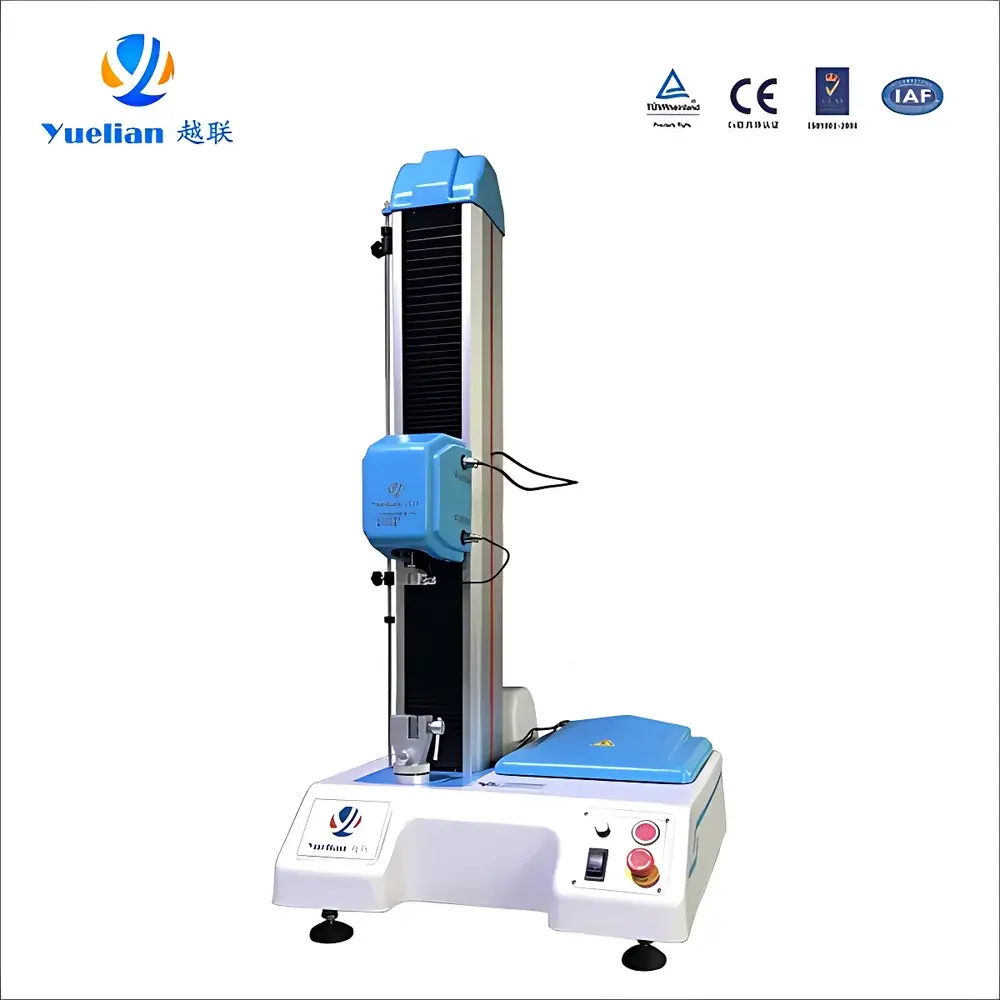
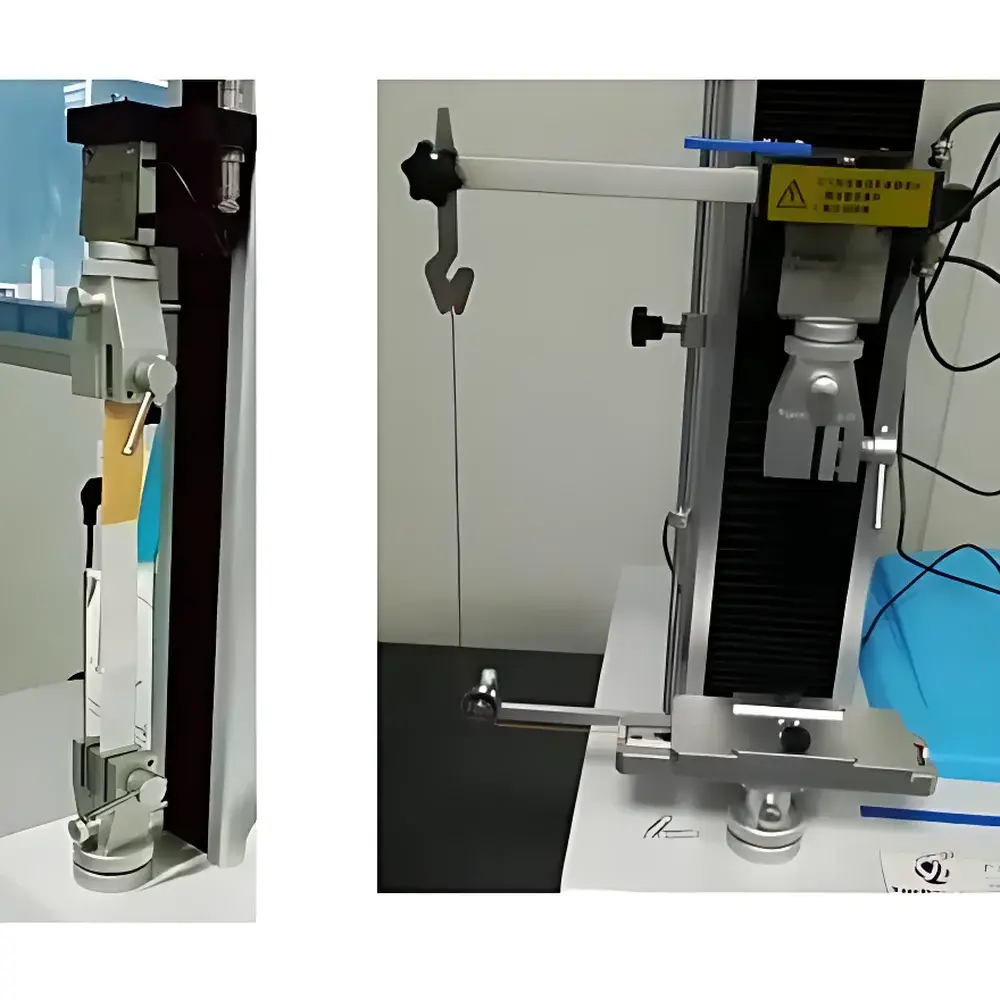
Yuelian YL-S72 Electronic Tensile Testing Machine for Adhesive Lap Shear Strength
| Brand | Yuelian |
|---|---|
| Origin | Guangdong, China |
| Model | YL-S72 |
| Instrument Type | Electronic Tensile Testing Machine |
| Maximum Test Load | 5 kN |
| Force Measurement Range | 10 N – 5 kN |
| Force Accuracy | Better than Class 0.5 |
| Test Stroke | 500 mm |
| Displacement Resolution | 1/500,000 mm |
Overview
The Yuelian YL-S72 Electronic Tensile Testing Machine is a precision-engineered universal testing system designed specifically for quantitative mechanical evaluation of adhesive joints under standardized lap shear loading conditions. It operates on the principle of controlled uniaxial force application via a high-resolution servo-motor-driven ball-screw actuation system, enabling compliant, repeatable, and traceable measurement of shear strength (MPa), failure mode classification (cohesive, adhesive, or mixed), and load–displacement response characteristics per ASTM D1002, ISO 4587, and GB/T 7124. The machine integrates dual-channel high-fidelity load and displacement transduction with real-time synchronization, supporting both static and quasi-static test protocols required for QC/QA laboratories, R&D departments, and certification bodies validating structural adhesives used in automotive, aerospace, electronics assembly, and construction applications.
Key Features
- High-precision dual-capacity load cell architecture with selectable calibration ranges (10 N to 5 kN), optimized for low-force adhesive interface characterization and high-load composite joint validation.
- Sub-micron displacement resolution (1/500,000 mm) and force resolution (1/500,000 FS), ensuring detection of micro-yield events and precise determination of initial stiffness, yield point, and ultimate shear strength.
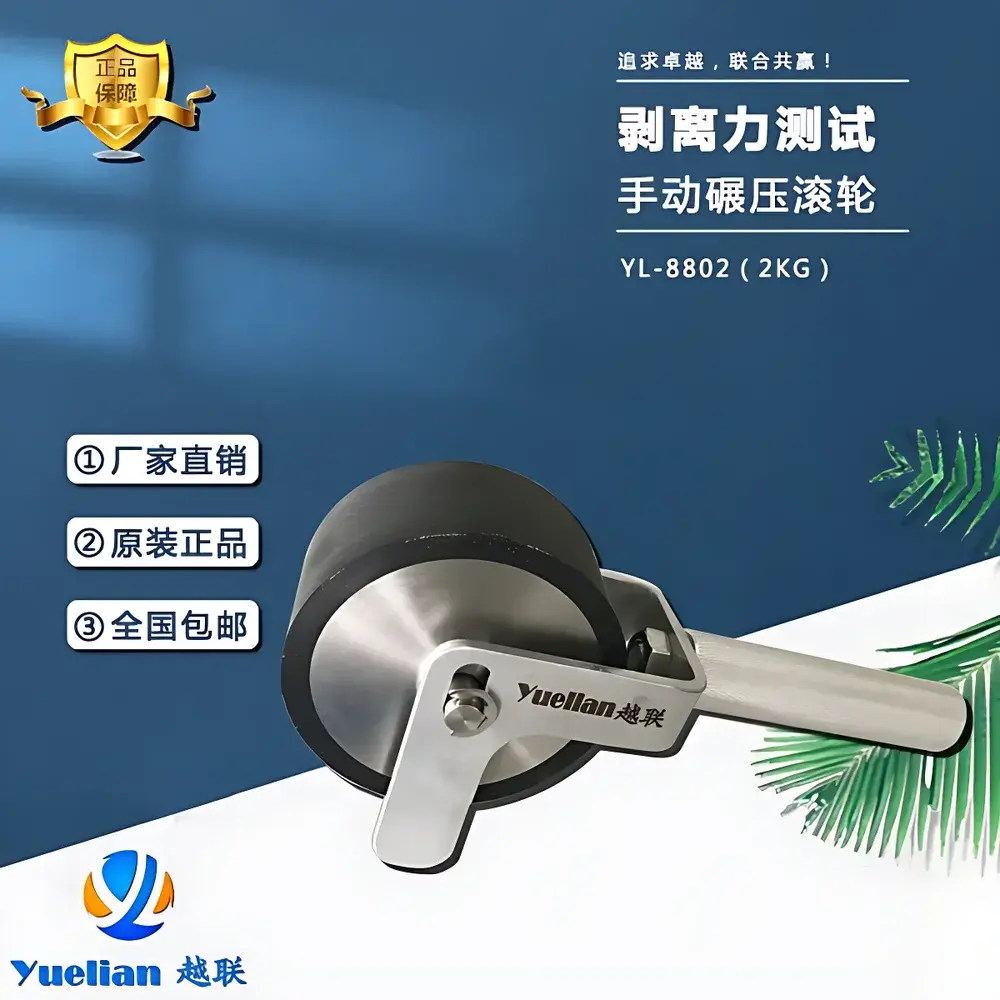
- Modular quick-release fixture interface compatible with standardized lap shear grips (e.g., ASTM D1002 aluminum substrate holders), peel fixtures, tensile dog-bone clamps, and custom tooling for ISO 4587-compliant specimen alignment.
- Robust mechanical design featuring anodized aluminum linear guides, ABS-coated enclosure, and integrated overload protection (mechanical limit switches + software-based upper/lower bound enforcement).
- Real-time multi-curve visualization: simultaneous display of force–displacement, force–time, displacement–time, and stress–strain plots with crosshair cursor, zoom, pan, and overlay functionality for comparative analysis across batches or formulations.
- Advanced closed-loop control modes including constant strain rate, constant stress rate, target load hold, and multi-step cyclic sequences—enabling simulation of service-condition loading profiles such as thermal cycling-induced shear fatigue.
Sample Compatibility & Compliance
The YL-S72 accommodates standard lap shear specimens per ASTM D1002 (25.4 mm × 101.6 mm aluminum adherends, 12.7 mm bond overlap) and ISO 4587 (bond width ≥ 25 mm, minimum grip length 50 mm). It supports metallic, polymer, composite, and elastomeric substrates with thicknesses ranging from 0.5 mm to 6 mm. All test methods are fully configurable to align with ISO/IEC 17025 documentation requirements, including audit-ready metadata logging (operator ID, environmental temperature/humidity tags, calibration certificate IDs). The system meets mechanical safety standards IEC 61000-6-2 (EMC immunity) and EN ISO 12100 (risk assessment for machinery), and supports GLP/GMP-compliant operation through optional electronic signature and 21 CFR Part 11–ready software modules.
Software & Data Management
The included PC-based control and analysis suite provides full test method definition, execution, and post-processing capabilities. It supports up to 7 user-defined test segments, 40 manual data points, and 120 auto-sampled points per curve. Statistical outputs include mean, median, standard deviation, CPK, min/max, and trimmed mean (excluding outliers). Raw data exports to CSV, Excel, and PDF formats; curve overlays allow side-by-side comparison of up to 10 historical tests. Audit trail functionality records all parameter changes, test starts/stops, and result modifications with timestamped operator attribution. Optional network licensing enables centralized instrument fleet management and remote calibration status monitoring.
Applications
- Quantitative lap shear strength assessment of epoxy, acrylic, cyanoacrylate, polyurethane, and silicone adhesives.
- Comparative evaluation of surface pretreatment efficacy (e.g., plasma, corona, chemical etching) on bond durability.
- Accelerated aging studies (thermal, humidity, UV exposure) followed by mechanical retesting per ASTM D897 or ISO 11339.
- Quality conformance testing for ISO 9001-certified adhesive manufacturing lines.
- Failure root cause analysis via load–displacement curve morphology (brittle fracture vs. ductile yielding vs. interfacial delamination).
- Support for ISO 25217 (adhesive fracture toughness) and ASTM D3163 (lap shear of plastic substrates) with appropriate fixture adaptation.
FAQ
What standards does the YL-S72 support for adhesive lap shear testing?
ASTM D1002, ISO 4587, GB/T 7124, and ASTM D3163 — with optional fixtures for ISO 25217 fracture toughness evaluation.
Can the system perform cyclic shear fatigue tests?
Yes — programmable multi-step control allows defined load/unload sequences, dwell periods, and variable amplitude cycles within a single test protocol.
Is displacement measurement traceable to national metrology institutes?
Force and displacement sensors are factory-calibrated against NIST-traceable reference standards; full calibration certificates are provided with each unit.
Does the software support automated pass/fail judgment based on specification limits?
Yes — user-defined upper/lower specification limits trigger automatic result flagging and generate compliance reports with statistical confidence intervals.
What is the recommended maintenance interval for long-term accuracy stability?
Annual verification using certified reference load cells and displacement artifacts is advised; routine daily zero checks and monthly mechanical inspection are sufficient for ISO/IEC 17025 compliance.



