
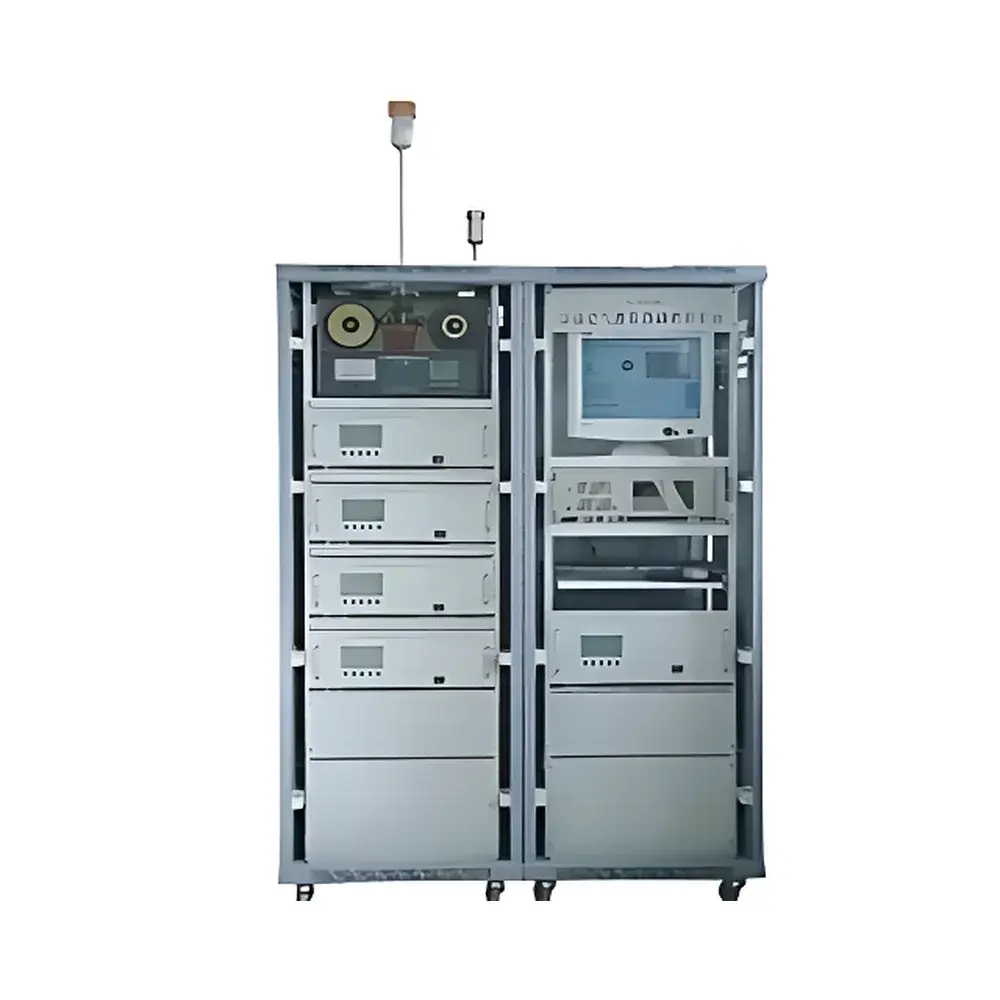
Yuhong TH-2000 Automatic Ambient Air Quality Monitoring System
| Brand | Yuhong |
|---|---|
| Origin | Hubei, China |
| Model | TH-2000 |
| Pollutant Parameters | PM2.5, PM10, TSP, SO₂, NO₂, NO, NOₓ, O₃, CO, H₂S, NH₃ |
| Data Acquisition | 3×/minute (per parameter) |
| Communication | RS232/RS485, GPRS, CDMA, wired PSTN/broadband |
| Compliance | Meets Chinese National Standards for Ambient Air Monitoring (HJ 653–2013, HJ 654–2013, HJ 655–2013), supports EPA-equivalent data validation protocols |
Overview
The Yuhong TH-2000 Automatic Ambient Air Quality Monitoring System is a modular, networked environmental monitoring platform engineered for continuous, real-time measurement of gaseous and particulate pollutants in ambient air. Based on standardized electrochemical, ultraviolet (UV) photometric, infrared (IR) absorption, and beta attenuation (for PM) detection principles, the system complies with the technical specifications outlined in China’s Ministry of Ecology and Environment (MEE) standards HJ 653–2013 (PM monitoring instruments), HJ 654–2013 (SO₂/NO₂/O₃ analyzers), and HJ 655–2013 (CO analyzers). Designed for deployment across urban, industrial, and regional background sites, the TH-2000 integrates distributed substation hardware with centralized data management software to support regulatory reporting, trend analysis, and source attribution studies. Its architecture enables scalable deployment—ranging from single-point monitoring stations to multi-node networks coordinated via secure telemetry.
Key Features
- Modular sensor configuration: Supports simultaneous monitoring of up to 11 regulated parameters—including PM₂.₅, PM₁₀, TSP, SO₂, NO₂, NO, NOₓ, O₃, CO, H₂S, and NH₃—with optional meteorological sensors (wind speed/direction, temperature, relative humidity, barometric pressure, rainfall, solar radiation).
- Dual-layer software architecture: Substation firmware handles local data acquisition at 3 samples per minute per channel, analog-to-digital conversion, instrument calibration control (zero/span), and buffered storage; central station software manages database ingestion, statistical aggregation (hourly/daily/weekly/monthly/annual averages), index calculation (e.g., AQI), and automated report generation.
- Robust communication protocol stack: Native support for RS232/RS485 serial interfaces for direct instrument integration, plus dual-path telemetry—GPRS/CDMA cellular modules and wired PSTN or Ethernet connectivity—ensuring data continuity under variable infrastructure conditions.
- On-site calibration infrastructure: Integrated zero-air generator and dynamic gas calibrator enable traceable, field-based verification per ISO 17025-aligned procedures; certified standard gases (e.g., NIST-traceable SO₂, NO, O₃, CO) are compatible with routine QA/QC workflows.
- Low-dependency software environment: Both substation and central station applications require minimal OS overhead (Windows 7+ or Linux LTS), operate without third-party runtime dependencies, and feature built-in audit trails for configuration changes, calibration events, and data export actions—supporting GLP-compliant documentation practices.
Sample Compatibility & Compliance
The TH-2000 is validated for ambient air sampling under ISO 7708 (particle size-selective inlets), EN 12341 (PM₁₀/PM₂.₅ reference methods), and US EPA CTM-034 (gaseous pollutant calibration). Its sampling manifold meets MEE requirements for flow rate stability (±5% over 24 h), inlet heating (to prevent condensation), and particle-free transport. All gaseous analyzers undergo interference testing per HJ 654–2013 Annex B; particulate monitors include temperature/humidity compensation algorithms to minimize hygroscopic bias. The system supports data formatting compliant with China’s national environmental information platform (CNEMC) transmission protocols and is extensible to international frameworks including EEA AirBase and WHO Global Urban Ambient Air Database schemas.
Software & Data Management
Substation software provides real-time graphical display of raw sensor outputs, automatic generation of minute-averaged files (.txt), and on-demand export of historical datasets (text or Excel-compatible CSV). It logs calibration timestamps, instrument status flags (e.g., maintenance required, flow fault), and diagnostic codes. Central station software ingests data via scheduled polling or event-triggered push, stores records in relational databases (SQLite or PostgreSQL), and applies standardized algorithms for calculating 24-hour moving averages, percentile concentrations (e.g., 98th percentile O₃), and air quality indices (AQI) per GB 3095–2012. Audit logs capture all user-initiated actions—including remote instrument reconfiguration, manual data overrides, and report exports—meeting baseline requirements for FDA 21 CFR Part 11–aligned electronic record integrity.
Applications
- Regulatory compliance monitoring for municipal environmental protection bureaus and provincial ecological monitoring centers.
- Industrial fence-line monitoring to verify emission controls and assess community exposure gradients.
- Research-grade time-series analysis for atmospheric chemistry modeling (e.g., ozone formation potential, secondary aerosol formation).
- Public information kiosks and web-based dashboards delivering near-real-time AQI updates to citizens.
- Baseline studies for environmental impact assessments (EIAs) prior to infrastructure development.
FAQ
Does the TH-2000 meet international calibration traceability requirements?
Yes—when configured with NIST- or CNAS-certified standard gases and operated with documented zero/span frequency per HJ 655–2013, the system satisfies metrological traceability to SI units.
Can the system integrate third-party meteorological sensors?
Yes—via RS485 Modbus RTU or analog 4–20 mA inputs, provided the sensor output conforms to IEC 61000-4-5 surge immunity and IP65 enclosure ratings.
Is remote firmware update supported?
Firmware upgrades are performed via secure SCP/SFTP transfer to the substation PC, requiring authenticated SSH access and pre-deployment validation checksums.
What data security protocols are implemented?
All wireless transmissions use TLS 1.2 encryption; database backups are AES-256 encrypted; user roles enforce read/write/delete permissions aligned with ISO/IEC 27001 Annex A.9 access control guidelines.
How does the system handle power outages or network interruptions?
Substations retain ≥72 hours of raw data locally; upon connection restoration, buffered records are transmitted with sequence-stamped timestamps to prevent chronological gaps in the central database.
Related Products







