
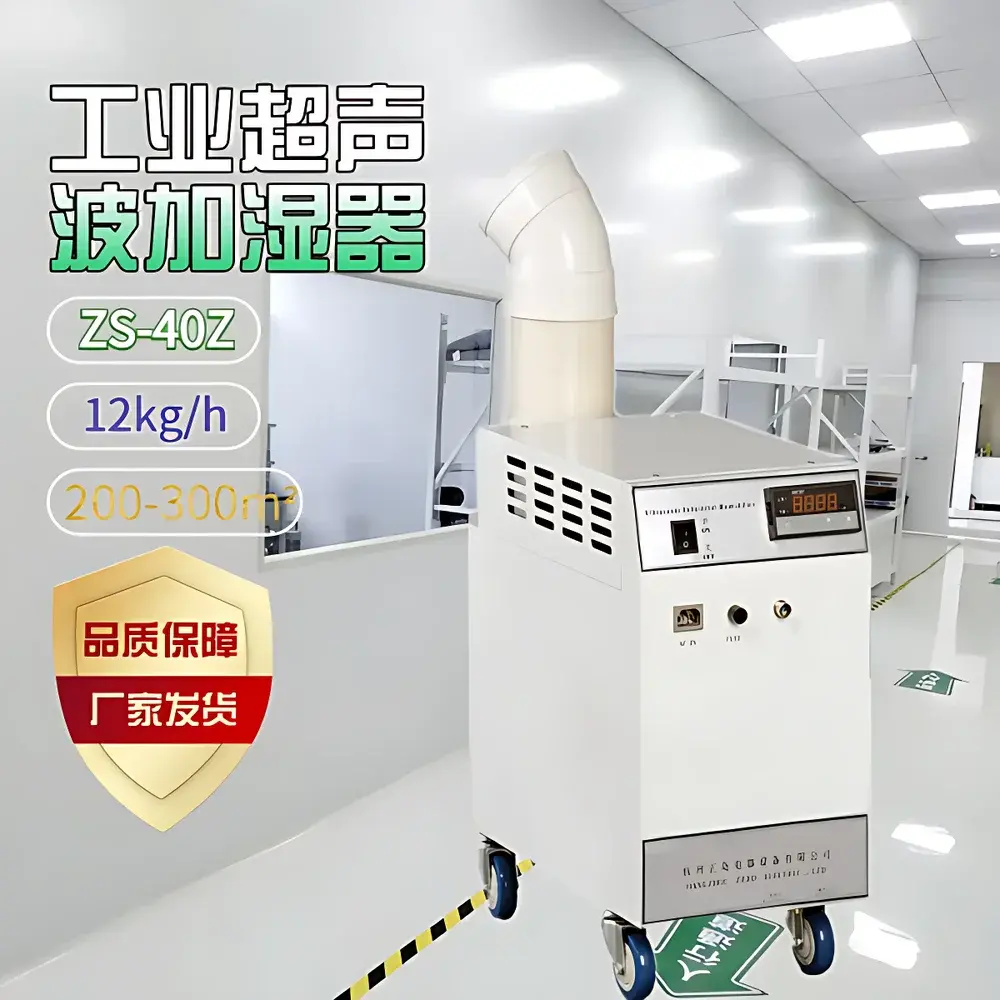
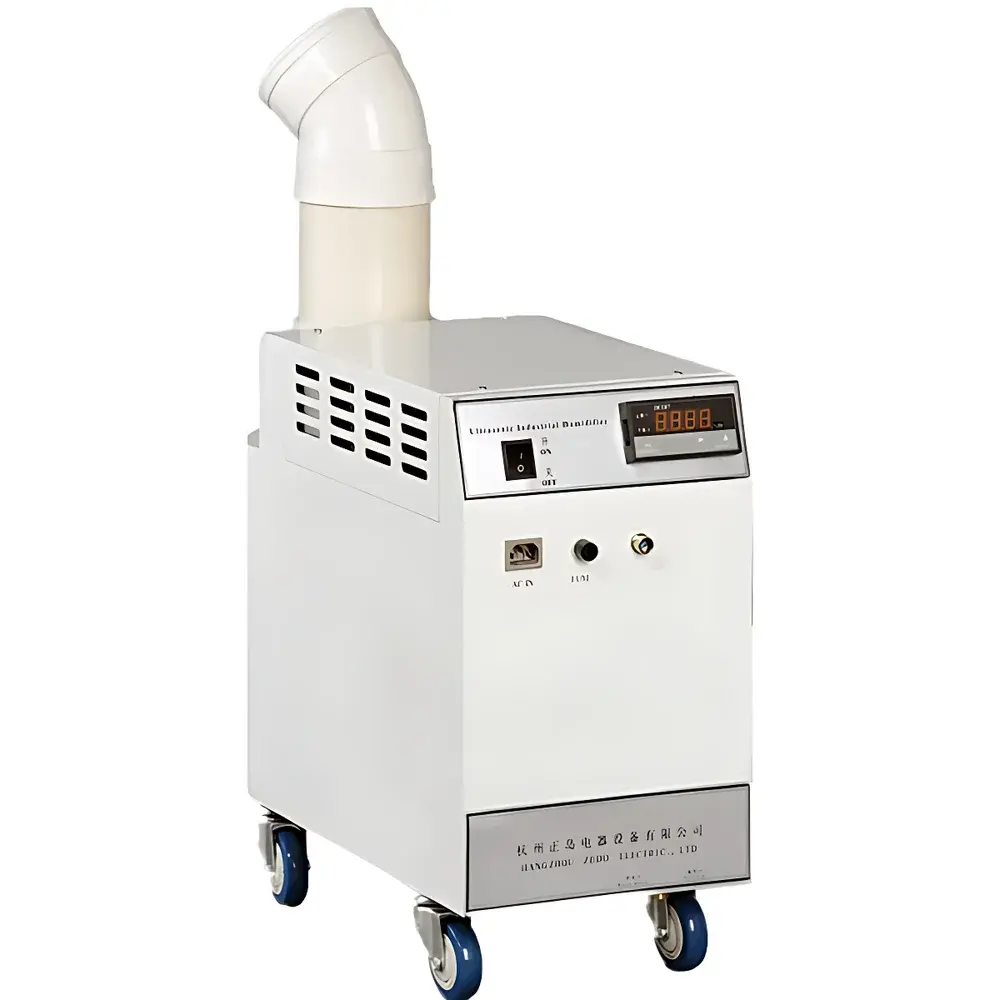
ZEDO ZS-40Z Industrial Ultrasonic Fogging Humidifier
| Brand | ZEDO |
|---|---|
| Origin | Zhejiang, China |
| Manufacturer Type | Direct Manufacturer |
| Model | ZS-40Z |
| Humidification Capacity | 12 kg/h |
| Power Consumption | 1200 W |
| Net Weight | 38 kg |
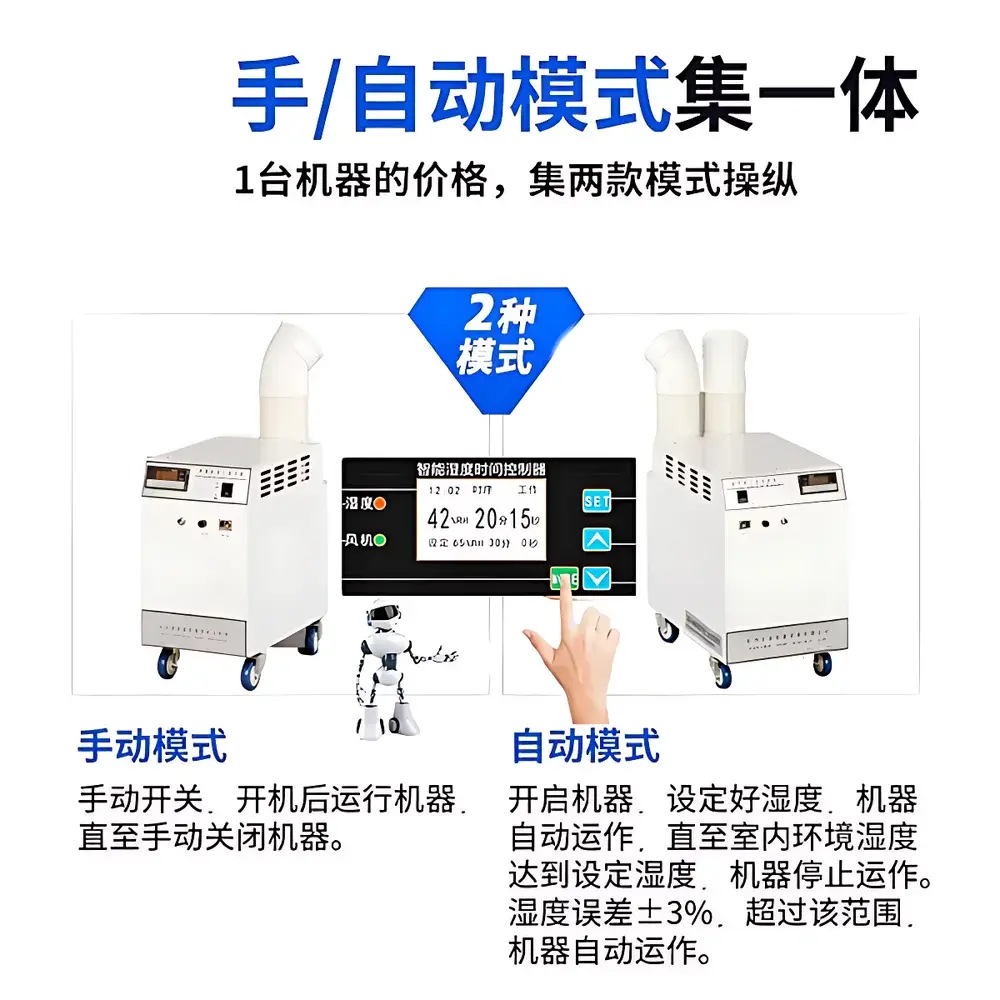
| Control Mode | Humidity Feedback Control (with Integrated Hygrometer) |
| 雾化方� | �: Dual Nozzle Output |
| Enclosure Material | Full Stainless Steel (AISI 304) |
| IP Rating | IP68 (Power Supply & Fan) |
| Ultrasonic Frequency | 1.7 MHz |
| Ceramic Transducer Lifespan | 3000–5000 h |
| Sensor Accuracy | ±3% RH (JAPAN SHINYEI Sensor) |
| Operating Ambient Temperature | 5–40°C |
| Water Inlet | Auto-fill with Overflow Protection |
| Mobility | Four Swivel Casters with Locks |
Overview
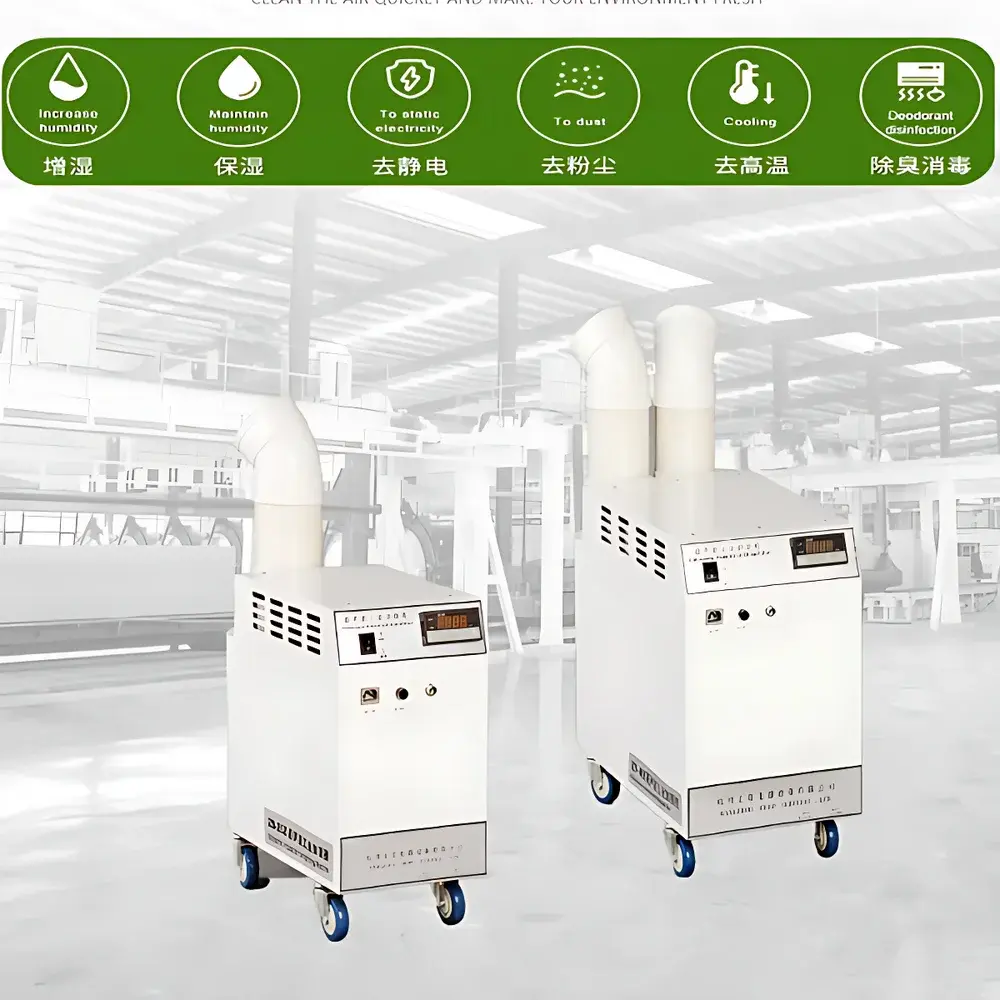
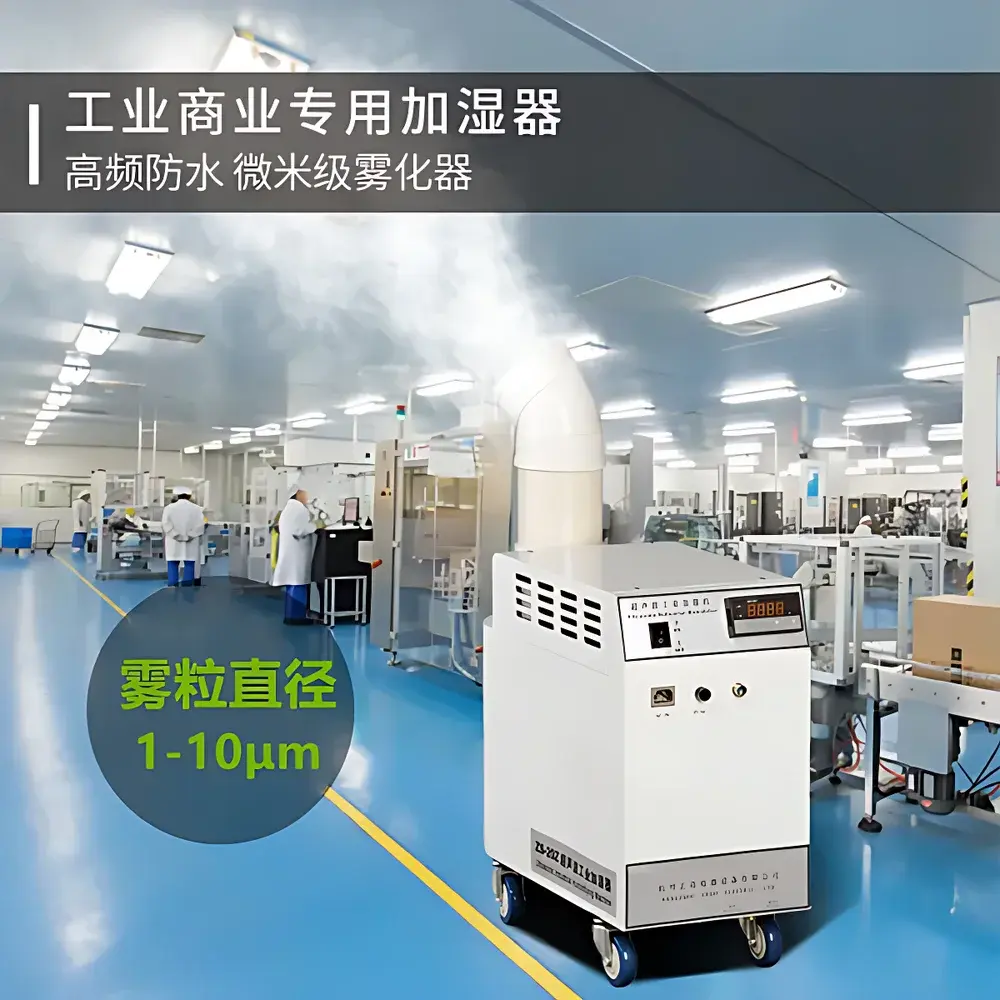
The ZEDO ZS-40Z Industrial Ultrasonic Fogging Humidifier is an engineered solution for precise ambient humidity control in manufacturing environments where electrostatic discharge (ESD), particulate suspension, and material dimensional instability pose critical process risks. Unlike evaporative or steam-based humidification systems, the ZS-40Z employs high-frequency ultrasonic transduction (1.7 MHz) to atomize deionized or softened water into sub-10 µm droplets—enabling rapid vapor-phase integration without thermal load or mineral carryover. This principle of piezoelectric cavitation ensures uniform spatial distribution of moisture across large-volume industrial spaces (up to 2000 m³ at 55–65% RH), making it suitable for cleanrooms, electronics assembly lines, textile processing halls, and pharmaceutical packaging zones where static-sensitive components or hygroscopic materials require strict environmental governance per ISO 14644-1 Class 7–8 or ANSI/ESD S20.20-compliant conditions.
Key Features
- Full AISI 304 stainless steel enclosure with electrophoretic coating—resistant to corrosion, alkali, and acidic water conditions encountered in industrial water recirculation systems.
- Dual-nozzle ultrasonic output architecture delivering 12 kg/h nominal humidification capacity with <5 dB(A) operational noise—eliminating mechanical fans or compressors that contribute to vibration-induced measurement drift in adjacent metrology equipment.
- IP68-rated sealed variable-frequency power supply and ceramic transducers—certified for continuous submersion at 1 m depth, ensuring reliability in high-humidity or condensate-prone installations.
- Integrated Shinyei (Japan) capacitive humidity sensor with ±3% RH accuracy and 0.1% RH resolution, coupled with microprocessor-based PID control logic for closed-loop feedback regulation within ±2% RH setpoint tolerance.
- Self-regulating auto-fill system with float-switch overflow protection and low-water cutoff—compatible with municipal, RO, or deionized water sources; no external pump or booster required.
- Modular design with four locking swivel casters (100 mm diameter)—enabling repositioning without disassembly, ideal for temporary ESD mitigation zones or seasonal humidity zoning strategies.
Sample Compatibility & Compliance
The ZS-40Z is designed for use with water having total dissolved solids (TDS) ≤ 100 ppm and hardness ≤ 50 ppm CaCO₃ equivalent. It complies with IEC 60335-1 (Household and Similar Electrical Appliances – Safety) and meets CE marking requirements for EMC Directive 2014/30/EU and Low Voltage Directive 2014/35/EU. While not classified as medical or laboratory-grade instrumentation under ISO/IEC 17025, its humidity control stability supports GLP-aligned environmental monitoring when deployed in QC laboratories, stability chambers, or controlled storage areas. The device satisfies ANSI/ESD S20.20 Annex B recommendations for relative humidity maintenance between 30% and 70% RH in ESD Protected Areas (EPAs), and aligns with ISO 8573-1:2010 Class 4 particulate purity when used with filtered feedwater.
Software & Data Management
The ZS-40Z operates via a standalone embedded controller with LCD interface and tactile membrane keypad—no proprietary software, cloud dependency, or driver installation required. All operational parameters—including real-time RH%, setpoint, runtime hours, fault codes (e.g., “Low Water”, “Transducer Overheat”), and cumulative humidification volume—are locally logged with timestamped records retained for ≥30 days. Audit trail functionality supports manual export via USB-C port for compliance documentation. Optional RS-485 Modbus RTU interface enables integration into building management systems (BMS) or SCADA platforms for centralized environmental logging per FDA 21 CFR Part 11 data integrity expectations—though native electronic signature or user-role authentication is not implemented.
Applications
- Electronics manufacturing: Mitigation of ESD events during PCB handling, semiconductor testing, and wafer fabrication by sustaining 40–60% RH in Class 10k–100k cleanrooms.
- Textile and nonwoven production: Prevention of fiber breakage and yarn tension variance during spinning, weaving, and needle-punching operations.
- Printing and converting facilities: Reduction of paper curl, ink misting, and registration error caused by low-RH-induced substrate shrinkage.
- Pharmaceutical secondary packaging: Stabilization of blister foil adhesion and carton board stiffness during serialization and case-packing stages.
- Research laboratories: Humidity conditioning of hygroscopic reference standards (e.g., LiCl, MgCl₂ saturated salt solutions) and polymer characterization chambers.
- Archival and museum conservation: Passive climate buffering in storage vaults housing cellulose acetate film, parchment, or photographic emulsions.
FAQ
What water quality is required for optimal transducer longevity?
Deionized or reverse-osmosis water (TDS ≤ 50 ppm) is recommended. Hardness > 50 ppm CaCO₃ accelerates ceramic transducer scaling and reduces effective lifespan below 3000 h.
Can the unit operate continuously for 24/7 industrial duty cycles?
Yes—rated for continuous operation with thermal cutoff protection on both transducer stack and power module; mean time between failures (MTBF) exceeds 12,000 hours under nominal load.
Is remote monitoring or BMS integration supported?
Standard configuration includes RS-485 Modbus RTU output (addressable node ID, 9600 baud); custom protocol gateways for BACnet/IP or MQTT are available upon request.
How does the ZS-40Z differ from steam or centrifugal humidifiers in cleanroom applications?
It introduces zero thermal energy, no boiler maintenance, and no risk of microbial aerosol generation—unlike steam systems—or mineral dust dispersion—unlike centrifugal units—making it compliant with ISO 14644-1 airborne particle limits.
Does the unit comply with explosion-proof or hazardous location standards?
No—the ZS-40Z is rated for general-purpose indoor industrial use only (Class I, Division 2 not applicable); it lacks ATEX, IECEx, or UL HazLoc certification.



