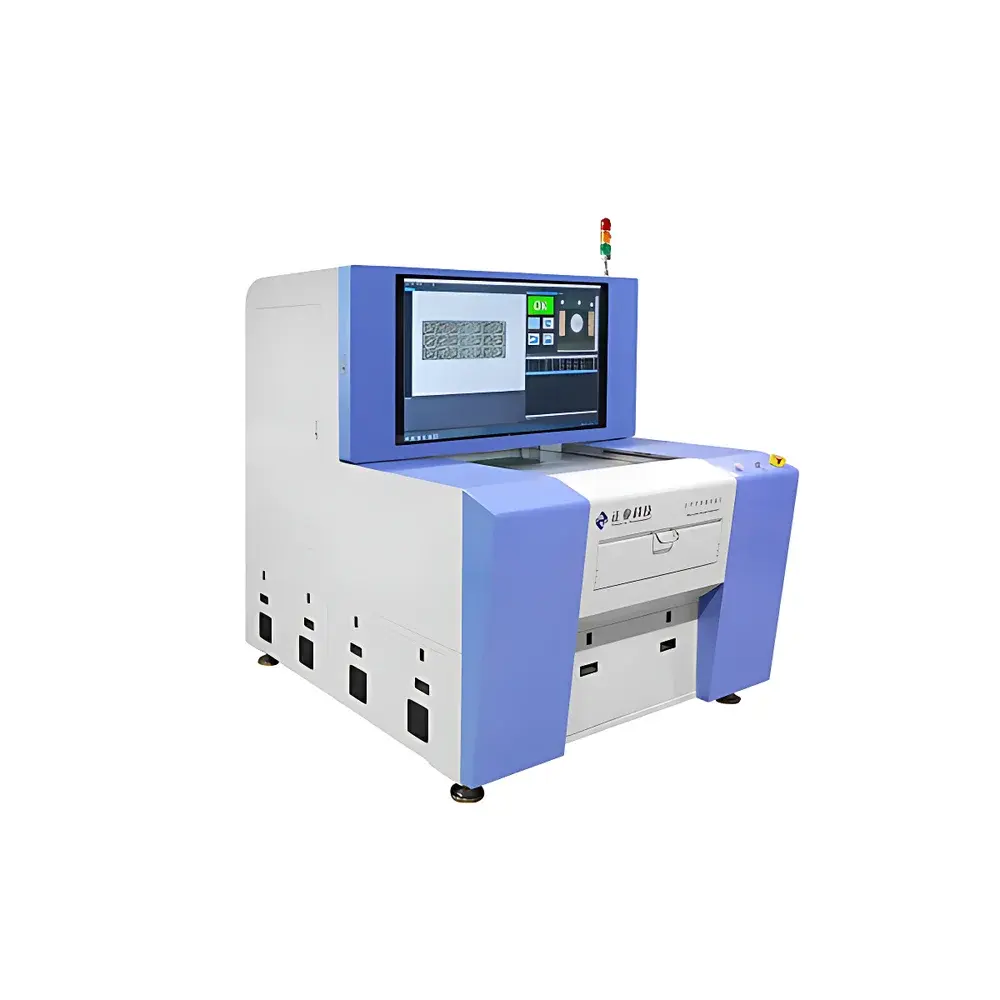
Zhengye KC2021 Automated Full-Field Optical Metrology System for PCB, FPC & HDI Substrates
| Brand | Zhengye |
|---|---|
| Origin | Guangdong, China |
| Manufacturer Type | OEM/ODM Manufacturer |
| Country of Origin | China |
| Model | KC2021 Full-Field Metrology System |
| Dimensions (W×L×H) | 1653 × 2038 × 1900 mm |
| Weight | ~2500 kg |
| Power Supply | AC 220 V + N + PE / 50 Hz / 2800 W |
| Structural Base | Grade-0 Granite Platform |
| Motion System | Linear Motor + High-Resolution Glass Scale |
| Camera | DALSA 8K Line-Scan CCD (Canada) |
| Computing Unit | Industrial PC (Intel Core i7, 32 GB RAM, 1 TB SSD), 55″ Touch-Enabled Display |
| Scan Speed | 200 mm/s |
| Scale Resolution | 0.5 µm |
| Measurement Accuracy | ±10 µm |
| Repeatability | ±5 µm |
| Maximum PCB/FPC Measurement Area | 650 × 750 mm |
| Supported Substrate Thickness | 0.036–12 mm |
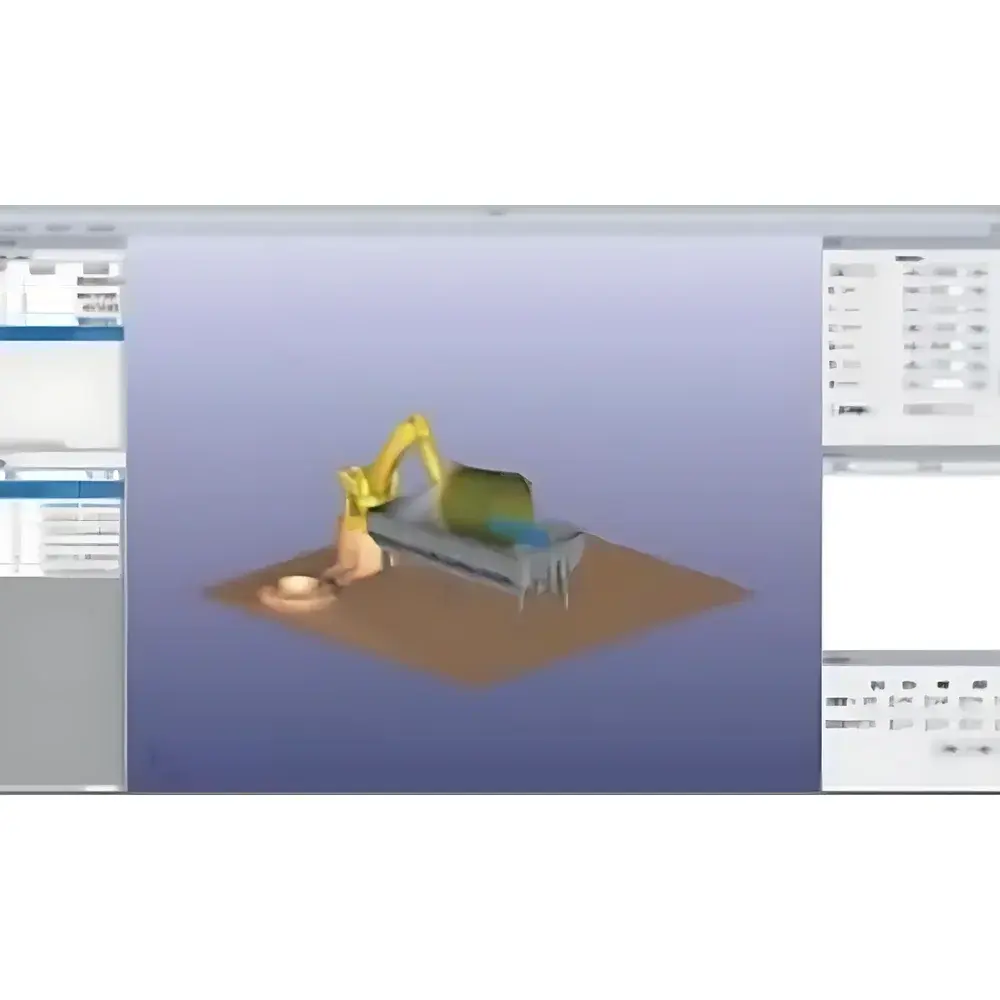
| Software Platform | Proprietary Metrology Suite with GD&T Analysis, SPC Reporting & Audit Trail |
Overview
The Zhengye KC2021 Automated Full-Field Optical Metrology System is an industrial-grade, non-contact optical measurement platform engineered for high-throughput dimensional verification of rigid PCBs, flexible printed circuits (FPCs), and high-density interconnect (HDI) substrates. It operates on the principle of precision line-scan imaging combined with calibrated motion metrology: a high-resolution DALSA 8K linear CCD sensor captures sub-pixel edge data across the entire substrate surface while synchronized linear motor motion ensures spatial registration via embedded glass scale feedback (0.5 µm resolution). This architecture enables traceable, full-field coordinate measurement without stage repositioning or stitching artifacts—critical for evaluating feature-to-feature relationships in advanced packaging substrates such as BGA land patterns, micro-via arrays, gold finger profiles, and fine-pitch trace geometries. Designed for integration into inline QC environments and NPI labs, the system delivers certified measurement uncertainty compliant with ISO 10360-2 (coordinate measuring machines) and supports traceability to national standards through documented calibration procedures.
Key Features
- Grade-0 granite base structure providing thermal stability and vibration damping essential for micron-level metrological integrity
- Direct-drive linear motor stage with closed-loop position feedback via high-stability glass scale (0.5 µm resolution)
- DALSA 8K line-scan CCD camera with telecentric illumination path, optimized for high-contrast edge detection on solder mask, copper, and plated surfaces
- Automated fiducial recognition and board alignment algorithm supporting multi-layer registration (top/bottom layer overlay analysis)
- Real-time measurement engine capable of processing >200 mm/s scan velocity while maintaining ±10 µm measurement accuracy and ±5 µm repeatability
- Industrial computing subsystem with Intel Core i7 processor, 32 GB DDR4 RAM, and 1 TB SSD—optimized for concurrent image acquisition, geometric fitting, and statistical reporting
- 55-inch capacitive touch display with ergonomic operator interface for manual override, measurement point annotation, and pass/fail visualization
Sample Compatibility & Compliance
The KC2021 accommodates a broad spectrum of PCB and advanced substrate formats: standard FR-4 rigid boards (0.036–6.0 mm), ultra-thin flex circuits (down to 36 µm polyimide), rigid-flex hybrids, and HDI laminates with sequential build-up layers. Its 650 × 750 mm active measurement envelope supports panelized production lots up to 24″ × 26″, with programmable Z-axis lift (±15 mm) enabling focus adjustment for warped or bowed substrates. The system complies with IEC 61000-6-2 (EMC immunity) and IEC 61000-6-4 (EMC emissions), and its software architecture supports 21 CFR Part 11-compliant audit trails—including user authentication, electronic signatures, and immutable change logs—for regulated manufacturing environments operating under ISO 9001, IATF 16949, or IPC-A-600/610 quality frameworks.
Software & Data Management
The proprietary metrology software suite provides comprehensive GD&T evaluation (position, concentricity, parallelism, profile), automated defect flagging (e.g., pad undercut, drill breakout, solder mask misregistration), and real-time SPC charting (X-bar/R, Cpk/Ppk). All measurement data are stored in structured SQLite databases with configurable export to CSV, PDF reports, or enterprise MES/SPC platforms via OPC UA or RESTful API. Calibration certificates, maintenance logs, and version-controlled software updates are managed within the same environment. Audit trail functionality records every operator action—including parameter modification, report generation, and calibration event—with timestamp, user ID, and hash-verified data integrity—fully satisfying GLP/GMP documentation requirements.
Applications
- Pre- and post-plating verification of BGA pad diameter, pitch, and coplanarity in semiconductor packaging substrates
- Dimensional validation of microvia arrays in HDI multilayer boards (aspect ratio, annular ring width, drill-to-copper clearance)
- Gold finger thickness uniformity and chamfer geometry assessment for connector interface compliance
- Line-width/line-space (L/S) metrology on fine-feature circuits (<50 µm L/S), including edge roughness quantification
- Drill hole location accuracy and true position deviation relative to reference datums per ASME Y14.5
- Panel-level warpage mapping using Z-height interpolation across grid points (optional add-on module)
FAQ
What substrate thicknesses can the KC2021 accommodate?
The system supports substrates ranging from 0.036 mm (ultra-thin FPC) to 12 mm (thick metal-core PCBs), with adaptive focus control and Z-axis compensation for bow/warp.
Does the system support automated programming for new board designs?
Yes—CAD import (Gerber RS-274X, ODB++, IPC-2581) enables automatic feature recognition, datum assignment, and measurement plan generation; template-based programming reduces setup time to under 15 minutes per new design.
How is measurement traceability maintained?
Each system ships with NIST-traceable calibration artifacts and a documented calibration procedure aligned with ISO/IEC 17025 requirements; annual recalibration services include uncertainty budgets per ISO/IEC 17025 Annex A.3.
Can the KC2021 integrate with factory MES or QMS platforms?
Yes—native OPC UA server and REST API support bidirectional data exchange with Siemens Opcenter, PTC ThingWorx, or custom SQL-based quality management systems.
Is the software validated for use in FDA-regulated medical device manufacturing?
The metrology software includes 21 CFR Part 11-compliant modules (electronic signatures, audit trail, role-based access control); IQ/OQ documentation packages are available upon request for GxP validation projects.