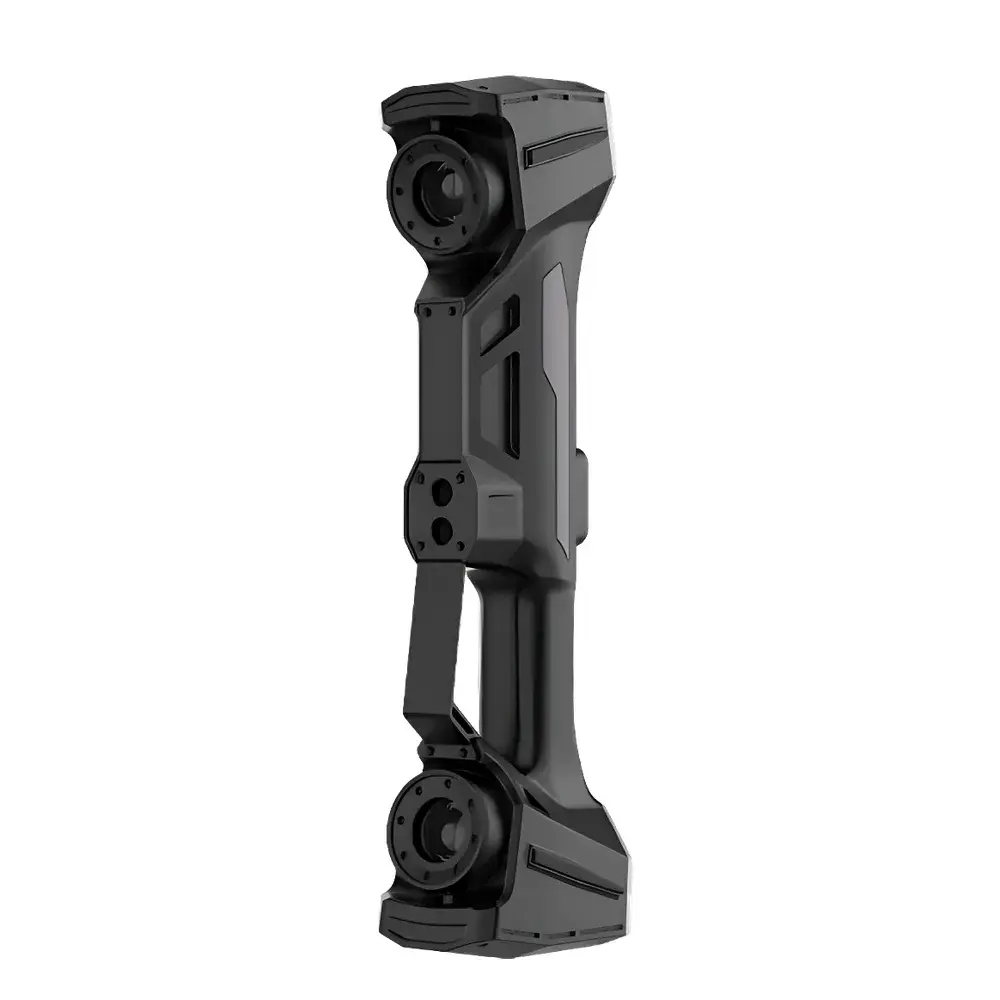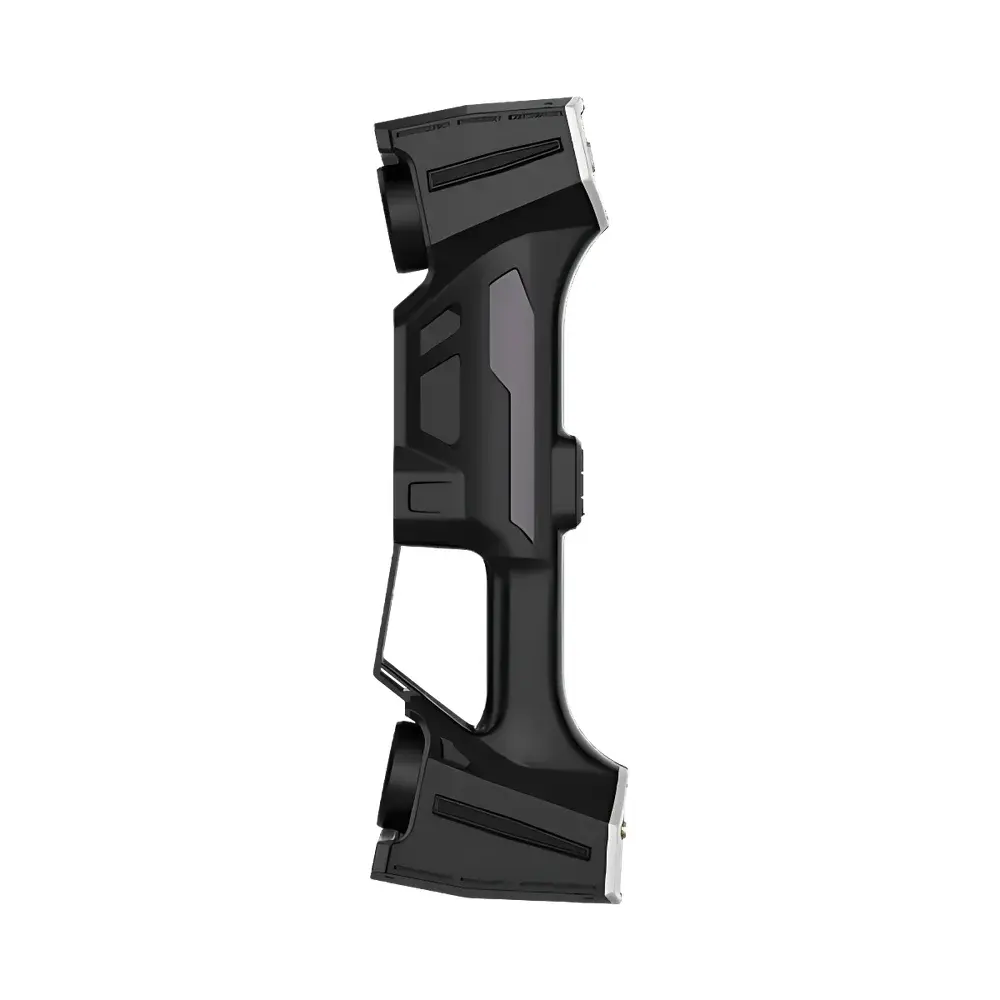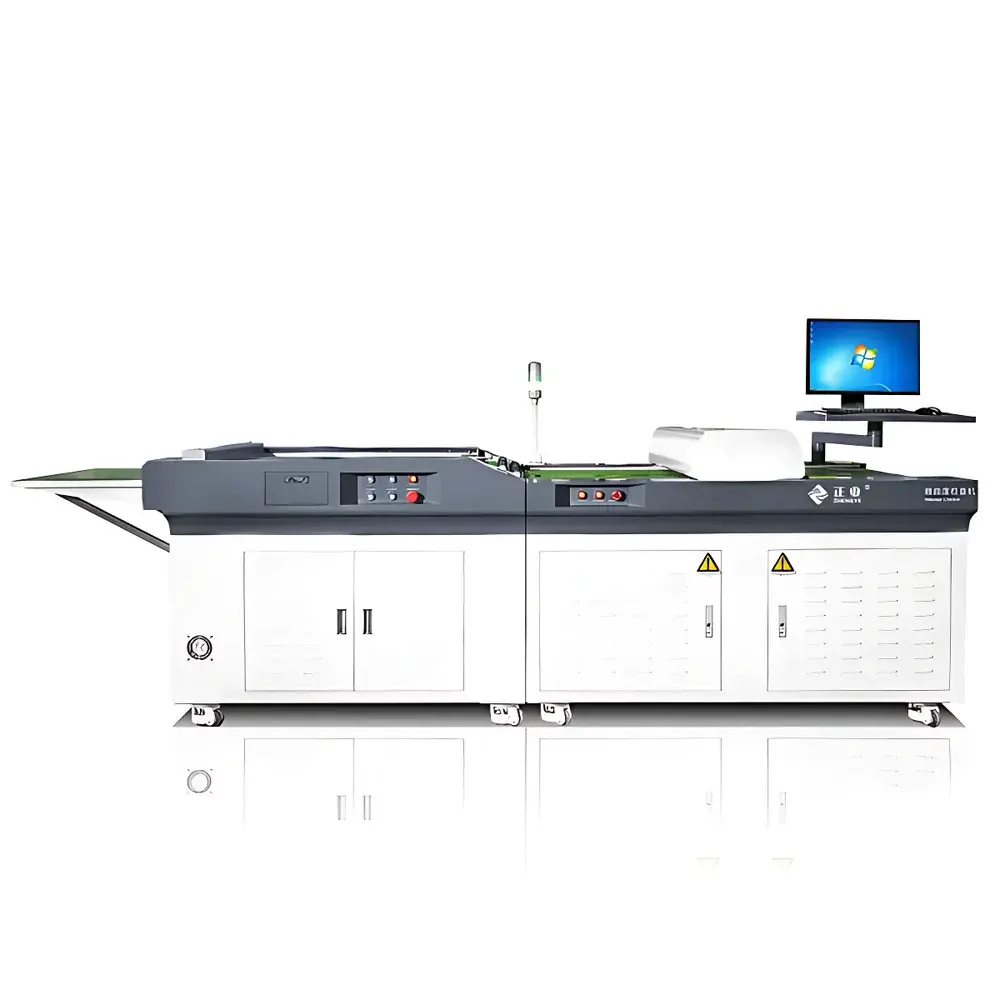
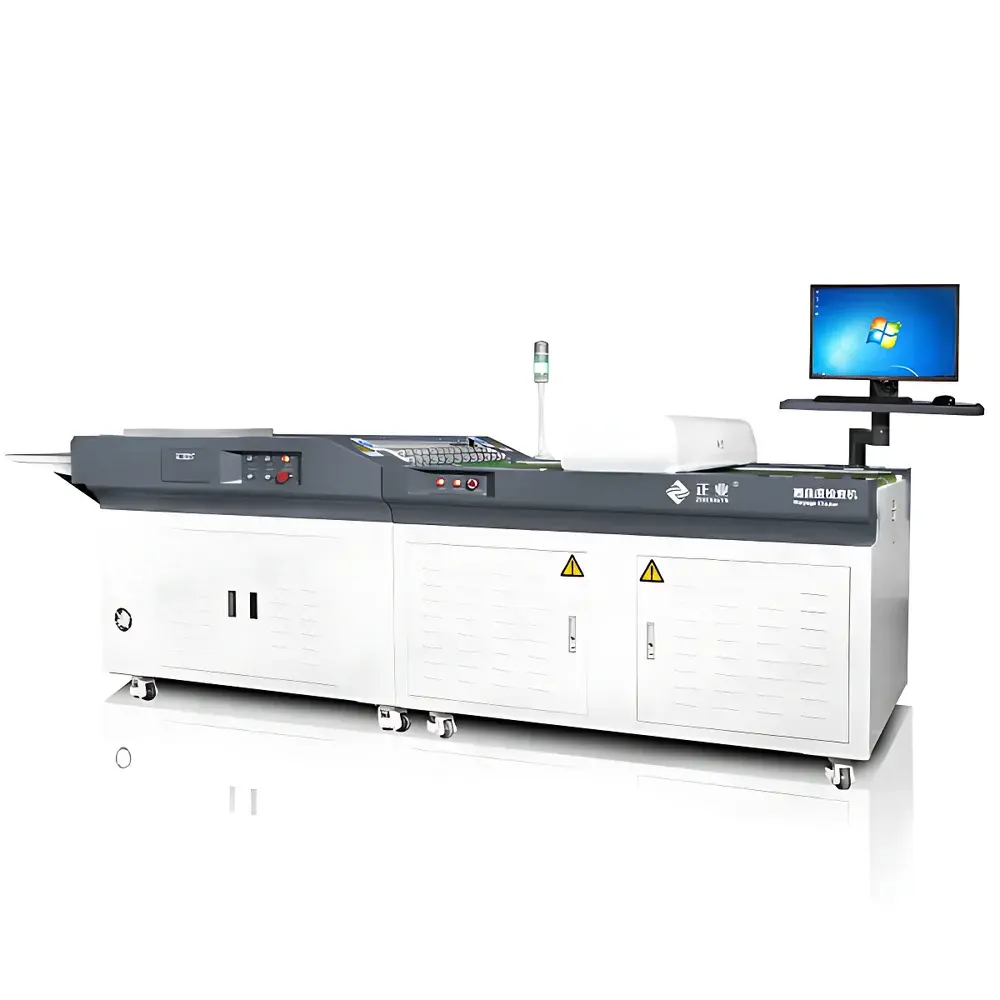
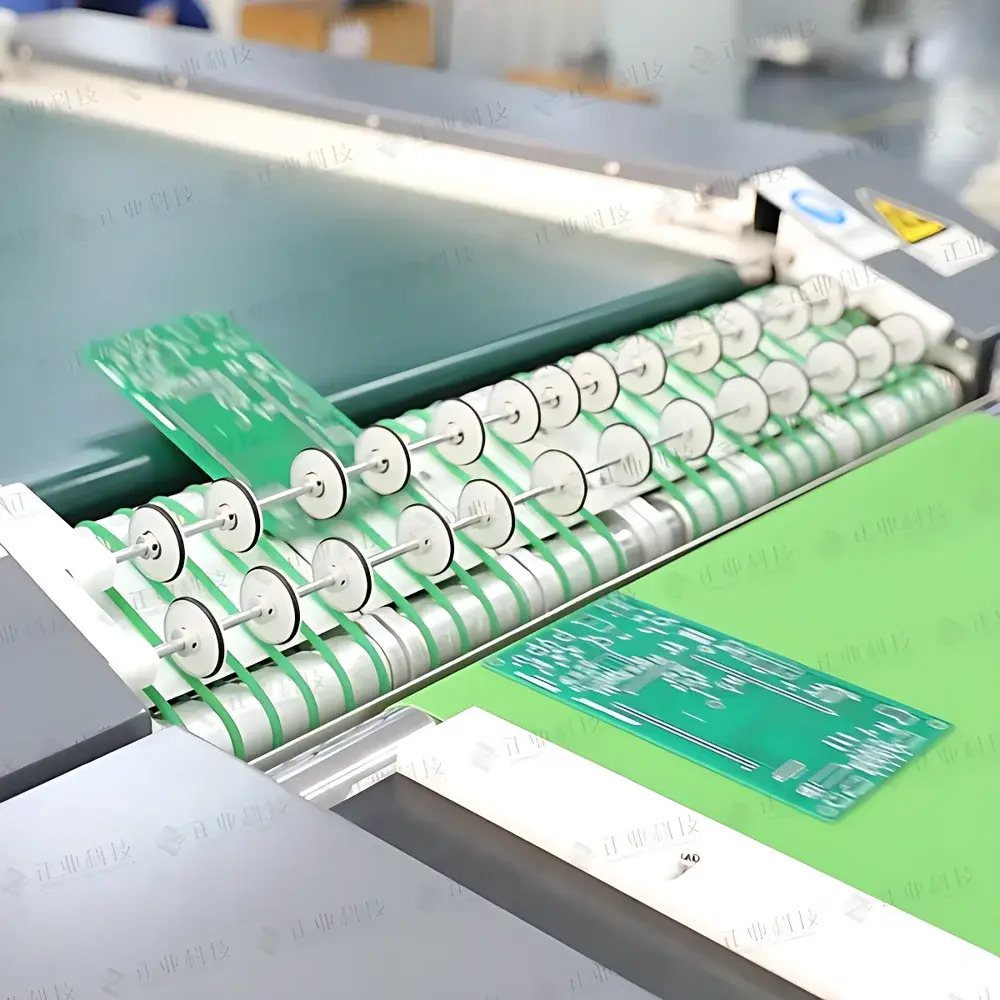
Zhengye QQ1000 In-Line PCB Warpage and Bow Inspection System
| Brand | Zhengye |
|---|---|
| Origin | Guangdong, China |
| Manufacturer Type | OEM/ODM Manufacturer |
| Country of Origin | China |
| Model | QQ1000 |
| Price Range | USD 14,000 – 72,000 |
| Measurement Principle | Non-contact laser triangulation with dual-sensor array |
| Measurement Accuracy | ±0.15 mm (verified against NIST-traceable gauge blocks) |
| Max. Conveyor Speed | 12.5 m/min |
| Measurable Board Thickness | 0.5–5.0 mm |
| Detectable Warpage/Bow Range | 0.3–5.0 mm |
| Supported PCB Dimensions | 40 mm × 80 mm to 480 mm × 500 mm |
| System Footprint | 3510 mm × 1160 mm × 1050 mm (L×W×H) |
| Weight | 450 kg |
Overview
The Zhengye QQ1000 In-Line PCB Warpage and Bow Inspection System is an industrial-grade, non-contact metrology platform engineered for high-throughput, real-time dimensional verification of printed circuit boards (PCBs) and copper-clad laminates (CCLs). It employs a dual-axis laser triangulation architecture—comprising calibrated Class II red semiconductor lasers and high-stability position-sensitive detectors—to acquire topographic surface profiles across the full board area. By scanning orthogonal cross-sections at sub-millimeter spatial resolution and reconstructing 3D warpage vectors (including both bow and twist components), the system quantifies deviation from planarity in strict accordance with IPC-TM-650 2.2.14 (Board Warpage Test Method) and IPC-A-600G (Acceptability of Printed Boards). Designed for integration into SMT line exits or post-lamination inspection stations, the QQ1000 delivers deterministic pass/fail classification without mechanical contact, eliminating risk of surface damage or measurement hysteresis.
Key Features
- Non-contact, high-speed laser profiling: Dual synchronized laser displacement sensors operate at ≥2 kHz sampling rate, enabling stable capture of dynamic board motion at conveyor speeds up to 12.5 m/min.
- Real-time decision engine: Embedded FPGA-accelerated algorithm computes maximum bow (BOW), maximum twist (TWIST), and global flatness deviation per IPC standards; outputs OK/NG signal via opto-isolated digital I/O within ≤150 ms latency.
- Modular mechanical architecture: Precision-ground granite base, servo-driven linear stage with ±0.02 mm repeatability, and adjustable Z-height sensor mounts accommodate varying board thicknesses (0.5–5.0 mm) without recalibration.
- Integrated material handling interface: Standardized 25 mm pitch conveyor belt with edge-guided tracking; optional side-guide rails and vacuum hold-down modules available for thin or warped substrates.
- Environmental robustness: IP54-rated enclosure, thermal drift compensation (±0.005 mm/°C), and ESD-safe construction compliant with ANSI/ESD S20.20 for cleanroom-adjacent deployment.
Sample Compatibility & Compliance
The QQ1000 accommodates rigid and rigid-flex PCBs, CCL panels, and substrate preforms meeting IPC-4101 specifications. Minimum detectable warpage is 0.3 mm over a 100 mm baseline; maximum measurable deformation remains linear up to 5.0 mm under ISO 10360-2 geometric accuracy validation. All measurement data are traceable to national length standards via factory calibration certificates issued per ISO/IEC 17025:2017 requirements. The system supports audit-ready documentation workflows aligned with ISO 9001:2015 clause 7.1.5 and satisfies evidence-generation criteria for FDA 21 CFR Part 11 electronic records when paired with optional secure logging firmware.
Software & Data Management
Control and analysis are performed via Zhengye VisionLink™ v4.2—a Windows-based application built on Qt framework with native support for OPC UA and Modbus TCP protocols. The software provides real-time 3D surface mesh visualization, statistical process control (SPC) charting (X̄-R, Cpk), and automated report generation in PDF/CSV formats. Historical inspection logs—including timestamped images, raw sensor waveforms, and classification metadata—are stored in encrypted SQLite databases with configurable retention policies. Optional cloud synchronization enables remote diagnostics and multi-facility benchmarking through TLS 1.2-secured API endpoints.
Applications
- Post-lamination warpage screening of FR-4, polyimide, and metal-core PCBs prior to drilling and plating.
- In-line verification after solder reflow to identify thermally induced distortion exceeding IPC-A-610 Class 2 tolerances.
- Quality gate inspection for HDI and IC substrate manufacturers requiring ≤0.5 mm bow specification compliance.
- Process development support: Correlation of lamination pressure/temperature profiles with measured warpage trends across DOE test lots.
- Supplier qualification audits where objective, instrument-based warpage data replace subjective visual assessment per AS9100 Rev D clause 8.6.2.
FAQ
What standards does the QQ1000 use to define ‘bow’ and ‘twist’?
It implements the definitions and calculation methodology specified in IPC-TM-650 2.2.14, computing bow as the maximum perpendicular deviation of the centerline from a best-fit plane, and twist as the difference in elevation between diagonally opposite corners normalized to diagonal length.
Can the system inspect panels with solder paste or assembled components?
Yes—non-contact laser operation permits inspection of populated boards; however, highly reflective or transparent surfaces (e.g., bare gold fingers, uncoated glass cores) may require optional diffuse-coating mode or polarization filtering.
Is calibration traceable to international standards?
Each unit ships with a factory calibration certificate referencing NIST-traceable gauge blocks; on-site recalibration services include uncertainty budgets per ISO/IEC 17025 Annex A.3.
How is OK/NG logic configured for different product families?
Thresholds are defined per job recipe using a graphical tolerance editor; multiple independent criteria (e.g., max bow ≤ 0.8 mm AND max twist ≤ 0.6 mm) can be cascaded with Boolean logic and assigned unique reject codes for MES integration.
Does the system support integration with factory MES or SCADA platforms?
Yes—native Modbus TCP and OPC UA server modes enable bidirectional communication with Siemens SIMATIC, Rockwell FactoryTalk, and SAP ME systems; custom API wrappers available for legacy MES environments.