
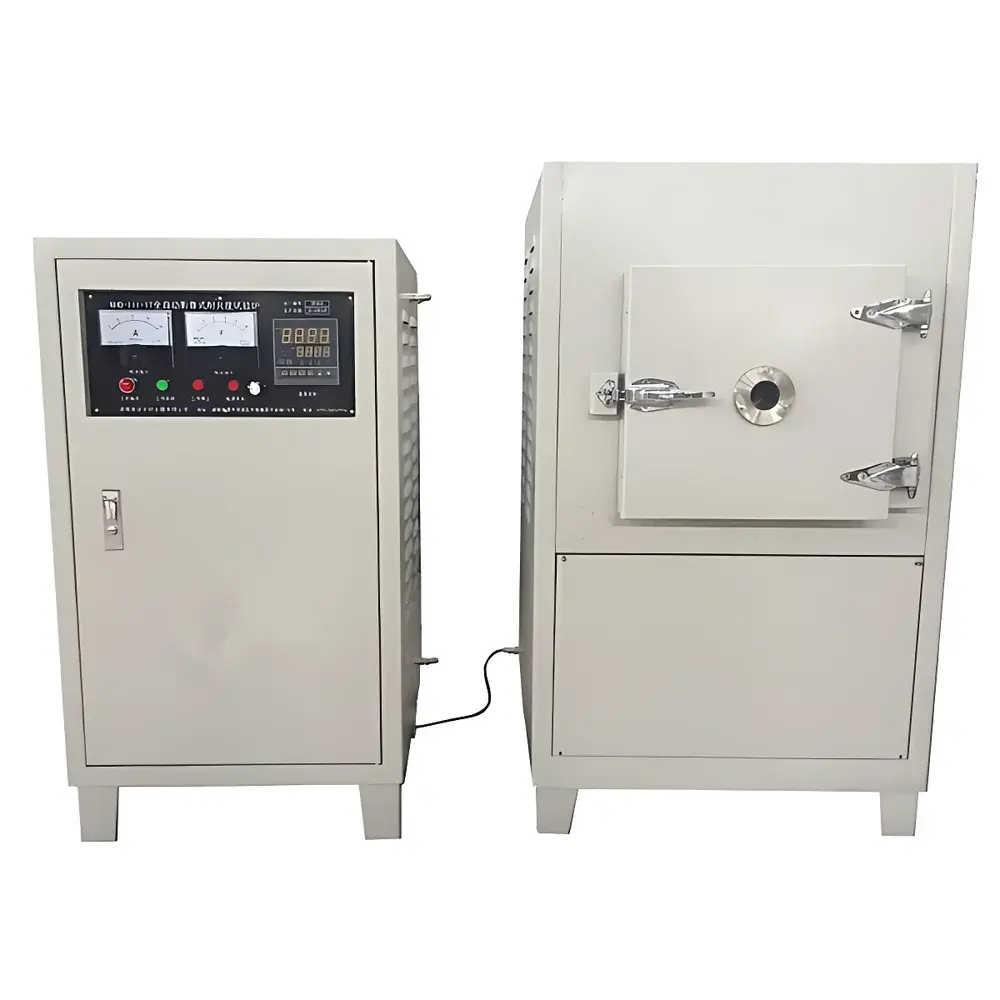
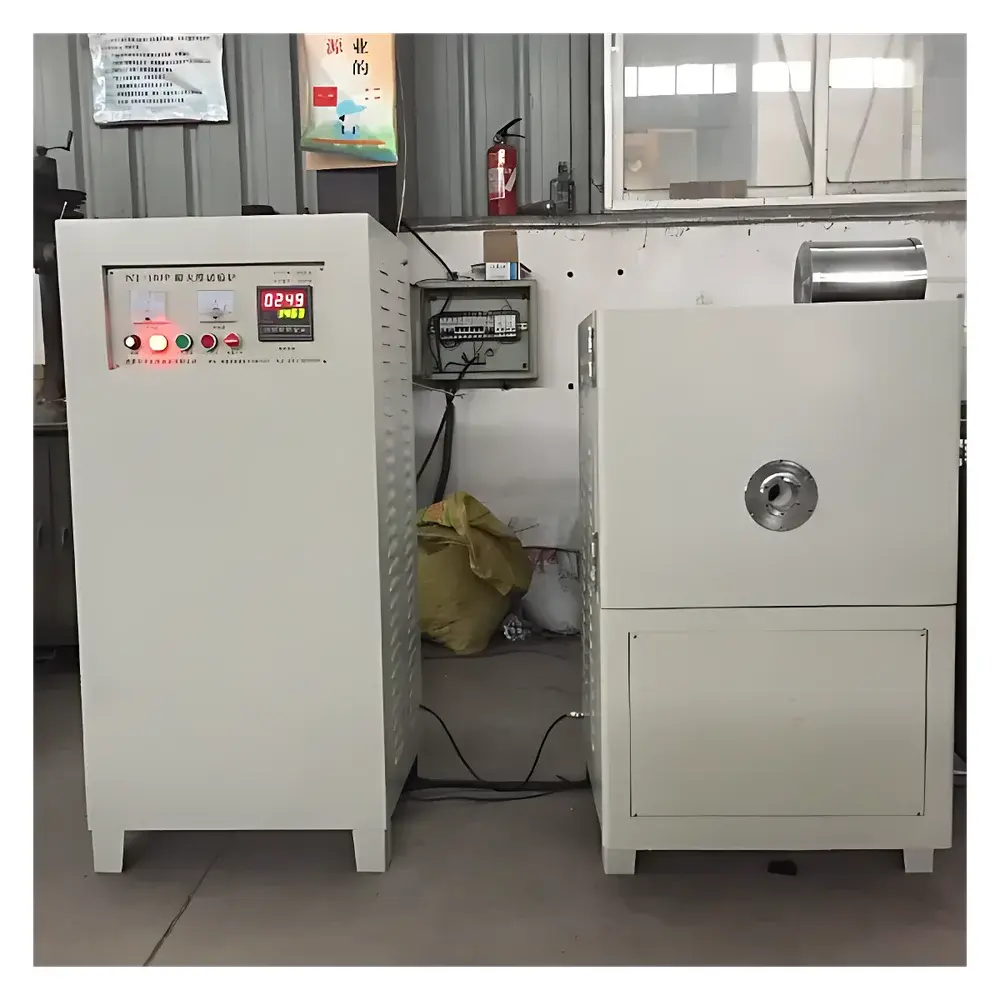
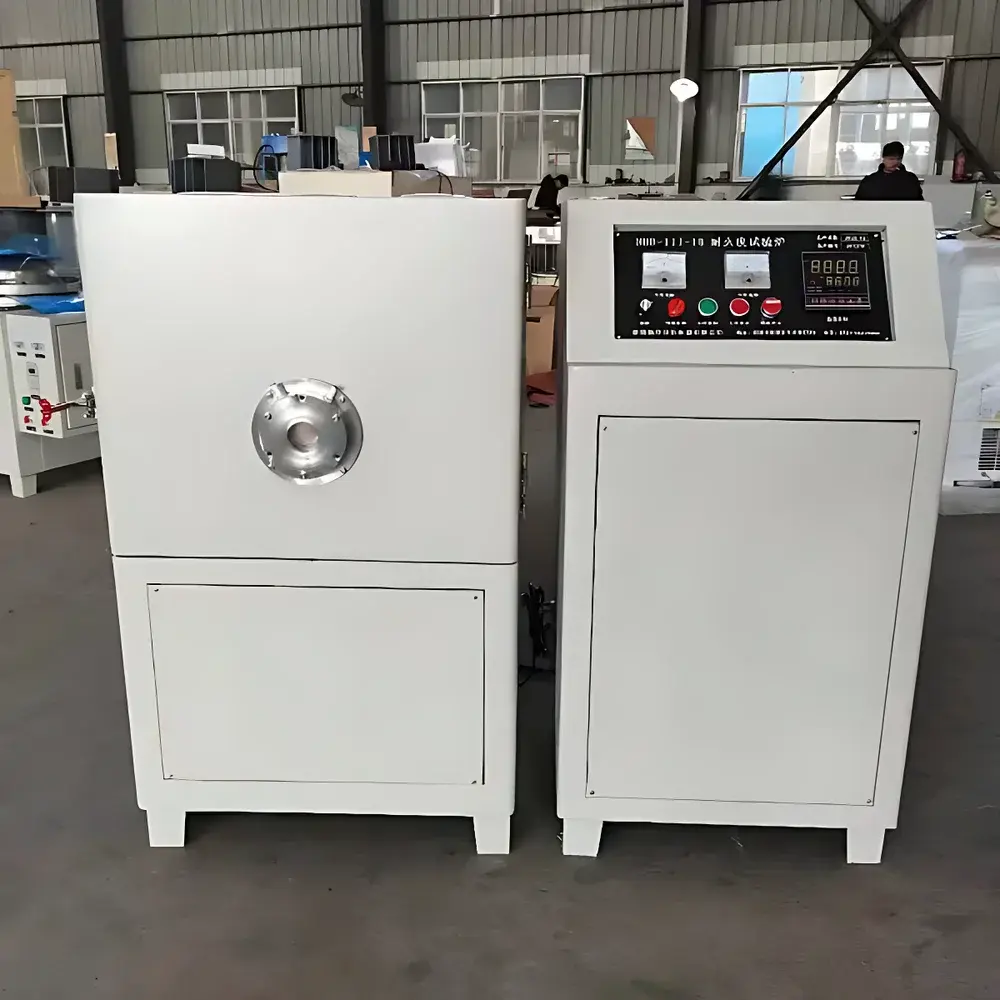
ZHENHUAFENXI NHD-III High-Temperature Pyrometric Cone Equivalent (PCE) Test Furnace
| Brand | ZHENHUAFENXI |
|---|---|
| Origin | Hunan, China |
| Model | NHD-III |
| Furnace Type | Box-Type Muffle Furnace |
| Max Temperature | 1800 °C |
| Temperature Control Accuracy | ±1 °C |
| Rated Power | 9 kW |
| Heating Element | Molybdenum Disilicide (MoSi₂) Rods |
| Internal Chamber Dimensions | 300 × 200 × 120 mm |
| Nominal Volume | 0.5 L |
| Heating Rate | 0–15 °C/min |
| Sample Holder Material | High-Purity Graphite (≥1800 °C service temp) |
| Sample Geometry | Triangular Pyrometric Cone (base width: 8.5 mm) |
| Cone Rotation Speed | 1–5 rpm |
| Temperature Sensor | Type B Dual Platinum-Rhodium Thermocouple |
| Imaging System | ≥10 MP Color CCD Camera with IR Filter & Continuous Zoom Lens |
| Image Capture Resolution | One frame per 1 °C |
| Software | Fully Automated PCE Analysis Suite (compliant with ASTM C134/C135 and ISO 528 workflows) |
| Atmosphere Compatibility | Inert or reducing gas inlet port |
| Safety Protections | Current-limiting startup, overload protection, thermal runaway prevention |
Overview
The ZHENHUAFENXI NHD-III High-Temperature Pyrometric Cone Equivalent (PCE) Test Furnace is a precision-engineered box-type muffle furnace designed for standardized determination of refractoriness under load (RUL)-adjacent behavior via the pyrometric cone method. It operates on the fundamental principle that the softening temperature of a refractory material can be inferred by observing the deformation temperature of a geometrically standardized triangular cone—typically composed of the same composition as the test material—under controlled, slow-heating conditions. The furnace complies fully with ISO 528:2017 and GB/T 7322–2017, serving as a primary reference instrument in refractory R&D laboratories, quality control departments of refractory manufacturers, and third-party certification bodies conducting GLP-compliant testing. Its architecture integrates high-stability MoSi₂ heating elements, dual-platinum-rhodium thermocouple feedback, and real-time optical monitoring to ensure metrological traceability and inter-laboratory reproducibility.
Key Features
- High-temperature capability up to 1800 °C with programmable ramp rates from 0.5 to 15 °C/min, enabling precise replication of standard heating profiles defined in ISO 528 and ASTM C134.
- Robust internal chamber lined with high-purity alumina fiber insulation and constructed with corrosion-resistant stainless steel housing, optimized for long-term thermal cycling stability.
- Integrated rotary cone holder system with adjustable speed (1–5 rpm), ensuring uniform thermal exposure and eliminating localized shadowing during deformation observation.
- Dual-sensor temperature control loop: primary Type B thermocouple embedded in furnace wall + secondary verification sensor near sample zone, delivering ±1 °C accuracy across full operating range.
- Optically isolated observation port fitted with quartz viewport and IR-filtered, 10+ megapixel color CCD camera equipped with telecentric zoom lens—capable of sub-millimeter spatial resolution at 1800 °C.
- Automated image acquisition synchronized to temperature increments (1 frame per 1 °C), stored in uncompressed TIFF format with embedded timestamp, furnace ID, and calibration metadata.
- Comprehensive electrical safety suite including soft-start current limiting, overcurrent cutoff, and thermal runaway detection with audible/visual alarm and automatic power cutoff.
Sample Compatibility & Compliance
The NHD-III accommodates up to six standard pyrometric cones (8.5 mm base width, ISO 528 geometry) per test run, mounted on high-purity graphite supports rated for continuous operation above 1800 °C. Cones may be fabricated from raw materials including alumina-silica blends, magnesia-carbon composites, zirconia-based ceramics, and specialty non-oxide refractories. The furnace supports optional inert (N₂, Ar) or reducing (H₂/N₂ mix) atmospheres via sealed gas inlet ports—critical for evaluating carbon-containing or oxygen-sensitive compositions. All hardware and software workflows are structured to support audit-ready documentation per FDA 21 CFR Part 11 requirements, including electronic signatures, change logs, and user-access-controlled test archives.
Software & Data Management
The bundled PCE Analysis Suite provides fully automated cone deformation analysis using edge-detection algorithms calibrated against NIST-traceable reference cones. Software modules include: (1) multi-zone furnace profile calibration utility; (2) real-time overlay of cone tip displacement vs. temperature curve; (3) automatic determination of bending point (Tb), softening point (Ts), and fusion point (Tf) per ISO 528 Annex A; (4) batch report generation compliant with ISO/IEC 17025 documentation templates; and (5) export to CSV, PDF, and LIMS-compatible XML formats. Data integrity is preserved via write-once archival mode and SHA-256 hash verification of all acquired image sequences.
Applications
- Determination of pyrometric cone equivalent (PCE) values for fireclay, high-alumina, basic, and special refractories per ISO 528 and GB/T 7322.
- Quality assurance of raw material batches prior to brick forming or monolithic casting.
- Thermal stability evaluation of ceramic matrix composites (CMCs) and ultra-high-temperature ceramics (UHTCs).
- Development of novel refractory formulations where phase transition onset must be correlated with microstructural evolution.
- Interlaboratory round-robin studies requiring cross-platform comparability of softening behavior.
- Validation of computational thermodynamic models (e.g., FactSage) against empirical deformation thresholds.
FAQ
What standards does the NHD-III furnace comply with?
It meets ISO 528:2017, GB/T 7322–2017, and is functionally compatible with ASTM C134 and C135 methodologies.
Can the furnace operate under protective atmosphere?
Yes—it features dual gas inlet ports with mass flow controller compatibility for N₂, Ar, H₂/N₂, or CO/N₂ mixtures.
Is the imaging system capable of resolving cone tip deformation at 1800 °C?
Yes—the IR-filtered CCD with telecentric optics achieves ≤0.02 mm pixel resolution at working distance, validated against NIST SRM 1921a reference cones.
Does the software support 21 CFR Part 11 compliance?
Yes—audit trail logging, role-based access control, electronic signatures, and immutable data archiving are enabled by default.
What is the expected lifetime of the MoSi₂ heating elements at 1800 °C?
Under recommended thermal cycling protocols (≤3 cycles/week, ramp rate ≤10 °C/min), typical service life exceeds 1,200 hours at 1800 °C.



