
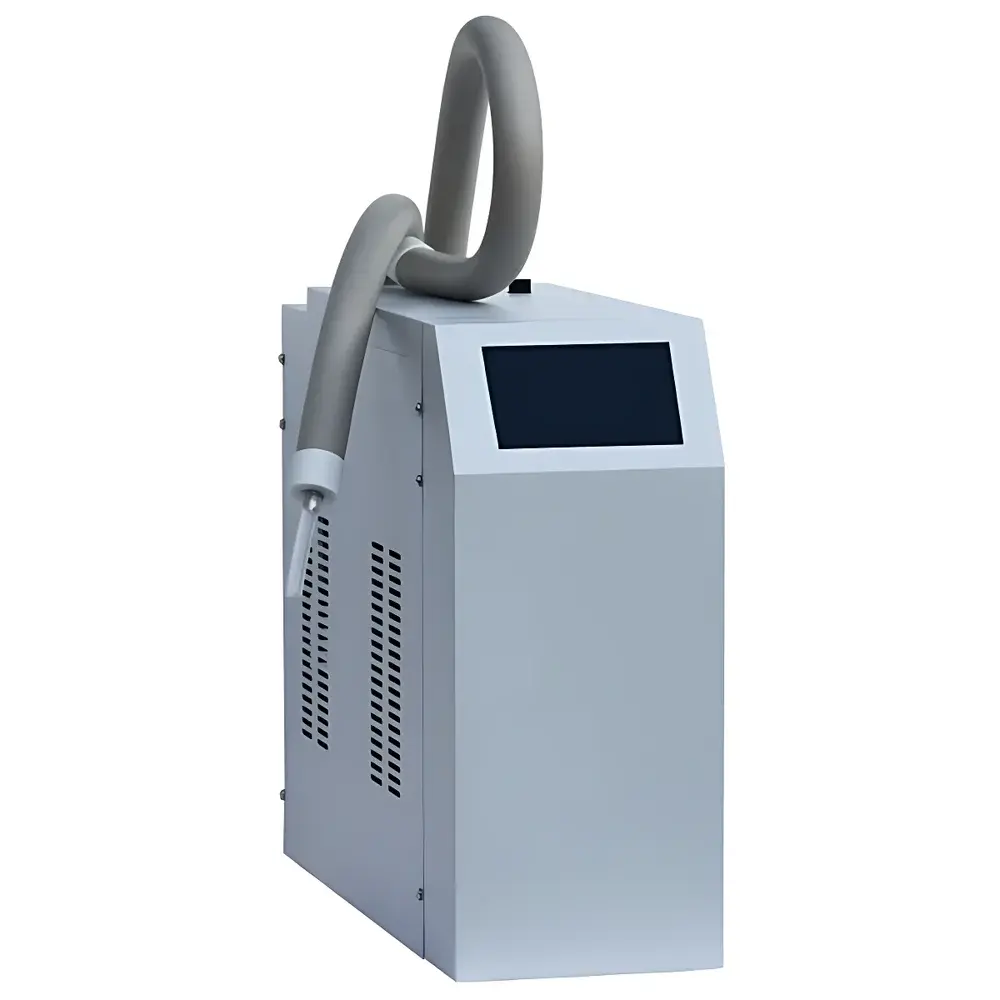
Zhonghui Pu HS-12 Static Headspace Sampler
| Brand | Zhonghui Pu |
|---|---|
| Origin | Beijing, China |
| Manufacturer Type | Manufacturer |
| Product Category | Domestic |
| Model | HS-12 |
| Instrument Type | Static Headspace Sampler |
| Automation Level | Semi-Automatic |
| Sample Vial Heating Range | 40–200 °C (optional up to 330 °C) |
| Valve Heating Range | 40–200 °C (optional up to 330 °C) |
| Sample Transfer Line Heating Range | 40–200 °C (optional up to 330 °C) |
| Temperature Control Accuracy | ±1 °C |
| Temperature Gradient Stability | ±0.1 °C |
| Pressurization Time | 0–20 min |
| Sampling Time | 0–20 min |
| Injection Time | 0–20 min |
| Loop Volume | 1 mL (optional up to 3 mL) |
| Vial Capacity | 10 mL or 20 mL |
| Vial Positions | 12 |
| Simultaneous Heated Vials | 12 |
| RSD | ≤1.5% (100 ppm ethanol in water) |
| Power Consumption | 350 W peak / 150 W average |
| Dimensions (L×W×H) | 500×180×400 mm |
| Net Weight | ~15 kg |
Overview
The Zhonghui Pu HS-12 Static Headspace Sampler is a precision-engineered sample introduction system designed for quantitative volatile organic compound (VOC) analysis in conjunction with gas chromatography (GC). It operates on the principle of static headspace equilibrium: a sealed vial containing liquid or solid sample is heated to a defined temperature, allowing analytes to partition into the vapor phase above the sample matrix. Once equilibrium is established, a precise volume of headspace gas is withdrawn via a pressurized loop-sampling mechanism and transferred directly to the GC injector. This method eliminates solvent interference, minimizes matrix effects, and provides high reproducibility for trace-level VOC quantification—particularly in regulated environments such as environmental testing, pharmaceutical residual solvents analysis (per USP & ICH Q2(R2)), and food safety screening.
Key Features
- Triple-zone independent temperature control: individually programmable heating for sample vial block, six-port valve, and transfer lines—all configurable up to 330 °C to accommodate high-boiling-point analytes without condensation or adsorption losses.
- High-fidelity sampling architecture: motor-driven six-port valve with inert, de-activated fused-silica or SilcoNert®-treated stainless-steel loop (1 mL standard, optional 3 mL) ensures minimal dead volume, consistent loop filling, and zero carrier-gas dependency.
- Positive-pressure equilibration and sampling: delivers robust sensitivity (detection limit ≤1 ppb benzene in water) and baseline stability during GC injection; eliminates vacuum-induced fractionation artifacts common in draw-and-fill systems.
- Integrated thermal management: vial heating block features matrix-aligned heater elements for uniform thermal distribution across all 12 positions, reducing thermal gradients and improving inter-vial reproducibility (RSD ≤1.5% at 100 ppm ethanol).
- Automated post-injection purge: simultaneous backflush of the sampling needle, transfer line, and valve internal pathways prevents carryover between runs—critical for high-throughput QC labs performing sequential analyses of diverse matrices.
- Full system diagnostics: built-in hardware self-test (PCB-level and pneumatic integrity check), real-time fault logging, and intuitive touchscreen interface with method storage, event-triggered operation, and remote control via RS-232/Ethernet.
Sample Compatibility & Compliance
The HS-12 accommodates standard 10 mL and 20 mL crimp-top or screw-cap headspace vials, supporting both aqueous and non-aqueous samples—including polymers, soils, pharmaceutical tablets, beverages, and biological fluids. Its design aligns with key regulatory requirements: compliant with ASTM D6866 (bio-based content), EPA Method 502.2/8260D (volatile halocarbons and aromatics), and ISO 11843-2 (detection capability estimation). When operated under validated SOPs, it supports GLP/GMP workflows with full audit trail capability when integrated with 21 CFR Part 11-compliant chromatography data systems (CDS). All wetted surfaces are constructed from high-purity, low-bleed materials meeting USP Class VI biocompatibility standards.
Software & Data Management
The HS-12 includes native Windows-compatible control software that enables full method definition (equilibration time, pressurization pressure, loop fill time, injection delay), real-time status monitoring, and synchronization with GC start triggers via TTL or Ethernet events. It supports bidirectional communication with major third-party CDS platforms—including Thermo Chromeleon, Agilent OpenLab, Shimadzu GC Solutions, and Waters Empower—enabling automated batch processing, sequence validation, and electronic signature integration. Raw instrument logs (temperature profiles, valve actuation timestamps, error codes) are timestamped and exportable in CSV format for quality review and regulatory submission.
Applications
- Residual solvent analysis in active pharmaceutical ingredients (APIs) and excipients per ICH Q3C guidelines.
- Environmental monitoring of chlorinated hydrocarbons, BTEX, and trihalomethanes in drinking water and wastewater.
- Flavor and fragrance profiling in beverages, dairy products, and fermented foods.
- Forensic toxicology screening for ethanol, acetone, and volatile drugs of abuse in blood and urine specimens.
- Polymer outgassing studies for automotive interiors, electronics encapsulants, and medical device packaging.
- Quality control of raw materials and finished goods in chemical manufacturing where VOC impurities impact odor, stability, or regulatory compliance.
FAQ
Is the HS-12 compatible with all major GC brands?
Yes—it features universal analog/digital trigger interfaces and mechanical mounting adaptability for seamless integration with Agilent, Thermo Fisher, Shimadzu, PerkinElmer, and Bruker GC systems.
Can the HS-12 be used for dynamic headspace (purge-and-trap) applications?
No—the HS-12 is specifically engineered for static headspace analysis; dynamic headspace requires dedicated purge-and-trap instrumentation with cryofocusing capability.
What maintenance is required to ensure long-term accuracy?
Routine maintenance includes quarterly verification of temperature calibration using NIST-traceable probes, annual replacement of septa and O-rings, and periodic cleaning of the sampling needle with appropriate solvents based on sample matrix.
Does the system support unattended overnight operation?
Yes—its 12-position carousel, programmable run sequences, and automatic fault recovery enable fully autonomous multi-day operation when paired with a GC autosampler-ready interface.
How is data integrity ensured during regulatory audits?
All method parameters, run logs, and system events are recorded with immutable timestamps; when connected to a validated CDS, full electronic records—including user actions and audit trails—meet FDA 21 CFR Part 11 and EU Annex 11 requirements.
Related Products





