
Zhongjiao Jinyuan R0302/R0303/R0305 Ag/AgCl and R0232 Saturated Calomel Reference Electrodes
| Brand | Zhongjiao Jinyuan |
|---|---|
| Origin | Beijing, China |
| Manufacturer Type | Direct Manufacturer |
| Product Origin | Domestic (China) |
| Models | R0302 (4 mm glass OD), R0303 (6 mm glass OD), R0305 (saturated Ag/AgCl), R0232 (SCE) |
| Internal Electrolyte | 3.5 mol/L KCl (R0302/R0303), saturated KCl (R0305/R0232) |
| Construction | Re-fillable (R0302), side-port refill (R0303), sintered-powder Ag/AgCl element (R0305), Hg/Hg₂Cl₂ with defined geometry (R0232) |
Overview
Reference electrodes are fundamental components in electrochemical measurement systems, providing a stable, reproducible, and well-defined potential against which working electrode potentials are measured. Zhongjiao Jinyuan’s reference electrode portfolio includes three Ag/AgCl variants—R0302 (4 mm OD, refillable), R0303 (6 mm OD, side-port refill), and R0305 (saturated, sintered-powder Ag/AgCl)—alongside the classical saturated calomel electrode (R0232). All units operate on the thermodynamic principle of reversible redox equilibria: Ag/AgCl electrodes rely on the Ag(s) | AgCl(s) | Cl⁻(aq) interface, while the SCE is based on the Hg(l) | Hg₂Cl₂(s) | Cl⁻(aq) system. Each electrode is calibrated to NIST-traceable standards and designed for use in potentiometric titrations, pH monitoring, corrosion studies, battery testing, and sensor calibration where long-term potential stability (< ±1 mV drift over 72 h under constant conditions) and low junction potential variability are critical. The choice between models depends on application-specific requirements for mechanical robustness, refilling frequency, junction design, and compatibility with miniaturized or high-temperature cells.
Key Features
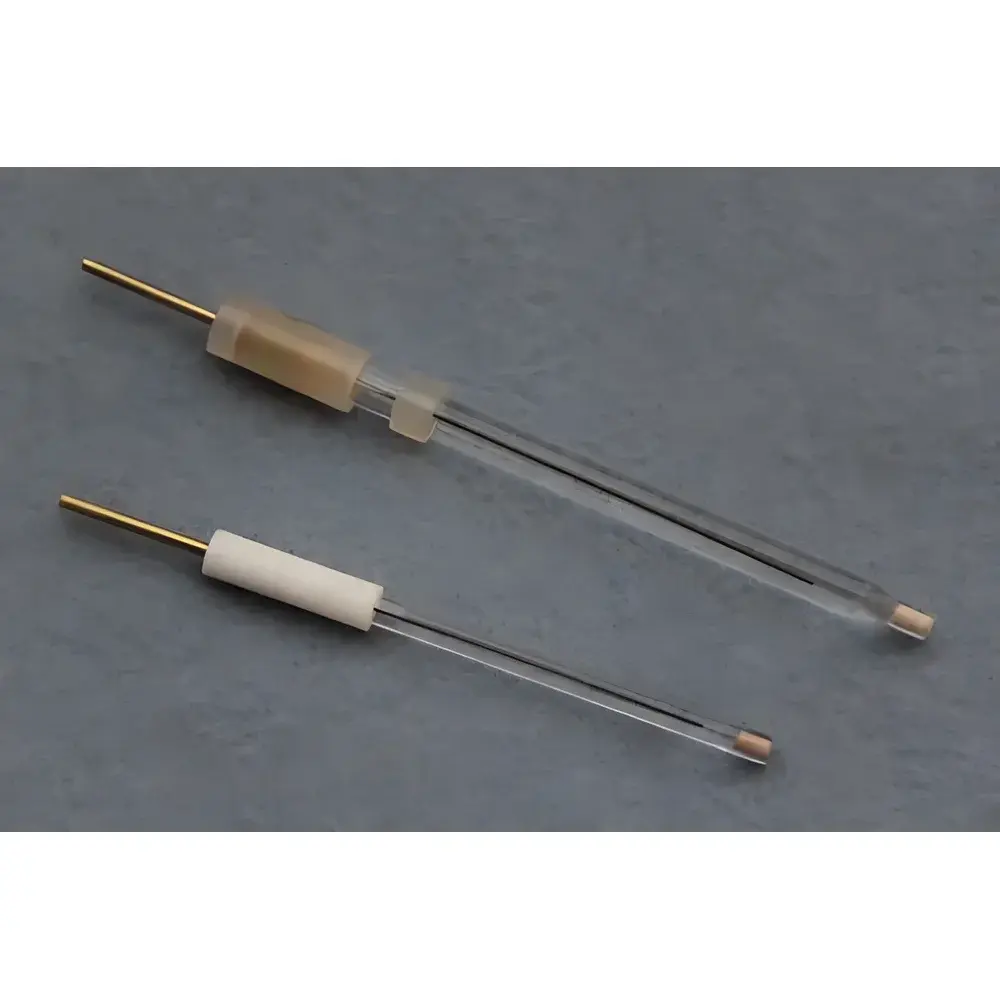
- R0302: 4 mm outer diameter glass body with removable cap and internal reservoir; enables full electrolyte replacement and cleaning—ideal for applications requiring strict contamination control or variable electrolyte composition.
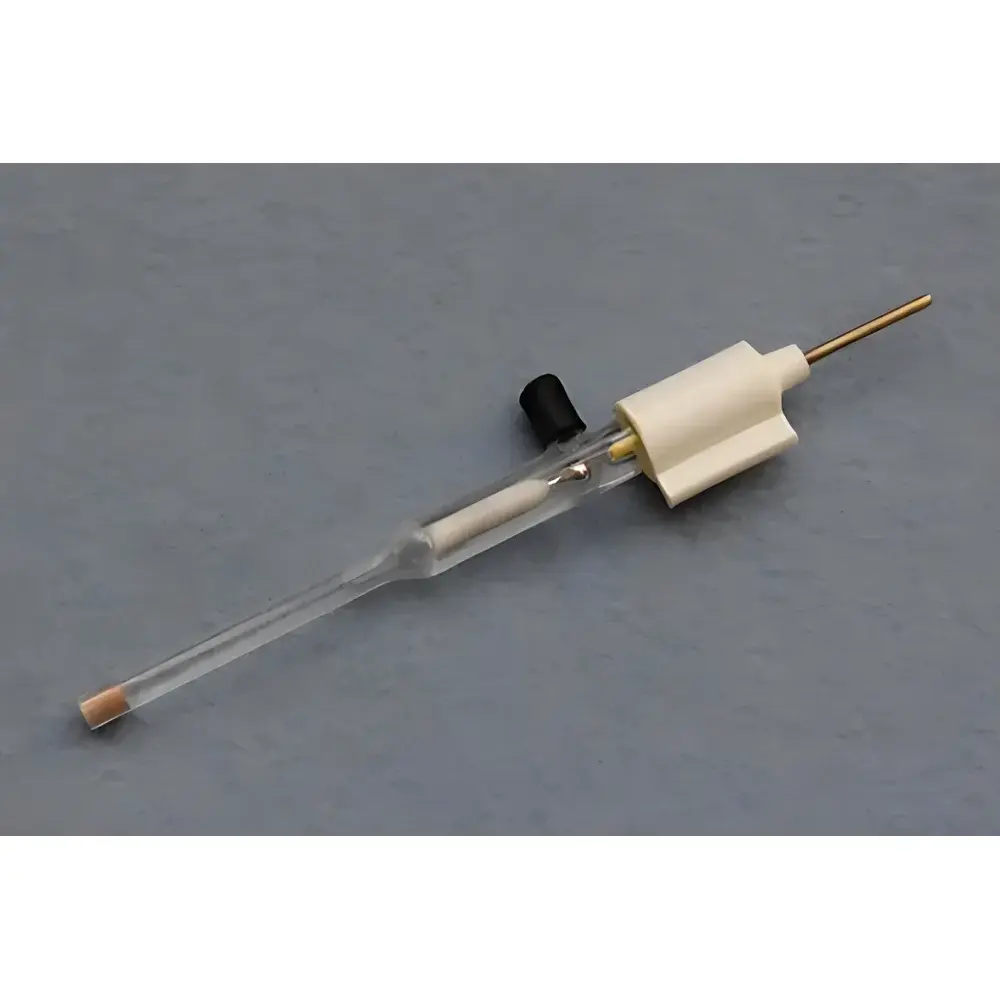
- R0303: 6 mm OD rigid glass construction with integrated lateral refill port; maintains structural integrity during prolonged immersion while allowing periodic KCl replenishment without disassembly.
- R0305: Saturated Ag/AgCl electrode fabricated via cold isostatic pressing of Ag/AgCl powder; delivers enhanced thermal and temporal stability due to minimized interfacial voids and uniform phase distribution—validated per ASTM D1129 for reference electrode consistency.
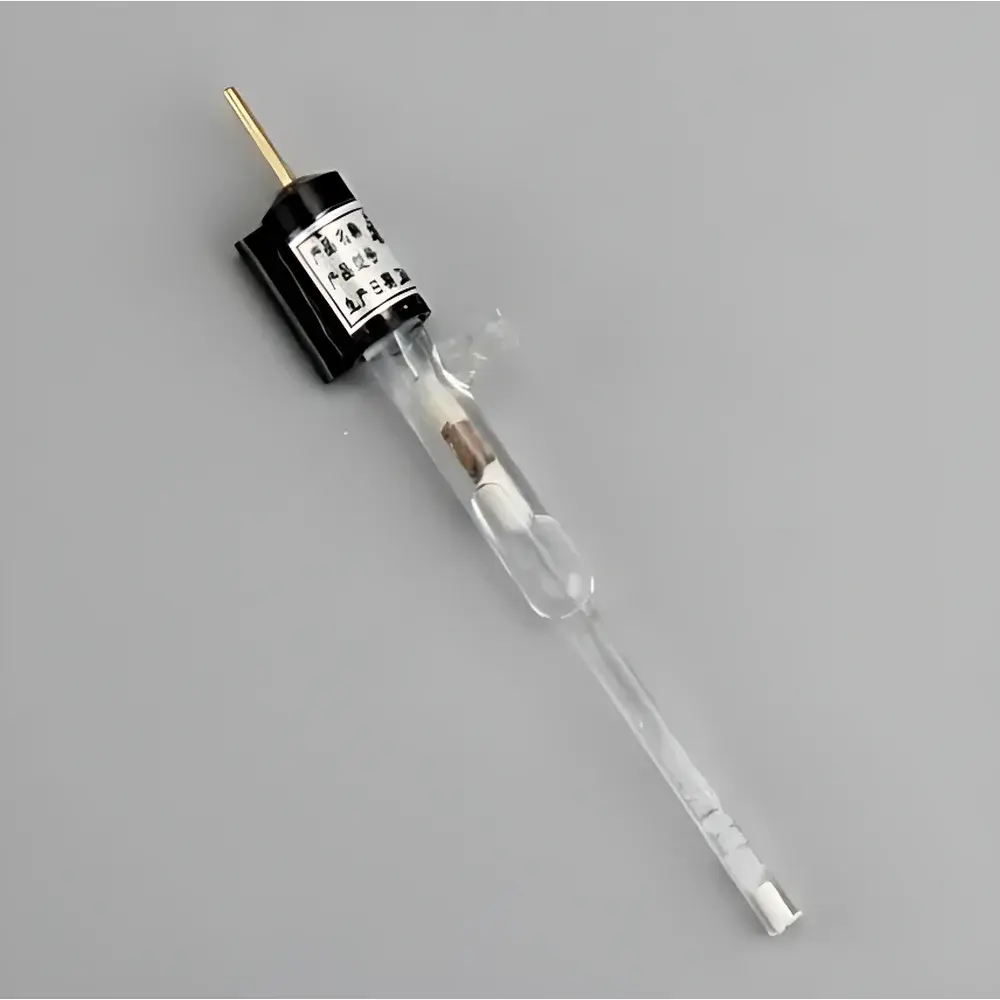
- R0232: Classical saturated calomel electrode with dual-diameter shaft (9.0 mm bulb / 5.0 mm stem); optimized junction geometry minimizes liquid junction potential shifts in non-aqueous or mixed-solvent systems.
- All models feature porous ceramic or fiber junctions engineered for controlled electrolyte outflow (1–3 µL/h), reducing clogging risk and maintaining stable liquid junction potential across pH 1–13.
Sample Compatibility & Compliance
These reference electrodes are compatible with aqueous, buffered, and moderately organic media (up to 30% v/v ethanol or acetonitrile). They meet functional equivalency requirements outlined in ISO 8655-5 (volumetric instruments), ASTM E2028 (electrochemical sensor validation), and USP for environmental monitoring in pharmaceutical water systems. The R0305 and R0232 variants support GLP-compliant data acquisition when paired with validated potentiostats, as their fixed saturation state ensures minimal temperature-dependent potential drift (dT/dE ≈ −0.6 mV/°C for Ag/AgCl, −0.1 mV/°C for SCE). Units are supplied with individual calibration certificates referencing IUPAC standard potentials at 25 °C: +0.197 V vs. SHE (R0302/R0303, 3.5 M KCl), +0.199 V vs. SHE (R0305, saturated KCl), and +0.244 V vs. SHE (R0232, saturated KCl).
Software & Data Management
While inherently analog devices, these electrodes integrate seamlessly with commercial electrochemical workstations (e.g., Metrohm Autolab, Gamry Interface series) and LIMS platforms supporting ASTM E1382-compliant metadata tagging. When used with compliant instrumentation, they support audit trails for electrode lot number, calibration date, and electrolyte batch ID—fulfilling FDA 21 CFR Part 11 requirements for electronic records in regulated laboratories. Zhongjiao Jinyuan provides optional traceable calibration logs and junction resistance verification protocols upon request.
Applications
- pH and ion-selective electrode (ISE) calibration in environmental water analysis (EPA Method 150.1, ISO 10523)
- Corrosion potential monitoring in cooling water circuits and reinforced concrete structures (ASTM G59, G102)
- Electrochemical impedance spectroscopy (EIS) of battery electrolytes and fuel cell membranes
- Amperometric biosensor development requiring stable baseline potential
- In-line process monitoring in bioreactors and chemical synthesis reactors
FAQ
What is the recommended storage condition for these reference electrodes?
Store vertically upright with the junction immersed in 3.5 mol/L KCl (for R0302/R0303) or saturated KCl (for R0305/R0232); avoid drying or exposure to light-sensitive solvents.
Can R0302 be used in non-aqueous solvents?
Yes, provided a double-junction configuration is employed using a compatible outer electrolyte (e.g., 0.1 M TBAP in acetonitrile) to prevent KCl precipitation and junction clogging.
How often should the electrolyte be refreshed in R0303?
Under continuous use at 25 °C, refresh every 4–6 weeks; frequency increases with temperature, evaporation rate, or elevated flow-through conditions.
Is R0232 suitable for high-precision pH measurements?
It remains viable for routine lab use but is less preferred than modern Ag/AgCl types in automated systems due to mercury content and slower thermal equilibration; verify compliance with local environmental disposal regulations prior to procurement.
Do these electrodes require factory recalibration?
No—each unit is pre-calibrated and certified; however, users must perform in-house verification against a known standard (e.g., pH 4.01/7.00 buffers) before critical measurements, per ISO/IEC 17025 clause 7.7.



