
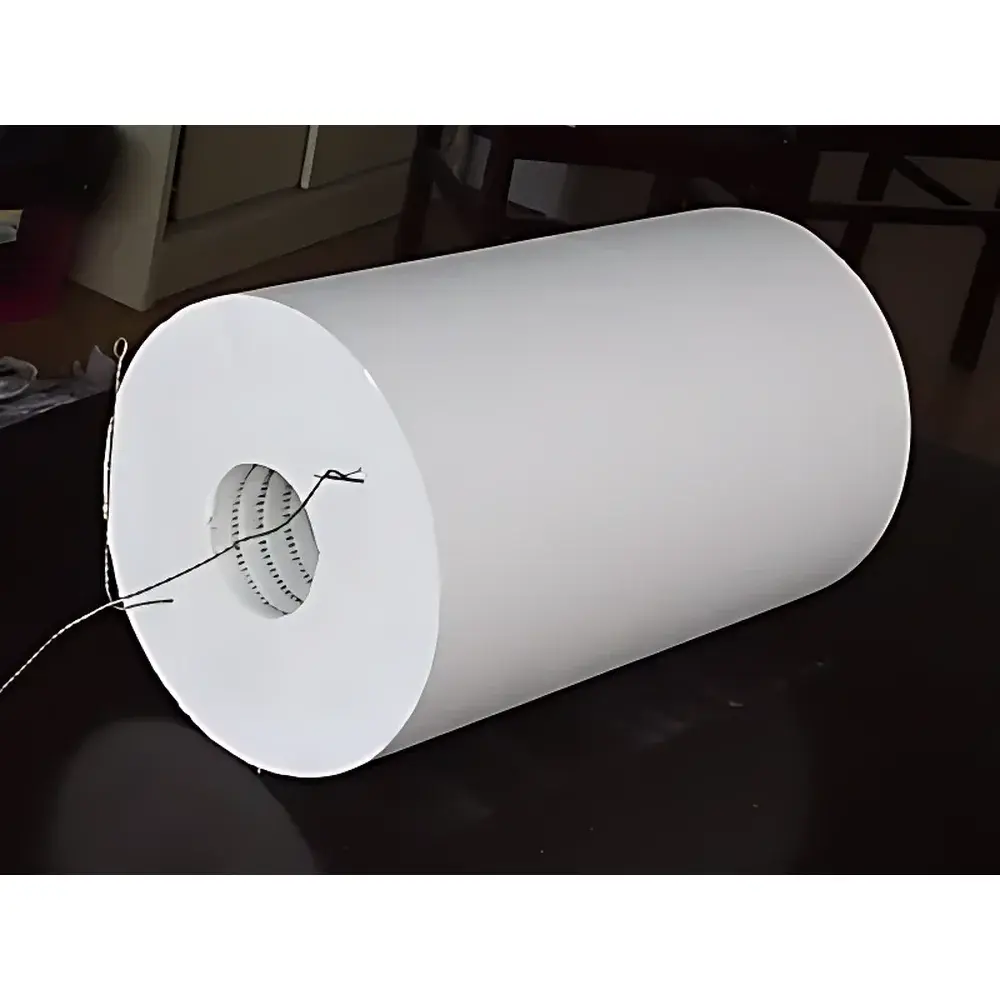
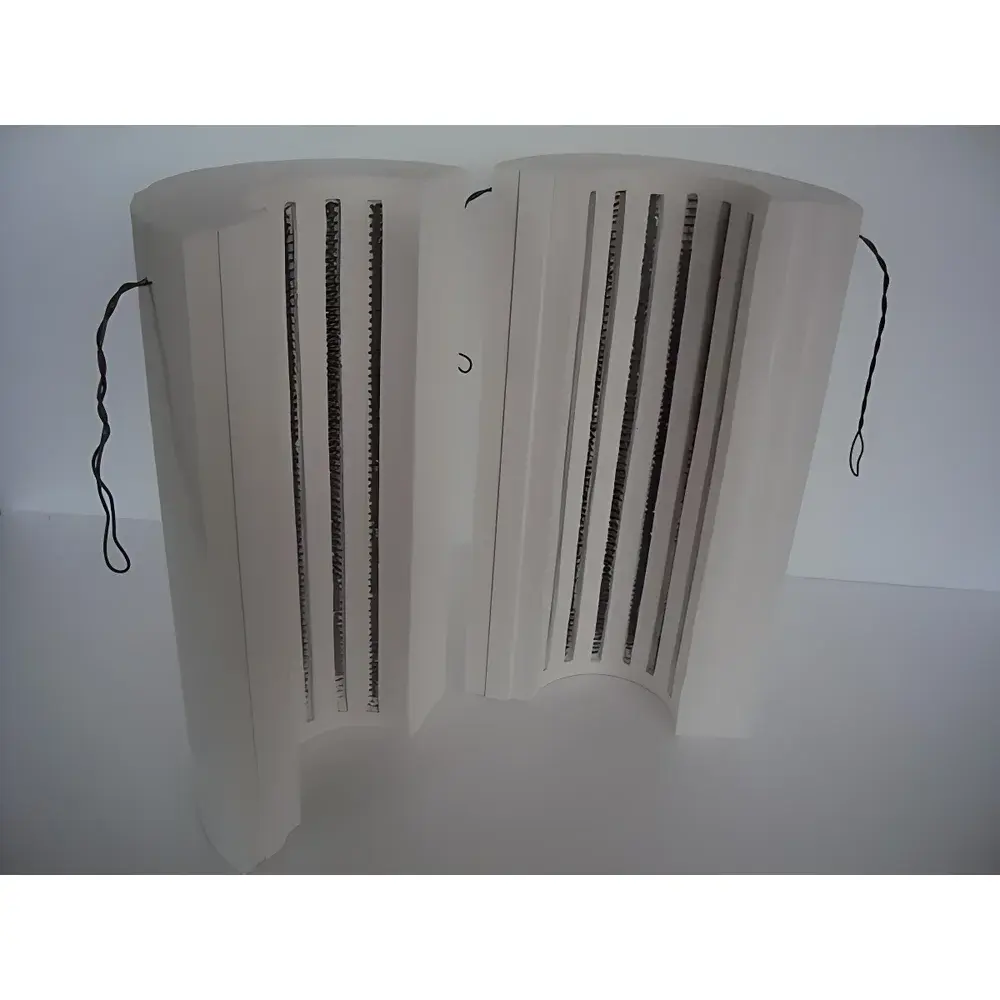
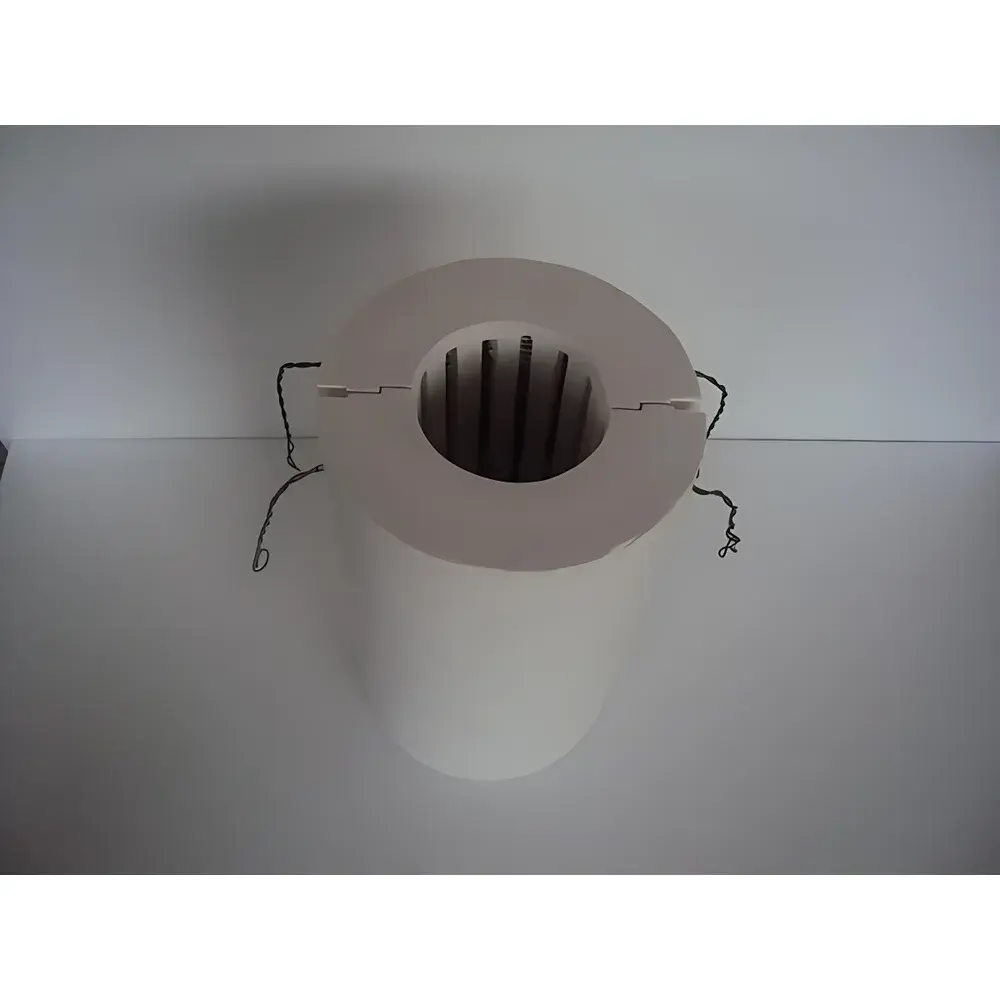
Zhongke Aobo Custom-Shaped High-Temperature Tube Furnace
| Brand | Zhongke Aobo |
|---|---|
| Origin | Beijing, China |
| Type | Tube Furnace |
| Max Temperature | 1700 °C |
| Temperature Control Accuracy | ±1 °C |
| Max Power | 10 kW |
| Heating Rate to Max Temp | ≤170 min (typical) |
| Heating Method | Electric (Fiber-Embedded Resistance Heating) |
| Internal Dimensions | Custom-Engineered per Drawing |
| Construction | Hybrid Fiber-Resistive Heating Module Assembly |
| Operating Temp Range | 1250–1600 °C (continuous), up to 1700 °C (intermittent) |
| Bulk Density | 200–600 kg/m³ |
| Thermal Conductivity | 0.16 W/(m·K) @ 1000 °C |
| Linear Shrinkage after Reheating | ≤2.0% @ 1500 °C × 1 h |
| Mechanical Workability | Machinable to Complex Geometries |
| Thermal Shock Resistance | High |
| Heat Capacity | Low |
Overview
The Zhongke Aobo Custom-Shaped High-Temperature Tube Furnace is an engineered thermal processing system designed for precise, repeatable, and energy-efficient high-temperature operations in research laboratories and industrial R&D environments. Unlike conventional muffle or box-type furnaces, this unit integrates a proprietary hybrid heating architecture: high-purity ceramic fiber matrices are structurally embedded with high-alloy resistance wire—configured in zig-zag or helical geometries—to form monolithic, shape-adaptive heating modules. This design eliminates mechanical support fixtures, suspension hardware, and thermal bridging typical of traditional coil-wound or brick-lined tube furnaces. The furnace operates on the principle of resistive Joule heating within a low-thermal-mass, high-emissivity composite medium, enabling rapid thermal response, uniform axial and radial temperature distribution, and minimal thermal lag during ramp-hold-cool cycles. It is rated for continuous operation up to 1600 °C and short-term excursions to 1700 °C, making it suitable for sintering, annealing, calcination, CVD precursor decomposition, and inert-atmosphere thermal treatments where geometric constraints preclude standard cylindrical furnace configurations.
Key Features
- Custom-geometry heating module assembly: Fully adaptable to non-cylindrical, segmented, or asymmetric internal profiles—including L-shaped, U-bent, tapered, or multi-zone concentric layouts—based on client-provided engineering drawings.
- Three-tier resistive wire embedding configuration: Buried (3–5 mm depth, surface load ≤1.4 W/cm²), semi-exposed (micro-protruding filament), and fully exposed helical winding—each optimized for thermal flux density, surface temperature uniformity, and longevity under specific duty cycles.
- Ultra-low thermal inertia: Ceramic fiber matrix (bulk density 200–600 kg/m³) ensures heat capacity reduction of ≥60% versus refractory brick or metal-sheathed elements, supporting heating rates up to 15 °C/min below 1000 °C and >8 °C/min above.
- High structural integrity at temperature: Maintains dimensional stability with ≤2.0% linear shrinkage after 1 h exposure at 1500 °C; exhibits excellent resistance to thermal shock, gas erosion, and mechanical vibration in dynamic furnace environments.
- Integrated PID-controlled power regulation: Digital temperature controller with dual-loop feedback (thermocouple + power monitoring) achieves ±1 °C setpoint accuracy over full range, with programmable ramp/soak profiles and auto-tuning capability.
- Modular electrical insulation: All heating elements electrically isolated via high-purity alumina-silica fiber barriers, compliant with IEC 61000-4-30 for electromagnetic compatibility in shared lab infrastructure.
Sample Compatibility & Compliance
This furnace accommodates diverse sample forms—including crucibles (graphite, alumina, quartz), boat assemblies, substrate holders, and custom jigs—within user-defined internal dimensions. Its open-tube or semi-sealed configuration supports ambient air, inert (N₂, Ar), reducing (H₂/N₂), or vacuum atmospheres (down to 10⁻² mbar with optional pump interface). The system complies with general safety requirements per IEC 61010-1 (Laboratory Equipment Safety) and incorporates over-temperature cut-off, ground-fault detection, and thermal runaway protection. While not certified to ISO/IEC 17025 for metrological traceability, its control architecture supports GLP/GMP-aligned data integrity practices when paired with validated external data loggers. Documentation packages include material certificates (fiber composition, wire alloy grade), calibration records for integrated thermocouples (Type S, Class 1), and electrical safety test reports.
Software & Data Management
The furnace operates via a front-panel digital controller with USB and RS-485 interfaces. Optional OEM software (Windows-based) enables remote parameter setting, real-time temperature logging (≥1 Hz sampling), profile export in CSV/Excel, and audit-trail generation—including operator ID, timestamped setpoint changes, and alarm event logs. Data files conform to ASTM E2913-22 guidelines for thermal process documentation and may be configured to meet FDA 21 CFR Part 11 requirements when deployed with electronic signature validation and role-based access controls. No cloud connectivity is embedded; all data remains on-premise unless explicitly interfaced with third-party LIMS or SCADA systems via Modbus TCP.
Applications
- Advanced ceramics processing: Solid-state reaction synthesis, phase-pure oxide sintering, and grain-growth studies requiring precise thermal history control.
- Nuclear materials research: High-temperature annealing of fuel pellet simulants and cladding alloys under controlled atmospheres.
- Aerospace component development: Heat treatment of Ni-based superalloys and CMC substrates in non-standard furnace envelopes.
- Electrochemical materials: Cathode/anode precursor calcination, solid electrolyte densification, and Li-ion battery material stabilization.
- Optical glass and specialty refractories: Homogenization and devitrification suppression in custom-formatted melting zones.
- Defense and space hardware: Thermal cycling of sensor housings, radiation shields, and propulsion system components with irregular thermal boundary conditions.
FAQ
Can this furnace be integrated into an existing glovebox or vacuum chamber?
Yes—custom flange interfaces (CF, KF, or ISO-K) and feedthrough-rated power connectors are available upon specification.
What thermocouple types are supported for internal measurement?
Standard configuration includes Type S (Pt/Pt–10%Rh) with ceramic protection sheaths; Type B and tungsten–rhenium variants are available for >1600 °C applications.
Is post-installation calibration required?
Factory calibration is performed at three points (800 °C, 1200 °C, 1600 °C) using NIST-traceable reference standards; annual recalibration is recommended per ISO/IEC 17025 Annex A.3.
How is maintenance performed on the heating modules?
Modules are field-replaceable as complete units; no soldering or rewinding is required. Spare modules are stocked with matched thermal expansion coefficients to prevent delamination during thermal cycling.
Does the system support multi-zone independent temperature control?
Yes—up to three independently controlled axial zones can be implemented with additional thermocouples and SSR-driven power channels (requires extended controller firmware and wiring harness).



