
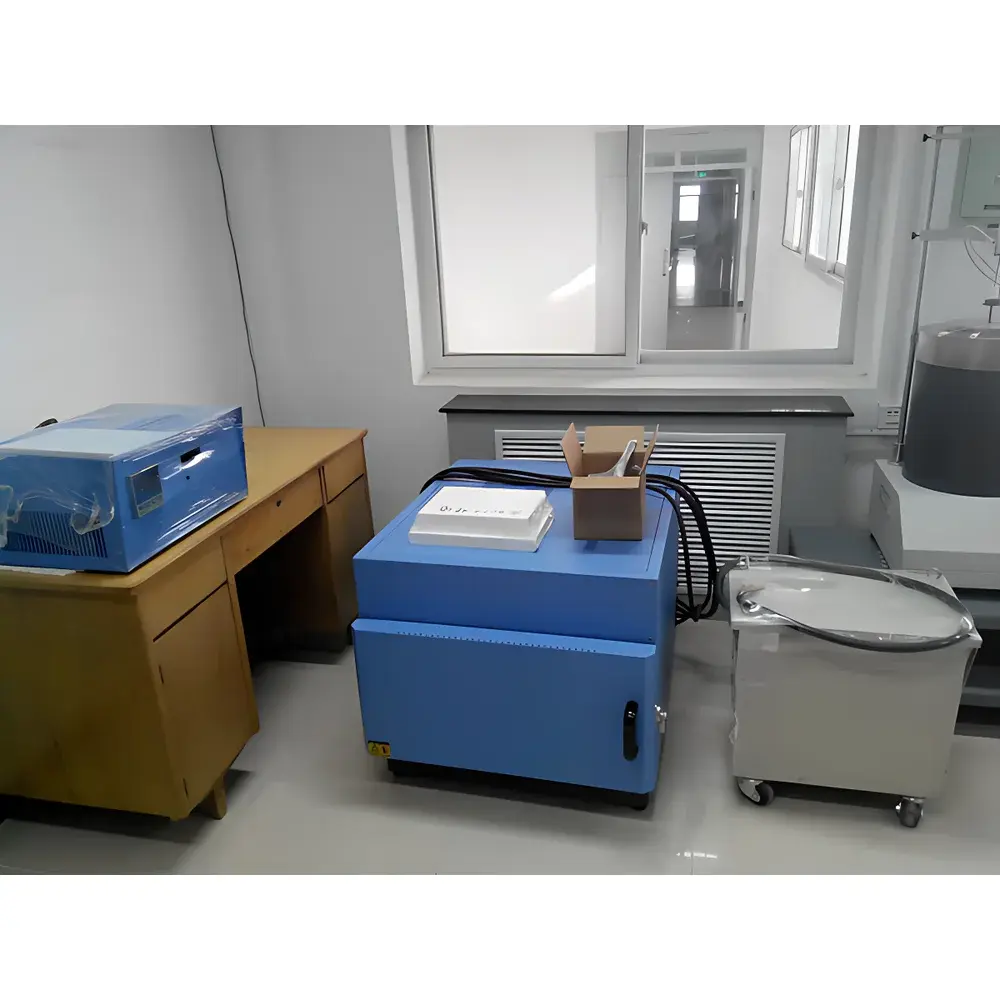
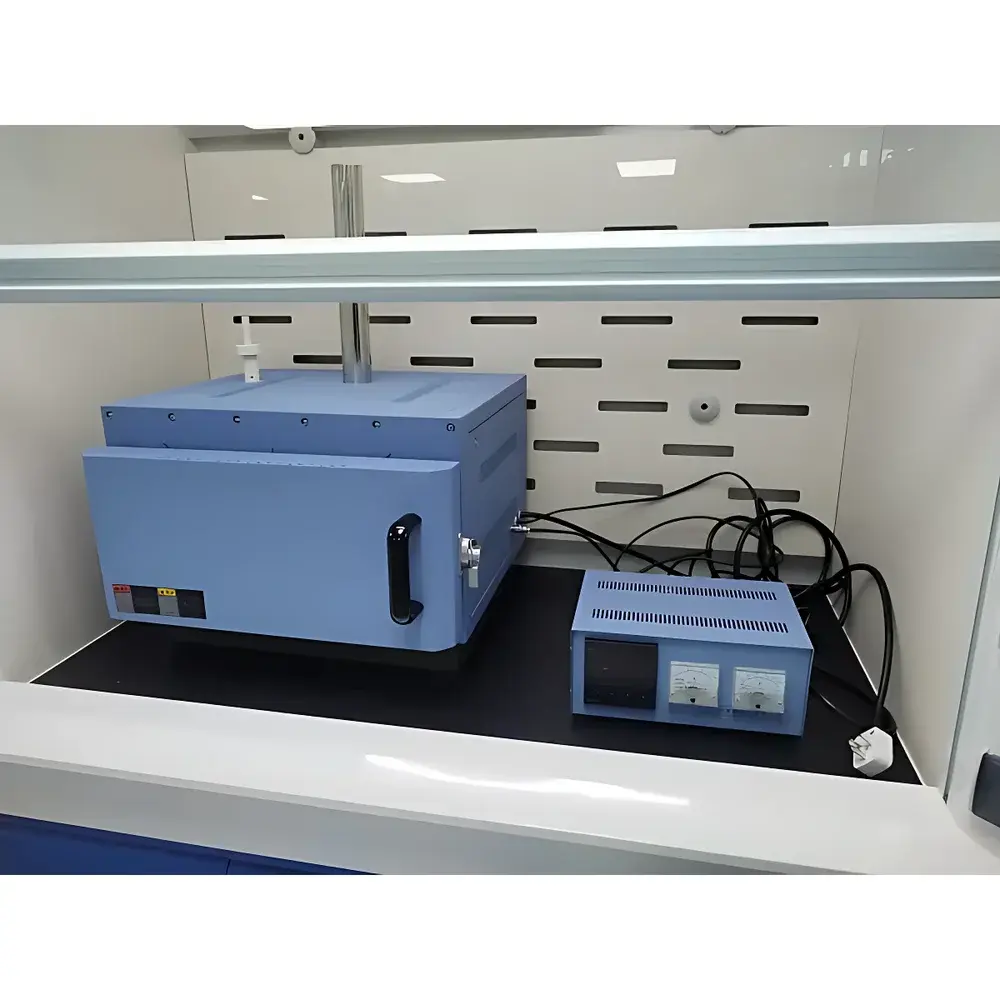
Zhongke Aobo TL2010 Split-Design Ceramic Fiber Muffle Furnace (1000°C)
| Brand | Zhongke Aobo |
|---|---|
| Origin | Beijing, China |
| Model | TL2010 |
| Type | Box-Type Muffle Furnace |
| Max Temperature | 1000°C |
| Temperature Control Accuracy | ±1°C |
| Rated Power | 6 kW |
| Heating Rate to Max Temp | ≤30 min |
| Internal Chamber Dimensions | 400 × 250 × 200 mm (L×W×H) |
| Chamber Volume | 20 L |
| Heating Element | High-Temperature Alloy Wire (Dual-Side Mounted) |
| Insulation Material | Polycrystalline Ceramic Fiber |
| Control System | PID-Based Intelligent Programmable Controller (30-Step Ramp/Soak) |
| Power Supply | 380 V AC, 3-Phase, 16 A |
| Surface Temperature at 1000°C/1 h | ≤55°C |
| Compliance | Designed for ASTM E1112, ISO 5667-3, USP <281>, and GLP-compliant sample ashing, calcination, and thermal pretreatment workflows |
Overview
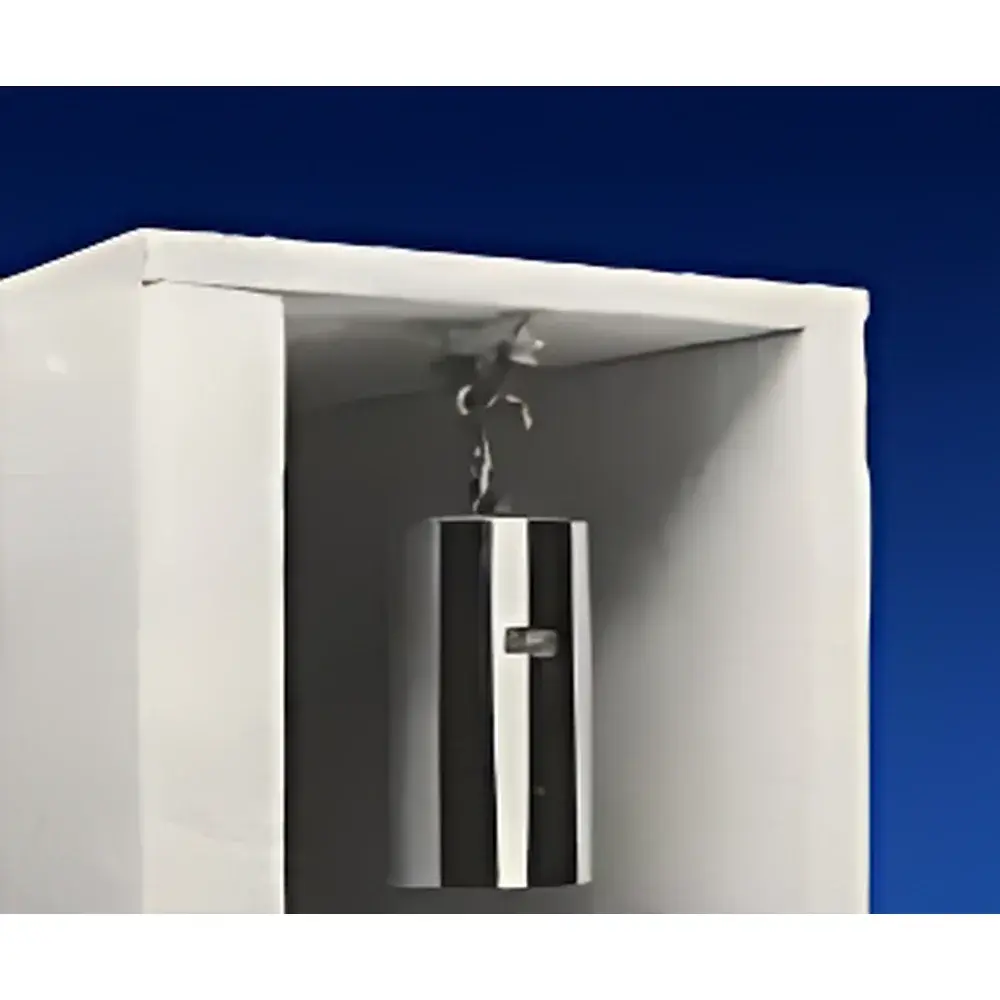
The Zhongke Aobo TL2010 Split-Design Ceramic Fiber Muffle Furnace is an engineered solution for precise, repeatable high-temperature thermal processing in research laboratories, quality control environments, and industrial testing facilities. Operating on the principle of resistive heating within a fully insulated, refractory-free chamber, this box-type muffle furnace delivers stable thermal profiles up to 1000°C with minimal thermal lag and exceptional energy efficiency. Unlike traditional brick-lined furnaces, the TL2010 employs polycrystalline ceramic fiber insulation—offering ultra-low thermal mass, rapid heat-up kinetics, and superior thermal retention. Its split architecture separates the furnace chamber from the digital controller unit, enabling flexible installation, simplified maintenance access, and reduced electromagnetic interference during sensitive analytical workflows. The furnace is purpose-built for applications requiring controlled oxidative or inert-atmosphere thermal treatment—including ashing, calcination, loss-on-ignition (LOI), moisture determination, and pre-digestion of solid matrices prior to elemental analysis.
Key Features
- Split-design configuration: Independent furnace body and PID programmable controller for enhanced serviceability, electromagnetic isolation, and ergonomic placement in constrained lab spaces.
- Dual-side mounted high-temperature alloy heating elements: Ensures uniform radial and axial temperature distribution across the 20 L chamber; elements are front-accessible for field replacement without disassembling insulation.
- Polycrystalline ceramic fiber insulation: Provides thermal conductivity 60% versus conventional firebrick furnaces.
- PID-based 30-segment programmable controller: Supports multi-step ramp/soak profiles with digital setpoint input, auto-tuning capability, and real-time deviation monitoring (±1°C accuracy at setpoint).
- Low-surface-temperature operation: External casing remains ≤55°C after 1 hour at 1000°C—meeting IEC 61000-6-3 EMC and EN 61000-3-2 harmonic emission requirements for laboratory environments.
- Integrated safety architecture: Includes over-temperature cut-off (independent thermocouple), door-open interlock, phase-failure protection, and grounded chassis design compliant with IEC 61010-1 Edition 3 for electrical safety in measurement and control equipment.
Sample Compatibility & Compliance
The TL2010 accommodates standard crucibles (alumina, platinum, quartz, and silicon carbide), petri dishes, and custom sample boats up to 150 mm in height. Its open-chamber geometry supports direct insertion of EPA SW-846 Method 3010A ashing trays and ASTM D3174-compliant coal ash crucibles. The furnace meets functional equivalency requirements for USP residue on ignition, ISO 5667-3 water quality sampling preparation, and ASTM E1112 clinical laboratory ashing protocols. Optional gas inlet/outlet ports (configurable upon order) allow integration with nitrogen purge systems or exhaust ducting to fume hoods—enabling controlled-atmosphere operation per ISO 8573-1 Class 4 purity standards. All firmware and hardware configurations support audit-trail-ready operation under GLP and GMP frameworks, including timestamped parameter logging and user-access-level controls.
Software & Data Management
The embedded controller features non-volatile memory for storing ≥100 user-defined programs and retains full operational history—including start/stop timestamps, peak temperature achieved, total dwell time at setpoint, and fault event logs (e.g., sensor disconnect, over-temp trigger). Data export is supported via RS-485 Modbus RTU interface for integration into LIMS platforms (e.g., LabWare, STARLIMS) or SCADA systems. Optional PC software (TL-Link Suite v2.1) provides graphical profile visualization, CSV report generation, and electronic signature support aligned with FDA 21 CFR Part 11 Annex 11 requirements for regulated environments. No cloud dependency or proprietary drivers are required; communication adheres strictly to open industrial protocols.
Applications
- Environmental testing: Ashing of soil, sediment, and filter media per EPA Method 1634 and ISO 11464 for subsequent heavy metal quantification (ICP-MS/OES).
- Pharmaceutical QC: Residue on ignition (USP ) and sulfate ash determination in active pharmaceutical ingredients (APIs) and excipients.
- Fuel and coal analysis: Determination of moisture, volatile matter, fixed carbon, and ash content per ASTM D3172–D3176 and ISO 1171.
- Materials science: Pre-sintering of ceramic precursors, binder burnout in powder metallurgy feedstocks, and thermal stability screening of polymer composites.
- Food safety labs: Total ash content analysis per AOAC 942.05 and ISO 2171 for nutritional labeling compliance.
FAQ
What is the maximum recommended continuous operating temperature?
The TL2010 is rated for continuous operation at 1000°C. Intermittent use up to 1050°C is permissible for ≤30 minutes per cycle, provided cooling intervals exceed 60 minutes between cycles.
Can the furnace be operated under inert or reducing atmospheres?
Yes—optional gas inlet and exhaust ports (M6 threaded) can be factory-installed to accommodate N₂, Ar, or forming gas purging. A dedicated gas flow meter and pressure regulator must be supplied externally.
Is calibration documentation included with shipment?
Each unit ships with a factory calibration certificate traceable to NIST standards, covering thermocouple linearity (Type K, ±1.5°C), controller setpoint accuracy (±1°C), and chamber uniformity (±5°C across working zone at 1000°C).
What maintenance is required for long-term reliability?
Annual verification of thermocouple response, visual inspection of heating element integrity, and vacuum cleaning of fiber insulation surfaces using HEPA-filtered air. No lubrication or consumable parts are required beyond periodic thermocouple replacement every 2–3 years under normal use.
Does the controller support remote monitoring via Ethernet or Wi-Fi?
The standard configuration includes RS-485 only. An optional Ethernet-to-RS485 gateway module (TL-EM1) enables TCP/IP connectivity and SNMP-based status polling—compatible with most enterprise network management systems.



