
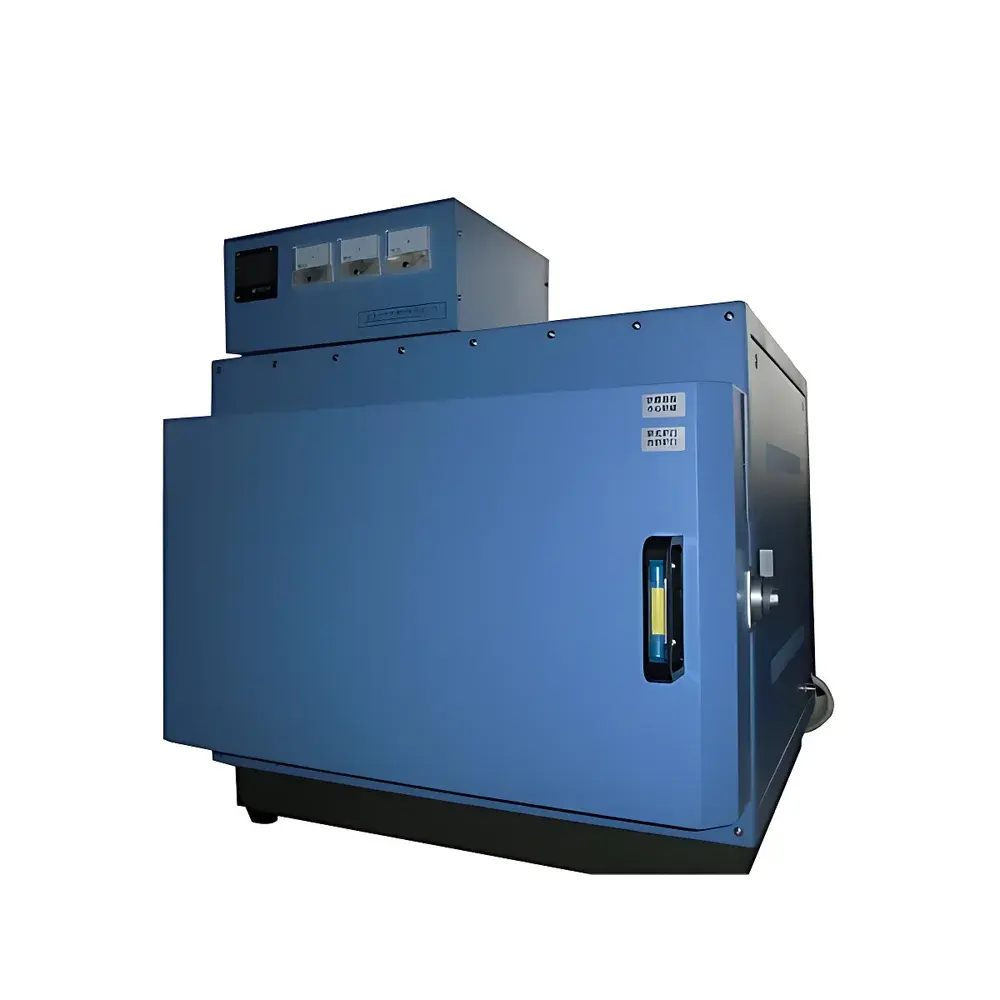
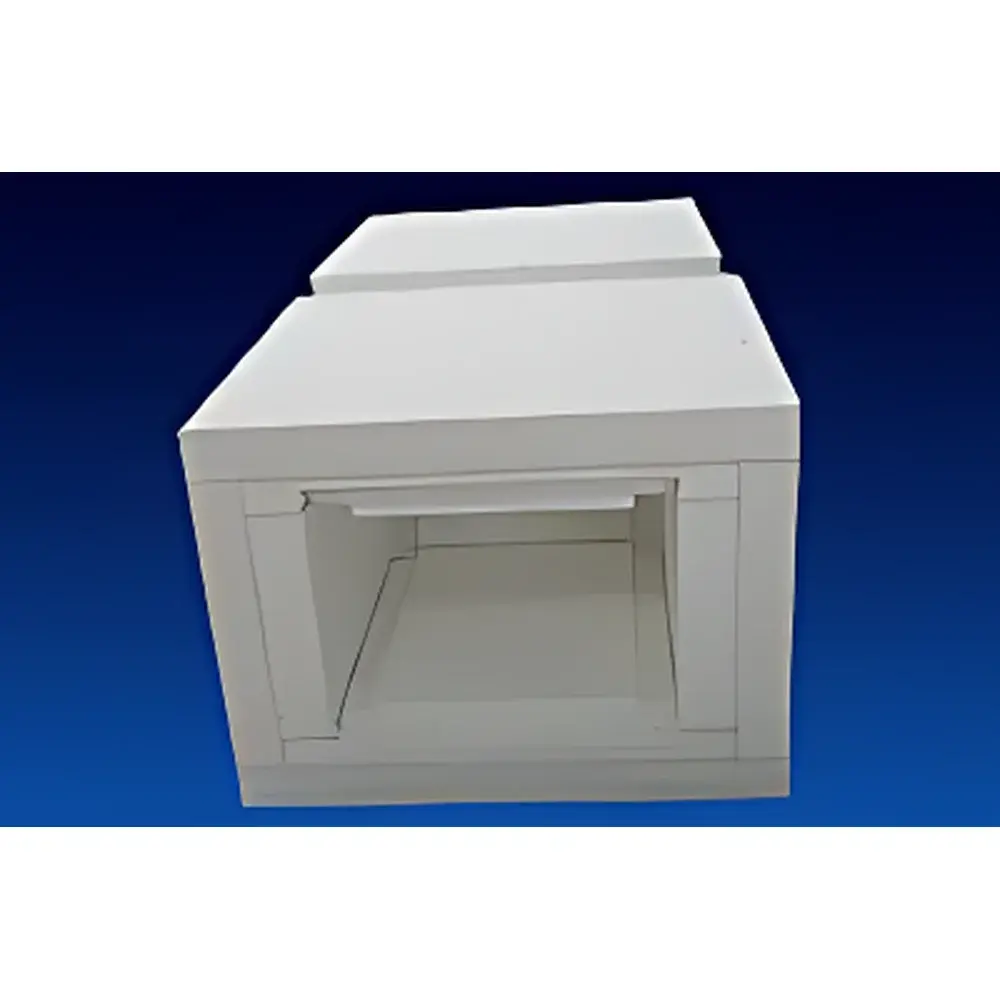
Zhongke Aobo TL3014 Industrial Muffle Furnace
| Brand | Zhongke Aobo |
|---|---|
| Origin | Beijing, China |
| Manufacturer Type | Authorized Distributor |
| Product Category | Domestic |
| Model | TL3014 |
| Instrument Type | Box-Type Muffle Furnace |
| Maximum Temperature | 1400 °C |
| Temperature Control Accuracy | ±1 °C |
| Rated Power | 9 kW |
| Heating Time to Max Temp | ≤60 min |
| Heating Element | Silicon Carbide Rods |
| Internal Chamber Dimensions | 400 × 300 × 250 mm (W×D×H) |
| Chamber Volume | 30 L |
| Compliance | CE-marked design |
Overview
The Zhongke Aobo TL3014 Industrial Muffle Furnace is a high-temperature box-type furnace engineered for precision thermal processing in regulated laboratory and industrial QA/QC environments. Operating on the principle of radiant heat transfer within an electrically insulated, refractory-lined chamber, it delivers stable, uniform temperature distribution across its 30 L ceramic fiber-insulated cavity—enabling reproducible ashing, calcination, heat treatment, and thermal decomposition of solid and powdered samples. Designed for continuous operation up to 1400 °C, the furnace employs silicon carbide (SiC) heating elements mounted laterally along both side walls, ensuring symmetrical thermal flux and minimizing axial temperature gradients. Its robust construction conforms to fundamental safety and performance expectations for Class II laboratory thermal equipment under IEC 61010-1, supporting applications requiring strict adherence to GLP, GMP, and ISO 17025 documentation workflows.
Key Features
- High-efficiency ceramic fiber insulation: Reduces thermal mass and improves energy efficiency—achieving ≤60 min ramp from ambient to 1400 °C while maintaining external surface temperatures below 55 °C at steady state.
- Modular split-body architecture: Separates furnace chamber and intelligent PID controller for enhanced serviceability, reduced electromagnetic interference, and simplified calibration access.
- Lateral dual-side heating configuration: Facilitates even thermal distribution and extends heating element service life; SiC rods are field-replaceable without disassembling the furnace shell.
- Digital programmable temperature controller: Features 8-step PID ramp/soak profiles, real-time digital display, and ±1 °C control stability over full range (RT to 1400 °C).
- Integrated safety protections: Includes over-temperature cutoff, open-circuit thermocouple detection, automatic power shutdown on sensor failure, and grounded chassis design per IEC 61000-6-3 EMC standards.
- Configurable venting system: Standard rear exhaust port supports optional flue integration or inert gas purging (N₂, Ar); inlet/outlet ports available upon request for controlled-atmosphere operation.
Sample Compatibility & Compliance
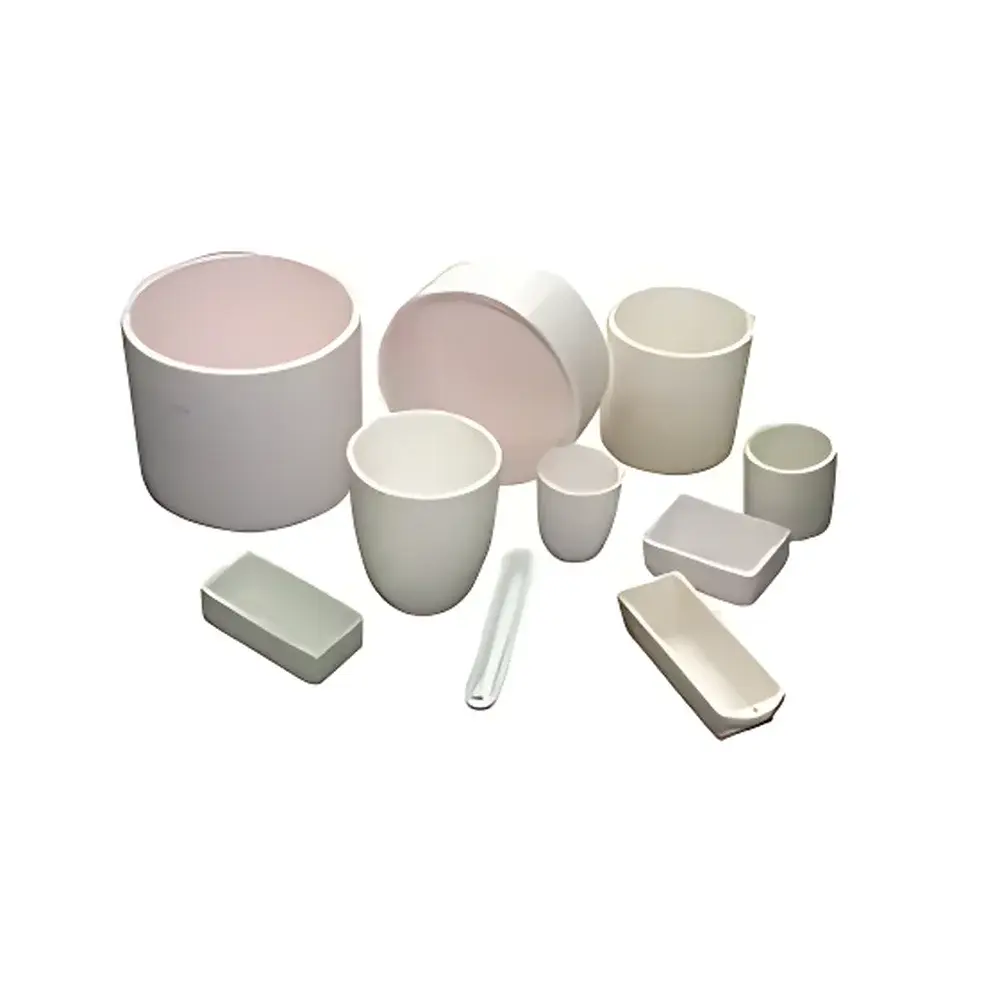
The TL3014 accommodates standard crucibles (alumina, platinum, quartz, and silicon carbide), petri dishes, and custom sample holders up to 300 mm in height. It is routinely deployed in accredited testing laboratories for standardized procedures including ASTM D3174 (ash content in coal), ASTM E1142 (total ash in biomass), ISO 1171 (ash in solid mineral fuels), and USP (residual solvents in pharmaceuticals). The furnace’s temperature uniformity (±5 °C at 1300 °C, measured per ASTM E220) and repeatability (±0.5 °C over 24 h hold) support method validation under FDA 21 CFR Part 11–compliant data management systems when paired with external logging hardware. All electrical components meet RoHS Directive 2011/65/EU requirements.
Software & Data Management
While the TL3014 operates via standalone front-panel control, its analog 4–20 mA output and RS485 Modbus RTU interface enable seamless integration into centralized lab automation platforms (e.g., LabWare LIMS, Thermo Fisher SampleManager). Optional USB data loggers record time-stamped temperature profiles with audit-trail capability, satisfying traceability requirements for ISO/IEC 17025 Clause 7.7 and GLP Principle 5. Firmware supports user-defined alarm thresholds, password-protected parameter editing, and automatic event logging—including power interruption recovery and cycle completion flags.
Applications
- Coal and coke analysis: Determination of moisture, volatile matter, fixed carbon, ash content, ash fusion temperature, and elemental composition (via subsequent ICP-OES/AAS).
- Pharmaceutical quality control: Residual solvent removal, excipient degradation studies, and filter integrity testing per USP and EP 2.2.42.
- Environmental testing: Total suspended solids (TSS) ash correction, soil organic matter quantification (LOI), and catalyst regeneration in air/water monitoring labs.
- Materials science: Pre-sintering of ceramics, heat treatment of metal alloys, and thermal stability assessment of composites and battery cathode precursors.
- Food and feed testing: Crude ash determination per AOAC 942.05 and ISO 5984, as well as mineralization prior to heavy metal analysis.
FAQ
What thermocouple type is used for temperature sensing?
Type S (Platinum/Rhodium 10%) thermocouples are standard for 1400 °C operation, providing NIST-traceable accuracy and long-term drift stability below 0.1 °C/year.
Can the furnace be operated under inert or reducing atmospheres?
Yes—optional gas inlet/outlet ports support continuous purge flow rates of 0.5–5 L/min; recommended for use with mass flow controllers and O₂ analyzers to maintain <10 ppm residual oxygen.
Is the TL3014 compliant with FDA 21 CFR Part 11 for electronic records?
The base unit does not include built-in Part 11 functionality, but its analog/digital outputs are fully compatible with validated third-party data acquisition systems meeting electronic signature and audit trail requirements.
What maintenance intervals are recommended for heating elements and insulation?
Silicon carbide rods typically require replacement after 1,500–2,000 h at 1400 °C; ceramic fiber lining retains structural integrity beyond 5,000 h if protected from mechanical impact and moisture ingress.
Does the furnace support multi-segment thermal profiling?
Yes—the embedded PID controller supports up to eight independent ramp-and-soak segments, with individual dwell times configurable up to 99 hours 59 minutes per step.



