
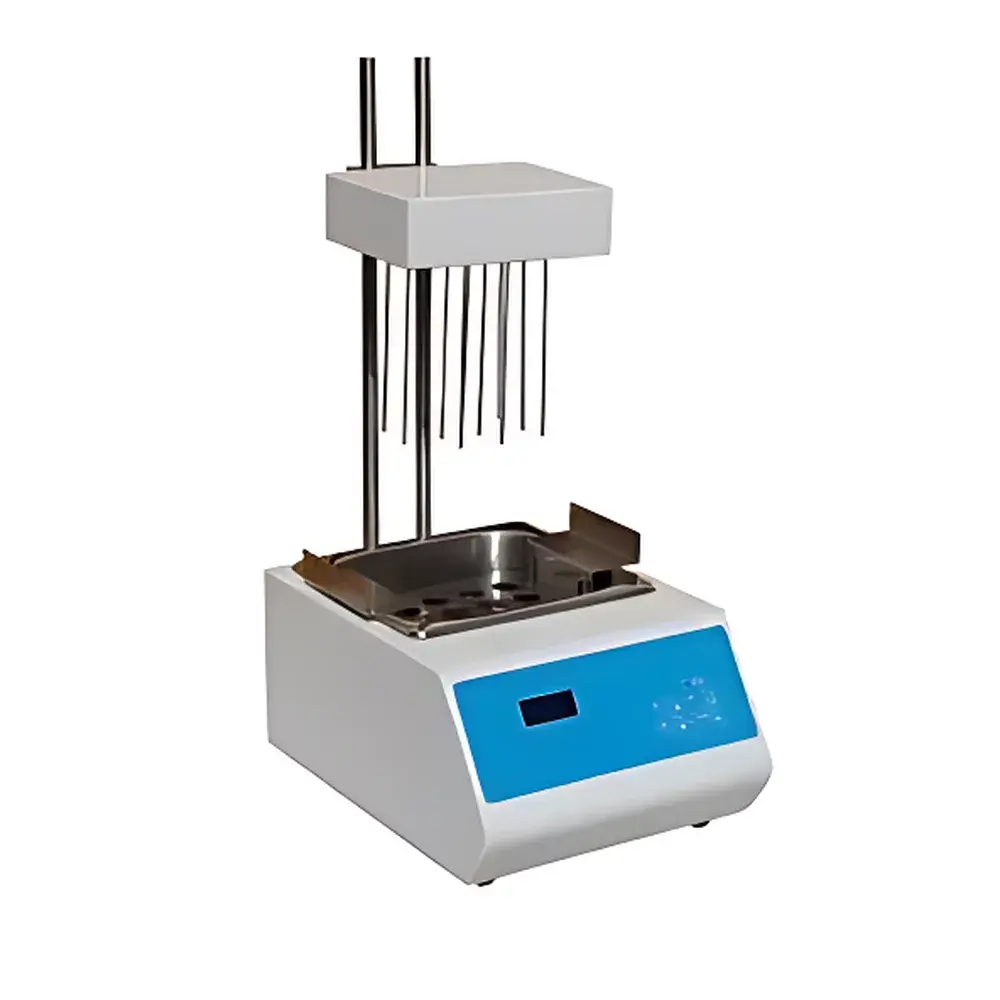
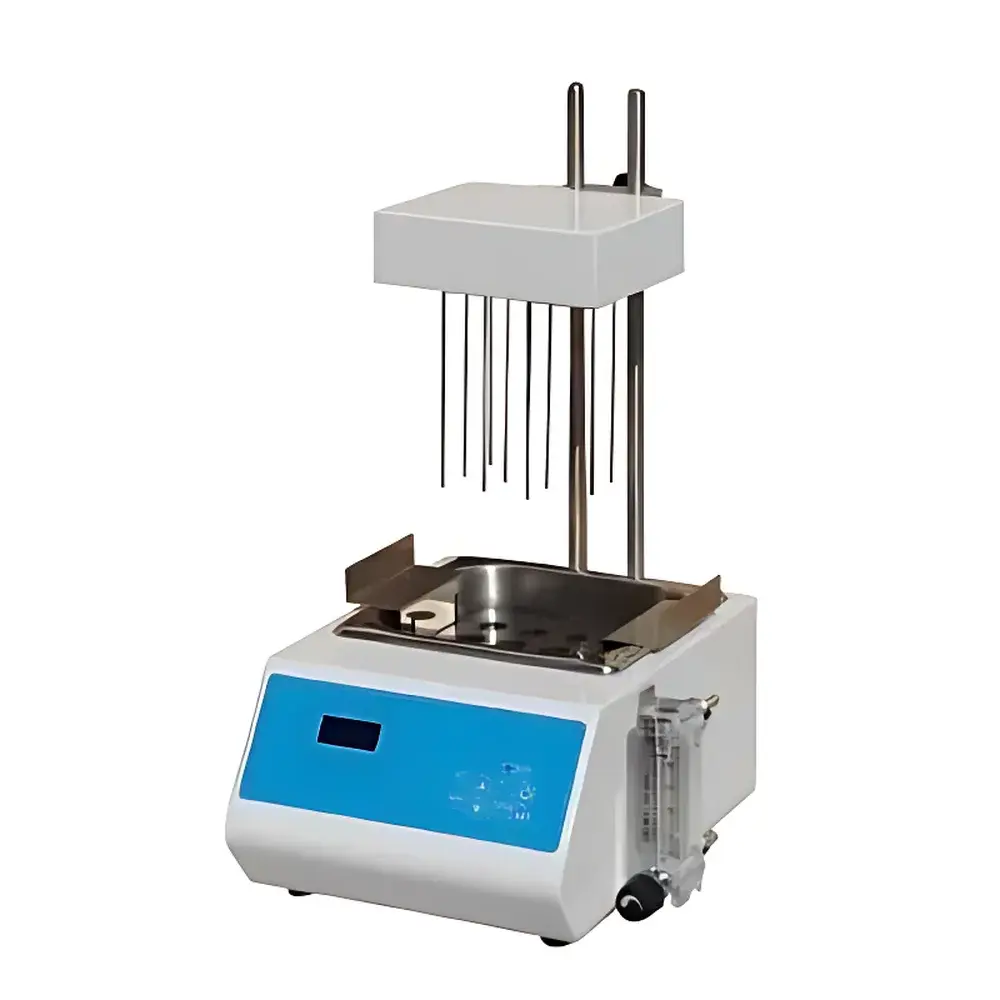
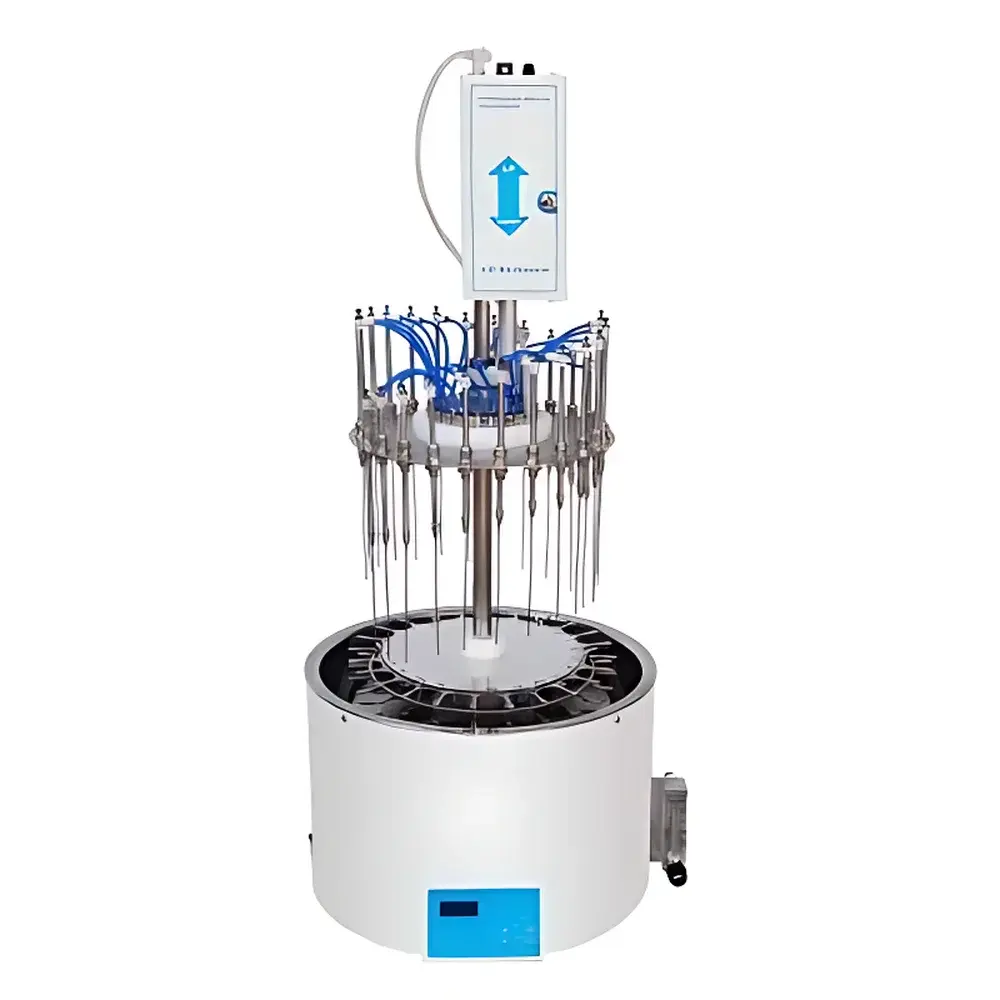
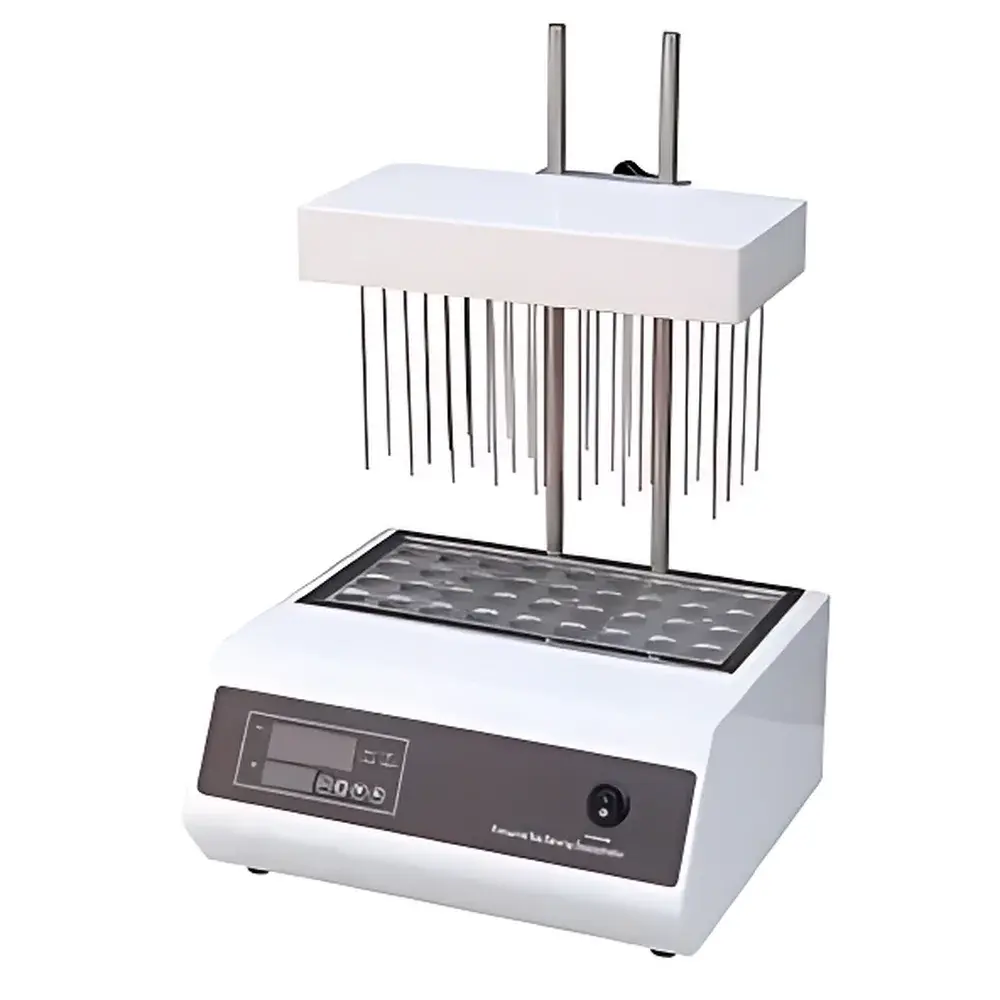
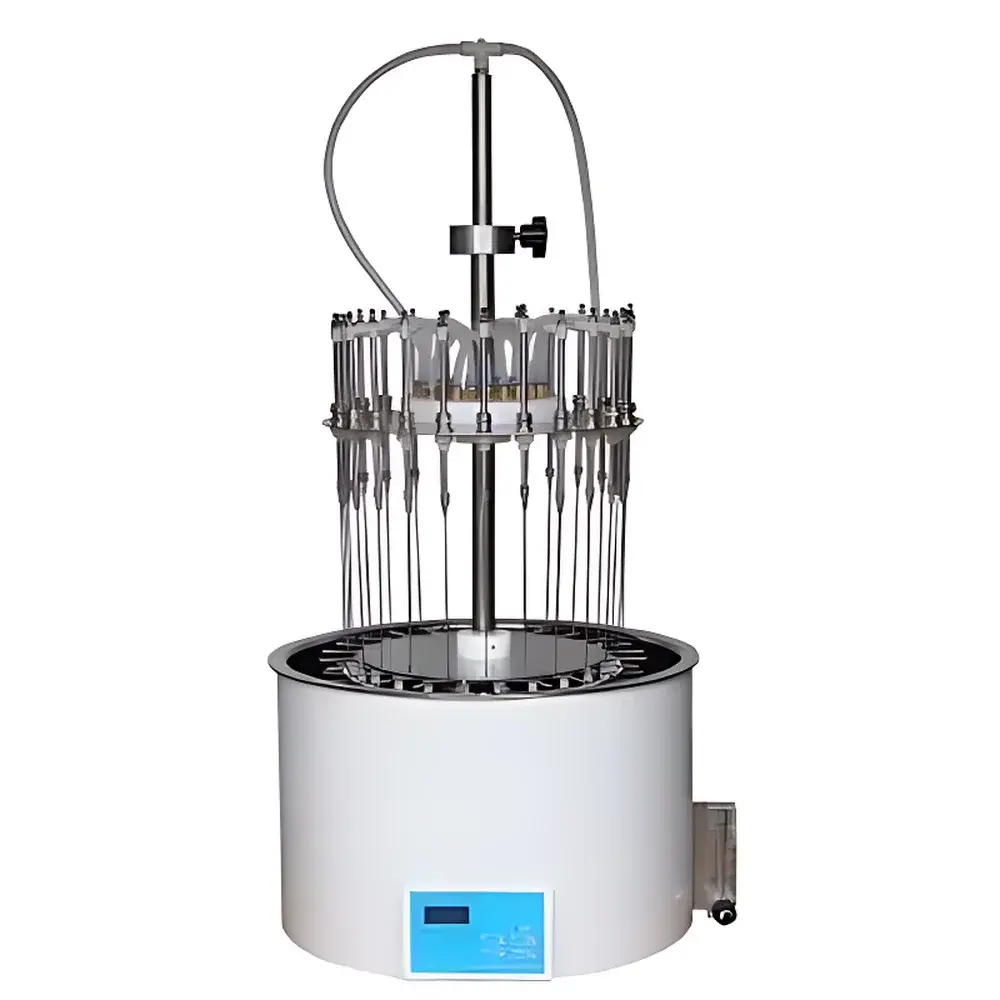
Zhongke Aobo UGC Series Nitrogen Evaporator
| Brand | Zhongke Aobo |
|---|---|
| Origin | Beijing, China |
| Manufacturer Type | Authorized Distributor |
| Product Origin | Domestic (China) |
| Model | UGC Series |
| Price | USD 700 (FOB Beijing) |
| Heating Method | Dry-Block or Water-Bath |
| Temperature Range | Ambient +5°C to 150°C (dry-block), Ambient +5°C to 100°C (water-bath) |
| Capacity Options | 12, 24, 36, 45 positions |
| Flow Control | Individual channel-adjustable nitrogen flow with integrated flowmeter (models ending in F/WF/CE) |
| Timer | 0–99 h 59 min with countdown display and audible alert |
| Display | LCD interface (models ending in T/F/WF/CE/T) |
| Block Material | Anodized aluminum heating block |
| Block孔 Diameter Options | 15 mm, 17 mm, 21 mm (custom diameters available on request) |
| Panel Design | Ergonomic tilted control panel |
| Optional Features | Motorized vertical lift (CE models), rotatable sample rack (T model) |
Overview
The Zhongke Aobo UGC Series Nitrogen Evaporator is an engineered solution for rapid, gentle, and parallel solvent removal from liquid samples under controlled inert conditions. Based on the principle of nitrogen gas-assisted evaporation—where a stream of dry, oxygen-free nitrogen sweeps across the surface of heated samples—the system accelerates solvent volatilization while minimizing thermal degradation, oxidation, and cross-contamination. Unlike vacuum centrifugal concentrators, nitrogen evaporation operates at atmospheric pressure and requires no complex vacuum infrastructure, making it ideal for routine high-throughput laboratories in analytical chemistry, environmental testing, pharmaceutical quality control, and food safety applications. The UGC platform supports both dry-block and water-bath heating modalities, enabling precise temperature stability across diverse sample matrices—including thermolabile pesticides, steroidal compounds, and volatile organic analytes—without compromising reproducibility or method robustness.
Key Features
- Intelligent PID temperature control with digital LCD display ensures ±0.5°C thermal accuracy and uniformity across all wells; programmable setpoints range from ambient +5°C to 150°C (dry-block) or 100°C (water-bath).
- Independent, per-channel nitrogen flow regulation via precision needle valves and integrated rotameter—critical for optimizing evaporation rates across heterogeneous sample volumes and solvents (e.g., dichloromethane vs. methanol).
- Anodized aluminum heating blocks provide corrosion resistance, extended service life (>10,000 operating hours), and easy decontamination between runs—essential for GLP-compliant residue analysis workflows.
- Ergonomically tilted front panel improves operator visibility and reduces repetitive strain during multi-hour concentration protocols.
- Extended timer function (0–99 h 59 min) with audible end-of-cycle alert and real-time countdown; “continuous run” mode available for unattended overnight operation.
- Modular design accommodates interchangeable blocks (15 mm, 17 mm, 21 mm diameter standard; custom bore patterns available) and optional motorized vertical lift (CE series) or 360° rotatable sample rack (T series) for enhanced accessibility.
Sample Compatibility & Compliance
The UGC Series is compatible with standard borosilicate glass test tubes (10–15 mL), HPLC vials, and conical-bottom microcentrifuge tubes. Its inert nitrogen environment prevents oxidative artifact formation—particularly critical in EPA Method 525.3 (drinking water pesticide analysis), AOAC 2007.01 (multiresidue fruit/vegetable screening), and USP chromatographic method development. All electrical components meet IEC 61010-1 safety standards for laboratory equipment. When used with validated SOPs and calibrated flowmeters, the system supports audit-ready documentation required under ISO/IEC 17025 and FDA 21 CFR Part 11 (when paired with compliant LIMS data capture).
Software & Data Management
While the base UGC models operate via standalone hardware controls, select variants (e.g., UGC-24WF, UGC-45CE) support RS-232 or USB connectivity for integration into centralized lab automation networks. Time-stamped operational logs—including start/stop times, target temperature, and elapsed duration—can be exported for inclusion in electronic batch records. For regulated environments, third-party software extensions enable full audit trail generation, user access control, and electronic signature compliance per 21 CFR Part 11 Annex 11 requirements.
Applications
- Multi-residue pesticide analysis in soil, water, and produce extracts (per EN 15662, QuEChERS workflow).
- Concentration of derivatized amino acids and fatty acid methyl esters (FAMEs) prior to GC-FID/GC-MS injection.
- Preparative cleanup in clinical toxicology—evaporation of plasma/urine extracts following solid-phase extraction (SPE).
- Routine QC release testing of active pharmaceutical ingredients (APIs) and excipients per ICH Q5C stability guidelines.
- Environmental monitoring of PAHs, PCBs, and organochlorines in sediment and biota homogenates (EPA Methods 8270, 8082).
FAQ
What nitrogen pressure and flow rate are recommended for optimal performance?
Typical operating pressure is 30–60 psi at the inlet regulator; flow rates range from 0.5–2.0 L/min per channel depending on solvent volatility and tube geometry. We recommend initial optimization using a reference standard (e.g., 1 µg/mL chlorpyrifos in acetonitrile) and monitoring recovery by GC-MS.
Can the UGC system be used with gases other than nitrogen?
Yes—argon or helium may be substituted where higher inertness or lower thermal conductivity is required, though nitrogen remains preferred for cost-efficiency and regulatory acceptance in most pharmacopeial methods.
Is calibration traceable to NIST standards?
Temperature sensors are factory-calibrated against NIST-traceable references; users may perform field verification using a certified RTD probe and external thermometer per ASTM E74-22.
How often should the gas distribution manifold be cleaned?
Inspect and clean the stainless-steel gas channels quarterly using 70% ethanol and compressed air; replace O-rings annually or if leakage is detected at >1 psi backpressure.
Do CE-series models support programmable lift profiles?
Motorized lift is manually triggered only; however, position memory and soft-start functionality prevent abrupt tube contact during descent—reducing risk of breakage in fragile glassware.



