
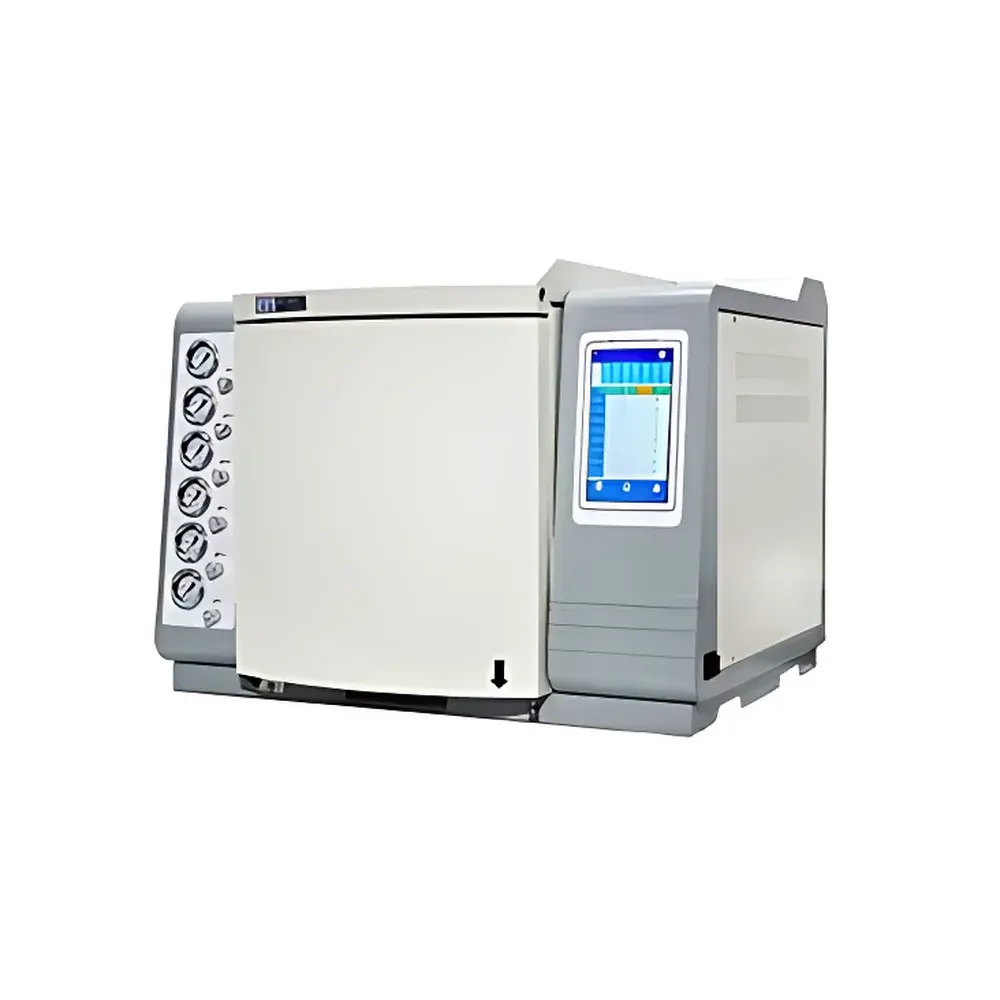
Zhongkehuifen GC-7820 Gas Chromatograph
| Brand | Zhongkehuifen |
|---|---|
| Origin | Beijing, China |
| Manufacturer Type | Authorized Distributor |
| Product Category | Domestic |
| Model | GC-7820 |
| Instrument Type | Laboratory Gas Chromatograph |
| Application Scope | General-Purpose |
| Oven Temperature Range | Ambient + 3 °C to 450 °C |
| Oven Ramp Rate | 0.1–40 °C/min |
| Oven Cooling Time | ~8 min (450 °C → 50 °C) |
| Carrier Gas Flow Range & Control | 0–1200 mL/min |
| Carrier Gas Pressure Range & Control | 0–970 kPa |
| Injector Maximum Operating Temperature | 450 °C |
| Injector Pressure Setting Range | 0–970 kPa |
| Injector Total Flow Setting Range | 0–1200 mL/min |
Overview
The Zhongkehuifen GC-7820 Gas Chromatograph is a modular, laboratory-grade analytical instrument engineered for precision separation and quantitative analysis of volatile and semi-volatile organic compounds. Based on classical gas chromatographic principles—where analytes are partitioned between a mobile phase (inert carrier gas) and a stationary phase (capillary or packed column)—the GC-7820 delivers robust performance across routine QC, environmental monitoring, petrochemical profiling, and academic research applications. Its thermally stable oven architecture, digitally controlled pneumatic modules, and scalable detector interface support method development aligned with internationally recognized standards including ASTM D3606, ISO 10301, USP , and EPA Method 8260/8270. Designed for reproducibility in regulated environments, the system supports audit-ready operation under GLP and GMP frameworks when paired with compliant data management software.
Key Features
- Thermally optimized oven with 300 × 280 × 180 mm internal volume, enabling complex multi-valve, multi-column configurations (up to five valves and seven columns)
- Precise temperature control: ±0.1 °C stability across 450 °C maximum operating range; programmable ramp rates from 0.1 to 40 °C/min
- Intelligent rear-door cooling system facilitating rapid thermal equilibration—achieving ~8-minute cooldown from 450 °C to 50 °C
- Modular injector design supporting multiple configurations: single packed column, single capillary, packed-capillary hybrid, or dual capillary inlet systems
- Compatibility with auxiliary sampling interfaces including headspace autosamplers and thermal desorption units
- Logarithmic amplifier circuitry in signal processing electronics—providing wide dynamic range (typically 10⁶), linear response over four orders of magnitude, and automatic gain adjustment to prevent detector saturation
- Digital pneumatic control of carrier gas pressure (0–970 kPa) and total flow (0–1200 mL/min), ensuring retention time reproducibility and method transferability
Sample Compatibility & Compliance
The GC-7820 accommodates a broad spectrum of sample matrices—including aqueous extracts, hydrocarbon fractions, air canister samples, soil headspace vapors, and polymer leachates—when coupled with appropriate sample introduction techniques. Its injector temperature rating (up to 450 °C) permits direct injection of high-boiling-point compounds without degradation. All pneumatic and thermal subsystems comply with IEC 61010-1 safety requirements for laboratory equipment. The instrument’s hardware architecture supports integration into workflows governed by FDA 21 CFR Part 11 when used with validated chromatography data systems (CDS), including electronic signature enforcement, audit trail logging, and user-access controls.
Software & Data Management
The GC-7820 operates via a dedicated Windows-based acquisition and control platform offering real-time monitoring of oven temperature, detector signals, and gas pressures. Method setup includes up to 16-stage temperature programming, valve timing sequences, and detector parameter optimization. Raw data files adhere to AIA/ANDI standard formats (.cdf), ensuring interoperability with third-party quantitation packages (e.g., OpenLab CDS, Chromeleon, Empower). Optional validation packages include IQ/OQ documentation templates and traceable calibration protocols compliant with ISO/IEC 17025 requirements for testing laboratories.
Applications
- Environmental analysis: BTEX, PAHs, chlorinated solvents, and VOCs in water, soil, and ambient air per EPA SW-846 methods
- Petrochemical QA/QC: Hydrocarbon group-type analysis (HTA), gasoline PIONA profiling, and sulfur compound speciation
- Pharmaceutical residual solvent testing per ICH Q2(R2) and USP
- Food & flavor chemistry: Essential oil fingerprinting, pesticide residue screening, and off-flavor compound identification
- Academic teaching labs: Method development exercises, retention index determination, and detector response characterization
FAQ
Is the GC-7820 compatible with third-party chromatography data systems (CDS)?
Yes—the instrument exports AIA/ANDI-compliant .cdf files and supports ASCII export for integration with major commercial CDS platforms.
What detector types can be installed simultaneously?
The modular detector bay supports up to two independently powered and controlled detectors (e.g., FID + TCD or ECD + FPD), each with dedicated gas supply and signal conditioning circuits.
Does the system meet regulatory requirements for GLP or GMP environments?
When deployed with validated software, calibrated reference standards, and documented operational procedures, the GC-7820 meets foundational technical requirements for GLP-compliant analysis and can be qualified for GMP release testing under client-specific validation protocols.
Can the oven perform true near-ambient temperature separations?
Yes—the intelligent rear-door system enables stable oven operation as low as 50 °C, and with optional cryo-cooling accessories, sub-ambient control down to 0 °C is achievable.
What maintenance intervals are recommended for routine operation?
Injector liner replacement every 100–200 injections; column trimming every 2–4 weeks depending on sample cleanliness; annual full pneumatic calibration and detector performance verification using certified test mixtures.
Related Products






