
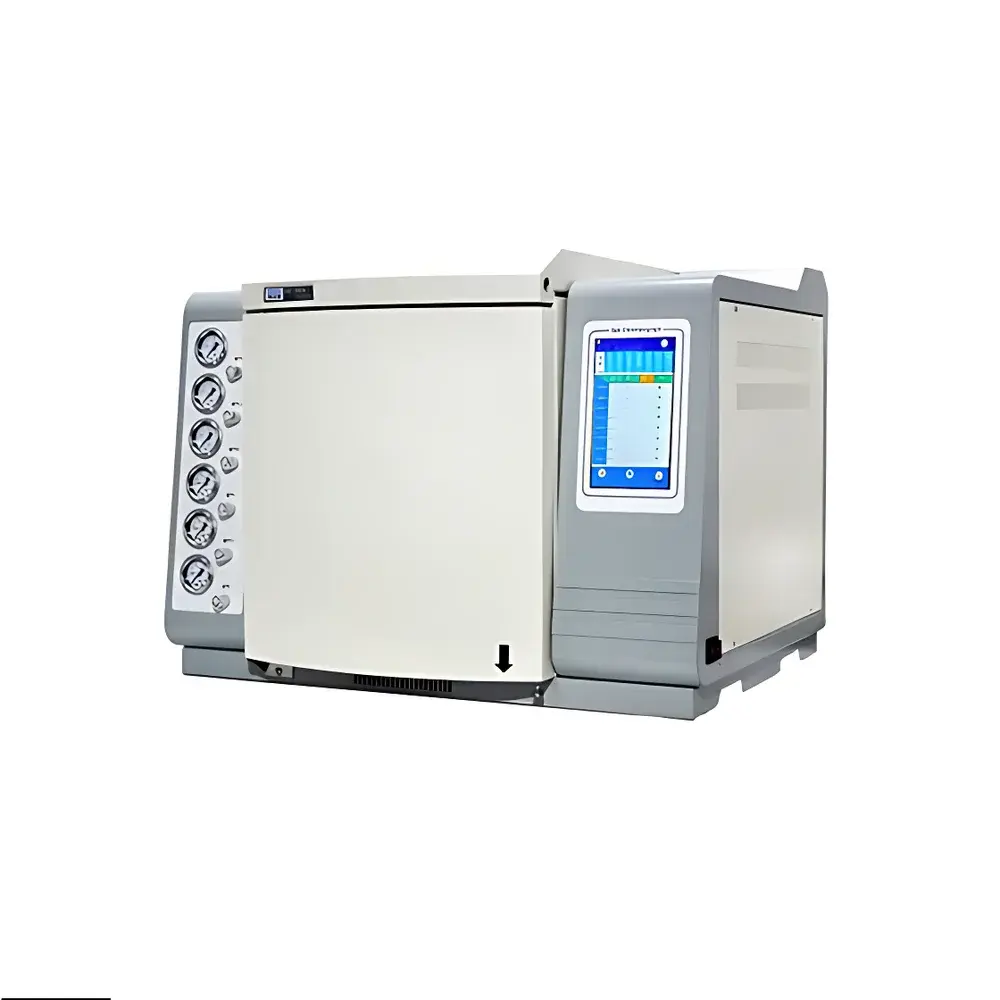
ZHONGKEHUIFEN GC-7820 Liquefied Petroleum Gas (LPG) Analysis Dedicated Gas Chromatograph
| Brand | ZHONGKEHUIFEN |
|---|---|
| Origin | Beijing, China |
| Manufacturer Type | Authorized Distributor |
| Product Category | Domestic |
| Model | GC-7820 LPG Analysis Dedicated Gas Chromatograph |
| Instrument Type | Laboratory Gas Chromatograph |
| Application Scope | General-purpose with LPG-specific configuration |
| Temperature Control Range | Ambient + 3°C to 450°C |
| Oven Ramp Rate | 0.1–40°C/min |
| Cooling Rate | ~8 minutes (450°C → 50°C) |
| Carrier Gas Flow Range & Control | 0–1200 mL/min |
| Carrier Gas Pressure Range & Control | 0–970 kPa |
| Injector Maximum Operating Temperature | 450°C |
| Injector Pressure Setting Range | 0–970 kPa |
| Injector Total Flow Setting Range | 0–1200 mL/min |
Overview
The ZHONGKEHUIFEN GC-7820 Liquefied Petroleum Gas (LPG) Analysis Dedicated Gas Chromatograph is a purpose-engineered laboratory gas chromatograph designed for the precise, reproducible, and compliant quantification of hydrocarbon and oxygenate components in LPG streams. Built upon the robust GC-7820 platform, this instrument implements a dual-valve, dual-column, dual-FID configuration optimized per NB/SH/T 0230–2019 (System 2: Oxygenates and LPG Composition), enabling full compositional analysis—including C₁–C₅ hydrocarbons, olefins, and polar oxygenates such as dimethyl ether (DME), methanol, and methyl tert-butyl ether (MTBE)—in a single injection. The system operates on the principle of gas-phase separation via capillary or packed column chromatography, followed by selective detection using flame ionization detection (FID). Its architecture integrates thermally stable flow control, inertized gas pathways, and programmable temperature ramping to ensure retention time stability and peak resolution across repeated analyses under high-throughput laboratory conditions.
Key Features
- Dual-valve, dual-column, dual-FID configuration for simultaneous hydrocarbon and oxygenate analysis—eliminating need for multiple injections or method switching.
- Ultra-low dead-volume pneumatic connections and passivated internal surfaces (including stainless-steel lines and valve manifolds) to minimize adsorption, carryover, and catalytic degradation of reactive species (e.g., olefins, DME).
- High-precision electronic pressure control (EPC) for both carrier gas (He ≥ 99.999% purity) and detector gases (H₂, air, N₂), ensuring consistent flow and pressure across temperature gradients.
- Valve oven maintained at 150°C to prevent condensation and ensure reliable actuation of high-temperature pneumatic valves; injector temperature up to 450°C supports volatile and semi-volatile compound introduction without thermal discrimination.
- Configured with two application-specific columns: a 30 m × 0.53 mm Al₂O₃/KCl PLOT column (15 µm film) for C₁–C₅ hydrocarbon separation, and a 10 m × 0.53 mm Lowox™ column (10 µm film) for oxygenate resolution.
- Micro-gas-flow switching technology enables precise modulation of sample routing between columns and detectors, improving quantitative accuracy and reducing cycle time.
Sample Compatibility & Compliance
The GC-7820 LPG Analyzer is validated for use with liquefied petroleum gas samples collected per SH/T 0233, including vapor-phase and liquid-phase sampling protocols. It supports compliance with multiple national and international standards relevant to fuel gas quality control and regulatory reporting, including GB 11174 (LPG specifications), GB/T 12576 (vapor pressure, relative density, and octane number calculation), GB 19159 (automotive LPG), and ISO 6142 / GB/T 5274 (preparation of calibration gas mixtures by gravimetric methods). All hardware and software configurations are engineered to support GLP-compliant operation, with audit-trail-ready data acquisition and method parameter logging. While not pre-certified for FDA 21 CFR Part 11, the system architecture permits integration with validated LIMS environments supporting electronic signature and change-control workflows.
Software & Data Management
The instrument is controlled via ZHONGKEHUIFEN’s proprietary GC Navigator software, a Windows-based platform supporting method development, sequence scheduling, real-time monitoring, and integrated quantitative reporting. Software features include automatic baseline correction, peak integration with customizable retention time windows, multi-point external standard calibration curves, and customizable report templates aligned with GB/T 12576 and NB/SH/T 0230 reporting formats. Raw data files (.CDF) are stored in open-format chromatographic data files compatible with third-party review tools (e.g., OpenChrom, Chromeleon). All method parameters—including oven program, detector settings, valve timing, and flow profiles—are saved with timestamps and user IDs to support traceability and method version control.
Applications
This system is deployed in refinery QC laboratories, petrochemical R&D centers, and third-party testing facilities for routine LPG composition verification, blending optimization, and specification conformance testing. Typical use cases include: quantification of propane/propylene ratio for polymer-grade feedstock assessment; detection of trace ethane and methane in commercial LPG to verify vapor pressure compliance; measurement of DME content in alternative fuel blends; identification and quantification of MTBE carryover from gasoline blending units; and verification of butene isomer distribution for alkylation unit feed characterization. The dual-detection capability also supports method transfer studies between legacy packed-column systems and modern capillary-based platforms.
FAQ
What standards does the GC-7820 LPG Analyzer comply with?
It is configured and validated per NB/SH/T 0230–2019 (System 2), and supports implementation of GB 11174, GB/T 12576, GB 19159, SH/T 0233, and ISO 6142.
Can the system analyze both hydrocarbons and oxygenates in one run?
Yes—the dual-valve, dual-column, dual-FID architecture enables simultaneous separation and detection of C₁–C₅ hydrocarbons and polar oxygenates (e.g., DME, MTBE, methanol) without re-injection.
Is helium the only supported carrier gas?
Helium (≥99.999% purity) is recommended per NB/SH/T 0230–2019; however, hydrogen and nitrogen may be used with appropriate method revalidation and flow recalibration.
What is the typical analysis cycle time for a full LPG composition?
Under standard conditions (90°C initial hold, 6°C/min ramp to 180°C, 30 min final hold), total run time is approximately 48 minutes, including column equilibration and detector stabilization.
Does the system support automated calibration and QC checks?
Yes—software supports multi-level calibration curves, bracketing standards, and system suitability tests (e.g., resolution between n-butane and isobutane, FID response linearity) with pass/fail thresholds and auto-flagging.
Related Products





