
Zhuochi AOX-1000 Halogen Analyzer for Adsorbable Organic Halides (AOX) in Water Samples
| Brand | Zhuochi |
|---|---|
| Origin | Zhejiang, China |
| Model | AOX-1000 |
| Measurement Principle | Combustion-Coulometric Titration |
| Measurement Range | 5–1000 µg/L (as Cl⁻) |
| Accuracy | ±1% |
| Repeatability (RSD) | ≤1% |
| Detection Limit | 0.8–1000 µg/L |
| Resolution | 0.01 µg |
| Compliance | Designed to meet ISO 9562 and EPA Method 1650 requirements for AOX determination |
Overview
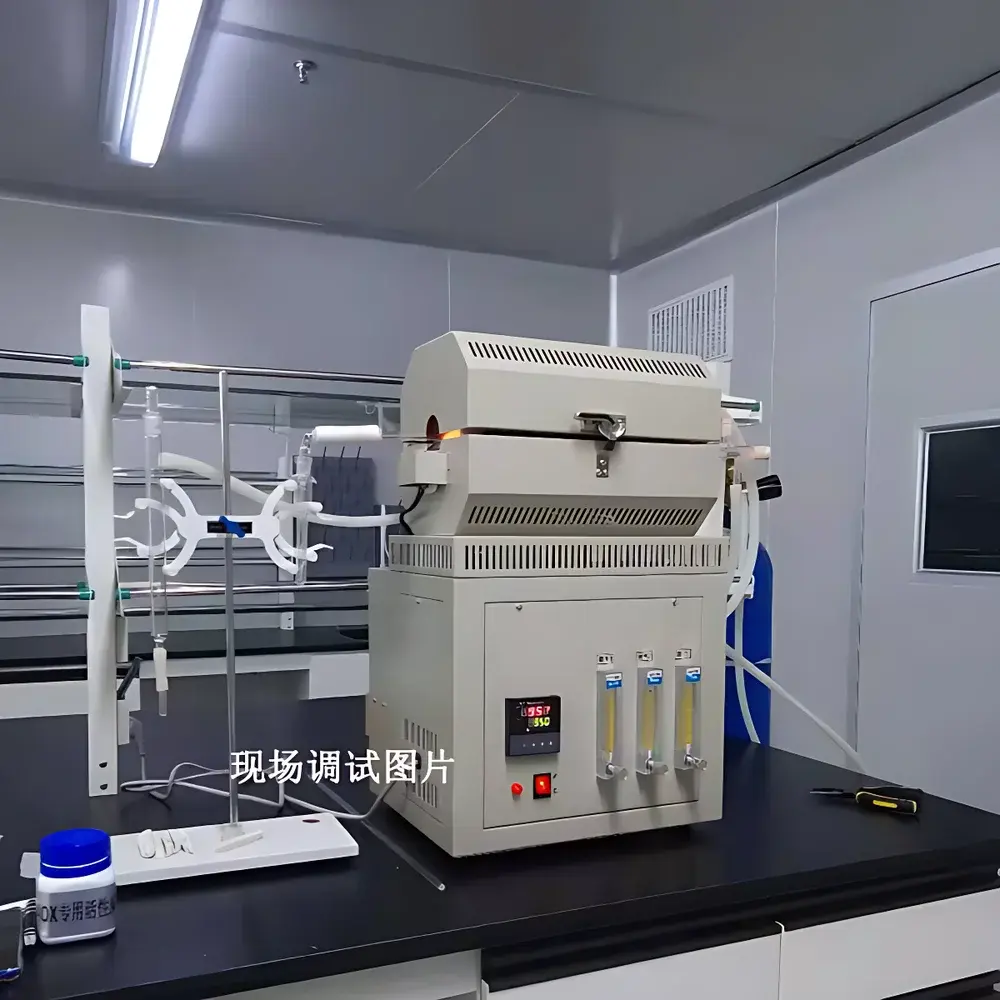
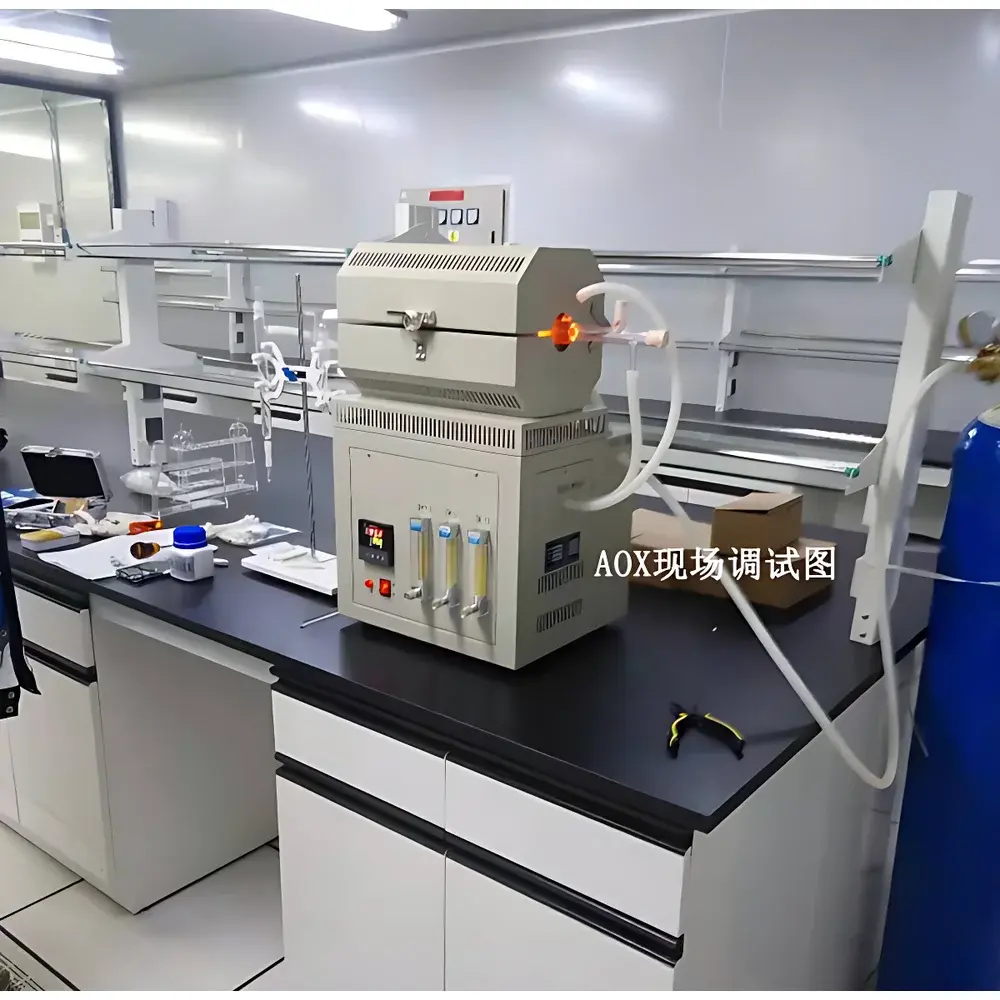
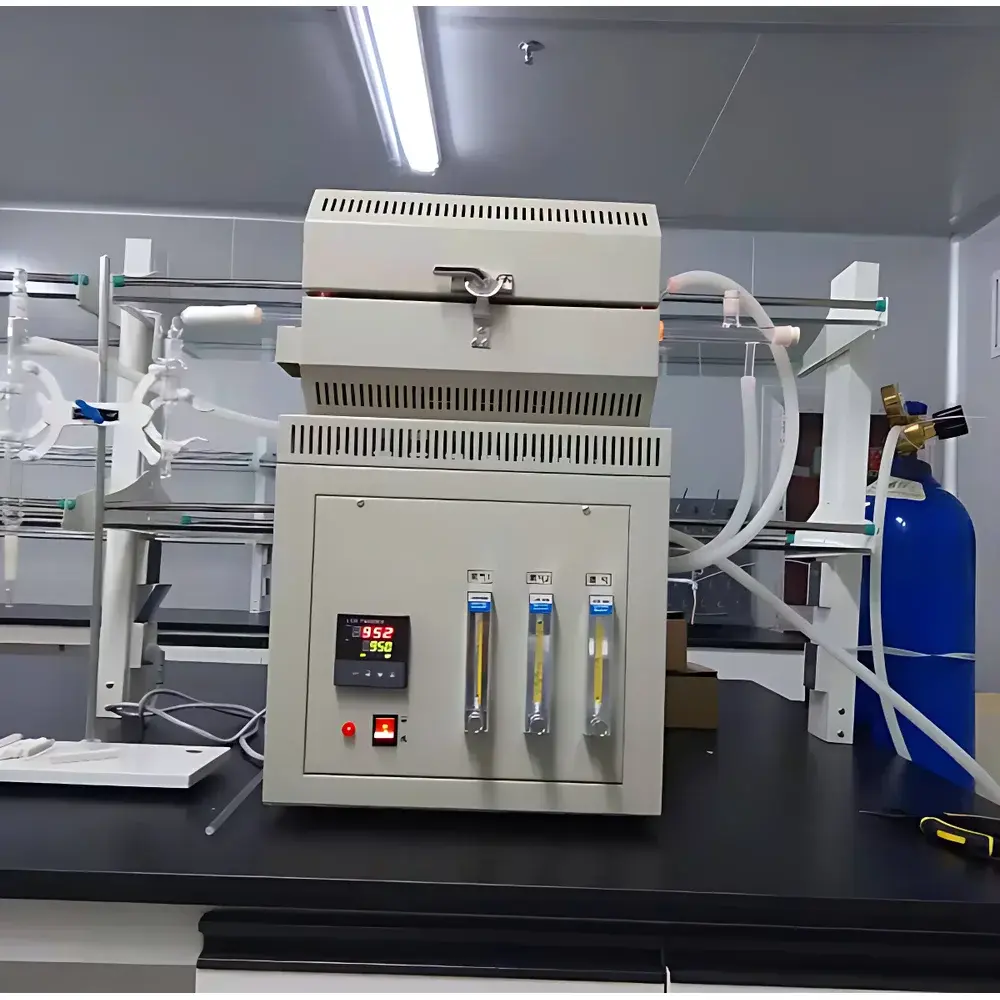
The Zhuochi AOX-1000 Halogen Analyzer is a dedicated benchtop instrument engineered for the quantitative determination of adsorbable organic halides (AOX) in aqueous environmental samples—including drinking water, wastewater, surface water, and industrial effluents. It implements the internationally recognized combustion-coulometric titration method, as specified in ISO 9562 (Water quality — Determination of adsorbable organic halogens (AOX)) and aligned with U.S. EPA Method 1650. In this process, organic halogen compounds are first concentrated onto activated carbon via solid-phase adsorption under controlled nitrogen flow, then thermally combusted at 950 °C in an oxygen-rich quartz furnace. The resulting hydrogen halides (HCl, HBr, HI) are absorbed in an alkaline electrolyte solution, where coulometric titration quantifies total halide content based on Faraday’s law—providing trace-level sensitivity and high reproducibility without manual reagent standardization.
Key Features
- Integrated dual-gas flow control system: Independent regulation of inner-tube oxygen (120–150 mL/min) and outer-tube oxygen (40–60 mL/min) ensures complete oxidation and minimizes soot formation during high-temperature combustion.
- Precision adsorption module: Equipped with calibrated nitrogen pressure regulator and flowmeter to maintain consistent sample loading at 2–3 mL/min through standardized activated carbon columns—critical for quantitative recovery across variable matrix compositions.
- High-temperature quartz combustion furnace: Stable operation at 950 °C with programmable pre-heating and zone-controlled insertion protocol (2 min pre-heating at furnace entrance, followed by 3 min residence in hot zone) to maximize halogen release efficiency and minimize incomplete pyrolysis.
- Coulometric detection cell: Platinum electrode-based titration cell with real-time current integration delivers resolution down to 0.01 µg and linear response over five orders of magnitude (0.8–1000 µg/L).
- Robust architecture: All wetted parts constructed from inert quartz, PTFE, and borosilicate glass; no metal contamination pathways—ensuring integrity of low-level halogen measurements.
Sample Compatibility & Compliance
The AOX-1000 accepts liquid samples ranging from ultrapure water to complex wastewater matrices, provided turbidity is reduced to <5 NTU and suspended solids are filtered (0.45 µm). Sample volume is typically 100–500 mL, adjusted according to expected AOX concentration. The system supports compliance with ISO 9562, DIN 38409-H11, and EPA Method 1650. Its design incorporates GLP-ready operational logging (time-stamped run records, operator ID fields), and data output formats support audit trails required under 21 CFR Part 11 when paired with validated LIMS integration. Calibration verification is performed using potassium hydrogen phthalate (KHP)-spiked sodium chloride standards traceable to NIST SRM 976.
Software & Data Management
The analyzer operates via embedded firmware with a 7-inch capacitive touchscreen interface, enabling step-by-step guided workflows for adsorption, combustion, and titration phases. All measurement parameters—including gas flows, temperature profiles, titration charge integrals, and blank corrections—are stored locally with UTC timestamps. Export options include CSV and PDF reports compliant with ISO/IEC 17025 documentation requirements. Optional USB or Ethernet connectivity allows secure transfer to laboratory information management systems (LIMS) with configurable metadata tagging (sample ID, analyst, batch number, QC flag). Audit trail functionality logs all parameter changes, method edits, and result overrides—supporting regulatory readiness for environmental testing laboratories accredited to ISO/IEC 17025:2017.
Applications
- Regulatory monitoring of AOX in municipal wastewater treatment plant (WWTP) discharges per EU Directive 2000/60/EC and China’s GB 3838-2002.
- Process control in pulp and paper mills, chlor-alkali facilities, and pharmaceutical manufacturing sites where chlorine-based disinfection or synthesis generates halogenated organics.
- Environmental impact assessments for landfill leachate, industrial runoff, and sediment pore water analysis following EPA SW-846 Method 9020B adaptations.
- Method validation studies supporting accreditation under CNAS CL01 (equivalent to ISO/IEC 17025) for third-party environmental testing labs.
FAQ
What sample preparation is required prior to AOX analysis?
Water samples must be filtered through a 0.45 µm membrane filter to remove particulates. High-turbidity or high-suspended-solid samples require centrifugation or additional filtration. No acidification or preservative addition is permitted, as it may volatilize or hydrolyze labile organohalogens.
Can the AOX-1000 measure individual halogens (e.g., Cl, Br, I) separately?
No—the instrument reports total adsorbable organic halides expressed as chloride equivalents (µg Cl⁻/L). Speciation requires coupling with GC-MS or IC-MS techniques post-combustion.
How often must the coulometric cell electrolyte be replaced?
Under routine use (≤10 analyses/day), the 0.1 mol/L NaOH/KOH electrolyte should be refreshed every 48 hours or after 20 runs—whichever occurs first—to maintain titration stability and avoid carbonate interference.
Is the system compatible with automated sample introduction?
The base configuration supports manual sample handling only. An optional autosampler module (AOX-AS100) is available for unattended sequential analysis of up to 24 prepared carbon columns, with integrated column conditioning and purge cycles.
What maintenance intervals are recommended for the quartz combustion tube?
Visual inspection after every 50 runs; cleaning with 10% HNO₃ followed by deionized water rinse is advised if carbon deposits or discoloration appear. Full replacement is recommended after 500 combustion cycles or upon observed thermal cracking.
Related Products







