
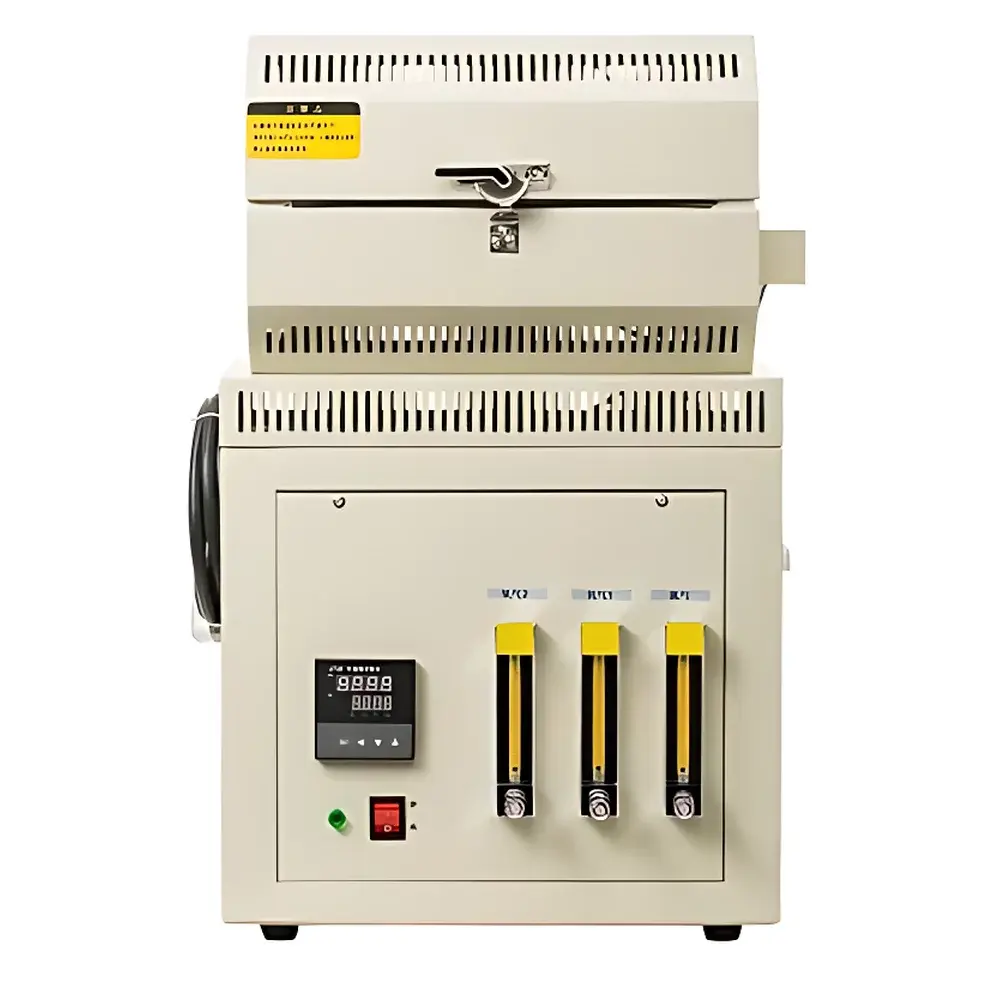
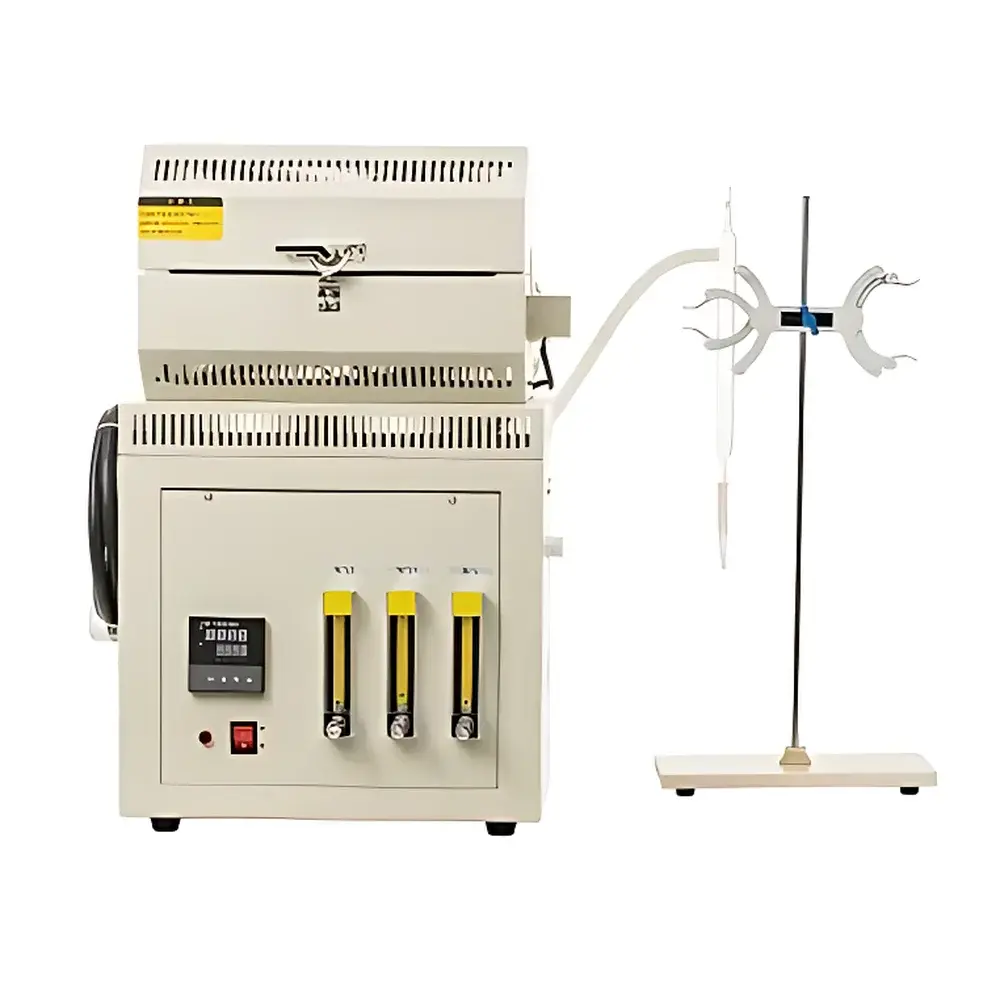
Zhuochi AOX-3 Combustion Furnace for Adsorbable Organic Halogens (AOX) Analysis
| Brand | Zhuochi |
|---|---|
| Origin | Zhejiang, China |
| Model | AOX-3 |
| Measurement Principle | High-Temperature Combustion Coupled with Coulometric Titration |
| Measurement Range | 5–1000 mg sample mass |
| Detection Range | 0.8 µg/L – 1000 µg/L |
| Accuracy | ±1% |
| Repeatability | ≤1% RSD |
| Detection Limit | 0.8 µg/L |
| Resolution | 0.01 µg |
| Max Operating Temperature | 1150 °C |
| Temperature Stability | ±1 °C |
| Heating Rate | Up to 50 °C/min (adjustable) |
| Furnace Chamber | φ40 × 300 mm |
| Power Supply | 220 V, 50 Hz, 1.5 kW |
| Net Weight | 26 kg |
| Compliance | HJ/T 83–2001, ISO 9562:1989, GB/T 15959–1995, GB 8978–1996, GB 3544–2008 |
Overview
The Zhuochi AOX-3 Combustion Furnace is a dedicated high-temperature thermal oxidation system engineered for the quantitative determination of Adsorbable Organic Halogens (AOX) in environmental water and solid matrices. It operates on the internationally validated principle of high-temperature combustion (up to 1150 °C) followed by halogen quantification via coulometric titration or ion chromatography—fully aligned with standardized methodologies including HJ/T 83–2001 (China), ISO 9562:1989, and GB/T 15959–1995. The furnace thermally mineralizes adsorbed organic halogen compounds—pre-concentrated on activated carbon—from aqueous or suspended samples, releasing halide ions (Cl⁻, Br⁻, F⁻, I⁻) into an absorption solution for downstream electrochemical or chromatographic detection. Its robust ceramic fiber insulation, dual-zone heating architecture, and programmable LTDE PID controller ensure precise thermal ramping, stable isothermal hold, and reproducible combustion conditions—critical for GLP-compliant AOX workflows requiring high sample throughput and inter-laboratory comparability.
Key Features
- High-temperature combustion capability up to 1150 °C with ±1 °C temperature stability and adjustable heating rates (≤50 °C/min)
- Ceramic fiber furnace chamber (φ40 × 300 mm) with embedded high-resistance heating elements and air-cooled metal housing for thermal efficiency and safety
- Integrated wash-gas system with five dedicated scrubbing bottles and two absorption units for complete removal of SO₂, NOₓ, and CO₂ prior to halide capture
- Modular nitrogen-pressurized adsorption assembly compatible with standard activated carbon columns (user-supplied) and customizable flow control
- Openable furnace design enabling real-time visual monitoring of sample combustion and rapid cooling between runs
- LTDE programmable controller with PID+SSR regulation, dual-stage overtemperature protection, and time-programmable ramp/soak cycles
- Low-voltage, high-efficiency 1.5 kW heating system (220 V, 50 Hz) rated for continuous 24-hour operation under routine laboratory conditions
- Compact footprint (345 × 360 × 660 mm) and lightweight construction (26 kg) suitable for benchtop deployment in QC, environmental testing, and regulatory compliance labs
Sample Compatibility & Compliance
The AOX-3 supports direct analysis of liquid and solid environmental specimens—including drinking water, surface water, groundwater, wastewater, effluent, seawater, pulp mill discharges, soils, sediments, sludge, and waste oils—following standardized adsorption protocols per HJ/T 83–2001. Sample introduction employs column-based adsorption on activated carbon (user-supplied analytical-grade material), followed by nitrogen-pressurized transfer to the quartz combustion boat. The system meets all instrumental requirements specified in ISO 9562 and GB/T 15959 for AOX determination, and its performance parameters satisfy data quality objectives outlined in national discharge standards (GB 8978–1996, GB 3544–2008). While the furnace itself does not include detection instrumentation, it is fully interoperable with commercially available microcoulometers and ion chromatographs compliant with EPA Method 1650 or equivalent regulatory frameworks.
Software & Data Management
The AOX-3 operates as a hardware module within a complete AOX workflow; no embedded software is included. However, its programmable LTDE controller supports audit-ready operation through configurable temperature/time profiles, automatic shutdown upon cycle completion, and built-in event logging (e.g., overtemperature alarms, runtime stamps). When integrated with external coulometric or IC systems equipped with 21 CFR Part 11-compliant software, full electronic record retention—including method parameters, calibration history, and raw absorbance/coulomb signals—is achievable. Optional PC-based control interfaces (sold separately) enable remote parameter adjustment, real-time temperature graphing, and CSV export of thermal profiles for QA documentation and method validation reports.
Applications
This furnace serves as the core thermal oxidation unit in accredited environmental laboratories performing routine AOX monitoring for regulatory reporting, wastewater treatment optimization, pulp and paper industry compliance, and industrial effluent characterization. Its rapid 3–10 minute combustion cycle (excluding pre-concentration) enables high-throughput screening of batched samples under strict turnaround time constraints. It is routinely deployed in municipal water authorities verifying disinfection by-product formation, in chemical manufacturing facilities assessing halogenated solvent residues, and in research institutions studying halogen persistence in anaerobic sediments. The system’s compatibility with both coulometric and ion chromatographic detection modalities provides flexibility across lab infrastructures—whether prioritizing speed (microcoulometry) or speciation capability (IC with suppressed conductivity).
FAQ
What detection instruments are required to complete an AOX analysis?
The AOX-3 is a combustion unit only. Users must supply either a microcoulometer (per GB/T 15959–1995) or an ion chromatograph (per HJ/T 83–2001) for final halide quantification. Syringe injectors, absorption traps, and calibrated standards are also user responsibilities.
Is purified oxygen mandatory for optimal performance?
Yes. Use of ≥99.999% pure O₂ eliminates the need for auxiliary gas scrubbing and ensures complete combustion without interference from nitrogen oxides or residual hydrocarbons.
Can the furnace be used for non-AOX halogen speciation (e.g., TOX, EOX)?
No. The AOX-3 is specifically configured for adsorbable halogens. Total Oxidizable Halogens (TOX) or Extractable Organic Halogens (EOX) require alternative sample preparation and may necessitate modified combustion gas flows or trapping chemistries.
Does the system support automated sample loading?
Not natively. Sample introduction is manual via quartz boats or custom carriers. Robotic autosamplers are not integrated but may be retrofitted with third-party mechanical handling solutions.
What maintenance intervals are recommended for long-term reliability?
Inspect quartz combustion tubes and absorption components after every 50 runs; replace ceramic fiber insulation if cracked or compressed; calibrate thermocouple annually using NIST-traceable reference sources.







