
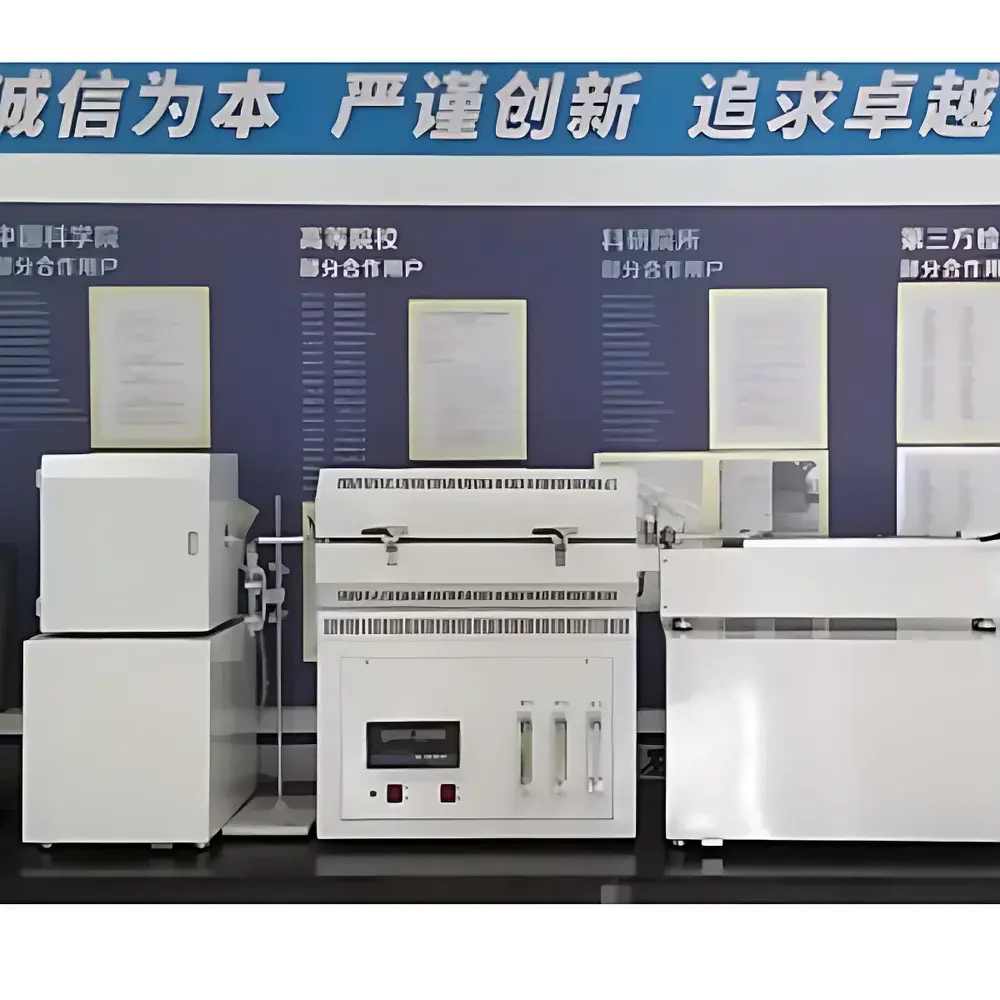
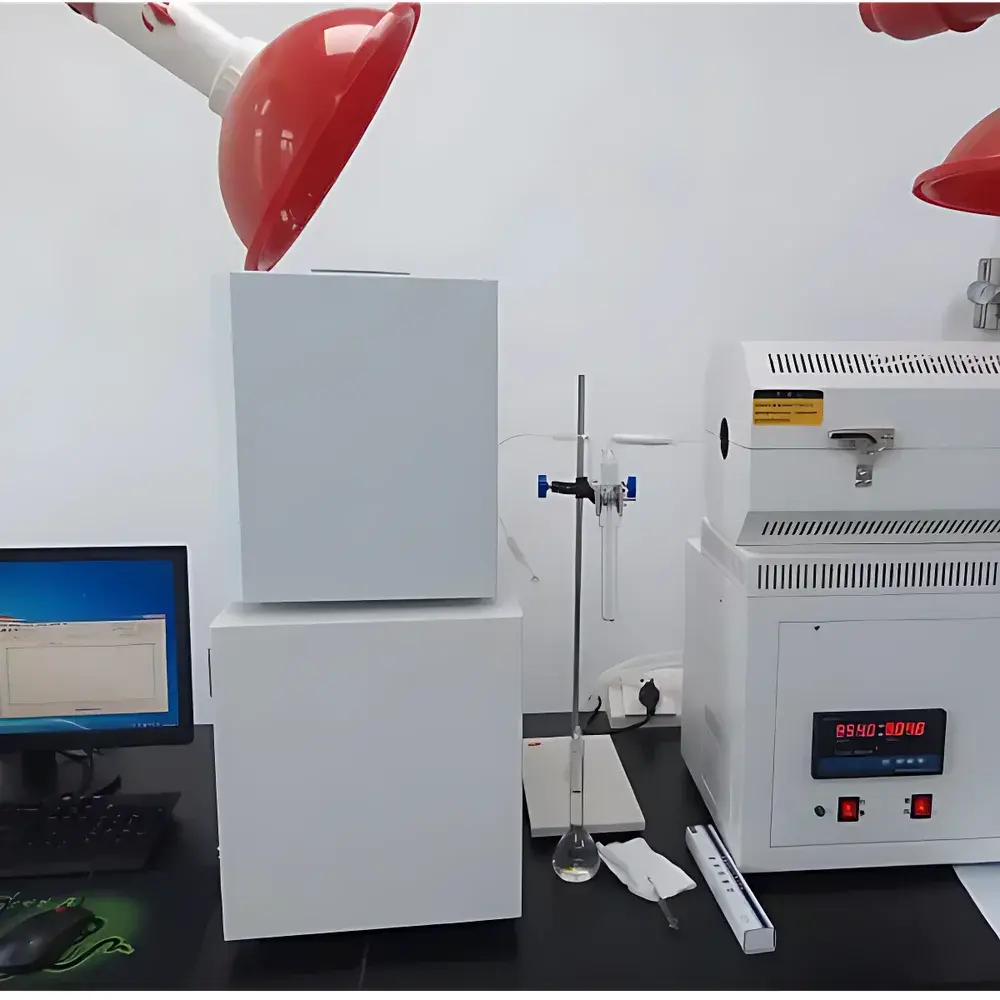
Zhuochi AOX-WK-3 Adsorbable Organic Halogens (AOX) Analyzer with Microcoulometric Detection
| Brand | Zhuochi |
|---|---|
| Origin | Zhejiang, China |
| Model | AOX-WK-3 |
| Measurement Principle | Combustion–Microcoulometric Titration |
| Measuring Range | 0–2 mg/kg |
| Limit of Detection (LOD) | 2 mg/kg |
| Repeatability | ≤10% RSD at sample concentration ≤2 mg/L |
| Compliance | GB/T 34845–2017, GB/T 22904–2008 |
| Instrument Type | Environmental Halogen Analyzer for Water and Pulp/Paper Matrices |
Overview
The Zhuochi AOX-WK-3 Adsorbable Organic Halogens (AOX) Analyzer is a dedicated microcoulometric system engineered for the quantitative determination of adsorbable organic halogen compounds—including chlorinated, brominated, and iodinated organics—in aqueous environmental samples, pulp, paper, and tissue products. It operates on the internationally recognized combustion–microcoulometric titration principle: samples are first adsorbed onto activated carbon under controlled nitrogen flow, followed by thermal desorption and high-temperature catalytic combustion (≥950 °C) in an oxygen-rich quartz furnace. The resulting halide ions (Cl⁻, Br⁻, I⁻) are swept into a dual-electrode microcoulometric cell, where electrochemical titration with silver ions (Ag⁺) enables precise, real-time quantification based on Faraday’s law. This method delivers high selectivity for total organic halogen content without interference from inorganic halides—provided proper sample pretreatment (e.g., acidification and filtration) is applied per standard protocols.
Key Features
- Integrated combustion–microcoulometric architecture compliant with GB/T 34845–2017 (for household paper) and GB/T 22904–2008 (for pulp and paper), supporting full traceability to Chinese national standard test workflows.
- Dual-zone temperature-controlled AOX combustion furnace with programmable ramping and stable isothermal operation at 950 °C, ensuring complete oxidative decomposition of refractory organic halogen species.
- Custom quartz裂解 tube and ceramic combustion boat designed for low blank contribution and high thermal stability during repeated high-temperature cycles.
- Microcoulometric detection cell with Ag/Ag⁺ reference and working electrodes, optimized for sub-microgram-level halogen ion detection and linear response across the 0–2 mg/kg range.
- Dedicated AOX adsorption and elution station including nitrogen-pressure-driven column assembly, mechanical shaker (150–250 rpm), and vacuum-assisted filtration unit with chlorine-free filter paper support.
- Modular hardware layout with separate workbenches for adsorption, combustion, titration, and data acquisition—minimizing cross-contamination and enabling GLP-aligned lab zoning.
Sample Compatibility & Compliance
The AOX-WK-3 is validated for use with drinking water, wastewater, surface water, leachates, and solid matrices such as tissue paper, cardboard, and unbleached/brightened pulp. Sample preparation follows standardized adsorption on AOX-grade activated carbon (supplied), followed by acidified methanol elution and removal of residual inorganic halides via sodium nitrate precipitation. All operational parameters—including gas flow rates (N₂, O₂), combustion dwell time, and titration integration window—are configurable to meet matrix-specific optimization requirements. The system supports audit-ready documentation per GB/T 34845–2017 Annex B and aligns with broader regulatory expectations for halogen speciation in environmental compliance reporting. While not certified to ISO/IEC 17025 out-of-the-box, its design facilitates method validation under ISO 10304-4 (determination of AOX in water) and EPA Method 1650 (AOX in wastewater).
Software & Data Management
The AOX-WK-3 is operated via embedded Windows-based microcoulometric software preinstalled on the included industrial PC. The interface provides real-time current monitoring, coulombic integration curves, automatic endpoint recognition, and batch-wise calibration curve generation using KCl standards. All analytical sequences—including adsorption duration, combustion profile, titration gain, and blank subtraction—are stored with timestamps and user ID tags. Raw data files (.dat) and summary reports (.pdf/.xlsx) are exportable with full metadata (instrument ID, operator, date/time, method version). Audit trail functionality records parameter changes and result modifications, supporting basic 21 CFR Part 11 readiness when deployed with domain-authenticated login and electronic signature protocols.
Applications
- Regulatory AOX monitoring in municipal and industrial wastewater treatment plants prior to discharge.
- Quality control of chlorine-free bleaching processes in pulp and paper manufacturing.
- Compliance verification for eco-label certifications (e.g., EU Ecolabel, Blue Angel) requiring AOX limits ≤1.0 mg/kg in consumer tissue products.
- Research on formation and persistence of chlorinated dioxins/furans in anaerobic digestates and landfill leachates.
- Method development and interlaboratory comparison studies targeting harmonized AOX measurement across Asian environmental testing networks.
FAQ
What sample types can be analyzed with the AOX-WK-3?
The system is validated for liquid samples (water, leachate, process effluents) and solid matrices (paper, pulp, sludge) after extraction and adsorption onto activated carbon per GB/T 34845–2017.
Does the instrument require external gas supplies?
Yes: high-purity nitrogen (≥99.998%) for adsorption and carrier gas, and medical-grade oxygen (≥99.5%) for combustion. Regulators and filters are recommended but not supplied.
Is the microcoulometric cell reusable?
Yes—the Ag/Ag⁺ electrode assembly is field-serviceable and designed for >500 analyses with routine cleaning and electrolyte replacement every 20–30 runs.
Can the system be upgraded for TOX (total organic halogens) analysis?
Not natively; TOX requires additional pyrolysis–GC/MS or IC-MS coupling. However, the combustion furnace and sample introduction module may serve as front-end components in hybrid configurations.
What maintenance intervals are recommended?
Daily: electrode cleaning and drying tube inspection. Weekly: furnace tube visual check and carbon trap replacement. Quarterly: full system performance verification using certified AOX reference materials (e.g., IAEA-437).
Related Products







