
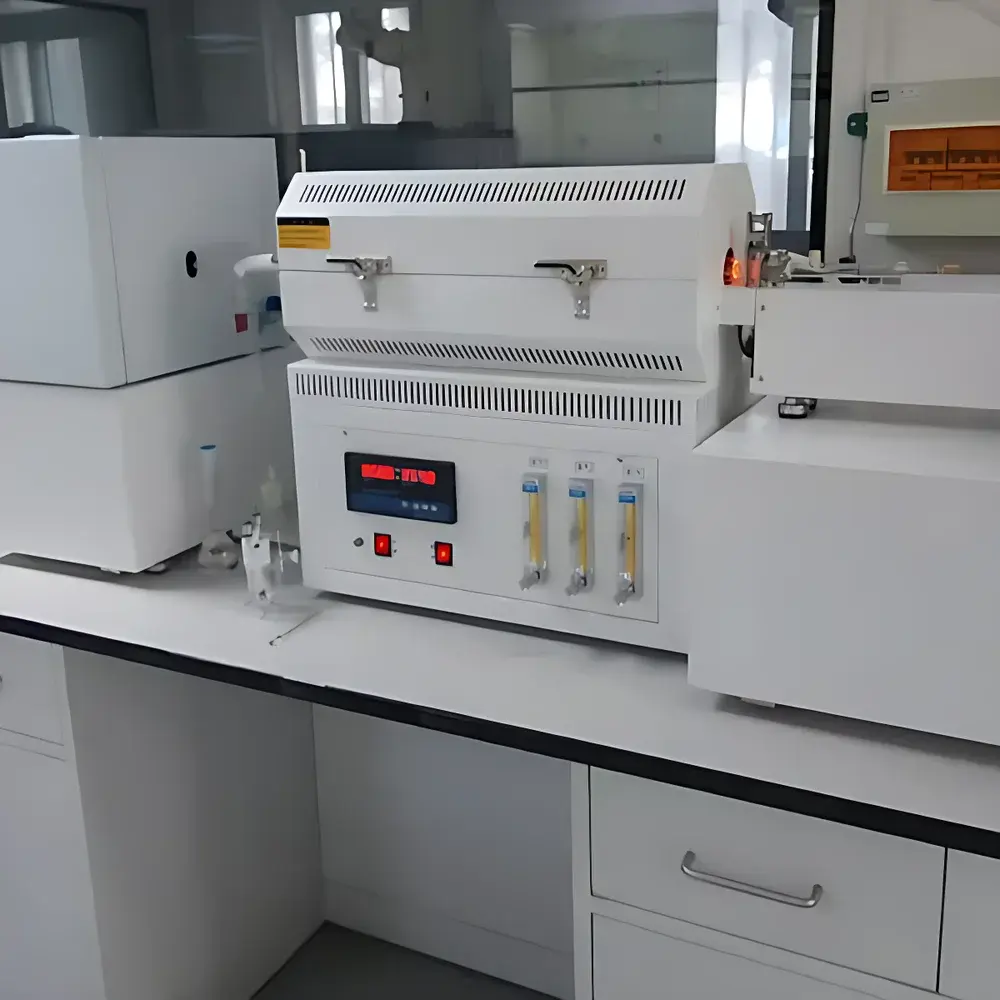
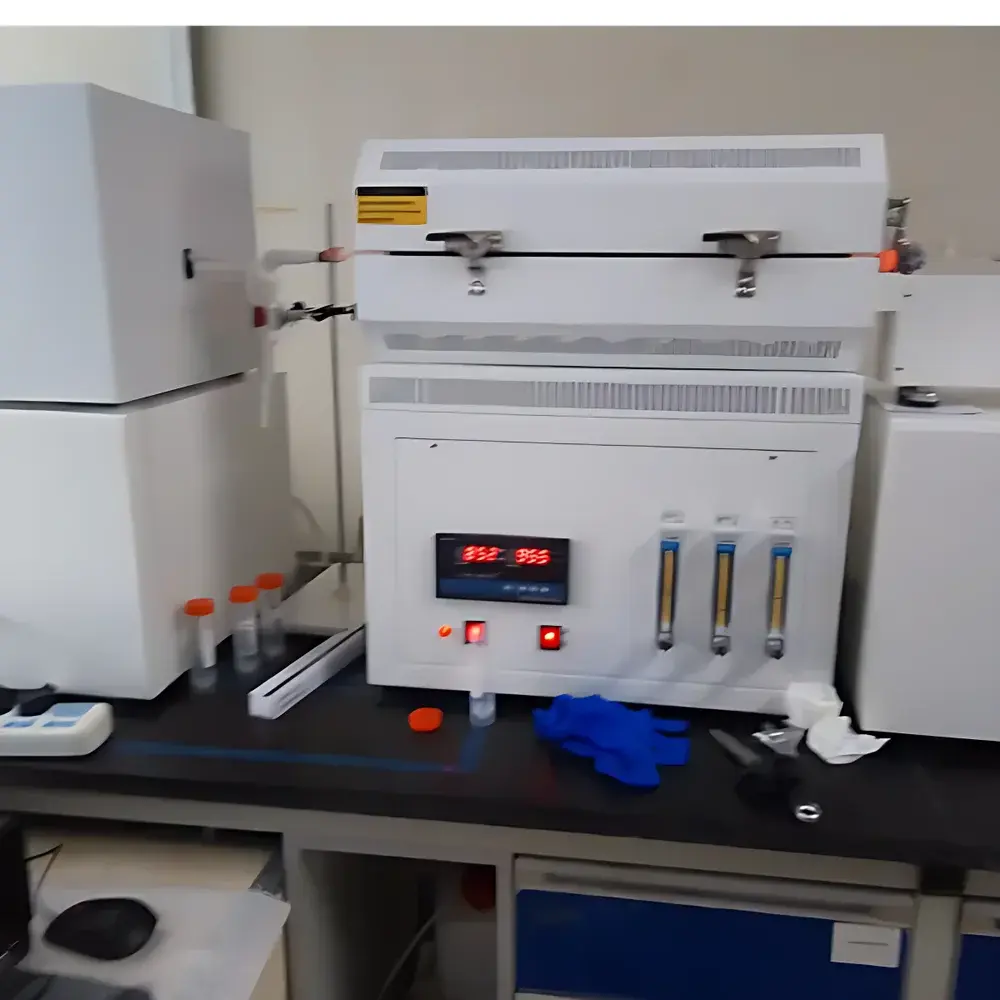
Zhuochi AOX-WK-3 Microcoulometric Halogen Analyzer for AOX Determination per GB/T 34845–2017
| Key | Principle: Combustion–Microcoulometric Titration |
|---|---|
| Range | 0.5–5 mg/kg (as Cl) |
| Accuracy | ±1 °C (furnace temperature control) |
| Repeatability | ≤10% RSD at ≤2 mg/L sample concentration |
| LOD | Not explicitly defined |
| Compliance | GB/T 34845–2017, GB/T 22904–2008 |
| Operating System | Windows-based control interface |
| Instrument Type | Benchtop AOX analyzer with integrated high-temperature combustion furnace and microcoulometric detection cell |
Overview
The Zhuochi AOX-WK-3 Microcoulometric Halogen Analyzer is a dedicated benchtop instrument engineered for the quantitative determination of Adsorbable Organic Halogens (AOX) in pulp, paper, and tissue products—specifically designed to comply with the Chinese national standard GB/T 34845–2017, “Determination of Adsorbable Organic Halogens (AOX) in Household Paper Products,” and GB/T 22904–2008, “Pulp, Paper and Board — Determination of Total Chlorine and Organic Chlorine.” The system operates on the combustion–microcoulometric titration principle: solid or extracted samples are combusted at controlled high temperatures (typically 950–1100 °C) in a quartz furnace under oxygen-rich conditions, converting all organic halogens (Cl, Br, I) into hydrogen halides (HX). These gaseous species are then absorbed in an aqueous electrolyte solution, where halide ions are quantified via coulometric back-titration using silver ions generated electrochemically at a constant current. The charge required to regenerate Ag⁺ is directly proportional to halogen mass, enabling precise, trace-level quantification without external calibration standards.
Key Features
- Integrated high-temperature combustion furnace with programmable temperature profile (±1 °C stability) and quartz reaction tube optimized for complete oxidative decomposition of lignocellulosic matrices.
- Microcoulometric detection cell featuring dual platinum electrodes, low-volume electrolyte reservoir, and real-time current integration for direct mass-based quantification.
- Windows-based control software providing intuitive workflow navigation, automated sequence execution, and real-time display of combustion temperature, titration current, and integrated charge.
- Built-in data logging: all method parameters (e.g., combustion time, gas flow rates, titration thresholds), raw coulometric signals, and final AOX results (mg/kg as Cl) are timestamped and stored in structured binary format.
- Modular design facilitates routine maintenance—combustion tube, absorption cell, and electrode assembly are field-replaceable with standardized tooling and documented procedures.
- No requirement for certified reference materials during daily operation; system verification performed via potassium hydrogen phthalate (KHP) or 3-chlorobenzoic acid check standards per GB/T 34845–2017 Annex B.
Sample Compatibility & Compliance
The AOX-WK-3 is validated for use with uncoated and lightly coated household paper products—including toilet paper, facial tissues, paper towels, kitchen rolls, napkins, and handkerchiefs—produced from wood or non-wood fiber sources. Sample preparation follows standardized adsorption on activated carbon (per GB/T 34845–2017 Section 6), followed by acidification and extraction. The instrument meets all instrumental performance criteria specified in Clause 7 of GB/T 34845–2017, including repeatability (≤10% RSD at ≤2 mg/L equivalent concentration in extract) and method detection capability. While not certified to ISO/IEC 17025, the system supports GLP-aligned documentation practices: audit trails for method edits, user logins, electronic signatures (via Windows credential integration), and exportable CSV reports compatible with LIMS environments.
Software & Data Management
The native Windows application provides full instrument control, method configuration, and result reporting. All analytical sessions are assigned unique batch IDs; raw coulometric curves and processed integrals are retained alongside metadata (operator ID, date/time, sample ID, furnace setpoint). Data export options include PDF summary reports (with embedded chromatogram-like titration traces), CSV for statistical analysis, and XML for enterprise system ingestion. Software enforces parameter locking during run execution and maintains a tamper-evident log of all configuration changes. Though not 21 CFR Part 11 compliant out-of-the-box, the architecture supports third-party digital signature modules and networked backup configurations required for regulated QC laboratories.
Applications
- Quality control of bleached and unbleached tissue grades for AOX compliance prior to market release.
- Process optimization studies evaluating chlorine dioxide, ozone, or peroxide bleaching efficiency in pulp mills.
- Environmental monitoring of wastewater effluents from paper manufacturing facilities (when coupled with EPA Method 1650 or ISO 9562 adaptations).
- Research applications investigating halogenated DBPs in recycled fiber systems or enzymatic deinking processes.
- Verification testing for suppliers under OEM environmental specifications requiring AOX < 1.0 mg/kg (e.g., EU Ecolabel, Nordic Swan).
FAQ
What sample types are supported under GB/T 34845–2017?
Solid paper products only—no liquid effluents or sludge. Samples must be homogenized, dried, and cut to ≤2 mm fragments prior to carbon adsorption.
Is calibration with halogen standards required before each analysis?
No. The microcoulometric principle is absolute—quantification relies on Faraday’s law. System verification uses certified organic chlorinated compounds (e.g., 3-chlorobenzoic acid) at least once per 20 analyses.
Can the AOX-WK-3 measure bromine or iodine separately from chlorine?
No. It reports total AOX as chloride-equivalent mass (mg/kg Cl). Speciation requires complementary techniques such as IC-MS or HR-GC/MS.
What maintenance intervals are recommended for the combustion furnace?
Quartz tube inspection every 100 runs; replacement every 500–800 runs depending on sample matrix ash content. Electrolyte replenishment required after every 20–30 analyses.
Does the system support automated sample introduction?
No. Sample loading and carbon cartridge handling are manual per GB/T 34845–2017 protocol. Autosamplers are not integrated but may be retrofitted via third-party robotics interfaces.
Related Products







