
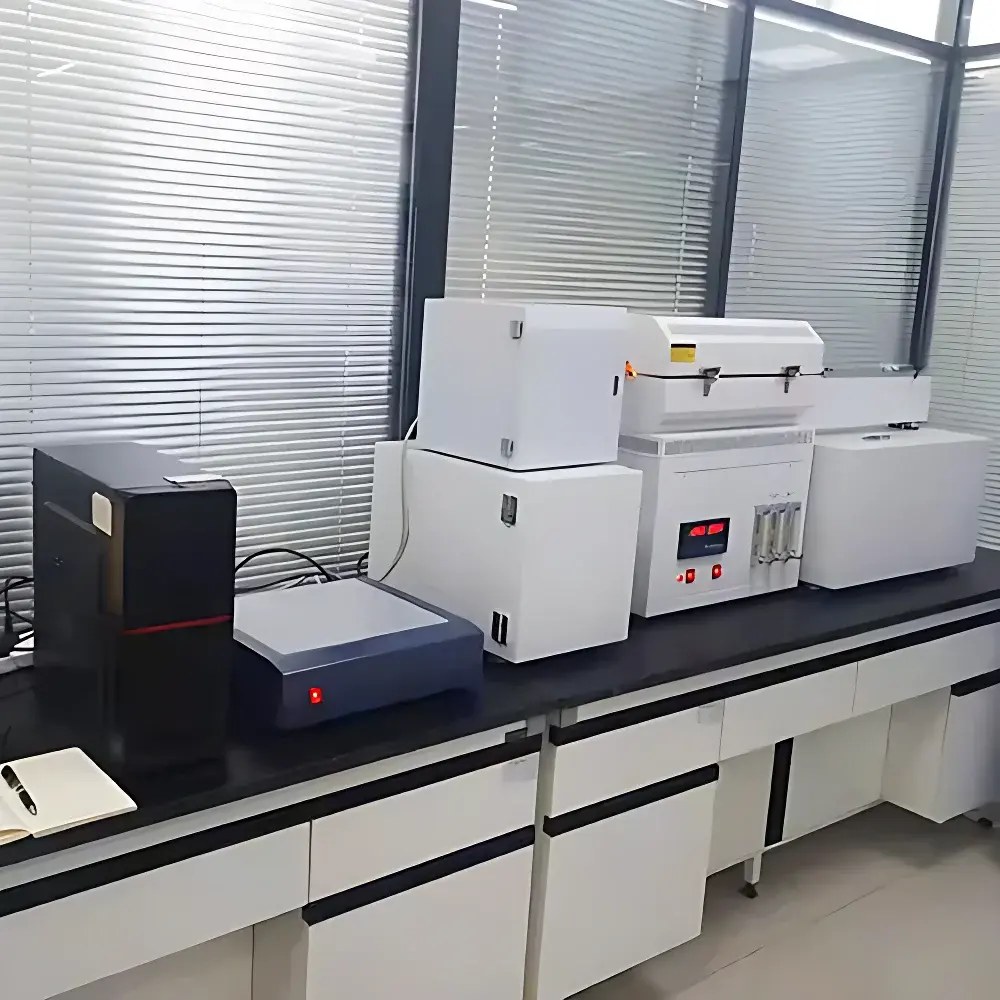
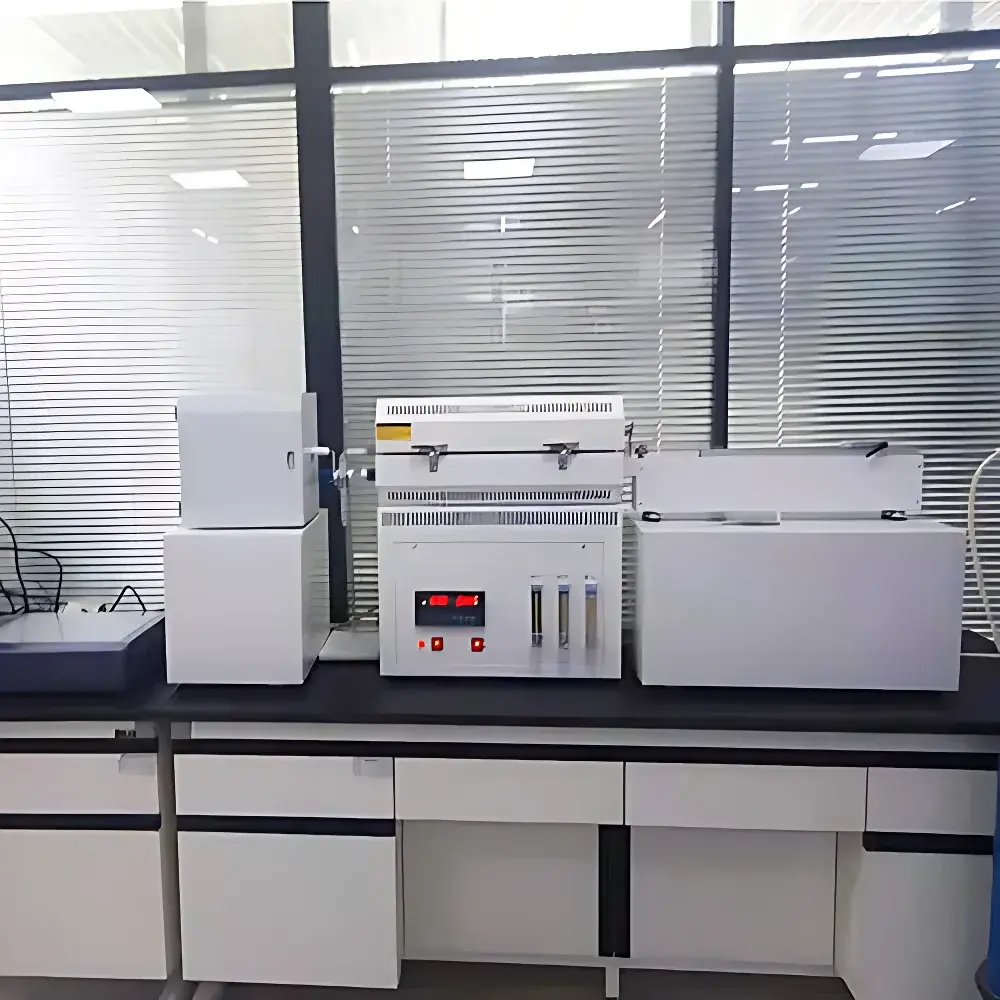
Zhuochi AOX-WK Microcoulometric Analyzer for Adsorbable Organic Halides (AOX) per HJ 1214–2021
| Brand | Zhuochi |
|---|---|
| Origin | Zhejiang, China |
| Manufacturer Type | Authorized Distributor |
| Country of Origin | China |
| Model | AOX-WK |
| Measurement Principle | Combustion–Microcoulometric Titration |
| Temperature Range | 500 °C to 1000 °C |
| Temperature Accuracy | ±1% ±5 °C |
| Overall Accuracy | <5% |
| Repeatability | <5% |
| Limit of Detection (LOD) | 0.1 µg/L |
| Compliance | HJ 1214–2021 |
Overview
The Zhuochi AOX-WK Microcoulometric Analyzer is a dedicated instrumental system engineered for the quantitative determination of Adsorbable Organic Halides (AOX) in aqueous environmental samples, fully compliant with the Chinese national standard HJ 1214–2021 – Water Quality – Determination of Adsorbable Organic Halides (AOX) – Microcoulometric Method. This system implements the combustion–microcoulometric titration principle: water samples are first pre-concentrated via activated carbon adsorption, followed by thermal desorption and high-temperature catalytic combustion (500–1000 °C) in an oxygen-rich atmosphere. Halogenated compounds are converted quantitatively to hydrogen halides (e.g., HCl, HBr), which are swept into a microcoulometric titration cell containing a silver nitrate electrolyte. The liberated halide ions react stoichiometrically with electrogenerated Ag+, and the charge consumed during titration—measured in coulombs—is directly proportional to the total halogen mass according to Faraday’s law. This fundamental electrochemical basis ensures trace-level sensitivity and high reproducibility across routine environmental monitoring workflows.
Key Features
- Integrated dual-zone programmable combustion furnace with precision gas-flow–controlled temperature regulation (±1% ±5 °C), enabling stable thermal decomposition across the full 500–1000 °C operating range;
- Dedicated quartz combustion tube with optimized catalyst bed geometry for complete mineralization of refractory organic halides without charring or memory effects;
- Automated sample introduction and effluent handling modules designed to minimize operator exposure and ensure consistent injection dynamics;
- High-sensitivity microcoulometric detector featuring low-noise current measurement circuitry and real-time charge integration for sub-microgram quantification;
- Modular column adsorption unit compliant with HJ 1214–2021 requirements for activated carbon pre-concentration (e.g., 100 mL–1 L sample volumes, flow-controlled loading);
- Rugged, laboratory-grade architecture with corrosion-resistant gas pathways and sealed reagent compartments to maintain long-term calibration stability.
Sample Compatibility & Compliance
The AOX-WK system is validated for use with surface water, groundwater, wastewater, and treated effluents as defined in HJ 1214–2021. Sample matrices must be free of suspended solids (>0.45 µm filtration required) and interfering oxidants (e.g., residual chlorine removed by sodium thiosulfate pretreatment). The method meets regulatory performance criteria including LOD ≤ 0.1 µg/L (as Cl), accuracy <5%, and repeatability <5% (RSD) at concentrations ≥ 10 µg/L. While HJ 1214–2021 is a national standard, the underlying combustion–microcoulometric methodology aligns conceptually with ISO 9562 (1993) and ASTM D5908–17 (Standard Test Method for Total Organic Halides in Water by Microcoulometry), facilitating cross-method comparability in multi-jurisdictional reporting contexts. System documentation supports GLP-compliant audit trails when paired with validated procedural SOPs.
Software & Data Management
The AOX-WK operates under embedded firmware with USB-connected PC interface for instrument control, real-time titration curve visualization, and automated calculation of AOX concentration (µg/L as Cl). Raw coulombic data, temperature logs, and method parameters are stored in timestamped CSV files compatible with LIMS integration. Data integrity safeguards include user-access levels, electronic signature prompts for critical steps (e.g., calibration verification), and immutable audit logs meeting minimum requirements for internal QA/QC and regulatory review. Although not FDA 21 CFR Part 11–certified out-of-the-box, the system architecture permits configuration for Part 11–aligned workflows when deployed within validated IT environments governed by documented change control procedures.
Applications
- Regulatory compliance testing for municipal and industrial wastewater discharge permits under China’s Environmental Protection Law;
- Source water quality assessment in drinking water treatment plants evaluating halogenated DBP precursors;
- Monitoring AOX accumulation in receiving waters downstream of pulp/paper mills, pharmaceutical manufacturing, and chlor-alkali facilities;
- Method validation and interlaboratory comparison studies supporting national environmental monitoring networks;
- Research on halogen speciation trends (Cl/Br/I) through sequential fractionation protocols coupled with post-combustion ion chromatography (IC) analysis.
FAQ
What sample volume is required for analysis?
Typical sample volumes range from 100 mL to 1 L, depending on expected AOX concentration; lower volumes may be used for high-concentration effluents after dilution validation.
Is the system compatible with other halogen-speciation methods?
The AOX-WK measures total adsorbable organic halogens (as Cl-equivalent); speciation requires coupling with post-combustion techniques such as IC or ICP-MS, which are methodologically supported but require separate instrumentation.
How often must the microcoulometric cell be regenerated?
Cell regeneration frequency depends on sample load and matrix complexity; under routine use (≤10 samples/day), electrolyte replacement and electrode cleaning are recommended every 50–100 analyses or weekly, whichever occurs first.
Does the system support unattended operation?
Yes—the combustion furnace, adsorption module, and titration unit are synchronized via integrated timing logic, enabling batch processing of up to 12 prepared samples with minimal manual intervention between runs.
What maintenance documentation is provided?
Comprehensive English-language manuals include hardware schematics, calibration protocols, troubleshooting guides, and preventive maintenance schedules aligned with ISO/IEC 17025 laboratory management expectations.
Related Products







