
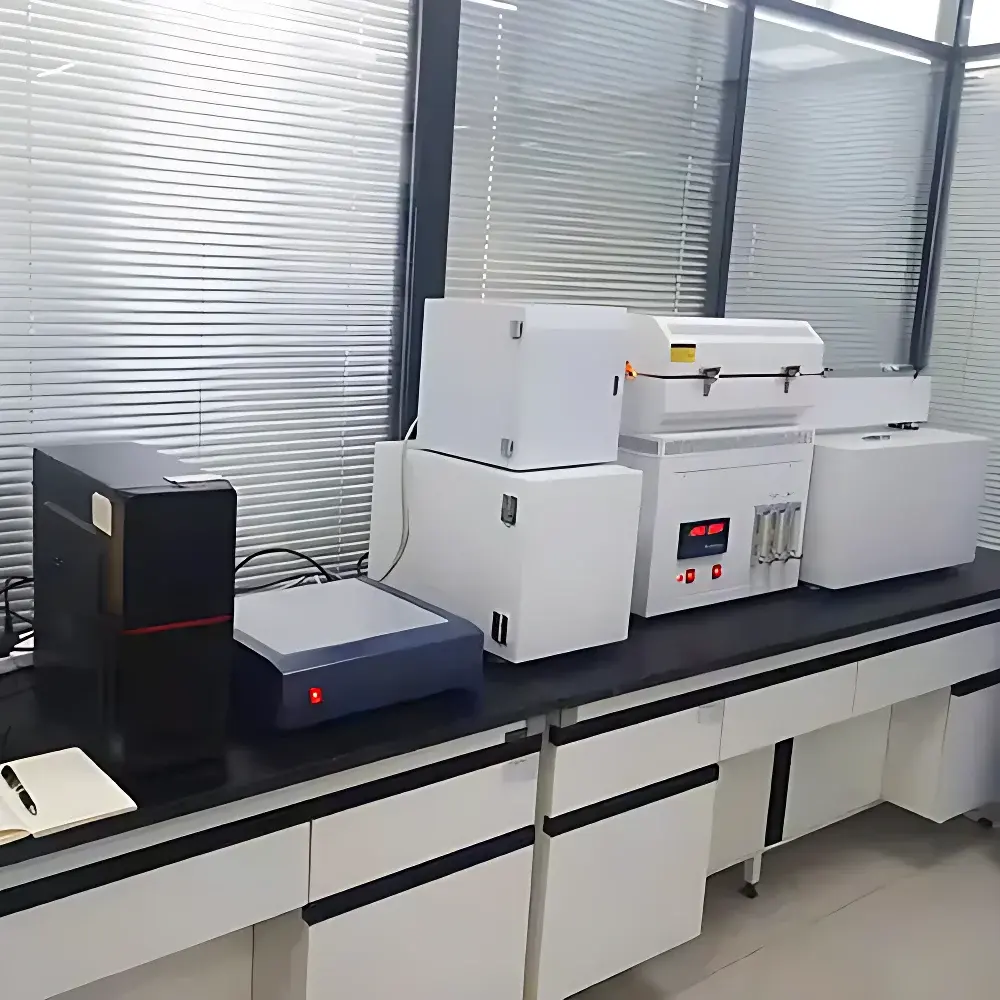
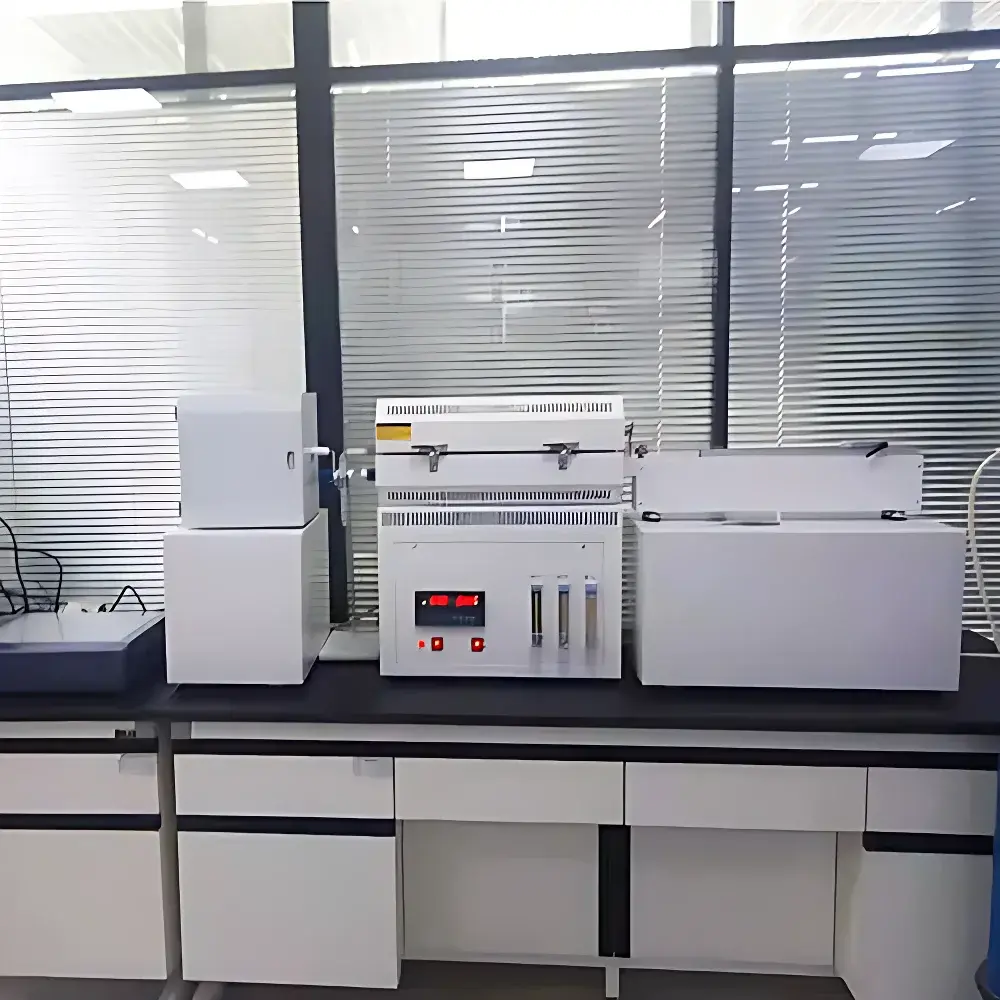
Zhuochi AOX-WK-S Microcoulometric Analyzer for Adsorbable Organic Halides (AOX) in Water
| Brand | Zhuochi |
|---|---|
| Origin | Zhejiang, China |
| Model | AOX-WK-S |
| Measurement Principle | Combustion–Microcoulometric Titration |
| Temperature Range | 500–1000 °C (±1% ±5 °C) |
| Accuracy | <5% |
| Repeatability | <5% |
| Limit of Detection (LOD) | 0.1 µg/L |
| Compliance | HJ 1214–2021 (China National Standard for AOX in Water) |
Overview
The Zhuochi AOX-WK-S Microcoulometric Analyzer is a dedicated instrumental system engineered for the quantitative determination of Adsorbable Organic Halides (AOX) in aqueous environmental samples, fully compliant with China’s national standard HJ 1214–2021, “Determination of Adsorbable Organic Halides (AOX) in Water—Microcoulometric Method.” The system implements the combustion–microcoulometric titration principle: water samples are first passed through activated carbon to adsorb organic halogen compounds; the loaded carbon is then combusted at high temperature (500–1000 °C) under controlled oxygen flow, converting organically bound halogens (Cl, Br, I) into hydrogen halides (HX). These gaseous species are absorbed into an electrolyte solution where they undergo microcoulometric titration via electrogenerated silver ions (Ag⁺), enabling highly selective and stoichiometric quantification of total halogen content. This method delivers trace-level sensitivity and robust performance for regulatory monitoring of chlorinated disinfection by-products, pesticide residues, pharmaceutical metabolites, and industrial effluent contaminants.
Key Features
- Dual-zone programmable combustion furnace with integrated gas-flow and temperature control (±1% ±5 °C stability across 500–1000 °C), ensuring complete and reproducible thermal decomposition of adsorbed organohalogens.
- Optimized quartz combustion tube with inert inner lining to prevent catalytic interference or halogen memory effects between runs.
- Automated sample introduction and ash removal modules minimizing operator exposure and reducing carryover risk.
- Dedicated microcoulometric detector featuring Ag/Ag⁺ redox electrode pair, real-time current integration, and charge-based quantification calibrated against certified KBr standards.
- Integrated column adsorption unit with standardized activated carbon cartridges (ASTM D5907-compliant packing geometry), supporting parallel or sequential sample loading per HJ 1214–2021 protocol.
- Rugged, modular architecture designed for routine laboratory operation in environmental testing labs accredited to CNAS (ISO/IEC 17025) and aligned with GLP data integrity expectations.
Sample Compatibility & Compliance
The AOX-WK-S accommodates a broad range of water matrices including surface water, groundwater, wastewater, drinking water, and leachates—provided suspended solids are pre-filtered (<0.45 µm) and interfering oxidants (e.g., residual chlorine, Fe³⁺) are quenched prior to adsorption. Sample volumes range from 100 mL to 1 L depending on expected AOX concentration and LOD requirements. All operational parameters—including combustion temperature ramp profiles, gas flow rates, and electrolyte composition—are defined and validated per HJ 1214–2021. While developed for Chinese regulatory use, the underlying microcoulometric methodology is technically harmonized with ISO 9562 (1993) and DIN 38409-22 (2015), facilitating cross-border method equivalence assessments. System documentation supports audit readiness for environmental lab accreditation (CNAS, CMA) and internal QA/QC programs requiring documented calibration, blank tracking, and spike recovery records.
Software & Data Management
The analyzer operates via embedded firmware with USB-connected configuration and data export interface. Instrument control includes preset combustion cycles, automatic baseline correction, and real-time coulombic charge integration display. Raw data (charge vs. time) and calculated AOX concentrations (µg/L as Cl) are exported in CSV format for external validation and LIMS integration. Each analysis record captures critical metadata: sample ID, date/time, operator, furnace temperature setpoint, gas flow rate, blank value, recovery percentage (if spiked), and detector response stability index. While not FDA 21 CFR Part 11-certified out-of-the-box, the system supports manual electronic signature workflows and audit-trail logging when deployed within validated laboratory IT environments meeting GLP/GMP documentation requirements.
Applications
- Regulatory compliance testing for municipal wastewater treatment plants discharging to sensitive aquatic ecosystems.
- Monitoring AOX formation during chlorination, chloramination, and ozone–chlorine hybrid disinfection processes.
- Environmental impact assessment of pulp and paper mill effluents, textile dyeing facilities, and agrochemical manufacturing sites.
- Method validation and interlaboratory comparison studies targeting halogenated persistent organic pollutants (POPs), including dioxins precursors and brominated flame retardant degradation products.
- Research applications in environmental fate and transport modeling, where speciation-independent total halogen burden serves as a conservative surrogate endpoint.
FAQ
What sample preparation steps are required prior to AOX analysis using the AOX-WK-S?
Samples must be filtered through a 0.45 µm membrane, acidified to pH ≤2 with HNO₃, and dechlorinated using ascorbic acid if free chlorine is present. Dissolved organic carbon (DOC) should be measured concurrently to normalize AOX results where necessary.
Can the system quantify individual halogens (Cl, Br, I) separately?
No—the AOX-WK-S reports total adsorbable halogen content expressed as µg/L Cl-equivalent. It does not provide halogen speciation; separation requires coupling with GC-MS or IC-MS techniques.
How frequently must the microcoulometric cell electrolyte be replaced?
Electrolyte (typically 0.01 mol/L AgNO₃ in 2% HNO₃) should be refreshed after every 10–15 analyses or immediately upon observing unstable baseline current or reduced titration efficiency.
Is certified reference material (CRM) available for method verification?
Yes—NIST SRM 2291 (chlorinated humic substances) and custom KBr-spiked water CRMs traceable to NMIJ are recommended for initial qualification and ongoing QC checks.







