
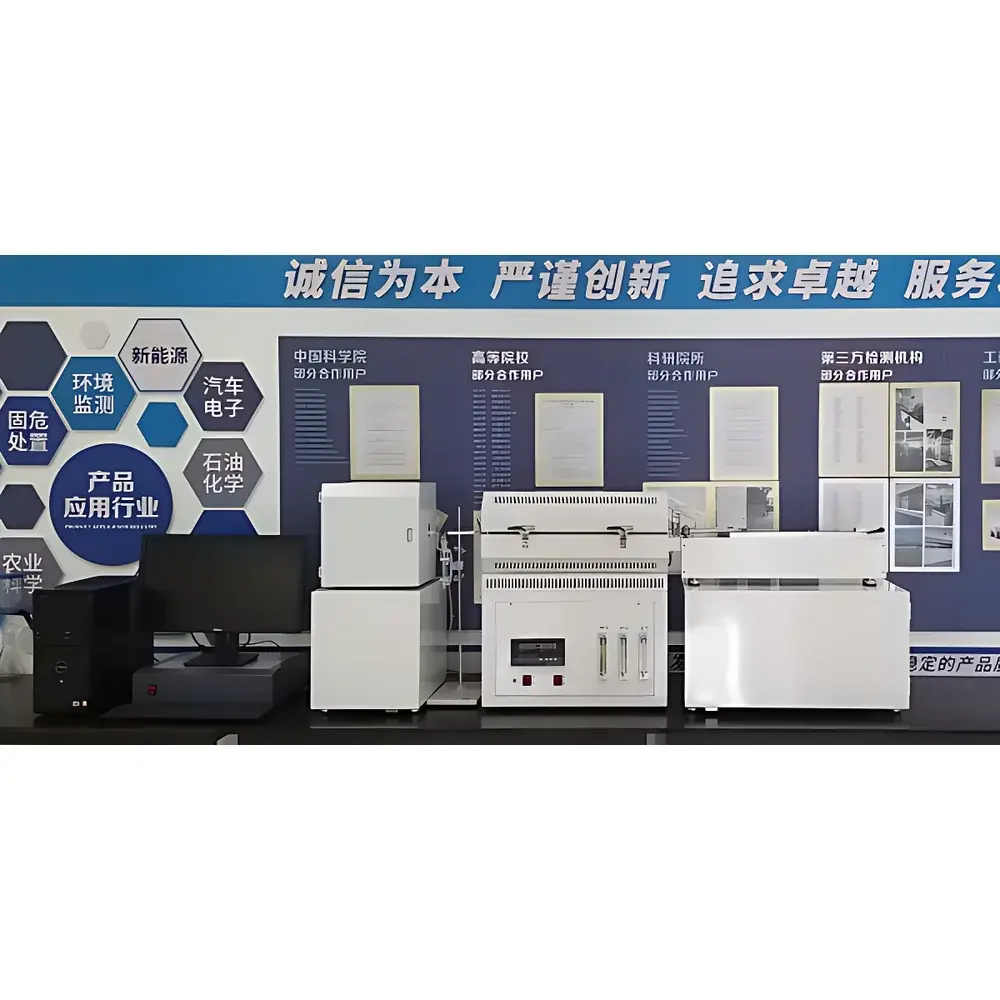
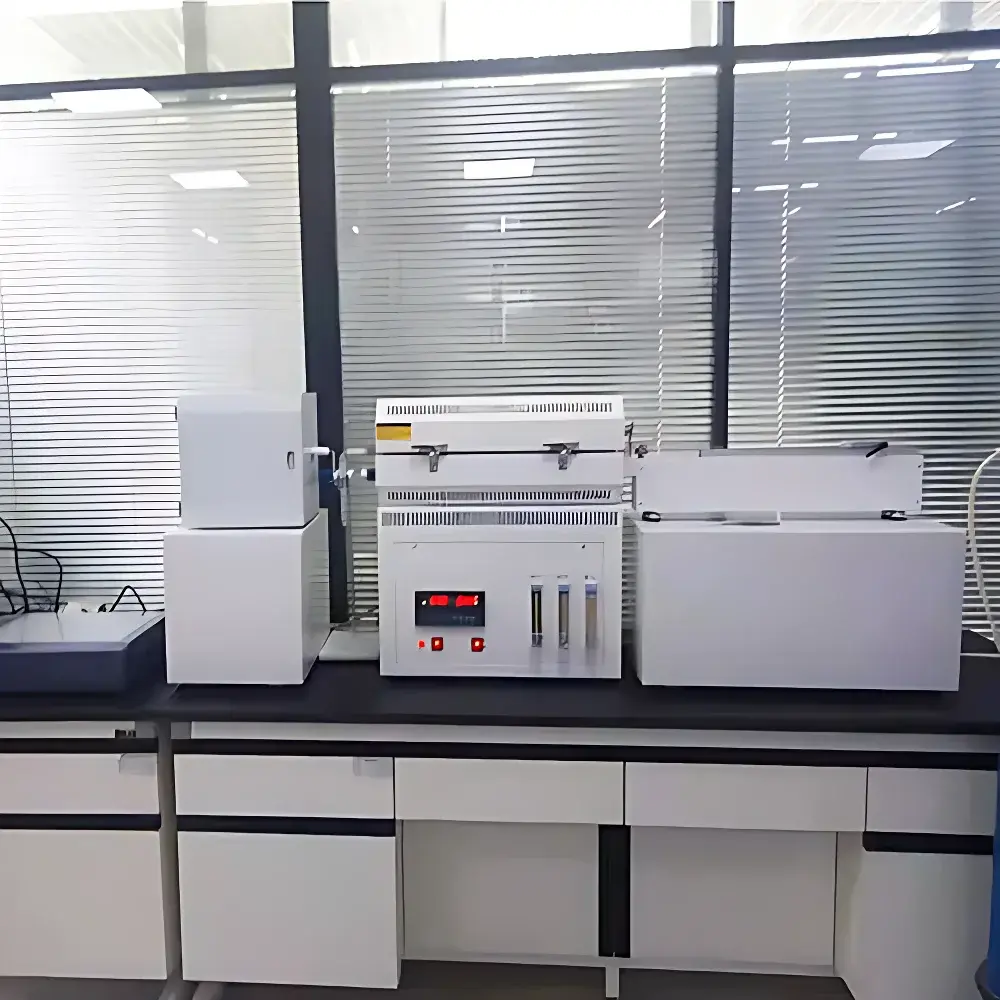
Zhuochi AOX-WK-S Microcoulometric Analyzer for Adsorbable Organic Halogens (AOX) per HJ 1214–2021
| Brand | Zhuochi |
|---|---|
| Origin | Zhejiang, China |
| Manufacturer Type | Authorized Distributor |
| Country of Manufacture | China |
| Model | AOX-WK-S |
| Measurement Principle | Combustion–Microcoulometric Titration |
| Temperature Range | 500–1000 °C |
| Temperature Accuracy | ±1% ±5 °C |
| Measurement Accuracy | <5% |
| Repeatability | <5% |
| LOD | 0.1 µg/L |
| Compliance | HJ 1214–2021 |
Overview
The Zhuochi AOX-WK-S Microcoulometric Analyzer is a dedicated instrumental system engineered to quantify adsorbable organic halogens (AOX) in aqueous environmental samples in strict accordance with the People’s Republic of China National Standard HJ 1214–2021, “Determination of Adsorbable Organic Halogens (AOX) in Water—Microcoulometric Method.” The system implements the combustion–microcoulometric titration principle: water samples are first passed through activated carbon columns to adsorb organic halogenated compounds; the loaded carbon is then combusted at high temperature (500–1000 °C) under oxygen-rich conditions, converting all organically bound chlorine, bromine, and iodine into hydrogen halides (HX). These gaseous halides are swept into an electrolytic cell containing a silver nitrate–sodium nitrate–acetic acid electrolyte, where electrochemical titration occurs via controlled generation of Ag⁺ ions. The total charge required to maintain stoichiometric equivalence between generated Ag⁺ and incoming X⁻ is measured, enabling precise quantification of total halogen mass based on Faraday’s law. This method delivers trace-level sensitivity and high specificity for halogenated organics—including chlorinated pesticides, brominated flame retardants, iodinated contrast media, and industrial process residues—without interference from inorganic halides or matrix salts when operated per protocol.
Key Features
- Integrated dual-zone combustion furnace with independent gas-flow temperature control, ensuring stable thermal profiles across the sample oxidation and catalytic conversion zones
- Dedicated quartz combustion tubes optimized for complete mineralization of adsorbed organohalogens and minimal memory effect
- Automated sample introduction and ash removal modules designed for reproducible handling of activated carbon cartridges (standard 100–200 mg loading)
- High-stability microcoulometric detection cell with Ag/Ag⁺ reference electrode and low-noise current measurement circuitry (resolution <10 nC)
- Modular column adsorption unit compatible with standard 10-mm-diameter activated carbon cartridges and certified blank verification protocols
- Full-system validation support including certified reference materials (CRM), procedural blanks, and recovery spikes per HJ 1214–2021 Section 8
Sample Compatibility & Compliance
The AOX-WK-S supports analysis of surface water, groundwater, wastewater, leachates, and treated effluents. Sample preparation follows standardized adsorption using specified activated carbon (e.g., Norit SX-1 or equivalent), followed by rigorous rinsing and drying prior to combustion. The system meets all instrumental performance criteria outlined in HJ 1214–2021, including calibration linearity (R² ≥ 0.995 over 0.1–100 µg AOX), method detection limit verification (<0.1 µg/L as Cl), and interlaboratory precision requirements. While HJ 1214–2021 is a national Chinese standard, its technical foundation aligns with ISO 9562 (1993) and DIN 38409 Part 37 (2012); users may adapt operational parameters to meet local regulatory reporting needs under EPA Method 1650 or EN ISO 9562 frameworks, subject to method validation.
Software & Data Management
Instrument operation and data acquisition are managed via embedded firmware with USB interface and optional PC-based control software (Windows 10/11 compatible). All raw coulometric signals, temperature logs, and calibration records are timestamped and stored with metadata (operator ID, sample ID, column lot number, blank status). Audit trails comply with basic GLP documentation requirements: changes to calibration curves or integration parameters are logged with user attribution and timestamps. Export formats include CSV and PDF reports compliant with laboratory information management system (LIMS) ingestion standards. For regulated environments requiring 21 CFR Part 11 compliance, third-party electronic signature and role-based access modules are available upon request.
Applications
- Regulatory monitoring of AOX emissions from pulp and paper mills, chlor-alkali plants, and pharmaceutical manufacturing facilities
- Wastewater treatment plant (WWTP) influent/effluent characterization for halogenated micropollutant load assessment
- Environmental impact assessments (EIA) involving discharge permits and receiving water body quality evaluation
- Research on transformation products of emerging contaminants (e.g., degradation of PFAS precursors, disinfection by-product formation)
- Validation of advanced oxidation processes (AOPs) and activated carbon regeneration efficiency
FAQ
What sample volume is required for AOX determination using the AOX-WK-S?
Typical analysis uses 100–500 mL of water sample, depending on expected AOX concentration and carbon loading capacity. Lower concentrations require larger volumes or pre-concentration via solid-phase extraction (SPE) prior to adsorption.
Does the system differentiate between chlorine, bromine, and iodine species?
No—the method reports total AOX as micrograms of chlorine equivalent (µg Cl⁻ eq./L). Halogen speciation requires complementary techniques such as IC-MS or HR-GC-MS.
Can the AOX-WK-S be used for soil or sediment extracts?
Yes, provided extracts are aqueous (e.g., water-leached or methanol–water extracted and solvent-exchanged), filtered (0.45 µm), and free of suspended solids that could clog the adsorption column.
Is routine maintenance documented in the user manual?
Yes—the manual includes scheduled procedures for combustion tube cleaning, electrolyte replacement (every 50–100 analyses), Ag electrode polishing, and system leak testing using helium tracer gas.
How is method accuracy verified during daily operation?
Per HJ 1214–2021, each analytical batch must include one reagent blank, one matrix spike (at 5–10 µg/L), and one certified reference material (CRM) with known AOX content; recovery must fall within 70–130% for acceptance.







