
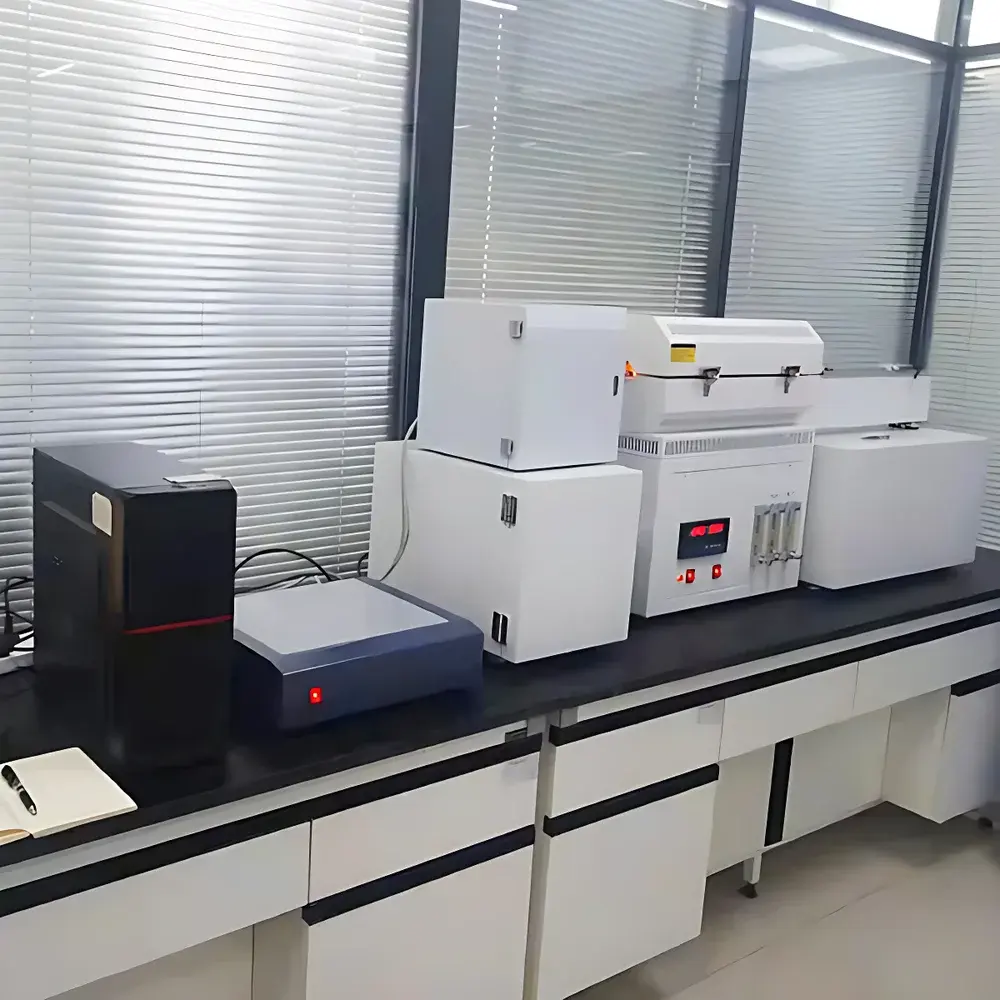
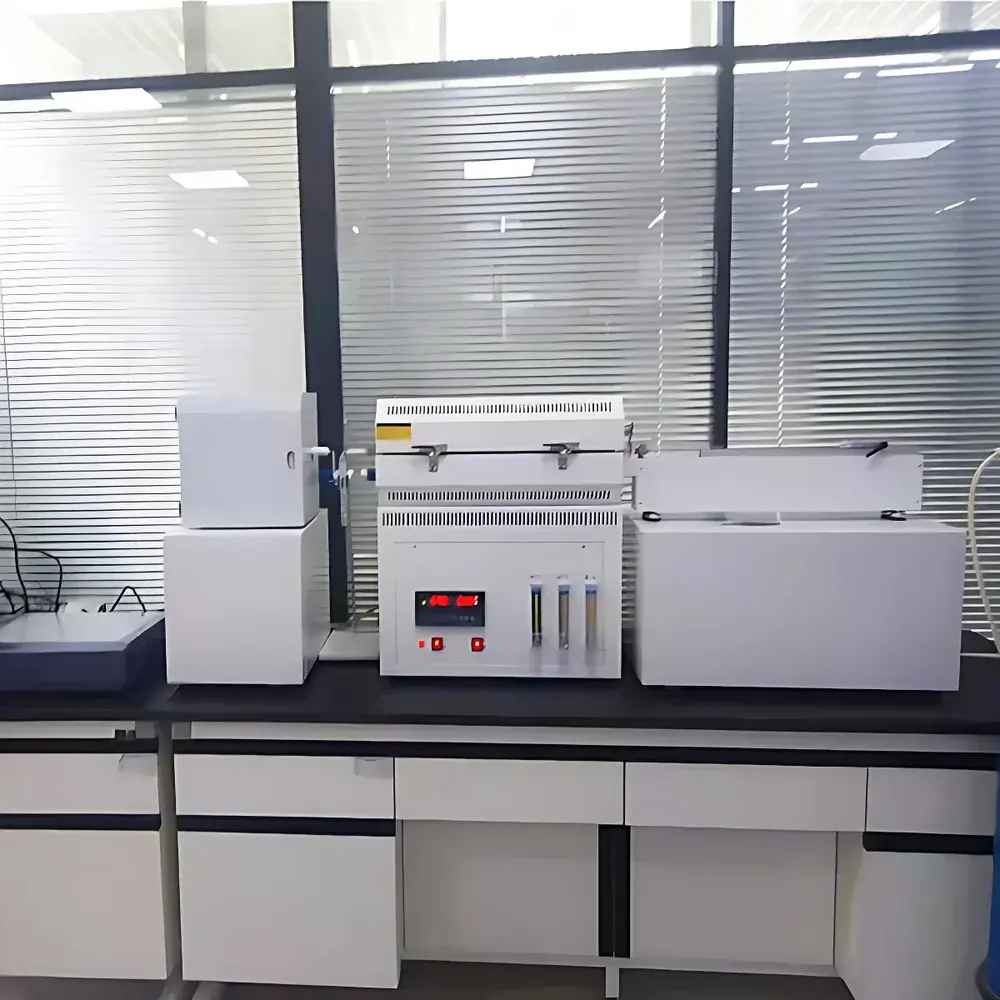
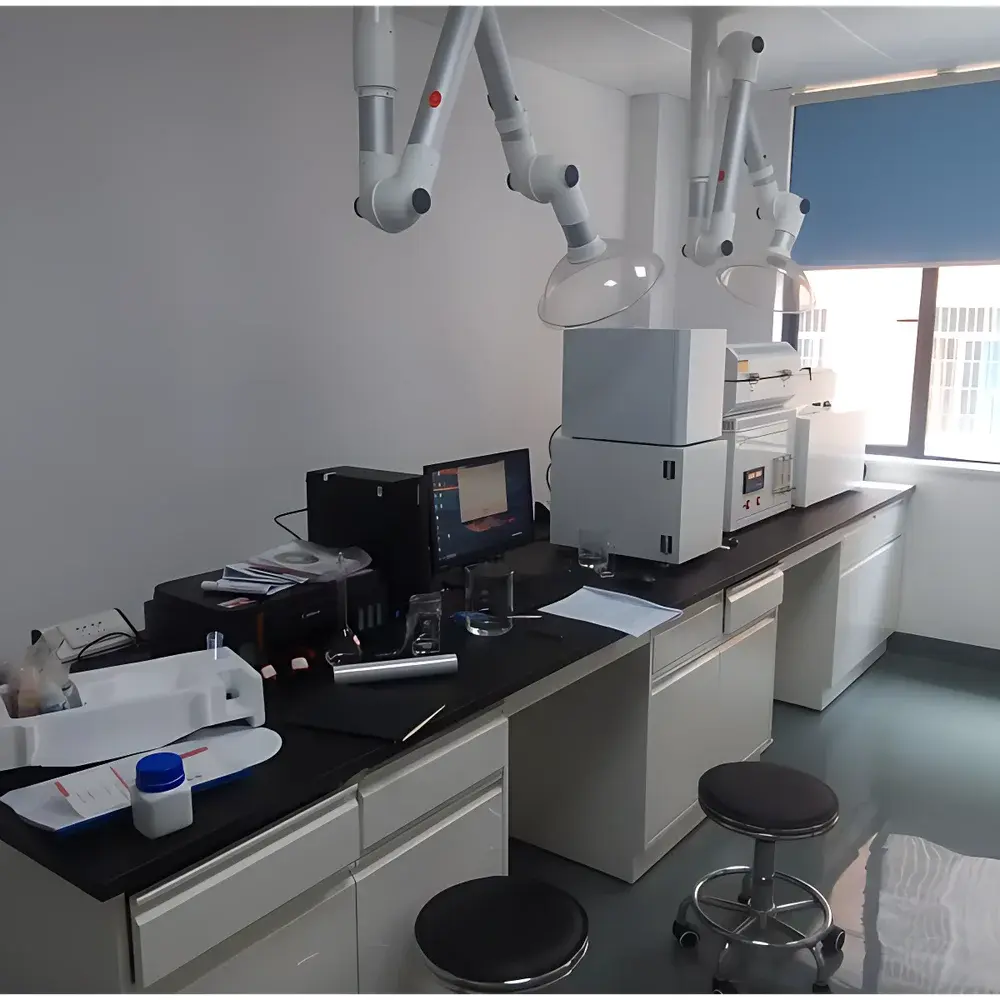
Zhuochi AOX-WK-S Microcoulometric Analyzer for Adsorbable Organic Halogens (AOX) in Water
| Brand | Zhuochi |
|---|---|
| Model | AOX-WK-S |
| Application | Water Quality Analysis |
| Measurement Principle | Combustion–Microcoulometric Titration |
| Temperature Range | 500–1000 °C (±1% ±5 °C) |
| Accuracy | <5% |
| Repeatability | <5% |
| LOD | 0.1 µg/L |
| Compliance | HJ 1214–2021 (China EPA Standard) |
| Origin | Zhejiang, China |
| Supplier Type | Authorized Distributor |
Overview
The Zhuochi AOX-WK-S Microcoulometric Analyzer is a dedicated instrumental system designed to quantify adsorbable organic halogens (AOX) in aqueous environmental samples—primarily surface water, wastewater, drinking water, and leachates—in strict accordance with China’s national standard HJ 1214–2021, “Determination of Adsorbable Organic Halogens (AOX) in Water—Microcoulometric Method.” The system implements the combustion–microcoulometric titration principle: water samples are first acidified and passed through activated carbon columns to adsorb organohalogen compounds; the loaded carbon is then combusted quantitatively at high temperature (500–1000 °C) under controlled oxygen flow, converting all organic halogens to hydrogen halides (e.g., HCl, HBr); the resulting halide gases are absorbed in an electrolyte solution, where electrochemical titration via coulometric generation of silver ions (Ag⁺) enables precise, real-time quantification of total halogen content. This method delivers high specificity for covalently bound halogens (Cl, Br, I), excluding inorganic halides and fluoride, and is widely accepted for regulatory compliance monitoring in municipal and industrial effluent laboratories.
Key Features
- Integrated dual-zone combustion furnace with independent airflow and temperature control—ensures stable thermal decomposition across the full 500–1000 °C operating range (±1% ±5 °C accuracy) and minimizes carryover between analyses.
- Dedicated quartz combustion tube optimized for complete oxidation of carbon-adsorbed organohalogens without catalytic interference or wall adsorption losses.
- Automated sample introduction and ash removal modules reduce manual handling, improve inter-operator reproducibility, and support unattended batch operation.
- High-sensitivity microcoulometric detector with Ag/Ag⁺ redox electrode pair and low-noise current measurement circuitry, enabling reliable detection down to 0.1 µg/L AOX (as Cl).
- Pre-configured column adsorption unit—including standardized activated carbon cartridges, flow regulators, and vacuum-assisted loading manifold—fully aligned with HJ 1214–2021 procedural requirements.
- Robust mechanical architecture and modular design facilitate routine maintenance, calibration verification, and traceable instrument qualification per GLP practices.
Sample Compatibility & Compliance
The AOX-WK-S accepts liquid water samples within pH 2–12 and turbidity ≤100 NTU (pre-filtration recommended for suspended solids >10 mg/L). It supports both grab and composite sampling protocols. All hardware and operational workflows conform explicitly to HJ 1214–2021, including column conditioning, adsorption time (≥16 h), desorption validation, blank correction procedures, and calibration using potassium hydrogen phthalate–chlorinated standards. While developed for Chinese regulatory frameworks, the combustion–microcoulometric methodology is technically harmonized with ISO 9562 (Water quality—Determination of adsorbable organohalogens (AOX)—Microcoulometric method) and ASTM D5808–22 (Standard Test Method for Total Halogen Content in Water by Microcoulometric Titration), facilitating cross-jurisdictional data acceptance. System documentation supports audit readiness for GLP and ISO/IEC 17025-accredited laboratories.
Software & Data Management
The analyzer operates via embedded firmware with a dedicated touchscreen interface for method setup, real-time current/voltage monitoring, peak integration, and automatic calculation of AOX concentration (µg/L as Cl). Raw coulometric current traces, temperature logs, and calibration curves are exportable in CSV format for external validation. Audit trail functionality records operator ID, method version, calibration date, and result modification history—meeting foundational data integrity expectations aligned with FDA 21 CFR Part 11 principles (though not formally validated for Part 11 compliance out-of-the-box). Optional PC-based software provides enhanced reporting templates, multi-sample batch processing, and integration with LIMS via standard COM/RS-232 interfaces.
Applications
- Regulatory AOX monitoring of municipal wastewater treatment plant (WWTP) effluents and receiving waters.
- Industrial discharge compliance testing for pulp/paper, pharmaceutical, agrochemical, and textile facilities.
- Environmental impact assessment (EIA) studies evaluating halogenated pollutant loadings from landfill leachate or contaminated groundwater.
- Method validation and reference material analysis in certified environmental testing laboratories.
- Research on formation and fate of disinfection by-products (DBPs) in chlorinated drinking water systems.
FAQ
What sample volume is required for one AOX determination?
Typical analysis uses 100–500 mL of filtered, acidified water sample, depending on expected AOX concentration and adsorption efficiency.
Does the system require carrier gas certification or special purity grades?
Yes—high-purity oxygen (≥99.995%) and argon (≥99.998%) are required for combustion and carrier functions, respectively; gas purity directly affects baseline stability and LOD performance.
Can the AOX-WK-S measure individual halogens (e.g., Cl vs. Br) separately?
No—the method reports total AOX as chlorine-equivalent mass; speciation requires complementary techniques such as GC-MS or IC-MS.
How often must the microcoulometric cell be cleaned or reconditioned?
Electrode cleaning is recommended after every 20–30 analyses or when baseline drift exceeds ±2 nA; full electrolyte replacement is performed weekly under routine use.
Is third-party calibration verification supported?
Yes—the system accepts certified AOX reference standards (e.g., chlorinated benzoic acids) traceable to NIM or NIST SRMs; calibration verification checks are built into the standard operating procedure per HJ 1214–2021 Section 8.3.
Related Products







