
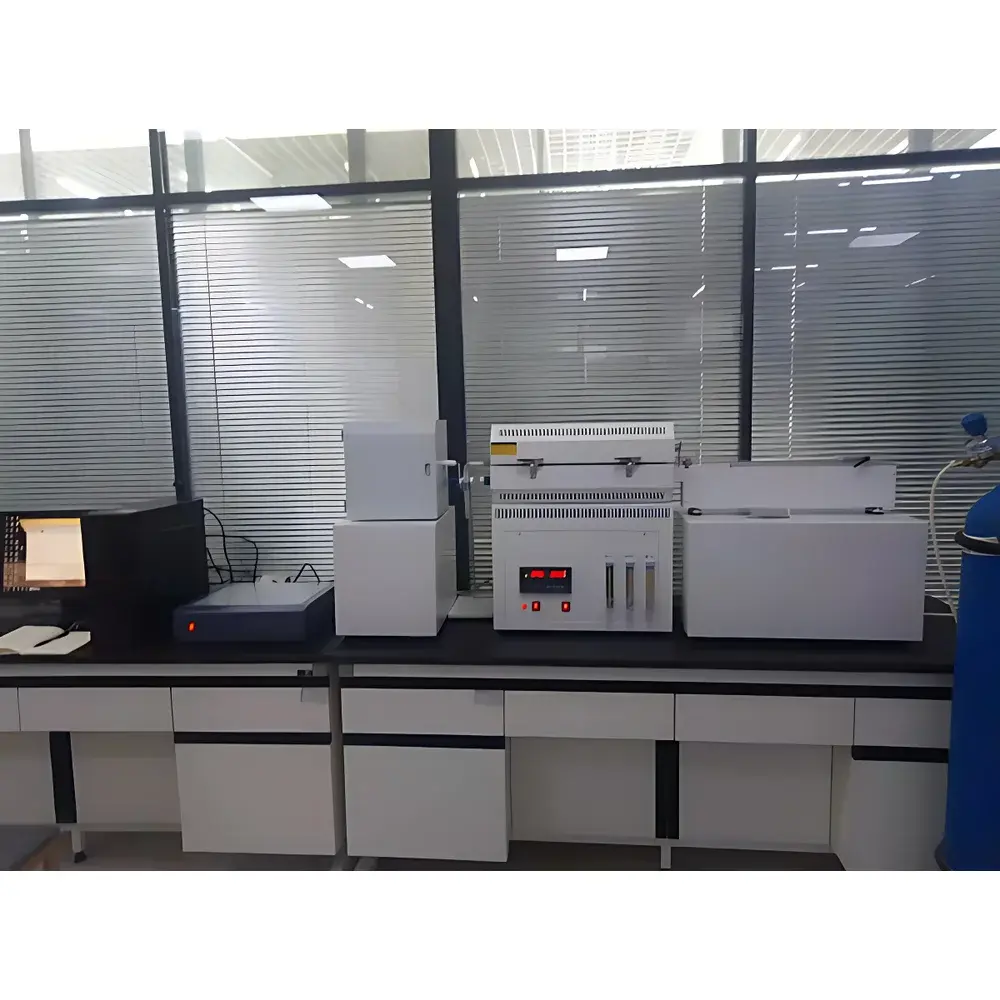
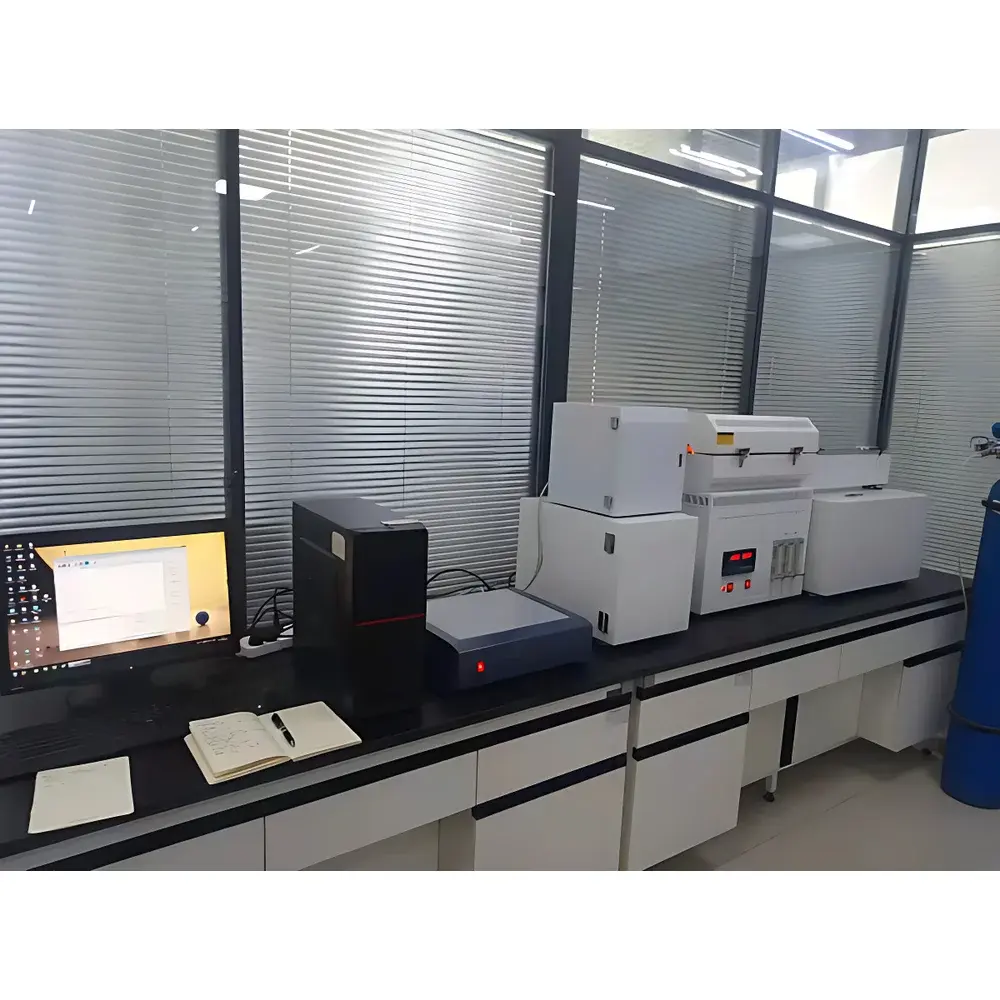
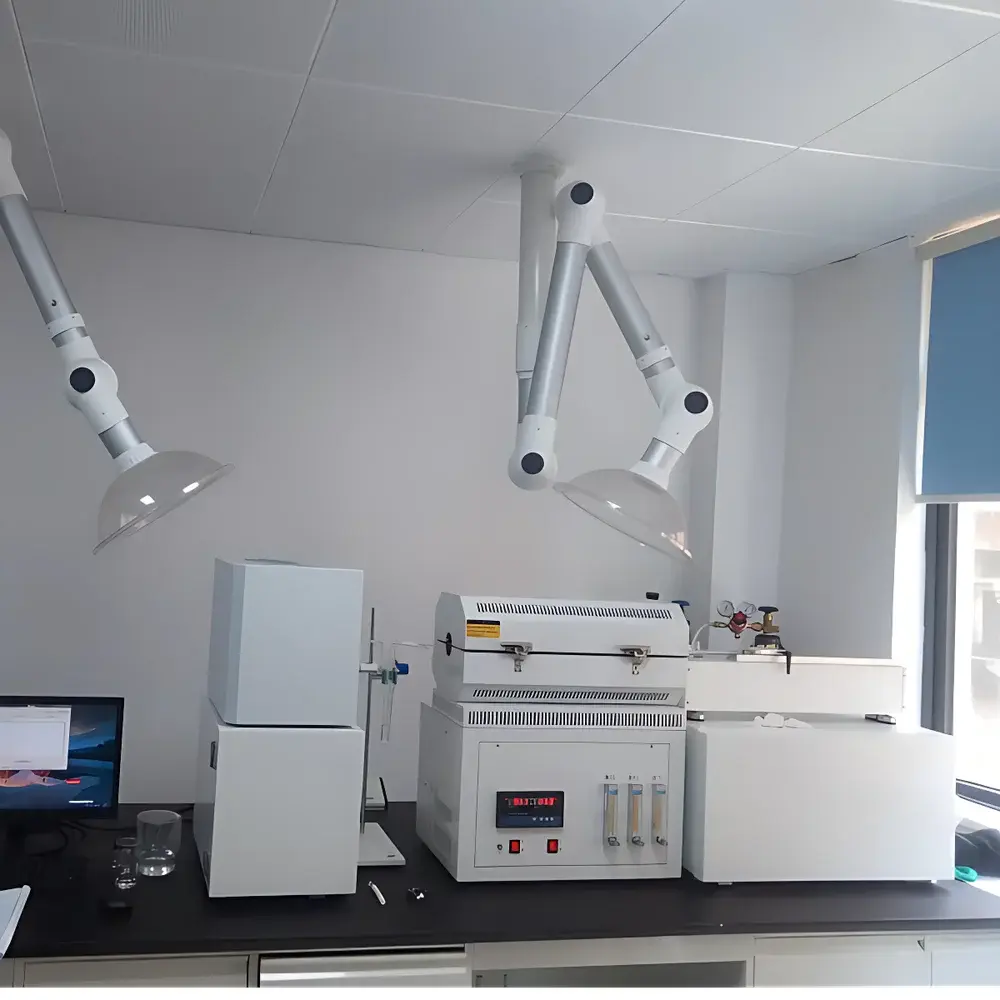
Zhuochi AOX-WK-S Microcoulometric Analyzer for Adsorbable Organic Halogens (AOX) in Water
| Brand | Zhuochi |
|---|---|
| Model | AOX-WK-S |
| Measurement Principle | Combustion–Microcoulometric Titration |
| Temperature Range | 500–1000 °C (±1% ±5 °C) |
| Accuracy | <5% |
| Repeatability | <5% |
| Detection Limit | 0.1 µg/L |
| Compliance | HJ 1214–2021 (China) |
Overview
The Zhuochi AOX-WK-S Microcoulometric Analyzer is a dedicated, standards-compliant instrumentation system designed for the quantitative determination of Adsorbable Organic Halogens (AOX) in aqueous environmental samples—particularly surface water, groundwater, wastewater, and effluents from industrial or municipal treatment facilities. It operates on the principle of high-temperature catalytic combustion followed by microcoulometric titration, as specified in China’s national standard HJ 1214–2021, “Determination of Adsorbable Organic Halogens (AOX) in Water—Microcoulometric Method.” In this process, organic halogen compounds are adsorbed onto activated carbon, thermally decomposed at precisely controlled temperatures (500–1000 °C), and converted into hydrogen halides (HX). These gaseous halides are swept through an electrolytic cell where electrochemical titration with silver ions (Ag⁺) occurs; the charge consumed during titration is directly proportional to the halogen mass, enabling highly selective quantification of total adsorbable organohalogens (Cl, Br, I) as chloride-equivalent.
Key Features
- Integrated dual-zone combustion furnace with independent gas-flow temperature control, ensuring stable thermal decomposition across the full operational range (500–1000 °C) with accuracy of ±1% ±5 °C;
- Dedicated quartz combustion tube optimized for complete mineralization of refractory organohalogens while minimizing memory effects and cross-contamination;
- Automated sample introduction and ash removal modules to enhance reproducibility and reduce operator intervention;
- High-sensitivity microcoulometric detection unit featuring low-noise current measurement circuitry and real-time coulombic integration for sub-microgram-level resolution;
- Onboard column adsorption module with standardized activated carbon cartridges, pre-conditioned and validated per HJ 1214–2021 requirements;
- Rugged mechanical architecture and corrosion-resistant gas path materials (e.g., quartz, PTFE, and high-purity stainless steel) suitable for long-term operation in regulated laboratory environments.
Sample Compatibility & Compliance
The AOX-WK-S supports analysis of liquid samples ranging from drinking water to highly contaminated industrial effluents. Sample preparation follows HJ 1214–2021 protocols: filtration (0.45 µm), acidification, adsorption onto activated carbon under controlled flow conditions, followed by rinsing and drying. The system is validated for compliance with Chinese national environmental monitoring standards and aligns with internationally recognized principles for halogen speciation—particularly those referenced in ISO 9562 (Water quality—Determination of adsorbable organic halogens (AOX)) and EPA Method 1650 (AOX by microcoulometry). While not certified to FDA 21 CFR Part 11 out-of-the-box, its data acquisition architecture supports audit-trail-ready software upgrades compliant with GLP/GMP documentation requirements.
Software & Data Management
The analyzer interfaces with proprietary PC-based acquisition software that records real-time current response, integrates coulombic charge, calculates AOX concentration (µg/L as Cl⁻), and stores raw signals with timestamp, method ID, operator ID, and calibration metadata. All measurements are traceable to NIST-traceable AgNO₃ reference standards. Data export formats include CSV and PDF reports compatible with LIMS integration. Software logs include instrument status flags (e.g., temperature deviation, electrolyte saturation, electrode polarization), supporting root-cause analysis during QA/QC review. Calibration curves are generated using at least five concentration points per batch, with R² ≥ 0.995 required for analytical validity.
Applications
- Regulatory monitoring of AOX discharge limits in wastewater permits (e.g., pulp & paper, pharmaceutical, agrochemical, and dye manufacturing industries);
- Environmental impact assessment (EIA) studies requiring baseline and post-treatment AOX profiling;
- Method validation and interlaboratory comparison exercises aligned with CNAS/ILAC accreditation criteria;
- Research on halogenated disinfection by-products (DBPs) formation kinetics in chlorinated water systems;
- Verification of activated carbon adsorption efficiency and regeneration performance in pilot-scale treatment units.
FAQ
What regulatory standard does the AOX-WK-S strictly implement?
It is engineered and validated for full compliance with HJ 1214–2021, China’s mandatory standard for AOX determination in water matrices.
Can the system measure individual halogens (Cl, Br, I) separately?
No—it reports total AOX as chloride-equivalent; speciation requires coupling with IC-MS or HR-GC/MS downstream.
Is routine maintenance of the microcoulometric cell operator-dependent?
Yes; daily electrolyte replenishment and periodic electrode polishing are required per manufacturer guidelines to maintain detection stability.
What sample volume is typically processed per analysis?
Standard protocol uses 100–500 mL of water sample, depending on expected AOX concentration and adsorption capacity of the carbon cartridge.
Does the system support automated calibration verification?
The software includes scheduled calibration check routines using standard spikes, with automatic flagging of drift exceeding ±3% relative to initial calibration curve.







