
Zhuochi AOX-WK-S Microcoulometric Analyzer for Adsorbable Organic Halogens (AOX) in Water per HJ 1214–2021
| Key | Principle: Combustion–Microcoulometric Titration |
|---|---|
| Temperature Range | 500–1000 °C |
| Accuracy | <5% |
| Repeatability | <5% |
| LOD | 0.1 µg/L |
| Temp. Control Precision | ±1% ±5 °C |
| Origin | Zhejiang, China |
| Brand | Zhuochi |
| Model | AOX-WK-S |
| Compliance | HJ 1214–2021 |
Overview
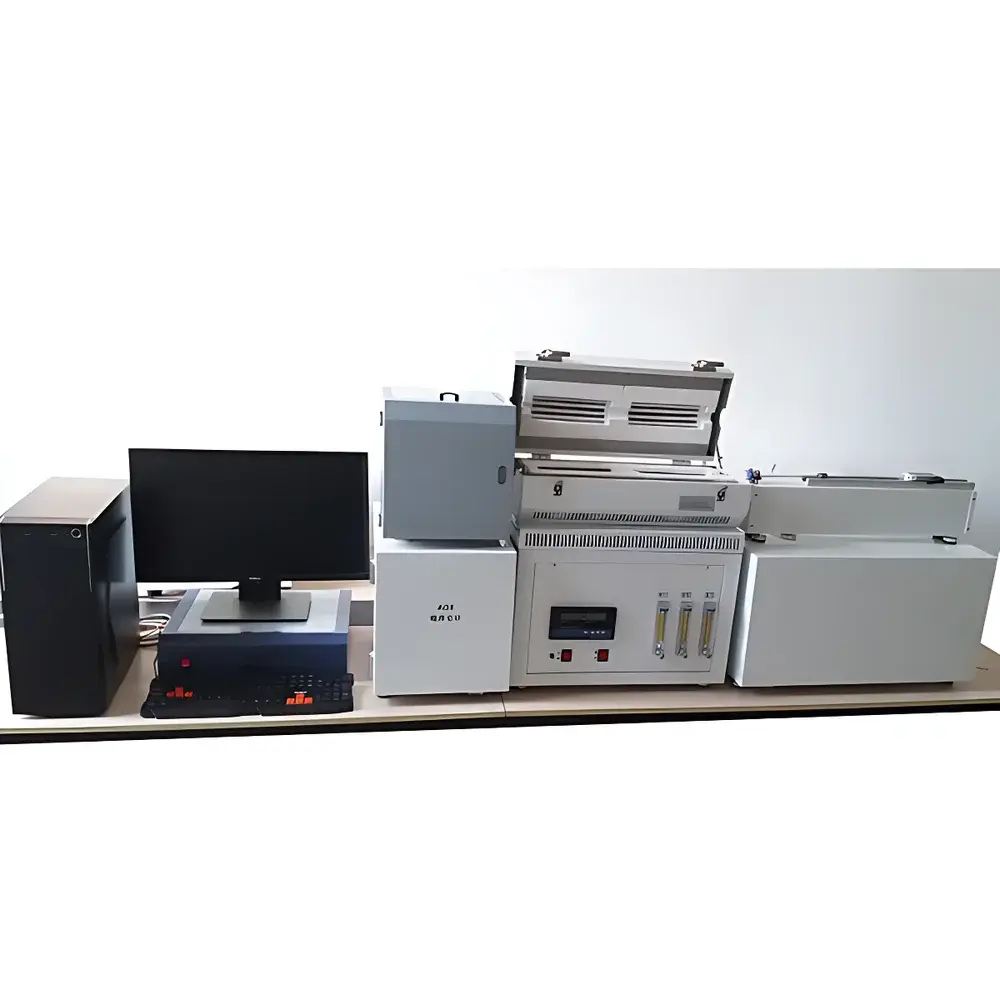
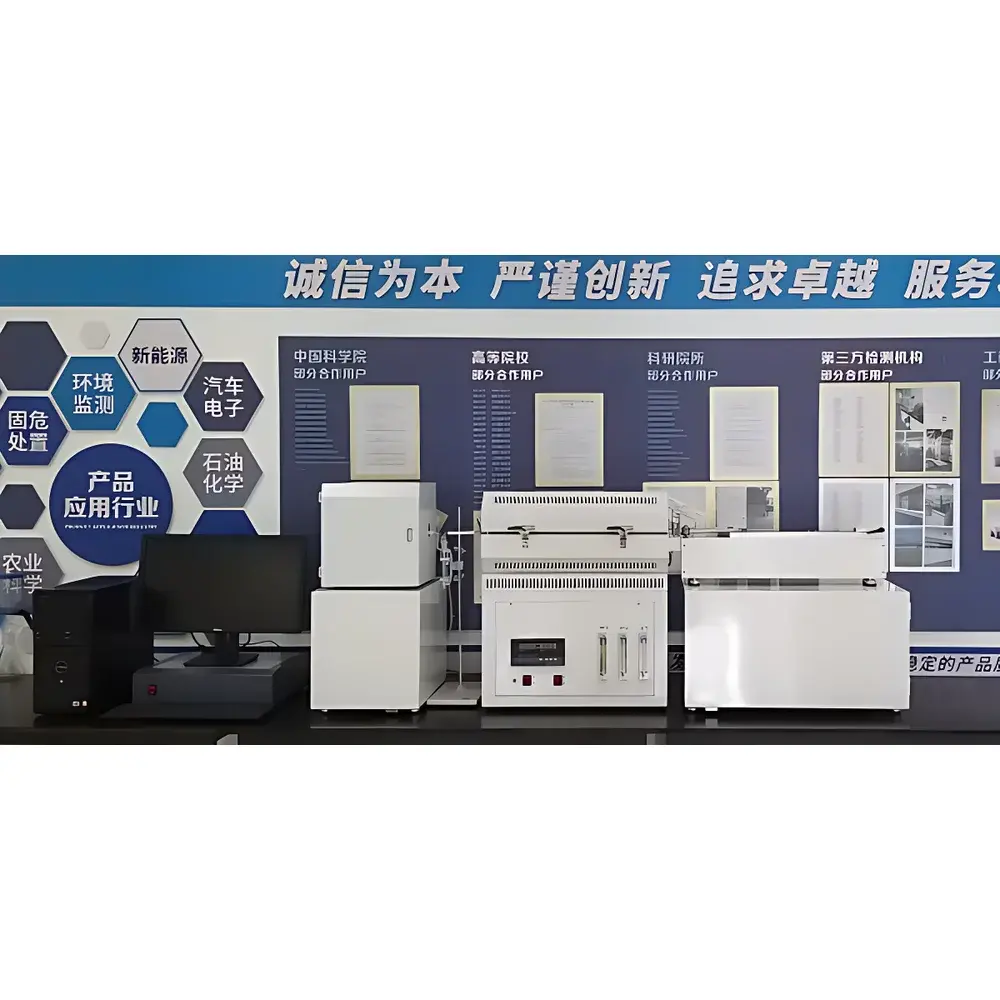
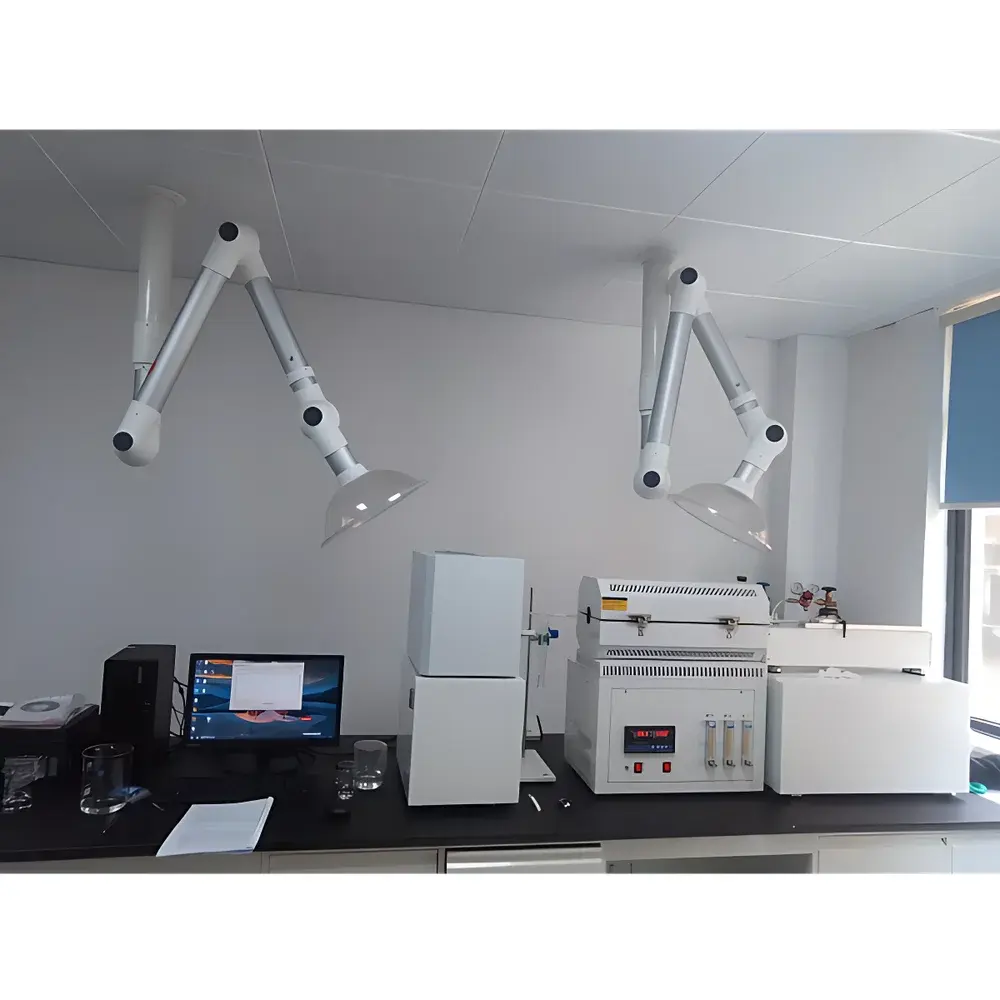
The Zhuochi AOX-WK-S Microcoulometric Analyzer is a dedicated instrumental system engineered for the quantitative determination of Adsorbable Organic Halogens (AOX) in aqueous environmental samples, fully compliant with the People’s Republic of China national standard HJ 1214–2021, “Determination of Adsorbable Organic Halogens (AOX) in Water—Microcoulometric Method.” The system operates on the combustion–microcoulometric titration principle: water samples are first passed through activated carbon to adsorb organic halogen compounds; the loaded carbon is then combusted at high temperature (500–1000 °C) in an oxygen-rich quartz furnace, converting all organic halogens to hydrogen halides (e.g., HCl, HBr). These gaseous halides are swept into an electrolytic cell containing a silver nitrate–sodium nitrate–acetic acid electrolyte, where electrochemical titration occurs via controlled generation of Ag⁺ ions. The charge consumed during titration—measured precisely in coulombs—is directly proportional to the halogen mass, enabling quantification with trace-level sensitivity and high reproducibility.
Key Features
- Integrated dual-zone high-temperature combustion furnace with independent gas-flow–controlled temperature regulation, ensuring stable thermal profiles across the entire 500–1000 °C operating range.
- Dedicated quartz combustion tube optimized for complete mineralization of adsorbed AOX without memory effects or catalytic interference.
- Automated sample introduction and ash discharge modules designed to minimize operator exposure and ensure consistent carbon loading and post-combustion handling.
- High-stability microcoulometric detection cell with low-noise current measurement circuitry and real-time charge integration for accurate halogen quantification.
- Modular column adsorption unit compatible with standardized 100-mL activated carbon cartridges (per HJ 1214–2021 Section 6.3), supporting both batch and continuous flow preconcentration protocols.
- Robust mechanical architecture built for long-term operation in routine environmental testing laboratories, including corrosion-resistant gas pathways and sealed electrolyte reservoirs.
Sample Compatibility & Compliance
The AOX-WK-S system is validated for use with surface water, groundwater, wastewater, and treated effluents, as specified in HJ 1214–2021. Sample matrices must be pre-filtered (≤0.45 µm) and free of suspended solids that could interfere with carbon adsorption efficiency. The analyzer meets all method-defined performance criteria—including accuracy (<5%), repeatability (<5%), and limit of detection (0.1 µg/L as Cl)—when operated under certified laboratory conditions. While HJ 1214–2021 is a national Chinese standard, the underlying microcoulometric methodology aligns conceptually with ISO 9562 (Water quality—Determination of adsorbable organohalogens (AOX)) and ASTM D5808–20 (Standard Test Method for Total Halogen Content by Microcoulometric Titration), facilitating cross-method comparability in international environmental monitoring programs. System documentation supports GLP-compliant recordkeeping, including instrument calibration logs, blank and spike recovery data, and daily performance verification records.
Software & Data Management
The AOX-WK-S is operated via embedded firmware with a local LCD interface for real-time temperature monitoring, current response visualization, and coulombic integration status. Raw charge signals are digitized at ≥10 Hz and stored internally with timestamped metadata (date, operator ID, sample ID, furnace setpoint, and cell voltage). Exportable data files (CSV format) contain integrated charge (C), calculated AOX concentration (µg/L as Cl), and method-specific QC flags. For laboratories requiring electronic records compliance, optional USB-to-PC connectivity enables transfer to validated third-party LIMS or spreadsheet-based QA/QC templates. Although the base system does not include 21 CFR Part 11–compliant audit trails or user role management, its deterministic signal acquisition and fixed calibration routines support retrospective validation and internal audit readiness.
Applications
- Routine AOX monitoring in municipal and industrial wastewater treatment plants for regulatory reporting under China’s Environmental Protection Law and local discharge permits.
- Source water assessment for drinking water utilities evaluating halogenated disinfection by-product (DBP) precursors.
- Environmental impact assessments (EIA) for chemical manufacturing, pulp and paper, and pharmaceutical facilities discharging chlorinated organics.
- Method validation and inter-laboratory comparison studies targeting harmonized AOX measurement across regional environmental monitoring networks.
- Research applications involving halogen speciation trends in contaminated aquifers or sediment pore waters when coupled with selective extraction pretreatments.
FAQ
What sample volume is required for one AOX analysis?
Typical analysis uses 100 mL of filtered water sample, per HJ 1214–2021 Section 7.1. Larger volumes may be processed via proportional carbon loading adjustments.
Is the system compatible with bromine- or iodine-containing compounds?
Yes—the microcoulometric cell responds to total oxidizable halogens (Cl, Br, I); results are reported as µg/L AOX expressed as chlorine equivalent unless compound-specific calibration is applied.
How often must the electrolyte solution be replaced?
Under normal usage (≤10 samples/day), the AgNO₃–NaNO₃–CH₃COOH electrolyte should be refreshed every 48 hours or after 20–25 analyses to maintain titration stability and baseline integrity.
Does the system require external gas supplies?
Yes—a certified 99.995% pure oxygen source (≥30 mL/min flow rate) is mandatory for complete combustion; argon or nitrogen may be used for carrier gas in certain configurations, subject to method validation.
Can the AOX-WK-S be used for solid-phase samples such as sediments or sludges?
No—HJ 1214–2021 and the AOX-WK-S design are strictly intended for aqueous matrices. Solid samples require separate leaching or solvent extraction protocols not supported by this configuration.
Related Products







