
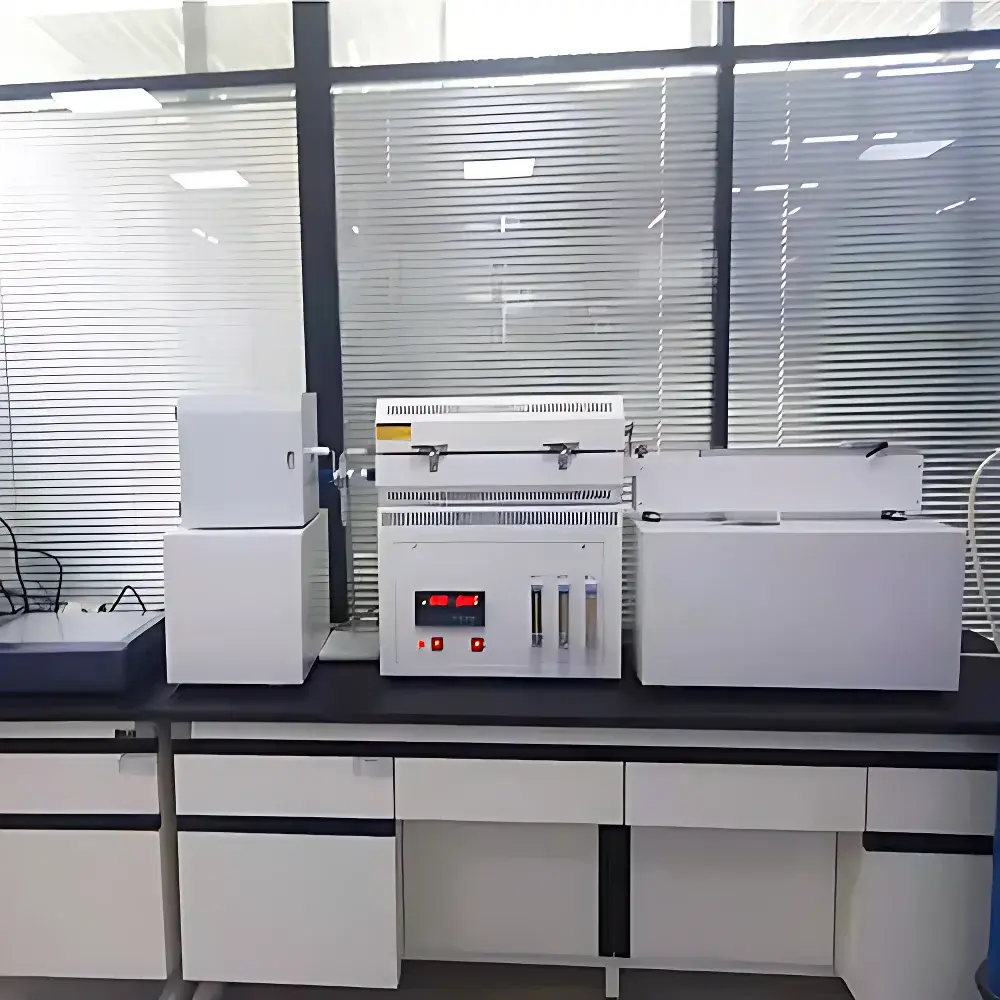
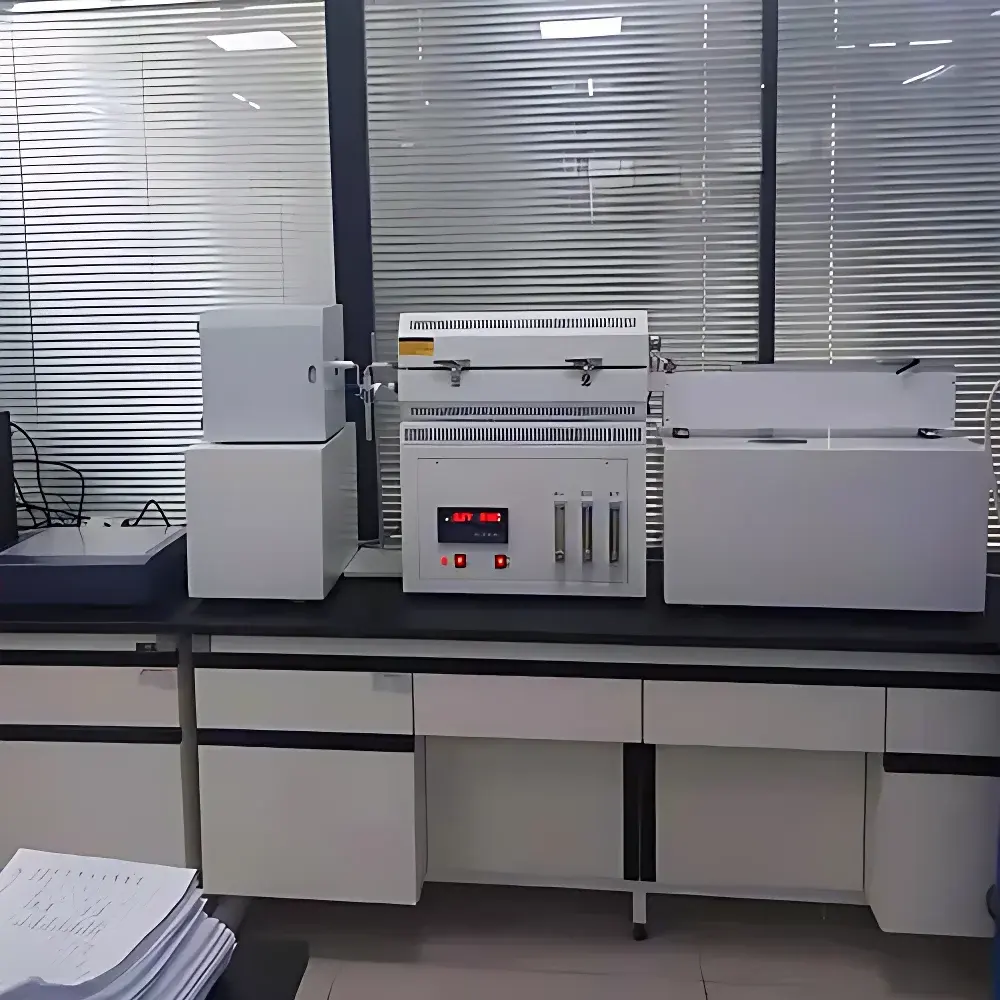
Zhuochi AOX-WK-S Microcoulometric Analyzer for Adsorbable Organic Halogens (AOX) in Water per HJ 1214–2021
| Brand | Zhuochi |
|---|---|
| Origin | Zhejiang, China |
| Manufacturer Type | Authorized Distributor |
| Country of Origin | China |
| Model | AOX-WK-S |
| Measurement Principle | Combustion–Microcoulometric Titration |
| Temperature Range | 500 °C to 1000 °C, ±1% ±5 °C |
| Accuracy | <5% |
| Repeatability | <5% |
| LOD | 0.1 µg/L |
| Compliance | HJ 1214–2021 |
Overview
The Zhuochi AOX-WK-S Microcoulometric Analyzer is a dedicated instrumental system engineered for the quantitative determination of Adsorbable Organic Halogens (AOX) in aqueous environmental samples, fully compliant with the People’s Republic of China national standard HJ 1214–2021, “Determination of Adsorbable Organic Halogens (AOX) in Water—Microcoulometric Method.” The system implements the combustion–microcoulometric titration principle: water samples are first passed through activated carbon columns to adsorb organic halogen compounds; the loaded carbon is then combusted at high temperature (500–1000 °C) in an oxygen-rich quartz furnace, converting organically bound chlorine, bromine, and iodine into hydrogen halides (HX). These gaseous halides are swept by carrier gas into an electrolytic cell containing silver nitrate–nitric acid electrolyte, where electrochemical titration occurs via controlled generation of Ag⁺ ions. The integrated coulometer measures total charge consumed to regenerate stoichiometric Ag⁺, enabling direct quantification of halogen mass based on Faraday’s law. This method delivers trace-level sensitivity and robustness for regulatory monitoring of chlorinated pesticides, disinfection by-products (e.g., chloroform, bromodichloromethane), pharmaceutical residues, and industrial effluent contaminants.
Key Features
- Integrated dual-zone combustion furnace with precision airflow-temperature control module, ensuring stable thermal decomposition across the full 500–1000 °C operating range (±1% ±5 °C tolerance)
- Dedicated quartz combustion tube optimized for complete mineralization of adsorbed carbon without halogen loss or memory effects
- Automated sample introduction and ash discharge mechanisms minimizing operator intervention and cross-contamination risk
- High-stability microcoulometric detector with low-noise current measurement circuitry and real-time charge integration
- Modular column adsorption unit compatible with standard 100 mg activated carbon cartridges (ASTM D5908–22 referenced geometry)
- Rugged mechanical architecture designed for continuous operation in ISO/IEC 17025-accredited environmental testing laboratories
Sample Compatibility & Compliance
The AOX-WK-S supports analysis of surface water, groundwater, wastewater, drinking water, and leachates per HJ 1214–2021 protocol requirements. Sample volumes range from 100 mL to 1000 mL, with optional pre-concentration for ultra-trace applications. All hardware components—including furnace zones, gas lines, adsorption columns, and electrolytic cells—are chemically inert to halogen species and resistant to acidic corrosion. The system meets the method-defined performance criteria: accuracy <5%, repeatability <5%, and limit of detection (LOD) of 0.1 µg/L expressed as Cl⁻ equivalent. While HJ 1214–2021 is a national Chinese standard, the underlying combustion–microcoulometric approach aligns with internationally recognized principles found in EPA Method 1650 and ISO 9562, facilitating cross-method validation studies.
Software & Data Management
Instrument control, data acquisition, and report generation are managed via embedded firmware with USB interface. Raw coulometric charge signals (in Coulombs) are converted in real time to AOX concentration (µg/L as Cl) using user-configurable calibration curves (single-point or multi-point). All analytical sequences—including furnace ramp profiles, gas flow rates, and titration thresholds—are stored with timestamps and operator IDs. Audit trails record parameter changes, calibration events, and result exports, supporting GLP-compliant documentation. Data export formats include CSV and PDF reports compliant with internal QA/QC review workflows. Though not FDA 21 CFR Part 11 certified out-of-the-box, the system architecture permits integration with validated LIMS platforms via standardized serial or TCP/IP protocols.
Applications
- Regulatory compliance testing for municipal wastewater treatment plants under China’s “Emission Standards of Pollutants for Municipal Wastewater Treatment Plants” (GB 18918–2002)
- Monitoring AOX formation during chlorine-based disinfection in drinking water facilities
- Environmental impact assessment of pulp and paper mill effluents, where chlorinated lignin derivatives dominate AOX load
- Pharmaceutical manufacturing site wastewater characterization per GMP environmental monitoring guidelines
- Research on halogenated persistent organic pollutants (POPs), including polybrominated diphenyl ethers (PBDEs) and short-chain chlorinated paraffins (SCCPs)
FAQ
What sample types are validated for use with the AOX-WK-S system?
Surface water, groundwater, treated and untreated wastewater, drinking water, and landfill leachate — all processed per HJ 1214–2021 filtration, adsorption, and combustion protocols.
Is the system capable of distinguishing between chlorine, bromine, and iodine contributions?
No. The microcoulometric detection measures total halogen content as chloride-equivalent mass; speciation requires complementary techniques such as IC-MS or HR-GC/MS.
Does the instrument support automated calibration verification?
Yes — users may schedule periodic spike recovery tests using potassium chloride standards; results are logged with pass/fail flags against method-defined acceptance criteria (80–120% recovery).
What maintenance intervals are recommended for routine operation?
Quartz combustion tubes should be inspected after every 50 analyses; electrolyte must be replaced every 30 days or after 200 injections; activated carbon columns are single-use per analysis sequence.
Can the AOX-WK-S be integrated into an existing laboratory information management system (LIMS)?
Yes — ASCII-based data output via USB or RS-232 enables parsing into most LIMS environments; custom API integration is available upon request for enterprise deployments.







