
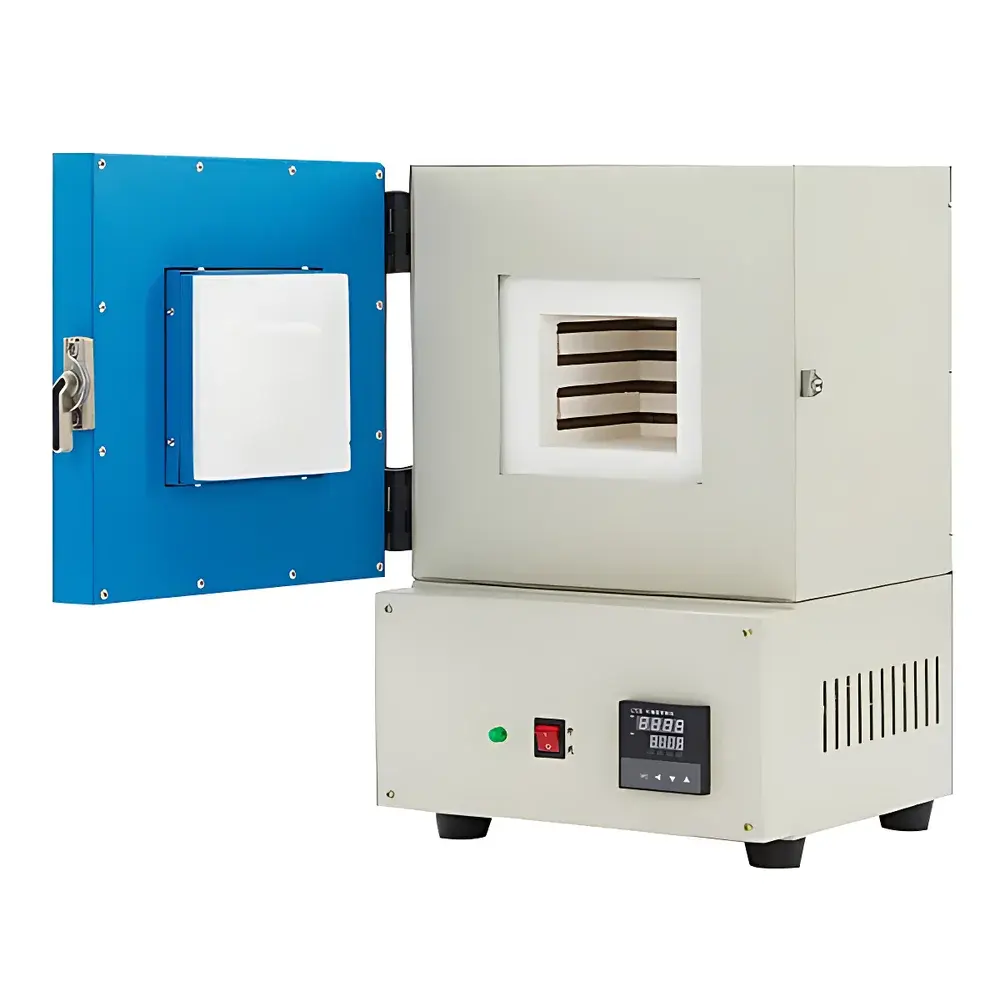
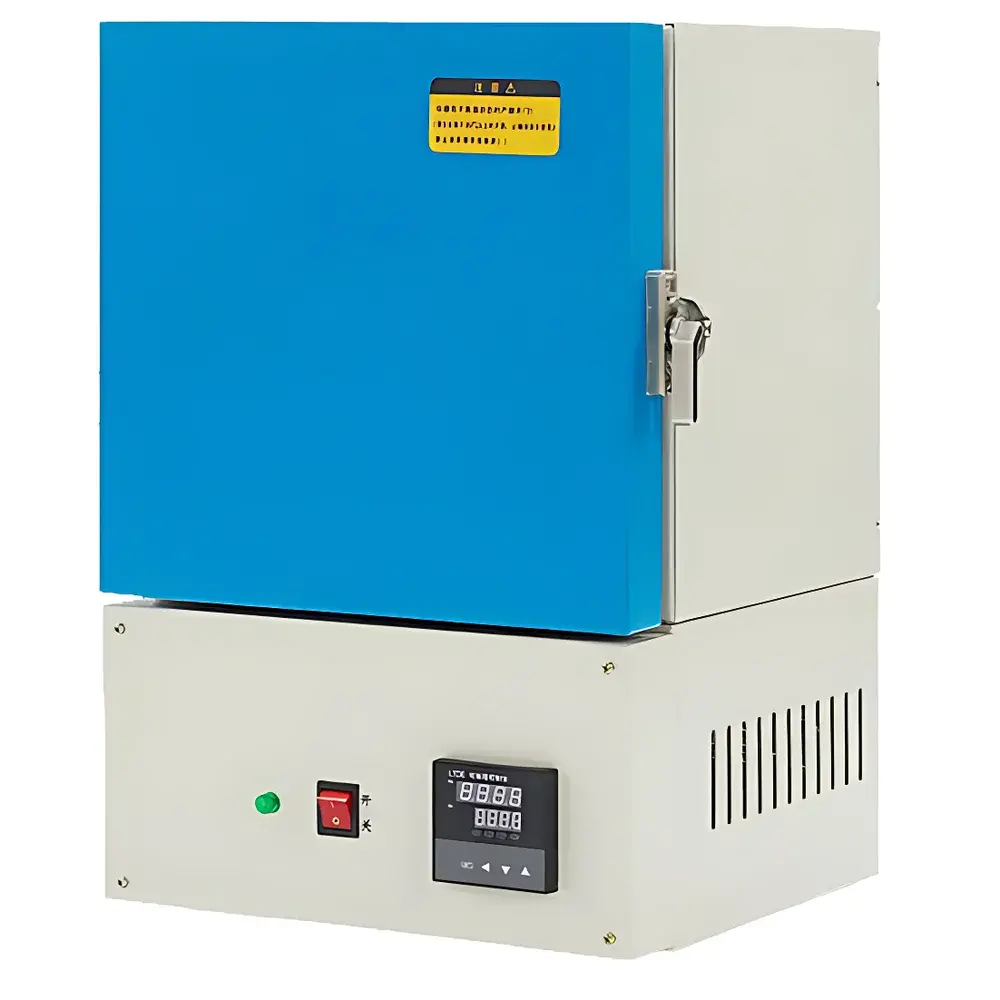
Zhuochi SG-XL1100 Benchtop Muffle Furnace
| Brand | Zhuochi |
|---|---|
| Origin | Zhejiang, China |
| Manufacturer Type | Authorized Distributor |
| Country of Origin | China |
| Model | SG-XL1100 |
| Instrument Type | Box-Type Muffle Furnace |
| Max Operating Temperature | 100–1100 °C |
| Temperature Control Accuracy | ±1 °C |
| Display Resolution | 1 °C |
| Max Power Consumption | 1.5 kW |
| Heating Rate (to Max Temp) | ≤30 °C/min |
| Heating Element Material | High-Performance Alloy Wire (0Cr27Al7Mo2) |
| Internal Chamber Dimensions | 165 × 120 × 105 mm |
| Power Supply | 220 V, 50 Hz |
| Temperature Sensor | K-Type Thermocouple (NiCr–NiSi) |
| Control System | 30-Stage Programmable PID Controller (LTDE Series) |
| Insulation Material | Polycrystalline Alumina Fiber Blanket |
| External Finish | Phosphated & Powder-Coated Cold-Rolled Steel (Computer Gray) |
Overview
The Zhuochi SG-XL1100 is a compact, benchtop muffle furnace engineered for precision thermal processing in research laboratories, quality control environments, and materials development facilities. It operates on the principle of resistive heating via high-stability alloy wire elements (0Cr27Al7Mo2), enclosed within a fully insulated polycrystalline alumina fiber chamber. This architecture ensures minimal thermal loss, rapid heat-up response, and exceptional temperature uniformity across the working zone—critical for reproducible ashing, calcination, sintering, and annealing procedures. Designed to meet fundamental requirements of ISO/IEC 17025-accredited labs, the furnace supports traceable thermal protocols through programmable ramp-hold-soak cycles and integrated overtemperature safeguards.
Key Features
- Polycrystalline alumina fiber insulation—high thermal resistance, low heat storage, and resistance to thermal shock up to 1100 °C
- Compact footprint (380 × 370 × 540 mm) with generous internal volume (165 × 120 × 105 mm), optimized for space-constrained lab benches
- 30-segment programmable temperature controller (LTDE series) enabling precise multi-step thermal profiles without manual intervention
- Dual safety architecture: independent overtemperature cut-off (via auxiliary thermocouple), door-interlocked power disconnection, and earth-leakage protection
- High-reliability electrical components—including industrial-grade solid-state relays, branded contactors, and axial cooling fans—designed for continuous operation under GLP-compliant conditions
- Front-access side-hinged door with ceramic fiber gasket ensures uniform sealing and minimizes radiant heat leakage during operation
Sample Compatibility & Compliance
The SG-XL1100 accommodates standard crucibles (alumina, quartz, or stainless steel), petri dishes, and small-volume sample boats used in ASTM D3174 (ash content of coal), ISO 1171 (determination of ash in solid mineral fuels), and USP <281> (residue on ignition). Its K-type thermocouple input and ±1 °C control stability comply with calibration traceability requirements under ISO/IEC 17025 Clause 6.5. The furnace’s programmable logic supports audit-ready data logging when paired with optional PC interface software—enabling compliance with FDA 21 CFR Part 11 for electronic records in regulated pharmaceutical or biomedical testing environments.
Software & Data Management
While the base unit operates autonomously via its front-panel LTDE controller, optional USB-to-RS485 interface modules enable bidirectional communication with Windows-based thermal management software. This configuration supports real-time temperature graphing, export of CSV-formatted cycle logs (including ramp rates, hold durations, and deviation alerts), and integration into LIMS or ELN platforms. All firmware updates are delivered via secure vendor-signed binaries, and system event logs—including overtemperature events, door-open interruptions, and power-loss recovery timestamps—are retained in non-volatile memory for post-run forensic review.
Applications
- Thermal gravimetric analysis (TGA) pre-conditioning and residue quantification in environmental and food safety labs
- Controlled oxidation of metal powders and ceramic precursors during R&D of battery cathode materials
- Organic matrix removal from geological samples prior to XRF or ICP-OES analysis
- Stress-relief annealing of thin-film substrates in microelectronics prototyping
- Calibration verification of thermocouples and RTDs using fixed-point reference materials (e.g., Al, Zn, Sn)
- ISO 5660 cone calorimeter specimen conditioning per fire safety testing standards
FAQ
What is the maximum recommended continuous operating temperature?
The furnace is rated for continuous operation at 1050 °C; 1100 °C is specified as short-term peak capability (≤30 minutes per cycle) to preserve element longevity and insulation integrity.
Is the controller compliant with FDA 21 CFR Part 11 for electronic signatures?
The embedded LTDE controller does not support user authentication or electronic signatures natively; however, when connected to validated third-party data acquisition software with role-based access controls, full Part 11 compliance can be achieved.
Can the furnace be integrated into a centralized lab automation network?
Yes—via Modbus RTU over RS485, the controller supports read/write access to setpoints, actual temperature, program status, and alarm flags, enabling integration with SCADA or MES systems.
What maintenance intervals are recommended for optimal performance?
Inspect heating element continuity and insulation integrity every 200 operational hours; replace ceramic fiber gasket if compressed beyond 30% of original thickness; calibrate thermocouple against NIST-traceable reference annually or per internal QA schedule.
Does the unit include documentation required for ISO/IEC 17025 accreditation?
Yes—the shipment includes a factory calibration certificate (with as-found/as-left data), electrical safety test report, CE Declaration of Conformity, and full technical manual with uncertainty budgeting methodology for temperature control validation.



