
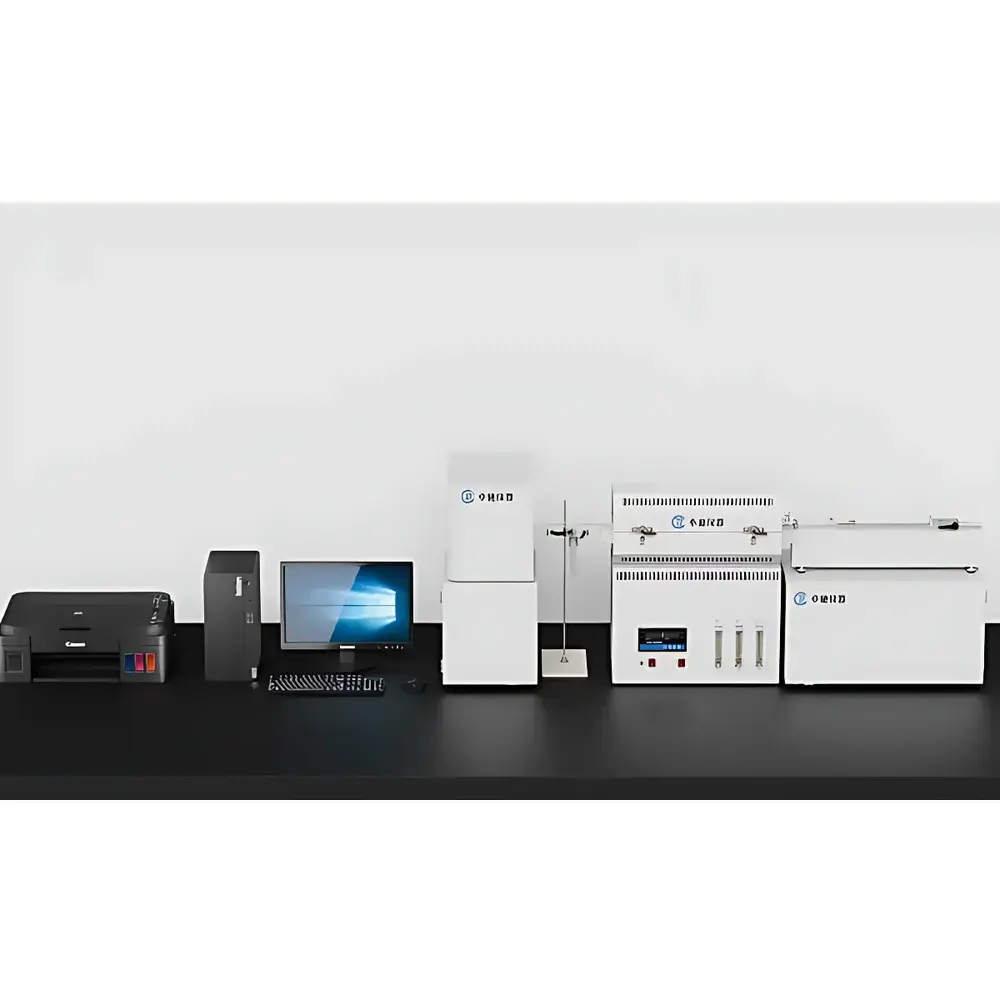
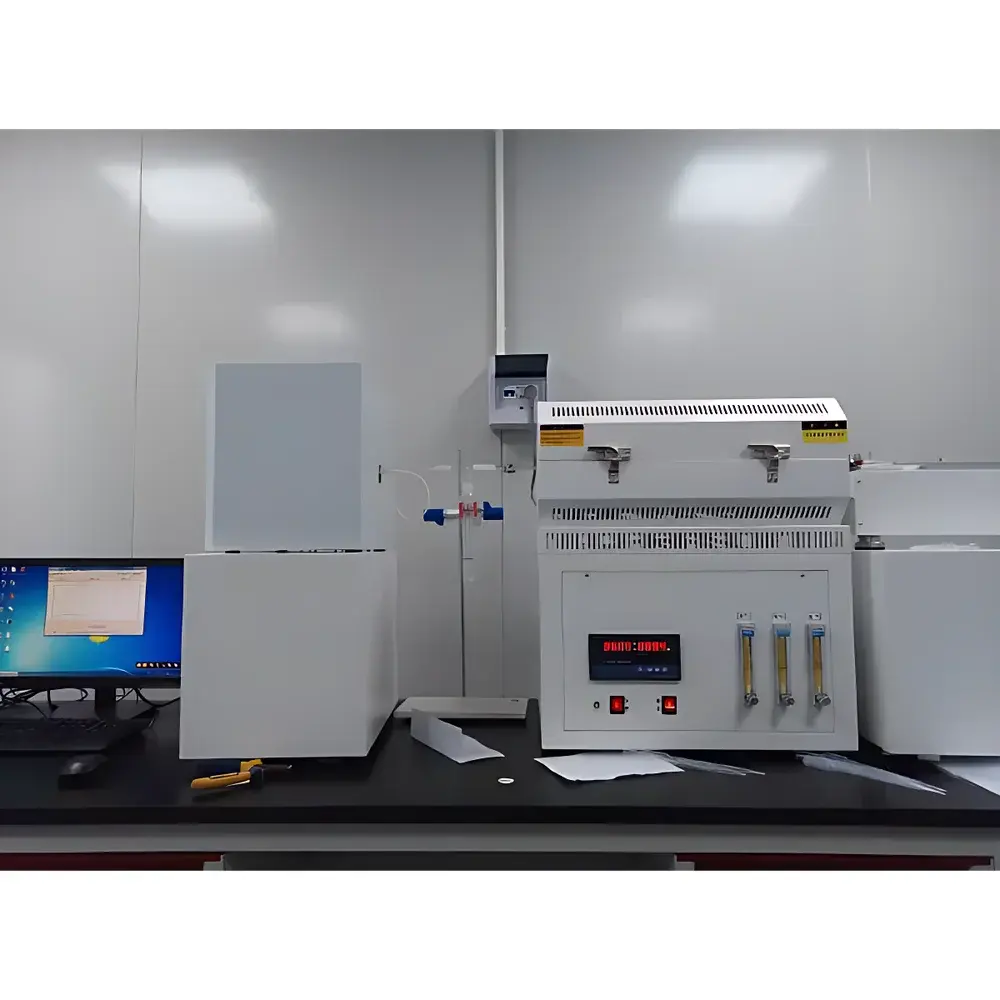
Zhuochi WK-S Water Quality Halogen Analyzer
| Brand | Zhuochi |
|---|---|
| Origin | Zhejiang, China |
| Model | WK-S |
| Measurement Principle | Combustion–Coulometric Titration |
| Detection Range | 0.02 mg/kg – 2 mg/kg |
| Accuracy | ±1 µg Cl⁻ |
| Repeatability | ≤10% RSD at sample concentrations <2 mg/kg |
| LOD | 0.028 mg/L |
| Resolution | 1 µg |
| Compliance | HJ 1214–2021 (PRC National Ecological and Environmental Standard for AOX in Water) |
Overview
The Zhuochi WK-S Water Quality Halogen Analyzer is a dedicated coulometric system engineered for the quantitative determination of adsorbable organic halogens (AOX) in aqueous environmental matrices. It operates on the principle of high-temperature catalytic combustion followed by microcoulometric titration—a method standardized under China’s national environmental regulation HJ 1214–2021. In this process, halogenated organic compounds are thermally decomposed in an oxygen-rich quartz combustion tube at ≥950 °C, converting all covalently bound chlorine, bromine, and iodine into corresponding halide ions (X⁻). The resulting halide-laden gas stream is absorbed into an electrolyte solution within a dual-electrode coulometric cell, where precise electrochemical titration quantifies total halogen content based on Faraday’s law. Designed for routine regulatory monitoring, the WK-S delivers trace-level sensitivity with robust thermal stability and low baseline drift—essential for compliance-driven water quality laboratories.
Key Features
- Integrated combustion–coulometric architecture: Combines high-efficiency quartz furnace (950–1000 °C), optimized gas flow control, and temperature-stabilized coulometric cell to ensure complete mineralization and stoichiometric halide detection.
- Sub-microgram resolution: Real-time digital coulometry with 1 µg detection resolution enables reliable quantification at the lower end of the 0.02–2 mg/kg AOX range.
- Automated workflow support: Windows-based control software manages sequence programming, real-time current integration, endpoint recognition, and automatic blank subtraction—reducing operator dependency and inter-run variability.
- Modular hardware configuration: Includes dedicated AOX combustion furnace, quartz sample boat assembly, activated carbon adsorption column, desiccant drying train, and precision micro-titrator—all aligned to HJ 1214–2021 procedural requirements.
- Regulatory-grade data integrity: Software enforces audit-trail logging of method parameters, calibration events, run timestamps, and raw coulometric current integrals—supporting GLP-aligned documentation practices.
Sample Compatibility & Compliance
The WK-S analyzer is validated for use with surface water, groundwater, domestic wastewater, and industrial effluents per HJ 1214–2021. Sample preparation follows standardized solid-phase extraction using activated carbon columns, followed by acidification, rinsing, and thermal desorption. The system accommodates both liquid samples (direct injection via syringe or autosampler-compatible inlet) and adsorbed carbon cartridges. All wet chemistry components—including electrolyte formulation (AgNO₃/KNO₃ in glacial acetic acid), absorption solution composition, and carbon column conditioning—are specified in the standard. While HJ 1214–2021 is the primary reference, the combustion–coulometric methodology aligns conceptually with ISO 9562 and EPA Method 1650 for AOX, facilitating cross-method comparability in international reporting contexts.
Software & Data Management
The instrument is controlled via a native Windows application providing intuitive graphical interface navigation, multi-user access control, and configurable report templates. All analytical parameters—including furnace ramp profiles, carrier gas flow rates (O₂, 100–200 mL/min), electrolysis current thresholds, and integration time windows—are programmable and stored with versioned method files. Raw coulometric current vs. time traces are archived in binary format alongside processed results (µg X⁻/L or mg/kg), enabling retrospective reintegration if required. Export options include CSV, PDF, and printer-ready formats compliant with internal QA documentation protocols. Audit trails record user login sessions, parameter modifications, calibration verifications, and result approvals—meeting foundational expectations for data integrity under ISO/IEC 17025 and FDA 21 CFR Part 11 (when deployed with appropriate IT governance controls).
Applications
- Regulatory monitoring of AOX in municipal wastewater treatment plant (WWTP) influent and effluent streams.
- Industrial discharge compliance verification for pulp/paper, pharmaceutical, agrochemical, and chlor-alkali manufacturing facilities.
- Environmental impact assessment of landfill leachate and contaminated groundwater plumes.
- Method validation and interlaboratory comparison studies targeting halogenated persistent organic pollutants (POPs), including chlorinated phenols, PCBs, and dioxin precursors.
- Research-scale screening of emerging halogenated contaminants (e.g., halogenated flame retardants, perfluoroalkyl substances with halogen substituents) when coupled with selective pre-concentration steps.
FAQ
What regulatory standards does the WK-S comply with?
The system is fully aligned with HJ 1214–2021, the official Chinese standard for AOX determination in water. Its combustion efficiency, detection limit, and repeatability meet the technical criteria defined therein.
Can the WK-S measure bromine and iodine separately from chlorine?
No—the method quantifies total adsorbable organic halogens (AOX) as chloride-equivalent mass. It does not speciate individual halogens; distinction requires complementary techniques such as IC-MS or HR-GC/MS.
Is vacuum pumping integrated or external?
A dedicated vacuum pump is supplied as part of the standard configuration to maintain consistent negative pressure across the adsorption and combustion gas train.
What maintenance intervals are recommended for the coulometric cell?
Electrolyte replacement is required every 30–50 analyses or when baseline current exceeds 20 nA; cell cleaning with ultrasonic acetone bath is advised weekly under heavy usage.
Does the system support unattended batch analysis?
Yes—up to 24 samples can be queued via the software scheduler, with automated furnace cooldown, cell refresh, and result compilation enabled per run sequence.
Related Products







