
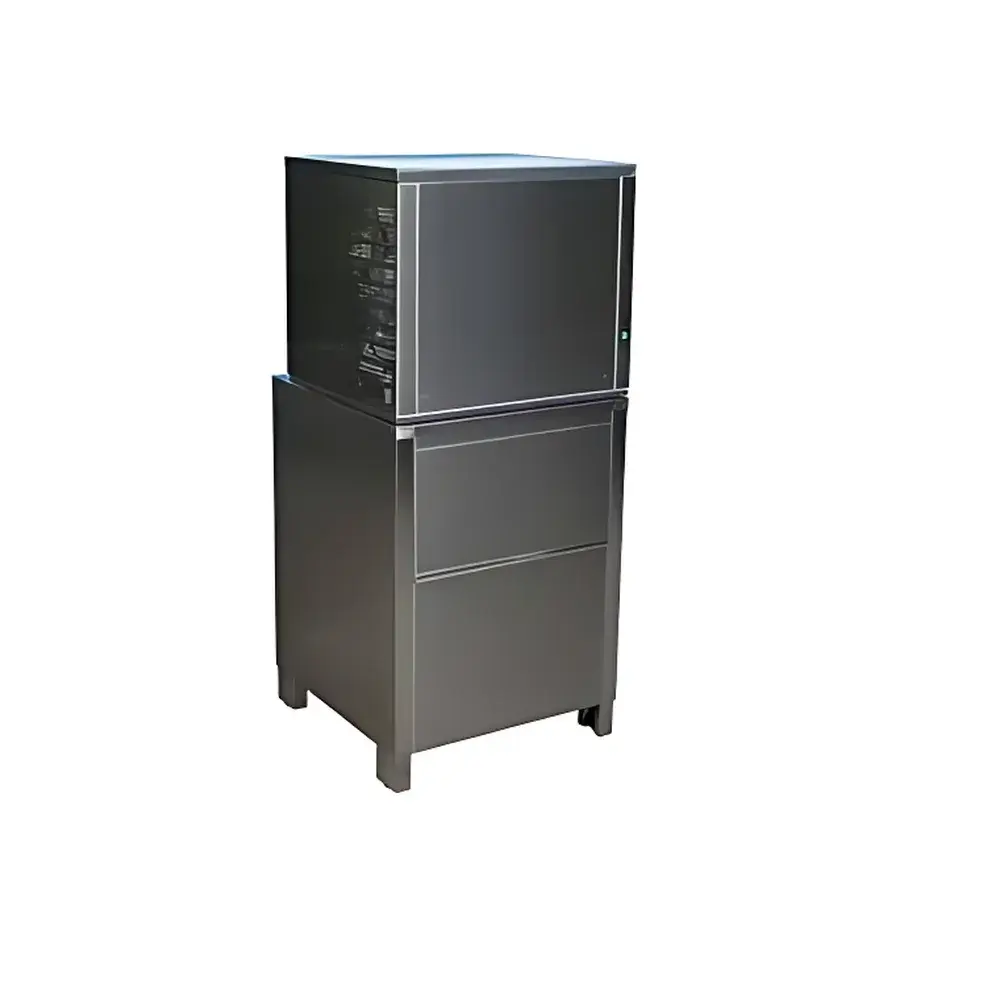
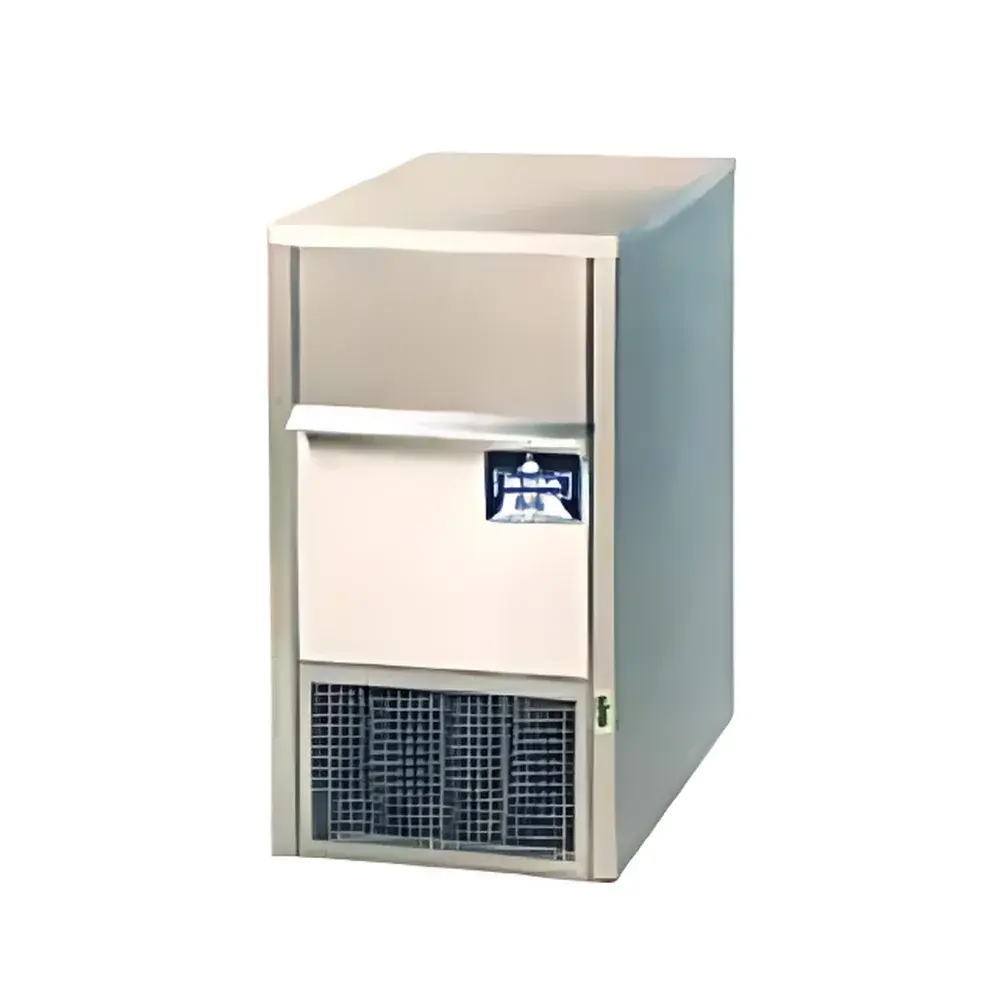
ZIEGRA ZBE 150/250/350 Flake Ice Machine
| Brand | ZIEGRA |
|---|---|
| Origin | Germany |
| Model | ZBE 150 / ZBE 250 / ZBE 350 |
| Ice Production Capacity | 150 kg/day, 250 kg/day, or 350 kg/day (at 20 °C ambient temperature, 15 °C inlet water temperature) |
| Storage Capacity | 100 kg or 200 kg |
| Construction | Full stainless steel (AISI 304), industrial-grade |
| Cooling Options | Air-cooled or water-cooled condenser |
| Ice Output Temperature | −0.5 °C |
| Power Supply | 230 V / 50 Hz (standard EU configuration) |
| Noise Level | ≤62 dB(A) |
| Compliance | EN 60335-1, EN 60335-2-74, EN 13445, EC 1935/2004 (food contact materials), DIN 1988-200 (drinking water safety) |
| Optional Features | Automatic cleaning & disinfection cycle, 0.2 µm sterile water filter, custom thermal performance validation for high-ambient conditions (e.g., 40 °C ambient, 25 °C inlet water) |
Overview
The ZIEGRA ZBE 150/250/350 is a precision-engineered flake ice machine designed specifically for demanding laboratory, pharmaceutical, biotechnology, and clinical applications where consistent, ultra-low-temperature ice—produced under strict hygienic and regulatory conditions—is critical. Unlike conventional cube or tube ice systems, this machine employs a direct-expansion, stainless-steel drum-based freezing process: potable or deionized water is evenly distributed over a refrigerated stainless-steel evaporator drum; rapid heat extraction forms thin, dry, irregularly shaped flakes at −0.5 °C. This morphology ensures high surface-area-to-volume ratio, rapid thermal transfer, and non-agglomerating storage—enabling reliable sample cooling, enzymatic reaction quenching, tissue preservation, and cold-chain integrity during transport or benchtop procedures. Built to operate continuously for up to 168 hours without interruption—even at ambient temperatures up to 40 °C—the ZBE series integrates robust thermodynamic architecture with low-noise scroll compressors and eco-friendly R290 refrigerant (GWP = 3), fully compliant with EU F-Gas Regulation (EU) No 517/2014.
Key Features
- Industrial-grade AISI 304 stainless-steel construction throughout—including drum, auger, storage bin, and water distribution system—for corrosion resistance, cleanability, and long-term structural integrity under repeated thermal cycling.
- Microprocessor-based control system with real-time monitoring of evaporator temperature, condensing pressure, water flow rate, and ice thickness; supports programmable start/stop cycles, automatic defrost initiation, and fault diagnostics with LED status indicators.
- Two standard storage bin configurations: 100 kg and 200 kg capacity, both insulated with closed-cell polyurethane foam (λ ≤ 0.022 W/m·K) and equipped with level sensors and anti-bridging agitators.
- Factory-calibrated ice output temperature of −0.5 °C ± 0.2 °C—validated per DIN 10508—ensuring optimal thermal stability without cryo-damage or unintended freezing of biological specimens.
- Optional integrated cleaning & disinfection module (EN 13697-compliant) with timed alkaline-acid rinse sequence and thermal sanitization (>85 °C hold for ≥5 min); compatible with 0.2 µm absolute-rated sterile water filtration (ISO 8573-1 Class 1 particulate, Class 2 oil, Class 3 water).
- EMC-certified design (EN 61000-6-3 / EN 61000-6-4) ensuring stable operation in proximity to sensitive analytical instrumentation such as NMR spectrometers, mass spectrometers, and PCR workstations.
Sample Compatibility & Compliance
The ZBE series is validated for use with both potable water (complying with DIN EN 13723 and EU Directive 98/83/EC) and deionized water (conductivity ≤ 1 µS/cm). All wetted surfaces meet EC 1935/2004 requirements for food-contact materials and are certified under German DVGW W270 for drinking water safety. The machine’s design supports GLP and GMP-aligned workflows: full audit trail logging (via optional RS485/Modbus interface), password-protected parameter access, and configurable event timestamps for maintenance records. It satisfies ISO 13485:2016 clause 7.5.10 (production equipment control) and is routinely deployed in laboratories undergoing FDA 21 CFR Part 11 readiness assessments.
Software & Data Management
While the base unit operates via embedded firmware without external software dependency, optional digital integration includes Modbus RTU communication (RS485) for connection to LabVantage, STARLIMS, or custom SCADA platforms. Logged parameters include daily ice yield, cumulative runtime, compressor cycles, and cleaning cycle history—exportable as CSV for QA review. Firmware updates are performed via secure USB interface with SHA-256 signature verification. No cloud connectivity or remote telemetry is implemented by default, preserving network isolation requirements common in regulated lab environments.
Applications
- Cold preservation of primary cell isolates, PBMCs, and tissue biopsies prior to cryopreservation or molecular analysis.
- Temperature-sensitive reagent stabilization during ELISA, Western blotting, and nucleic acid extraction protocols.
- Controlled cooling of centrifuge rotors, homogenizers, and microplate readers to prevent thermal drift.
- On-demand flake ice supply for cold rooms, walk-in refrigerators, and mobile clinical units requiring compact, self-contained ice generation.
- Support of ISO/IEC 17025 accredited testing labs where traceable, repeatable cooling media are required for calibration of thermocouples and RTDs.
FAQ
What water quality specifications are required for optimal performance?
Deionized water (≤1 µS/cm conductivity) or municipal potable water meeting DIN EN 13723 is acceptable. Hardness >2.5 mmol/L requires optional scale-inhibiting pretreatment.
Can the ZBE operate reliably in tropical laboratory environments (e.g., 35–40 °C ambient)?
Yes—when configured with water-cooled condensation and derated capacity validation, the ZBE maintains ≥92% nominal output at 40 °C ambient and 25 °C inlet water temperature.
Is the −0.5 °C ice temperature actively controlled or fixed by design?
It is dynamically maintained via PID-regulated evaporator saturation temperature control, with continuous feedback from dual platinum RTD sensors embedded in the drum wall.
How is compliance with FDA 21 CFR Part 11 addressed?
The system supports electronic record integrity through time-stamped, non-erasable event logs and user-access controls—but does not perform electronic signatures; those remain the responsibility of the host LIMS or QMS platform.
What is the expected service life and spare parts availability?
Designed for ≥15 years of continuous operation; ZIEGRA guarantees minimum 15-year spare parts availability from date of first commercial shipment, with documented obsolescence management per IEC 62402.



