
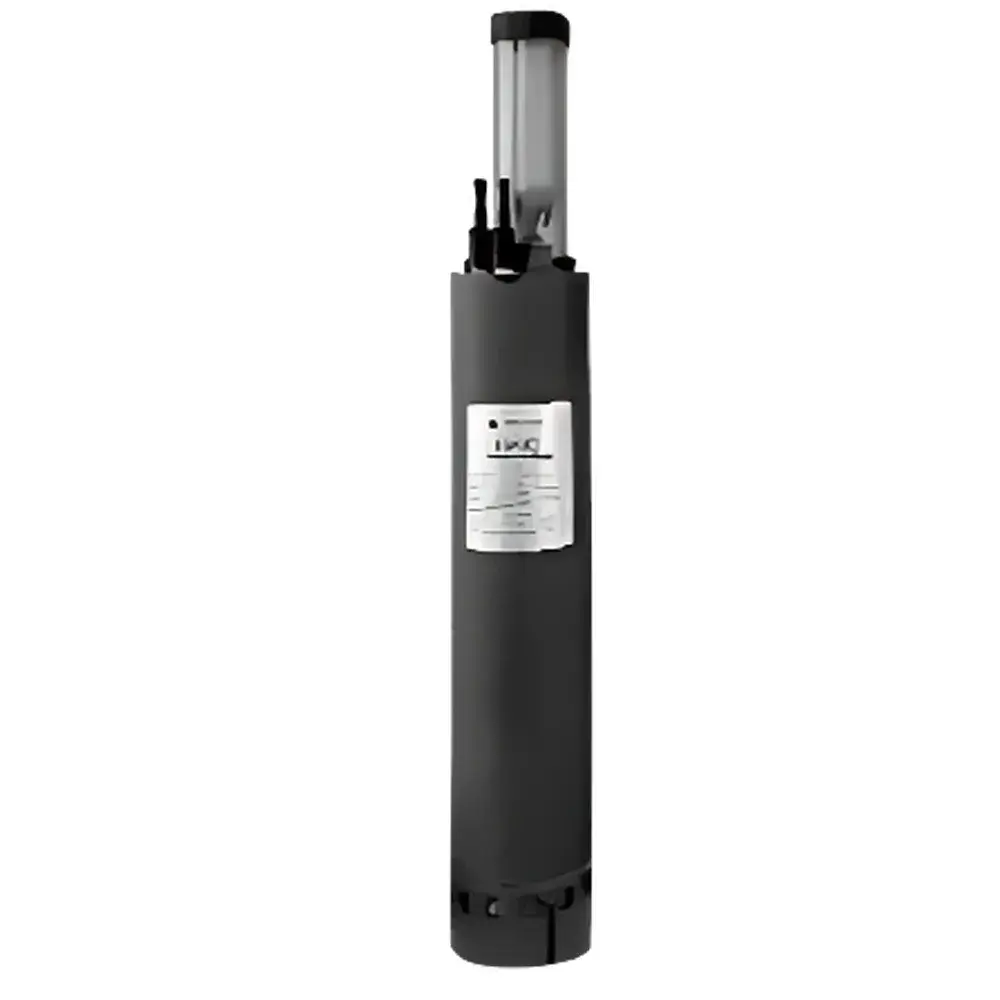
Zming Environmental HQ-8100 In-situ Ammonia-Nitrogen Water Quality Analyzer
| Brand | Zming Environmental Technology Co., Ltd. |
|---|---|
| Origin | Jiangsu, China |
| Manufacturer Type | Authorized Distributor |
| Country of Origin | China |
| Model | HQ-8100 |
| Pricing | Available Upon Request |
| Measurement Parameter | Ammonia-Nitrogen (NH₃-N) |
| Principle | Salicylate Spectrophotometry |
| Range | 0–1 mg/L and 0–10 mg/L (field-selectable) |
| Detection Limit | Sub-ppb level |
| Maximum Deployment Depth | 100 m |
| Integrated Sensors | Turbidity, Temperature, Humidity, Leak Detection |
| Form Factor | Portable, Integrated Handheld Display Unit |
| Deployment Platforms | Buoys, Floating Platforms, Moored Vessels, Shore-Based Stations |
Overview
The Zming Environmental HQ-8100 In-situ Ammonia-Nitrogen Water Quality Analyzer is an engineered field-deployable instrument designed for continuous, real-time quantification of dissolved ammonia-nitrogen (NH₃-N) in natural and engineered aquatic systems. It implements the standardized salicylate spectrophotometric method—recognized in ISO 14911:2022, ASTM D1426–22, and EPA Method 350.1—as a robust wet-chemical analytical core. Unlike laboratory-based or flow-through analyzers requiring sample extraction and transport, the HQ-8100 performs complete reagent delivery, digestion, colorimetric reaction, and photometric detection directly within the water column, eliminating sampling bias and preserving temporal resolution. Its compact, pressure-rated housing (IP68 rated to 100 m depth) enables long-term submersion without external enclosures, supporting autonomous operation on buoys, moorings, or mobile platforms across freshwater, estuarine, coastal, and brackish environments.
Key Features
- Integrated handheld display unit with intuitive touch interface for on-site configuration, calibration verification, and real-time data visualization—no external laptop required.
- Depth-rated deployment capability up to 100 meters, validated per IEC 60529 IP68 specifications, with titanium-alloy pressure housing and ceramic-sealed optical windows.
- Onboard turbidity measurement (ISO 7027-compliant nephelometry) co-located with the NH₃-N sensor; enables dynamic correction of light-scattering interference during colorimetric analysis.
- Turbidity-adaptive assay logic automatically selects optimal reaction time, reagent volume, and photometric integration window based on real-time turbidity feedback—ensuring accuracy across highly variable suspended solids conditions (0–1000 NTU).
- Multi-point leak detection system employing capacitive fluid sensors at all reagent manifold junctions and waste chamber interfaces, triggering automatic shutdown and event logging upon anomaly detection.
- Embedded environmental monitoring suite: calibrated NTC thermistor (±0.1 °C) and capacitive humidity sensor (±2% RH), both logged synchronously with NH₃-N readings for thermal drift compensation and QA/QC traceability.
- Low-power rapid-heating digestion module (Peltier-assisted, 100–110 °C, <90 s ramp time) enabling full assay completion in ≤4.5 minutes—critical for high-frequency profiling in tidal or diurnal cycles.
- Sub-ppb-level detection limit (LOD ≈ 0.008 mg/L NH₃-N, calculated per IUPAC CLSI EP17-A2 protocol), achieved through dual-beam photometry, temperature-stabilized LED source (λ = 655 nm ± 2 nm), and low-noise silicon photodiode detector.
Sample Compatibility & Compliance
The HQ-8100 is validated for direct immersion in unpreserved, unfiltered water matrices including raw surface water (lakes, rivers), potable distribution systems, municipal wastewater effluents, groundwater wells, and marine/estuarine waters (salinity range: 0–35 psu). It complies with regulatory data integrity requirements: all measurements include embedded timestamps (GPS-syncable via optional NMEA 0183 input), audit-trail-enabled firmware (supporting ALCOA+ principles), and configurable data export formats (CSV, JSON, MODBUS RTU/TCP). Instrument validation documentation aligns with ISO/IEC 17025:2017 clause 7.7 and supports GLP/GMP-aligned field deployments under US FDA 21 CFR Part 11 when paired with secure user authentication and electronic signature modules.
Software & Data Management
Firmware v3.2+ supports local SD-card logging (up to 12 months at 15-min intervals), encrypted wireless telemetry (LTE-M/NB-IoT), and cloud synchronization via Zming’s certified MQTT broker. The companion desktop software (Zming AquaView v2.4) provides automated calibration curve generation (multi-point standard addition), QC flagging (e.g., out-of-range turbidity, temperature drift >0.5 °C/min), and compliance-ready reporting templates aligned with EU WFD Annex V and US EPA STORET metadata standards. All raw absorbance spectra, reagent consumption logs, and diagnostic events are retained with immutable hash signatures for forensic traceability.
Applications
- High-resolution spatial-temporal mapping of NH₃-N gradients at riverine discharge points into sensitive estuaries and marine protected areas.
- Early-warning monitoring of nitrification failure in decentralized drinking water systems serving rural communities.
- Long-term trophic state assessment in eutrophic lakes, integrated with phosphorus and chlorophyll-a sensors on multi-parameter buoys.
- Regulatory compliance monitoring for NPDES permits—particularly where ammonia toxicity thresholds (e.g., EPA chronic criterion: 1.9 mg/L NH₃-N at pH 7.0, 20 °C) must be enforced in real time.
- Research-grade process evaluation in constructed wetlands and aquaculture recirculation systems, where rapid NH₃-N dynamics govern biofilter loading and fish health metrics.
FAQ
Does the HQ-8100 require daily manual maintenance or reagent replenishment?
No—reagent cartridges are field-swappable with 30-day operational autonomy (at 15-min sampling interval); full-service intervals are recommended every 90 days for optical window cleaning and pump calibration.
Can the instrument be deployed in seawater without corrosion concerns?
Yes—the wetted components use ASTM F138 surgical-grade stainless steel, Hastelloy C-276 valve seats, and alumina ceramic optical ports, validated for continuous operation in 35 psu seawater per ASTM G46-21 pitting resistance testing.
Is method validation data available for third-party accreditation?
Yes—Zming provides ISO/IEC 17025-accredited validation reports (CNAS L8225), including precision (RSD <2.1% at 0.5 mg/L), spike recovery (94–103%), and inter-laboratory comparison results against certified reference materials (NIST SRM 2375).
How is temperature compensation applied during NH₃-N quantification?
The system applies a dual-compensation model: (1) real-time correction of reaction kinetics using Arrhenius-derived coefficients, and (2) spectral baseline adjustment based on temperature-dependent LED output drift, both derived from in-situ thermal profiling during factory calibration.
What cybersecurity protocols are implemented for remote data transmission?
All OTA firmware updates and telemetry employ TLS 1.3 encryption; device authentication uses X.509 certificates with hardware-bound private keys stored in a certified secure element (Common Criteria EAL5+).
Related Products







