

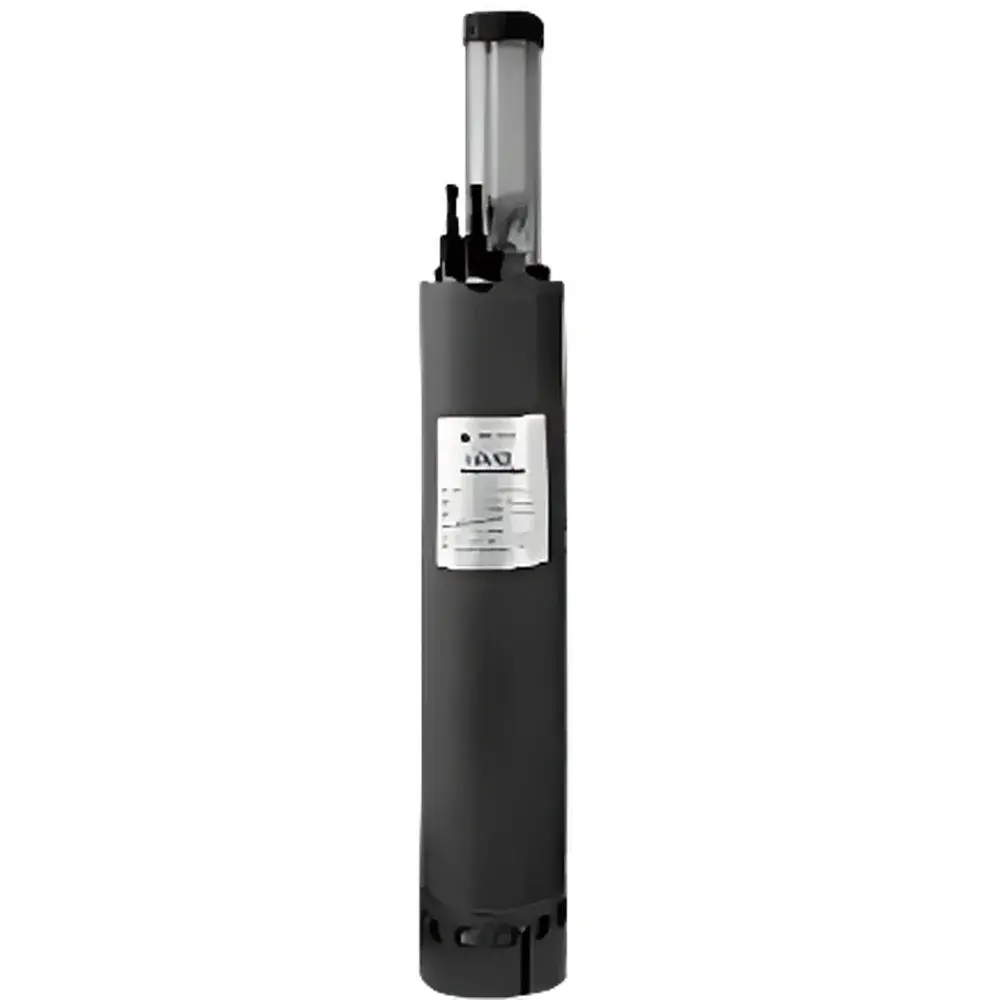
Zming Environmental HQ-8802 In-situ Nitrate-Nitrogen & Nitrite-Nitrogen Analyzer
| Brand | Zming Environmental Technology Co., Ltd. |
|---|---|
| Origin | Jiangsu, China |
| Manufacturer Type | Authorized Distributor |
| Country of Origin | China |
| Model | HQ-8802 |
| Pricing | Available Upon Request |
| Measurement Parameters | Nitrate-N (NO₃⁻-N), Nitrite-N (NO₂⁻-N) |
| Measurement Principle | N-(1-Naphthyl)ethylenediamine Dihydrochloride (NED) Spectrophotometry |
| Range | 0–0.5 mg/L (NO₃⁻-N), 0–0.2 mg/L (NO₂⁻-N), both field-adjustable |
| Detection Limit | Sub-ppb level (NO₃⁻-N and NO₂⁻-N) |
| Max Deployment Depth | 100 m |
| Integrated Sensors | Turbidity, Temperature, Humidity, Leak Detection |
| Onboard Display | Handheld touchscreen interface |
| Digestion | Rapid thermal digestion module |
Overview
The Zming Environmental HQ-8802 In-situ Nitrate-Nitrogen & Nitrite-Nitrogen Analyzer is an integrated, submersible water quality monitoring instrument engineered for continuous, unattended operation in lacustrine, reservoir, estuarine, and coastal marine environments. It employs dual-channel N-(1-naphthyl)ethylenediamine dihydrochloride (NED) spectrophotometric detection — a standardized colorimetric method compliant with ISO 7890-3, ASTM D3867, and EPA Method 353.2 — to quantify nitrate-nitrogen (NO₃⁻-N) and nitrite-nitrogen (NO₂⁻-N) simultaneously within the same aqueous sample matrix. Unlike benchtop analyzers requiring discrete sampling and laboratory processing, the HQ-8802 performs on-site reagent addition, thermal digestion, optical measurement, and data logging without manual intervention. Its compact, pressure-rated housing (IP68, 100 m depth rating) enables direct deployment on buoys, moored platforms, autonomous surface vehicles (ASVs), or fixed shoreline stations. The system operates under low-power consumption profiles suitable for solar-battery hybrid power systems, supporting long-term deployments exceeding 30 days between maintenance cycles.
Key Features
- Simultaneous dual-parameter quantification of NO₃⁻-N and NO₂⁻-N using independent optical flow cells and wavelength-specific photodiodes (540 nm for nitrite, 520 nm for nitrate post-diazotization)
- Rapid thermal digestion module with programmable ramp-and-hold temperature control (up to 105 °C), reducing analysis cycle time to ≤12 minutes per measurement sequence
- Integrated turbidity compensation algorithm: real-time correction of absorbance signals using co-located 860 nm/940 nm dual-wavelength turbidity sensing, eliminating scattering artifacts in high-sediment or algal bloom conditions
- Depth-rated mechanical architecture: titanium-alloy pressure housing with ceramic shaft seals, validated to 100 m static head pressure (IEC 60529 IP68, EN 61000-6-2 EMC immunity)
- Onboard environmental monitoring suite: embedded Pt1000 temperature sensor (±0.1 °C accuracy), capacitive humidity sensor (±2 % RH), and conductive leak detection circuitry with fail-safe shutdown protocol
- Field-configurable measurement ranges: user-selectable NO₃⁻-N spans (e.g., 0–0.1 / 0–0.5 / 0–2.0 mg/L); NO₂⁻-N spans (e.g., 0–0.05 / 0–0.2 / 0–1.0 mg/L), each calibrated via NIST-traceable standard solutions
- Sub-ppb-level detection sensitivity achieved through low-noise photometric electronics, optimized cuvette pathlength (10 mm), and dark-current-compensated signal acquisition
Sample Compatibility & Compliance
The HQ-8802 is validated for use in natural freshwater (pH 6.0–9.0, conductivity < 2,000 µS/cm), brackish estuaries (salinity up to 25 psu), and coastal seawater (salinity up to 35 psu). Reagent formulations are optimized to minimize chloride interference in nitrite determination and suppress iodide-mediated oxidation artifacts in nitrate analysis. All wetted materials comply with USP Class VI biocompatibility standards and NSF/ANSI 61 potable water system component requirements. Data integrity meets GLP and GMP-aligned audit trail specifications: timestamps, calibration logs, error flags, and raw absorbance values are stored with write-once-read-many (WORM) memory protection. Firmware supports optional 21 CFR Part 11-compliant electronic signature modules for regulated environmental reporting.
Software & Data Management
Instrument configuration, calibration, and diagnostics are managed via the Zming FieldLink™ mobile application (iOS/Android), which communicates over Bluetooth 5.0 or RS-485 Modbus RTU. Raw data streams (including NO₃⁻-N, NO₂⁻-N, turbidity NTU, temperature °C, humidity %RH, and diagnostic codes) are output at user-defined intervals (1 min to 24 h) in ASCII CSV format. Optional integration with SCADA platforms (e.g., Ignition, Siemens Desigo, or custom MQTT brokers) is supported through configurable TCP/IP Ethernet or 4G LTE telemetry. All firmware updates undergo cryptographic signature verification; configuration files include checksum validation to prevent unauthorized parameter modification.
Applications
- Long-term trophic state assessment in eutrophic lakes and reservoirs, tracking seasonal NO₃⁻/NO₂⁻ ratios as indicators of nitrification/denitrification activity
- Estuarine nutrient flux monitoring at river mouths, supporting Total Maximum Daily Load (TMDL) modeling and hypoxia forecasting
- Source water quality surveillance for rural drinking water supply systems, particularly where agricultural runoff introduces episodic nitrate spikes
- Coastal zone management programs requiring high-temporal-resolution nitrite data during phytoplankton bloom events (e.g., Prorocentrum, Chattonella)
- Validation of remote-sensing algorithms (e.g., Sentinel-3 OLCI) by providing ground-truth in-situ reference measurements
FAQ
What regulatory methods does the HQ-8802 implement for nitrate and nitrite analysis?
It follows NED-based spectrophotometry aligned with ISO 7890-3 (water quality — determination of nitrite — spectrometric method) and EPA Method 353.2 (determination of nitrate + nitrite by automated cadmium reduction), adapted for in-situ flow-cell geometry and thermal digestion.
Can the instrument operate autonomously for extended periods without servicing?
Yes — with standard reagent cartridges (60-day capacity), solar-charged battery packs, and anti-fouling wiper assembly, field uptime exceeds 90 days under typical temperate coastal conditions.
How is turbidity interference mitigated during nitrate/nitrite quantification?
Dual-wavelength (860 nm/940 nm) turbidity measurement occurs synchronously with photometric detection; real-time scatter correction is applied to absorbance values prior to calibration curve interpolation.
Is remote calibration verification supported?
Yes — the system accepts remote injection of certified reference materials (CRMs) via auxiliary port; onboard validation routines compare measured CRM concentrations against NIST-traceable certificate values and flag deviations >±5%.
Does the HQ-8802 support data export in formats compatible with national water quality databases (e.g., WQX, EEA WISE)?
Yes — CSV output includes mandatory metadata fields (station ID, UTC timestamp, parameter codes per EPA WQX taxonomy, uncertainty estimates) and can be mapped to WQX XML schema via Zming’s DataBridge™ conversion utility.
Related Products







