
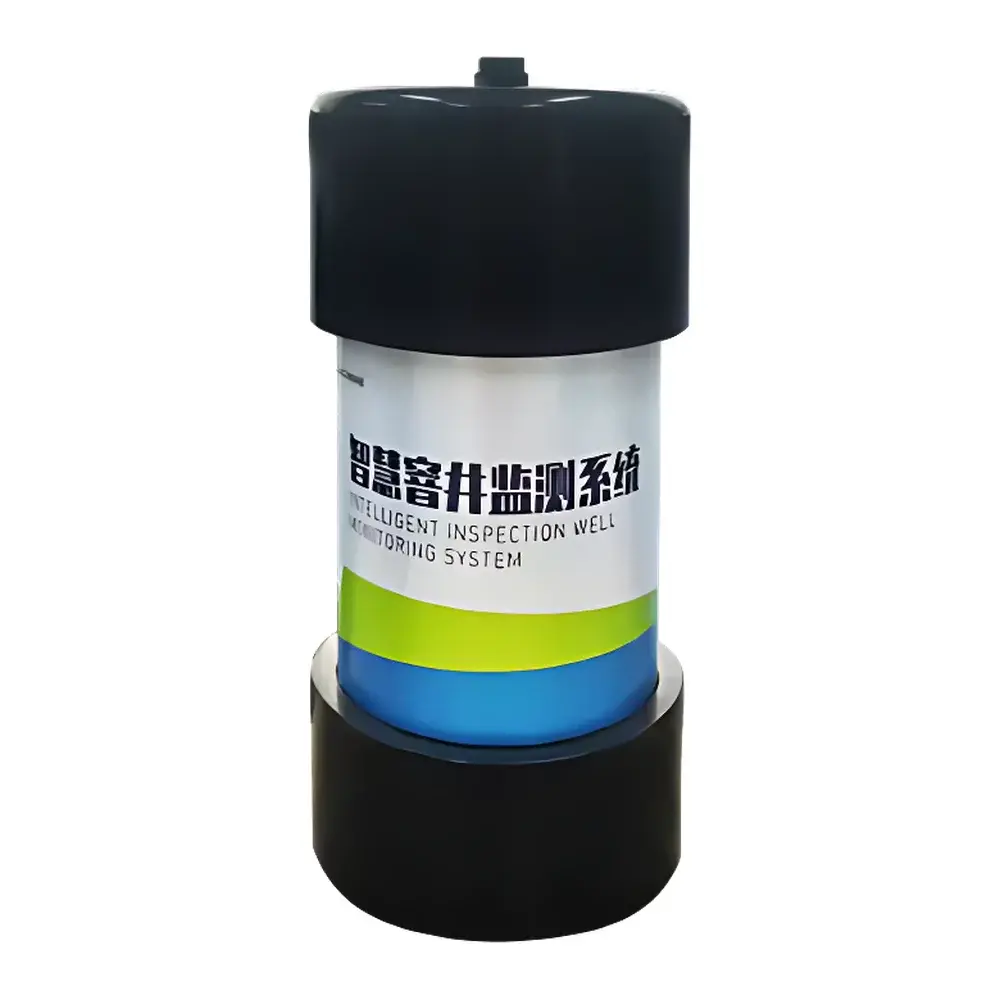
Zming Environmental Smart Manhole Monitoring System
| Brand | Zming Environmental Technology Co., Ltd. |
|---|---|
| Origin | Jiangsu, China |
| Manufacturer Type | Authorized Distributor |
| Origin Category | Domestic (China) |
| Model | Smart Manhole Monitoring System |
| Pricing | Available Upon Request |
Overview
The Zming Environmental Smart Manhole Monitoring System is an integrated, low-power, in-situ environmental monitoring platform engineered for continuous, real-time assessment of water quality and hydrological parameters within urban stormwater and wastewater infrastructure — specifically manholes, combined sewer overflows (CSOs), inspection chambers, and discharge points. Built upon a modular architecture, the system employs multi-spectral optical sensing, ion-selective electrode (ISE) technology, and ultrasonic/radar-based hydrometric measurement to deliver robust, field-deployable data acquisition under challenging underground conditions. Its core function is to support regulatory compliance, early pollution event detection, and evidence-based decision-making for municipal water authorities operating under frameworks such as ISO 14001, EU Urban Wastewater Treatment Directive (91/271/EEC), and China’s HJ 212–2017 technical specification for pollutant online monitoring data transmission. Unlike traditional grab sampling or centralized lab analysis, this system enables autonomous, long-duration operation with minimal maintenance—providing time-series resolution critical for identifying diurnal patterns, first-flush events, and illicit discharges.
Key Features
- Modular sensor architecture supporting simultaneous measurement of pH, conductivity, dissolved oxygen (DO), turbidity, temperature, COD (via UV-Vis spectral estimation), ammonium-nitrogen (NH₄⁺-N), liquid level, and flow velocity/volume
- Low-power design centered on a 12 V / 50 Ah lithium battery pack, enabling >90 days of continuous operation at default 30-minute telemetry intervals (configurable from 1 to 1440 minutes)
- Integrated MQPC-06 intelligent terminal with embedded Modbus-RTU master-slave protocol stack and native HJ 212–2017 data packaging and transmission compliance
- Dual-mode hydrometric sensing: Doppler ultrasonic flow meters for pipe flow profiling; radar-based level sensors for non-contact water surface tracking in open channels or wet wells
- Environmental resilience: UPVC housing (Φ14 × 30 cm per module), IP68-rated electronics, internal temperature/humidity monitoring, and voltage-level diagnostics for predictive power management
- Flexible mounting: Adjustable stainless-steel bracket system compatible with standard manhole access structures, corrosion-resistant galvanized steel support frames, and optional solar-assisted charging kits
Sample Compatibility & Compliance
The system is validated for deployment in mixed-flow environments typical of urban combined sewers, storm drains, and industrial outfalls—with representative matrix compatibility across pH 2–12, conductivity up to 20 mS/cm, turbidity ≤ 4000 NTU, and suspended solids concentrations up to 10 g/L. All electrochemical and optical sensors conform to IEC 61290-1 (optical fiber sensor safety) and IEC 60747-17 (solid-state chemical sensors). Data integrity meets GLP-aligned audit trail requirements through timestamped, CRC-verified packet transmission. Firmware and cloud platform components are designed to support future alignment with FDA 21 CFR Part 11 electronic record/electronic signature (ERES) principles where local regulatory adoption permits.
Software & Data Management
Data flows from the MQPC-06 terminal via DTU/RTU modules using GPRS/NB-IoT/LTE-M into either a hosted cloud platform or on-premises server infrastructure. The central management software provides role-based access control (RBAC), configurable alarm thresholds (e.g., pH drift >0.5 units/hr, DO 15 min), automated report generation (daily/weekly summary PDFs), and API-accessible RESTful endpoints for integration with SCADA, GIS (e.g., Esri ArcGIS Online), or digital twin platforms. Raw sensor data is stored with millisecond-precision timestamps; derived metrics (e.g., flow-weighted average COD, event-based load calculations) are computed using embedded algorithms compliant with ISO 5667-3 for water sampling and ISO 10703 for gamma spectrometry-based validation methodology analogues.
Applications
- Real-time CSO event detection and volume quantification for EPA NPDES permit reporting
- Baseline characterization of dry-weather flow and illicit connection screening in legacy sewer networks
- Performance verification of green infrastructure (bioswales, permeable pavements) via upstream/downstream manhole pair monitoring
- Support for urban water balance modeling and climate-resilient drainage planning (e.g., aligned with CEN/TS 16932:2016)
- Regulatory enforcement: Tracking compliance with national discharge limits (e.g., China’s GB 8978–1996, EU BAT conclusions for urban wastewater treatment plants)
- Emergency response coordination during flood or spill incidents through geo-referenced alerting and historical baseline deviation analytics
FAQ
What communication protocols does the system support for regulatory data submission?
The system natively implements HJ 212–2017 for Chinese environmental monitoring networks and Modbus-RTU for integration with third-party SCADA systems.
Can the system operate reliably in submerged or high-humidity manhole environments?
Yes — all sensor housings and terminal enclosures are rated IP68 and constructed from chemically inert UPVC; internal humidity monitoring triggers diagnostic alerts prior to condensation-related drift.
Is cloud data storage mandatory, or can data be retained locally?
Both options are supported: fully hosted SaaS platform or private-server deployment with PostgreSQL-backed time-series database and TLS 1.2+ encrypted ingestion.
How is calibration traceability maintained for long-term deployments?
Each sensor module includes embedded calibration history logs with NIST-traceable reference point metadata; field recalibration is supported via Bluetooth-enabled handheld configurators with audit-trail logging.
Does the system meet international standards for cybersecurity in critical infrastructure?
Firmware supports secure boot, AES-256 encrypted OTA updates, and configurable firewall rules on the DTU layer — aligning with IEC 62443-3-3 SL2 requirements for networked industrial devices.
Related Products







