
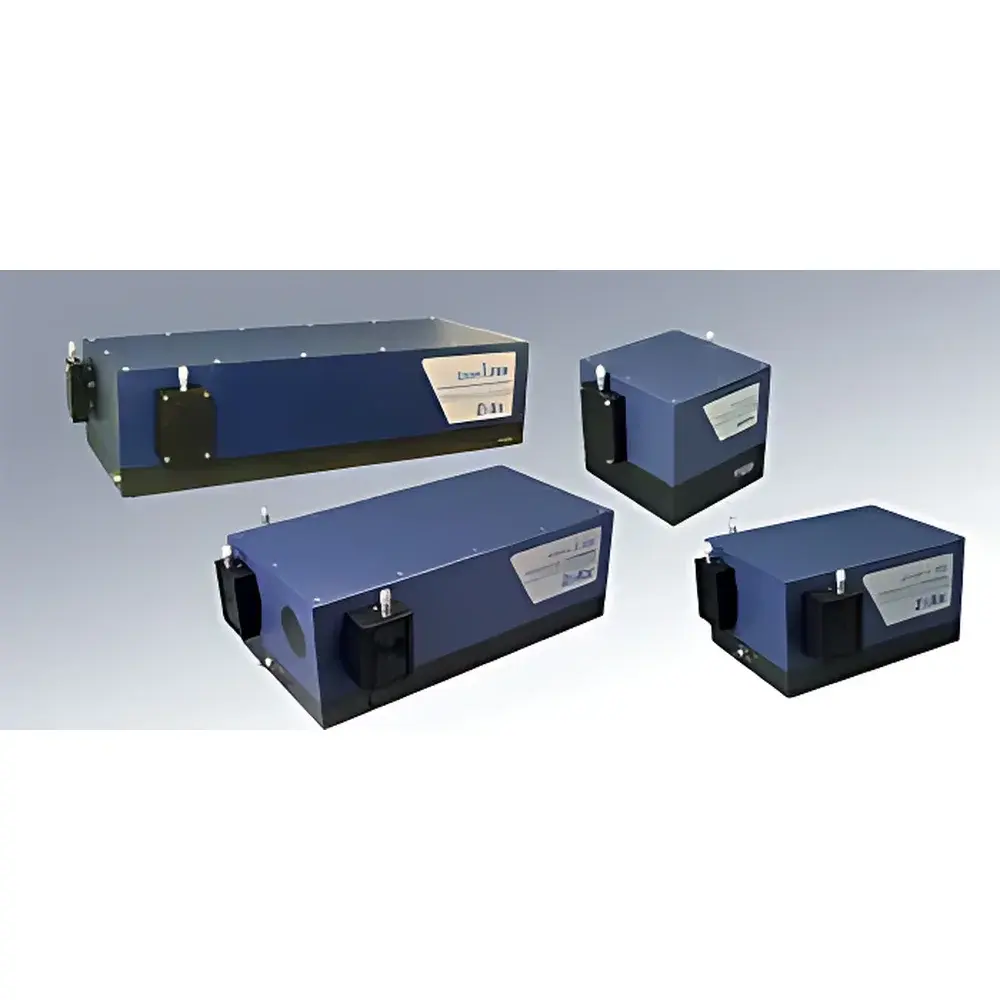
ZOLIX Omni-λ Series Automated Grating Spectrometer Monochromator
| Brand | ZOLIX |
|---|---|
| Origin | Beijing, China |
| Manufacturer Type | Original Equipment Manufacturer (OEM) |
| Product Origin | Domestic (China) |
| Model | Omni-λ |
| Pricing | Upon Request |
| Focal Length Options | 150 mm, 300 mm, 500 mm, 750 mm |
| Optical Design | Czerny–Turner (C-T) |
| Grating Mount | Dual-grating turret (Omni-λ150/300), Triple-grating turret (Omni-λ500/750) |
| Grating Size | 68 × 68 mm (standard for ≥300 mm models) |
| Wavelength Range | UV-VIS-NIR (190–2500 nm, dependent on grating and detector selection) |
| Resolution (with 1200 g/mm grating) | 0.4 nm (Omni-λ150) to 0.03 nm (Omni-λ750) |
| Wavelength Accuracy | ±0.25 nm (Omni-λ150) to ±0.2 nm (Omni-λ300+) |
| Wavelength Repeatability | ±0.1 nm |
| Minimum Scan Step | 0.005 nm |
| Entrance/Exit Configuration | Motorized dual-input/dual-output port selection |
| Interface | USB 2.0 (standard), RS-232 (optional) |
| Slit Options | Manual (0.01–3 mm width, 2/4/10/14 mm height) or motorized automatic slit |
| Optional Accessories | Motorized filter wheel, electronic shutter, CCD array or single-point detector integration |
Overview
The ZOLIX Omni-λ Series Automated Grating Spectrometer Monochromator is a precision optical instrument engineered for high-fidelity spectral dispersion and wavelength selection across the ultraviolet, visible, and near-infrared (UV-VIS-NIR) spectral domains (190–2500 nm). Based on the classical Czerny–Turner optical configuration, the Omni-λ platform delivers stable, low-aberration beam paths optimized for both monochromatic light isolation and broadband spectral acquisition. Its modular architecture supports operation as either a scanning monochromator—delivering tunable narrowband output—or as a fixed-grating spectrometer when coupled with array detectors such as back-illuminated CCDs or InGaAs sensors. The system’s mechanical and optical design emphasizes thermal stability, minimal stray light (<10⁻⁴ relative to peak intensity), and long-term calibration retention—critical attributes for quantitative spectroscopic applications in research laboratories and industrial QA/QC environments.
Key Features
- Four focal length variants (150 mm, 300 mm, 500 mm, and 750 mm) enable scalable trade-offs between throughput, resolution, and spectral coverage—supporting applications from rapid screening to high-resolution atomic line analysis.
- Large-format 68 × 68 mm ruled or holographic diffraction gratings maximize photon collection efficiency and reduce vignetting, particularly beneficial for low-light measurements including fluorescence and Raman spectroscopy.
- Motorized multi-grating turrets (dual-grating for Omni-λ150/300; triple-grating for Omni-λ500/750) allow seamless, software-controlled switching among gratings with different groove densities (e.g., 300 g/mm for broad-band NIR, 2400 g/mm for UV high-resolution), extending operational flexibility without manual realignment.
- Gold-coated optics (standard on NIR-optimized configurations) enhance reflectance above 1 µm, improving signal-to-noise ratio in infrared spectral regions where aluminum coatings exhibit significant absorption losses.
- DSP-based motion control enables sub-nanometer wavelength positioning accuracy (±0.005 nm step resolution) and repeatability of ±0.1 nm—validated per ISO 14785:2019 guidelines for spectrometer performance assessment.
- USB 2.0 digital interface replaces legacy RS-232, enabling deterministic command latency (<5 ms), plug-and-play enumeration under Windows/Linux, and compatibility with LabVIEW™, Python (PyVISA), and MATLAB® instrument control toolboxes.
Sample Compatibility & Compliance
The Omni-λ integrates seamlessly with diverse excitation sources (Xe arc lamps, tunable lasers, supercontinuum sources) and detection modalities—including photomultiplier tubes (PMTs), silicon photodiodes, scientific-grade CCDs, and extended-range InGaAs linear arrays. Its standardized 25 mm × 10–14 mm focal plane accommodates commercial detector mounts compliant with SMA905, FC/PC, or free-space coupling interfaces. For regulated environments, the system supports audit-trail-capable operation when paired with validated third-party software adhering to FDA 21 CFR Part 11 requirements. Optical components conform to ISO 10110 surface quality standards (scratch-dig 60–40), while mechanical housing meets IP20 environmental protection ratings. All models are CE-marked and RoHS-compliant.
Software & Data Management
ZOLIX provides the OmniDriver™ control suite—a native 64-bit application supporting real-time wavelength scanning, grating selection, slit width modulation, and synchronized detector triggering. Data export formats include ASCII (.txt), CSV, and HDF5, ensuring interoperability with OriginLab®, Igor Pro®, and open-source analysis pipelines (e.g., SciPy, Astropy). The SDK includes C/C++, .NET, and Python APIs with full documentation, enabling custom automation for GLP/GMP workflows. Firmware updates are delivered via secure HTTPS channels, and calibration files (wavelength, intensity, linearity) are stored internally with SHA-256 checksum validation to prevent tampering.
Applications
- Steady-state and time-resolved fluorescence spectroscopy (excitation/emission mapping, quantum yield determination)
- Micro-Raman and macro-Raman analysis using 532 nm or 785 nm excitation
- UV-VIS-NIR absorbance and transmittance measurements per ASTM E308 and ISO 11664-3
- Plasma emission characterization in semiconductor process monitoring
- LED and laser diode spectral profiling (FWHM, centroid wavelength, side-mode suppression ratio)
- Reflectance and colorimetric analysis in material science and pigment development
FAQ
What wavelength ranges can the Omni-λ cover?
The usable spectral range depends on grating selection and detector response—typically 190–1100 nm with Si-based detectors and up to 2500 nm using InGaAs arrays and gold-coated optics.
Is remote operation supported over Ethernet or Wi-Fi?
The standard interface is USB 2.0; Ethernet or Wi-Fi connectivity requires an external USB-to-Ethernet bridge configured at the host OS level—no native TCP/IP stack is embedded in the device firmware.
Can the Omni-λ be used in vacuum or purged environments?
The base instrument is rated for ambient air operation; optional vacuum-compatible versions (with sealed drive mechanisms and outgassing-tested adhesives) are available upon request for UHV spectroscopy applications.
How is wavelength calibration performed and maintained?
Factory calibration uses Hg/Ne and Ar spectral lines traceable to NIST SRM 2035; users may perform recalibration using internal or external reference lamps, with coefficients stored in non-volatile memory.
Does the system support synchronized multi-channel detection?
Yes—via TTL-triggered acquisition mode, the Omni-λ can coordinate start/stop signals with up to four external detectors, enabling pump-probe or dual-spectrometer comparative measurements.




