
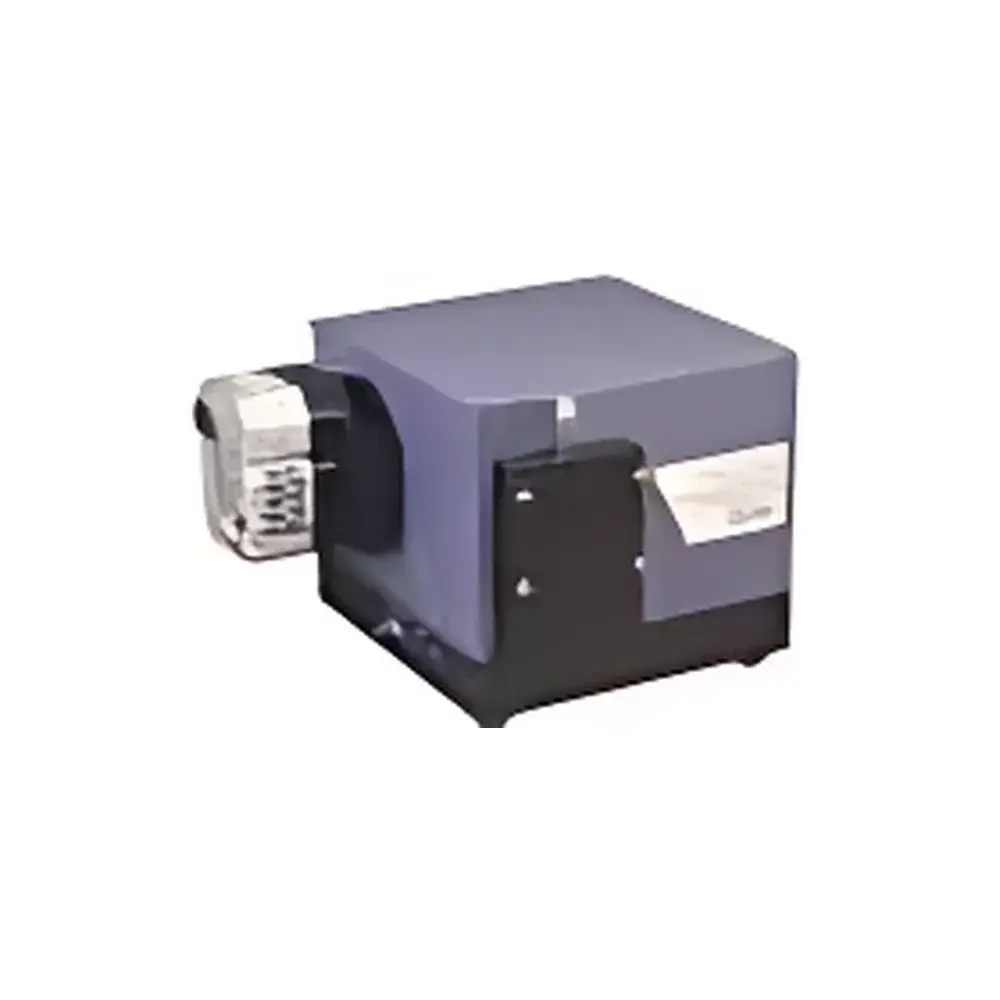
ZOLIX OmniEvo “Spectrum King” High-Performance Imaging-Corrected Spectrometer
| Brand | ZOLIX |
|---|---|
| Origin | Beijing, China |
| Manufacturer Type | Direct Manufacturer |
| Origin Category | Domestic (China) |
| Model | OmniEvo |
| Pricing | Upon Request |
Overview
The ZOLIX OmniEvo “Spectrum King” is a high-performance imaging-corrected grating spectrometer engineered for demanding spectroscopic applications requiring high spectral fidelity, low-light sensitivity, and spatial resolution across UV-VIS-NIR ranges. Built upon the proven Czerny–Turner (C-T) optical architecture and refined through ZOLIX’s proprietary optical design expertise, the OmniEvo integrates advanced aberration correction—specifically imaging correction—to minimize spatial distortion across the detector plane. This enables uniform spectral line shapes and accurate intensity distribution mapping, critical for quantitative fluorescence, Raman, photoluminescence, and time-resolved spectroscopy. Unlike conventional monochromators, the OmniEvo’s imaging-corrected optical path ensures minimal smile and keystone distortion, preserving pixel-to-wavelength correspondence without software interpolation—thereby maintaining true instrumental line shape (ILS) integrity and measurement reproducibility.
Key Features
- Imaging-corrected C-T optical design with optimized off-axis mirror alignment and holographically ruled or ruled diffraction gratings (imported from Newport, USA) for minimized astigmatism and spectral curvature
- Standard entrance slit adjustable from 0.01 mm to 3.0 mm in precision micrometer-driven increments, supporting variable resolution–throughput trade-offs
- Modular detector interface compatible with multiple scientific-grade sensors: Andor iVac deep-cooled CCD (–60 °C), optional back-illuminated CCD (–100 °C, QE >80% at 600 nm), and thermoelectrically cooled InGaAs linear array (900–1700 nm)
- Quantum efficiency up to 60% (400–1000 nm) for standard CCD configuration; read noise as low as 6.2 e⁻/count at –60 °C
- Optimized optical throughput via high-reflectivity Al+MgF₂ coatings and low-stray-light baffling, achieving stray light suppression better than 1×10⁻⁵ (typ.)
- Standard SMA905 fiber coupling option, enabling both single-point and multi-channel (via fiber bundle or switchable port) spectral acquisition
Sample Compatibility & Compliance
The OmniEvo supports diverse sample interfaces—including free-space beam coupling, fiber-optic input (with optional focusing optics), and direct mounting to microscopes or cryostats—making it suitable for solid, liquid, gas, and thin-film samples. Its mechanical and thermal stability meets ISO 14644-1 Class 5 cleanroom-compatible handling requirements when operated in controlled lab environments. While not certified as a medical device, the system adheres to IEC 61000-6-3 (EMC emission) and IEC 61010-1 (safety for laboratory equipment) standards. Data acquisition workflows can be configured to comply with GLP/GMP documentation practices, including audit-trail-enabled metadata logging (timestamp, slit width, grating position, integration time, detector temperature) when integrated with compliant third-party software platforms.
Software & Data Management
The OmniEvo operates under ZOLIX’s SpectraMaster™ control suite (Windows-based, 64-bit), offering real-time spectral preview, automated grating and filter wheel sequencing, dark/bias/flat-field correction, and wavelength calibration using Hg/Ar/Ne emission lines. Raw data are exported in industry-standard formats (FITS, CSV, HDF5) with embedded metadata compliant with ASTM E131-22 (Standard Terminology Relating to Molecular Spectroscopy). Optional SDKs support Python, MATLAB, and LabVIEW integration for custom automation, including synchronization with pulsed lasers or TCSPC modules. All spectral acquisitions retain full detector-level bit-depth (16-bit or higher), ensuring traceability and post-acquisition reprocessing without loss of dynamic range.
Applications
- Steady-state and time-gated fluorescence spectroscopy of quantum dots, perovskites, and organic emitters
- Micro-Raman analysis of 2D materials (graphene, MoS₂), pharmaceutical polymorphs, and stress/strain mapping in semiconductors
- Photoluminescence quantum yield (PLQY) measurements with integrating sphere coupling
- Near-infrared spectral profiling of agricultural biomass, polymer degradation, and telecom-grade optical components (using InGaAs option)
- Plasmonic resonance characterization and surface-enhanced Raman scattering (SERS) quantification
- Environmental monitoring of dissolved organic matter (DOM) via excitation-emission matrix (EEM) spectroscopy
FAQ
What optical design architecture does the OmniEvo use, and how does imaging correction improve spectral data quality?
The OmniEvo employs a modified Czerny–Turner layout with proprietary imaging correction that eliminates spectral smile and keystone distortion across the full detector height—ensuring consistent pixel-to-wavelength mapping without reliance on empirical calibration interpolation.
Is the OmniEvo compatible with third-party spectroscopy software such as OceanView or SpectraSuite?
Yes—via ASCII command protocol over USB or RS-232; ZOLIX provides full command-line documentation and DLL-based API for OEM integration.
Can the instrument operate in vacuum or inert gas environments?
The base model is air-operated; however, optional purged or vacuum-compatible housing (up to 10⁻³ mbar) is available upon request for UV-sensitive applications below 190 nm.
Does the system support automated wavelength calibration?
Yes—integrated calibration routines accept user-defined emission line databases (e.g., Hg, Ar, Ne, Xe lamps); NIST-traceable calibration certificates are available as an add-on service.
What maintenance is required for long-term spectral accuracy?
Annual verification of grating angular positioning and slit alignment is recommended; ZOLIX offers factory recalibration services with ISO/IEC 17025-accredited uncertainty reporting.
Related Products






