
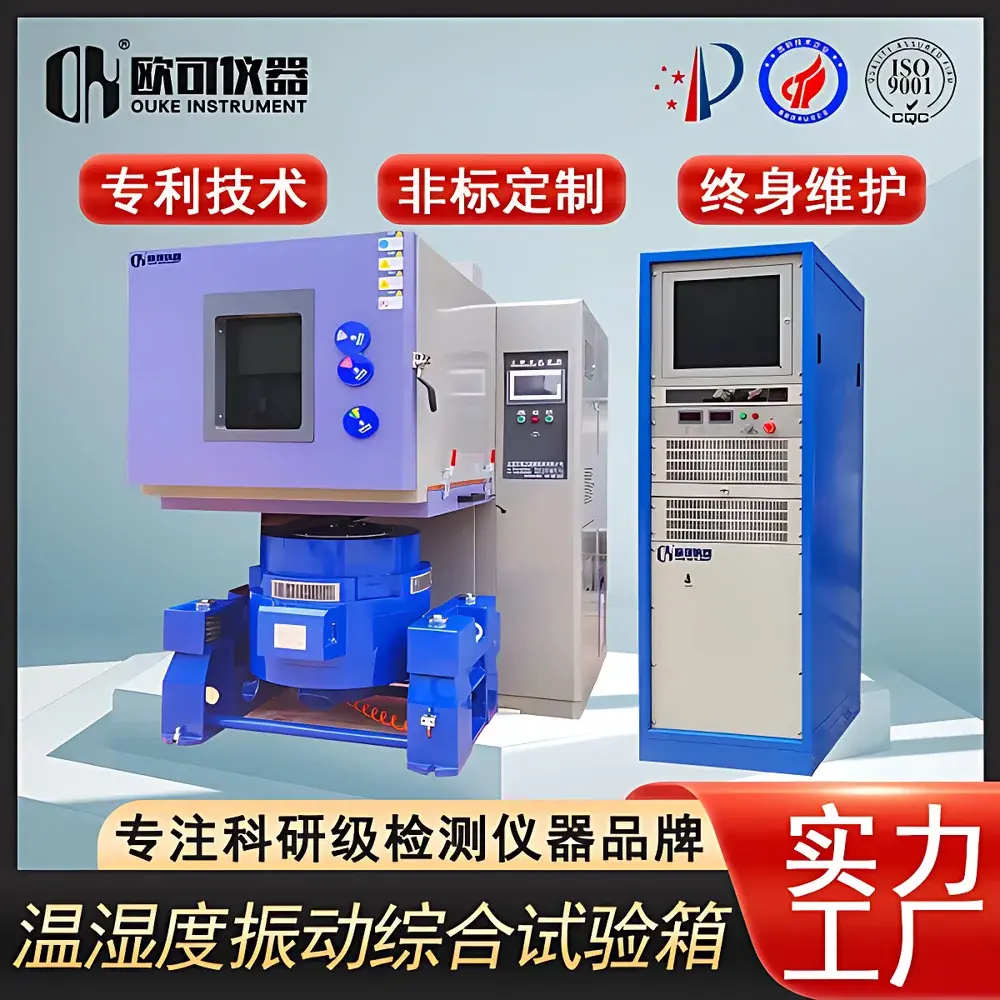
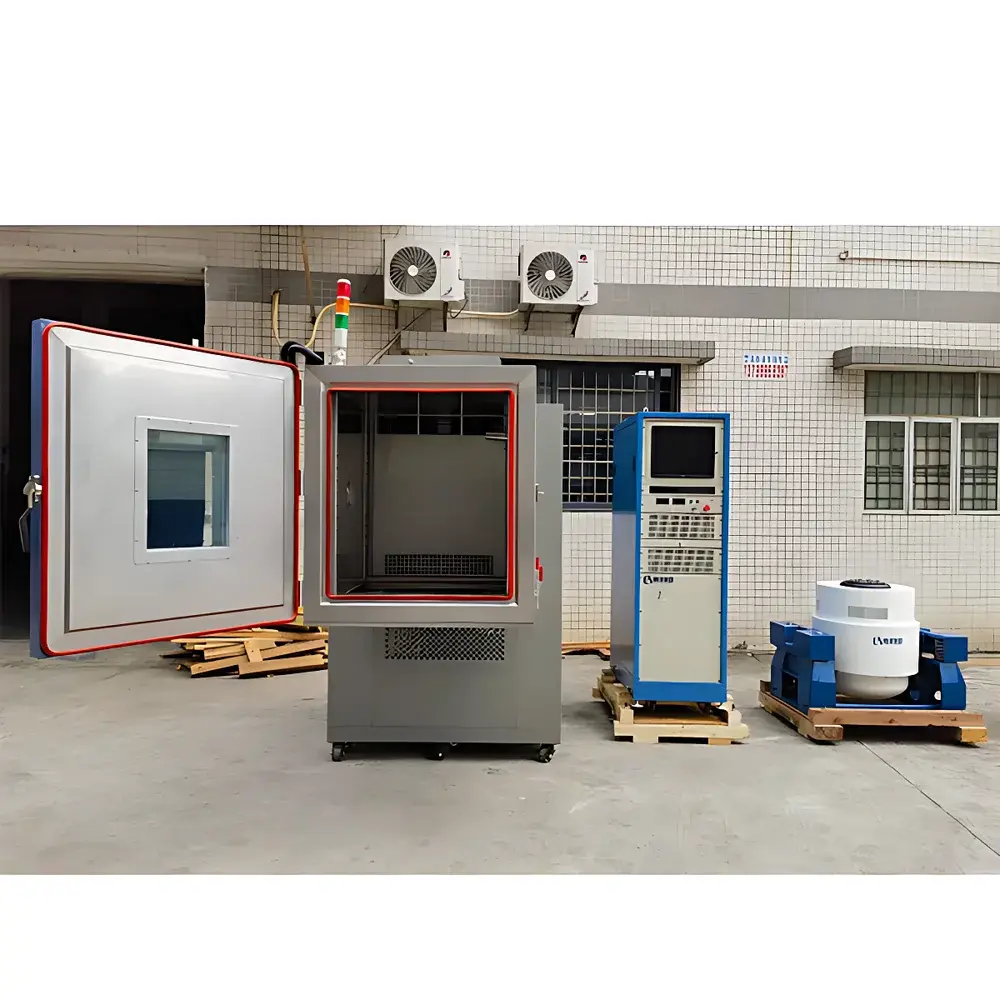
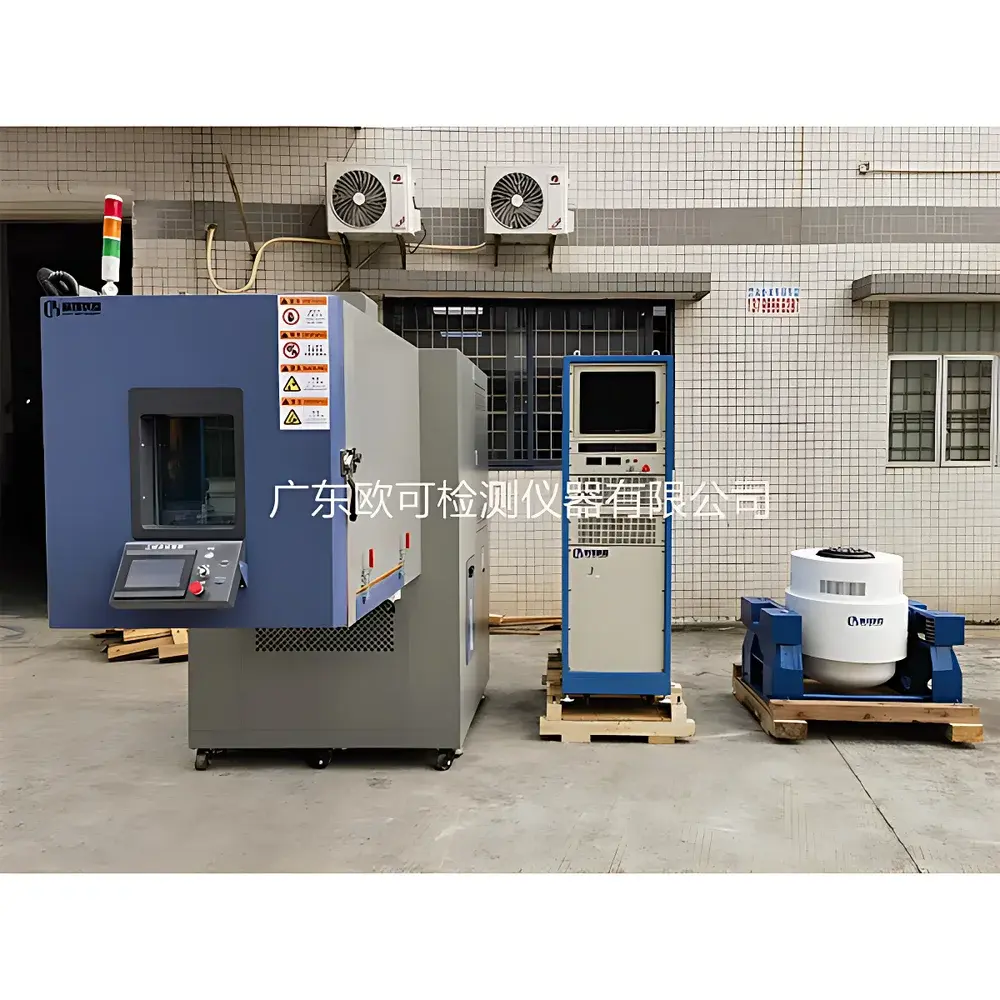
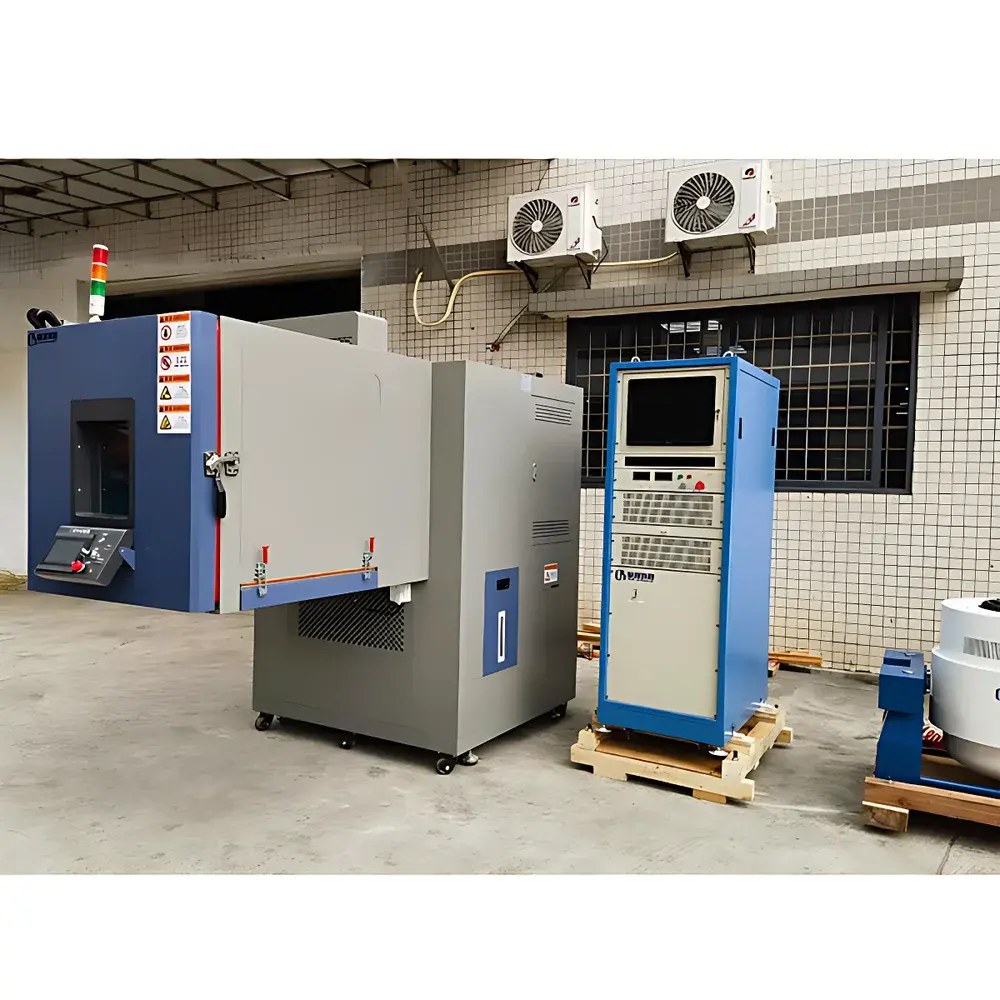
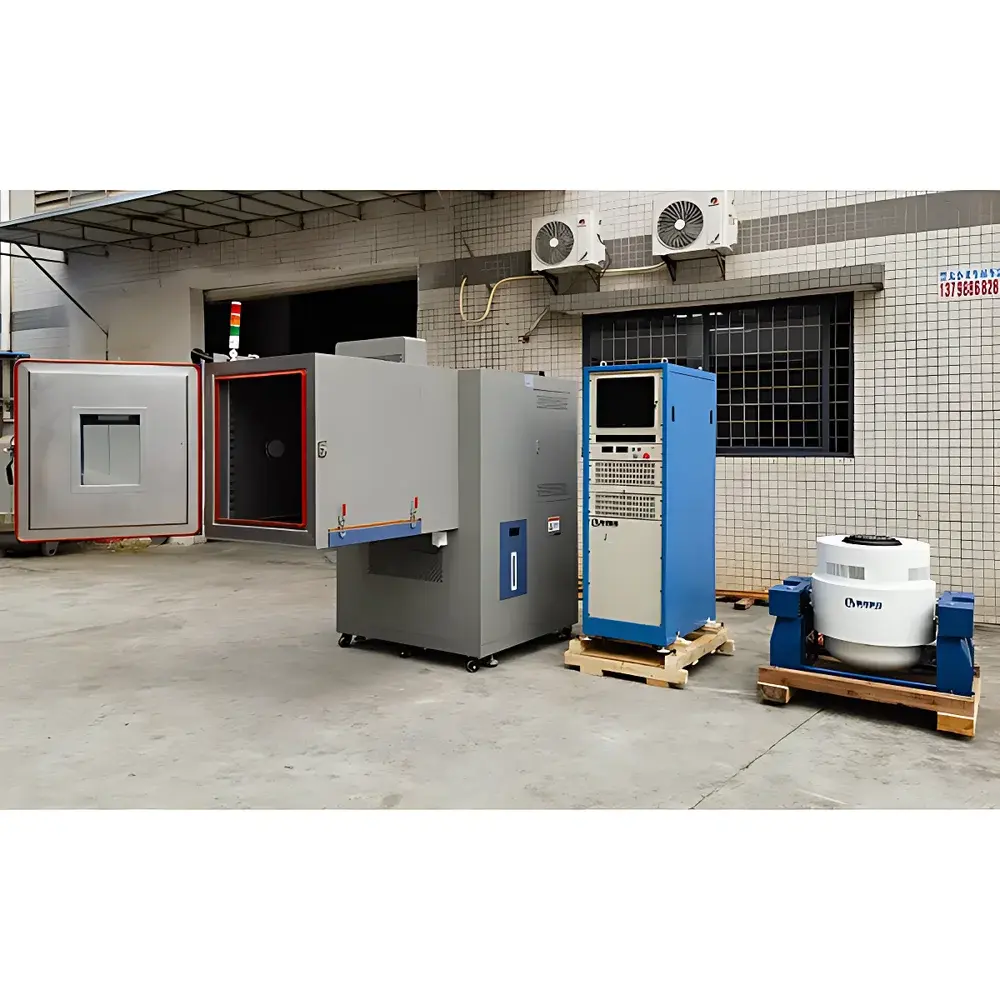
OK-ZTH-390.11111 Combined Temperature-Humidity-Vibration Test System
| Brand | OK Instruments |
|---|---|
| Origin | Guangdong, China |
| Manufacturer Type | Direct Manufacturer |
| Product Origin | Domestic (China) |
| Model | OK-ZTH-390.11111 |
| Temperature Range | −70 °C to +150 °C |
| Humidity Range | 20–98 %RH at 20–85 °C |
| Temperature Ramp Rate | 5 / 10 / 15 °C/min |
| Temperature Uniformity | ≤ ±0.5 °C |
| Standard Load Capacity | 15 kg aluminum mass, 350 W internal heat dissipation |
Overview
The OK-ZTH-390.11111 Combined Temperature-Humidity-Vibration Test System is an engineered platform for simultaneous multi-stress environmental simulation, integrating precise climatic control with electrodynamic vibration excitation in a single, co-located test volume. It operates on the principle of coupled environmental stress testing (CEST), where thermal gradients, hygrometric conditions, and mechanical acceleration profiles are applied concurrently—not sequentially—to replicate real-world operational and transport environments. Unlike standalone temperature chambers or vibration shakers, this system enables true synergistic stress interaction: thermally induced material expansion/contraction modulates mechanical damping characteristics; humidity ingress accelerates corrosion pathways under dynamic strain; and vibrational energy promotes crack propagation along moisture-penetrated interfaces. This physical coupling is essential for uncovering latent failure mechanisms—such as solder joint fatigue, sealant delamination, or PCB trace fracture—that remain undetected in single-factor qualification tests. The system conforms to the functional definition of a Class III combined environmental test chamber per IEC 60068-2-64 and ASTM D4728, serving as a core tool for reliability engineering, HALT-enabling pre-screening, and compliance validation against automotive (ISO 16750-4), aerospace (RTCA DO-160 Section 25), and industrial electronics (IEC 60721-3-3) standards.
Key Features
- Triple-axis synchronized control architecture enabling concurrent regulation of temperature, relative humidity, and broadband random/vibration profiles within a single sealed chamber volume
- Structurally reinforced stainless-steel chamber with vibration-damped mounting interface and dynamic sealing system for door, cable ports, and shaker feedthroughs—maintaining integrity under 10 gRMS peak acceleration
- Down-mounted electrodynamic shaker integrated beneath the chamber baseplate, featuring cryo-rated voice coil assembly and high-temperature lubricants compatible across −70 °C to +150 °C ambient extremes
- Programmable ramp rates (5/10/15 °C/min) with overshoot suppression and humidity tracking logic ensuring RH stability during rapid thermal transients
- Thermal uniformity ≤ ±0.5 °C at setpoint, verified per IEC 60068-3-5; humidity control accuracy ±3 %RH (20–85 °C range)
- Dual-stage refrigeration system with cascade compressor design and desiccant-based dehumidification for stable low-temperature, high-RH operation
Sample Compatibility & Compliance
The OK-ZTH-390.11111 accommodates standard test specimens up to 15 kg mass (aluminum reference load) and 350 W internal power dissipation without compromising climatic fidelity. Chamber interior dimensions support common automotive ECUs, avionics line-replaceable units (LRUs), consumer electronics assemblies, and packaged goods per ISTA 3A/3E protocols. All control firmware and data logging comply with GLP/GMP audit requirements, including electronic signature support, user access levels, and full 21 CFR Part 11–compliant audit trails. Test profiles may be configured to align with ISO 16750-4 (road vehicle environmental conditions), RTCA DO-160G Section 25 (vibration and temperature), MIL-STD-810H Method 514.8 (combined environments), and JEDEC JESD22-A110 (accelerated temperature-humidity-bias). Calibration certificates traceable to NIM (National Institute of Metrology, China) are provided with each unit shipment.
Software & Data Management
The embedded test controller runs OK-TestSuite v4.2—a deterministic real-time operating system supporting hierarchical test sequencing, conditional branching, and multi-channel synchronized acquisition. Users define complex composite profiles combining temperature sweeps, dwell phases, humidity ramps, and time-synchronized vibration spectra (e.g., PSD profiles per ISO 10816 or random waveforms per MIL-STD-810H Fig. 514.8C-1). Up to 16 analog/digital input channels record external sensor signals—including thermocouples, strain gauges, voltage monitors, or digital bus outputs—time-aligned to chamber and shaker parameters with microsecond-level timestamp resolution. Data export formats include CSV, TDMS, and HDF5; raw logs are encrypted and stored locally with optional network backup to secure FTP/SFTP servers. Remote monitoring and alarm notification via SMTP/SNMP are configurable for unattended overnight or weekend testing cycles.
Applications
- Automotive: Validation of ADAS sensors, battery management systems (BMS), and infotainment modules under combined desert heat (+85 °C, 85 %RH) and road-induced vibration (0.5–2 g RMS, 5–2000 Hz)
- Aerospace: Full-mission profile replication for UAV flight controllers—from ground soak (40 °C, 60 %RH) through climb (−40 °C, 20 %RH) to turbulent cruise (−55 °C, 10 %RH + broadband shake)
- Medical Devices: Accelerated life testing of implantable pulse generators subjected to body-temperature cycling (37 °C ↔ 42 °C), sweat-equivalent humidity (60 %RH), and gait-simulated vibration (1–10 Hz harmonic)
- Industrial IoT: Stress screening of edge computing nodes deployed in offshore wind farms (−25 °C, 95 %RH salt-laden air + 0.3 g RMS turbine-induced resonance)
- Transport Packaging: ISTA-compliant validation of cold-chain pharmaceutical shipments undergoing simultaneous refrigerated transit (2–8 °C), maritime humidity (90 %RH), and truck-bed vibration (0.2–0.8 g RMS)
FAQ
What distinguishes “combined” from “sequential” environmental testing?
Combined testing applies temperature, humidity, and vibration simultaneously within one chamber—enabling physical coupling of stresses (e.g., thermal expansion altering resonant frequencies under vibration). Sequential testing applies each stress independently, missing synergistic failure modes.
Can the system perform low-pressure (altitude) testing?
No—the OK-ZTH-390.11111 is a three-stress (temperature/humidity/vibration) platform. For four-stress capability (including low pressure), consider OK’s ZTHP series, compliant with MIL-STD-810H Method 500.7.
Is third-party calibration and certification available?
Yes—OK Instruments provides optional UKAS-accredited calibration services (ISO/IEC 17025) for temperature, humidity, and vibration channels, including uncertainty budgets and traceability documentation.
How is thermal crosstalk between the shaker and chamber minimized?
Through a dual-layer isolation interface: a vacuum-gap thermal break between the shaker armature and chamber floor, plus active cooling of the shaker’s rear magnet assembly using recirculating chiller loops independent of the main refrigeration circuit.
Does the system support custom test script execution via external APIs?
Yes—RESTful API endpoints and Python SDK are included, enabling integration with LabVIEW, MATLAB, or enterprise PLM/QMS platforms for automated test orchestration and result ingestion.



