
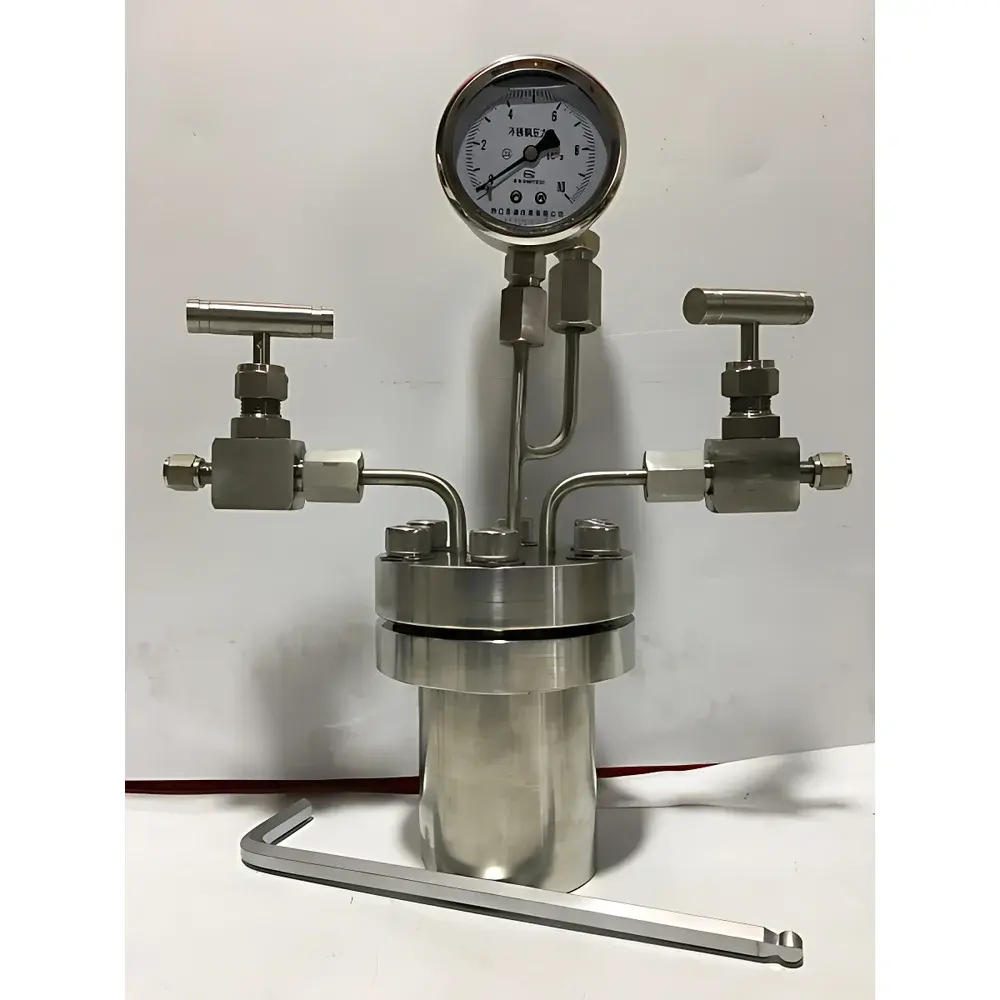
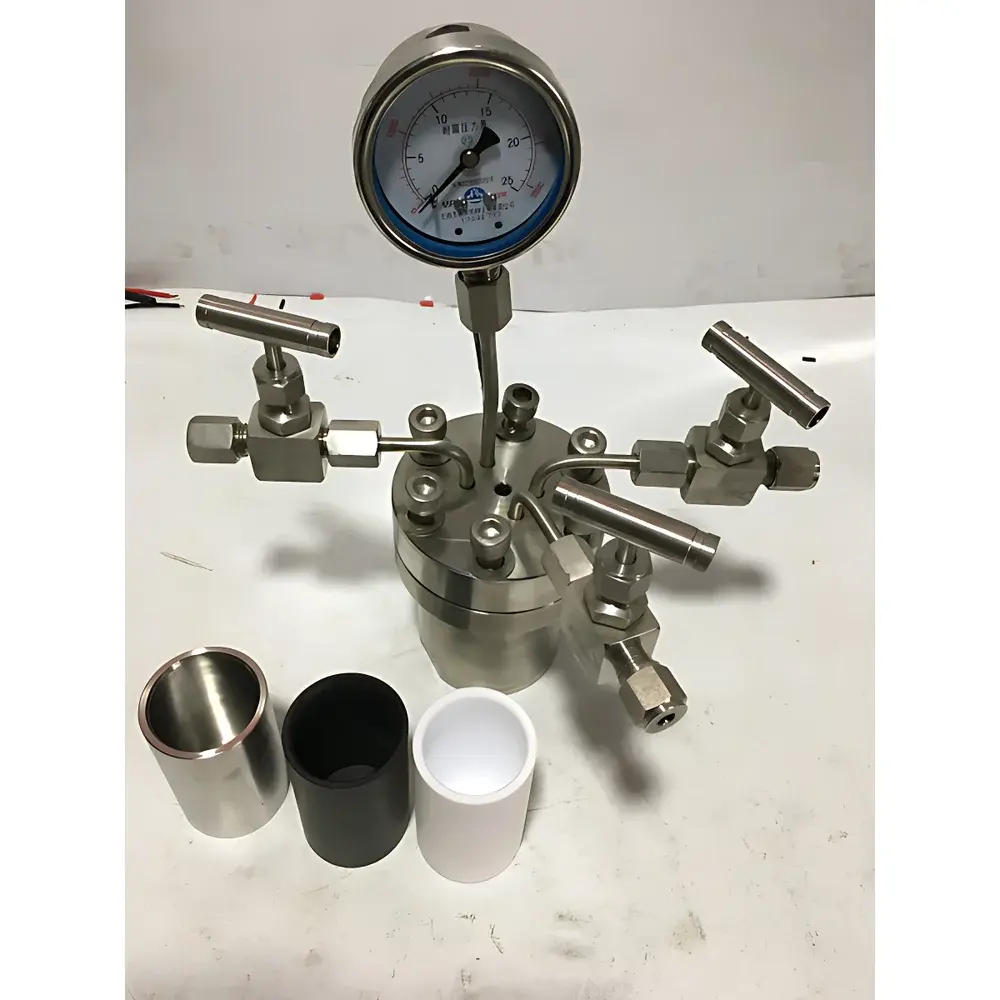
ZxYiqi PS-100ML High-Temperature & High-Pressure Batch Reactor
| Brand | ZxYiqi |
|---|---|
| Origin | Jiangsu, China |
| Manufacturer Type | Authorized Distributor |
| Country of Origin | China |
| Model | PS-100ML |
| Volume Range | 10–2000 mL |
| Vessel Material | ASTM A240 304 Stainless Steel (standard) |
| Operating Temperature | Up to 1000 °C |
| Design Pressure | –0.1 to 70 MPa |
| Vacuum Capability | ≤ –0.1 MPa (6 MPa absolute vacuum rating is technically inconsistent |
| Internal Lining Options | PTFE, PPL, Quartz, or metal cladding |
| Heating Compatibility | Oil bath, water bath, sand bath, electric cartridge heater, or external furnace |
| Stirring Interface | Standardized top-entry magnetic or mechanical drive port |
| Safety Features | Optional rupture disc, pressure relief valve, explosion-proof housing |
| Accessories | High-purity gas inlet/outlet needle valves (1/8″ & 1/4″ Swagelok®-compatible fittings), calibrated pressure gauge (0–100 MPa), Pt100 RTD probe, liquid sampling tube (optional) |
Overview
The ZxYiqi PS-100ML High-Temperature & High-Pressure Batch Reactor is an engineered laboratory-scale pressure vessel designed for controlled chemical synthesis, catalytic studies, hydrothermal material processing, and kinetic investigations under non-ambient thermal and pressure conditions. Based on ASME BPVC Section VIII Division 1 design principles—adapted for research-grade instrumentation—the reactor employs a monolithic forged 304 stainless steel body with full penetration welds and helium-leak-tested sealing integrity. Its modular architecture supports both static (batch) and semi-continuous operation modes, enabling precise control over reaction thermodynamics (T = 0–1000 °C) and fluid-phase equilibria (P = –0.1 to 70 MPa). Unlike ambient-pressure glassware, this reactor accommodates aggressive media—including halogenated solvents, supercritical CO₂, H₂S, NH₃, and molten salt systems—through customizable lining and alloy options (e.g., Hastelloy C-276 for chloride-rich environments or titanium for fluorinated acid resistance). The vessel’s pressure containment is validated via hydrostatic proof testing at 1.5× maximum allowable working pressure (MAWP), with traceable certification documentation provided per order.
Key Features
- Forged ASTM A240 304 stainless steel main body—optimized for tensile strength (>520 MPa), creep resistance up to 650 °C, and low intergranular corrosion susceptibility.
- Dual-configurable gas handling system: precision-machined 1/8″ and 1/4″ Swagelok®-compatible needle valves for inert gas purging, reactant dosing, and controlled venting—enabling quantitative atmosphere exchange prior to pressurization.
- Integrated high-fidelity instrumentation interface: threaded ports for Pt100 Class A RTD sensors (±0.15 °C accuracy), calibrated bourdon-tube pressure gauges (0–100 MPa, ±0.5% FS), and optional digital transducers with 4–20 mA output.
- Thermal management flexibility: standardized flange-mounting for immersion heaters, external furnace coupling, or jacketed circulation—supporting ramp rates from 0.1 to 10 °C/min with PID-controlled stability ±1 °C.
- Modular safety integration: provisions for ASME-certified rupture discs (set point adjustable between 10–70 MPa), spring-loaded relief valves, and optional explosion-proof enclosures compliant with IEC 60079-0.
- Customizable internal configuration: removable sintered metal frits (pore size: 1–50 µm), baffled impeller mounts, thermocouple wells, and liner-retention grooves for PTFE/PPL/quartz inserts.
Sample Compatibility & Compliance
The PS-100ML accommodates heterogeneous, homogeneous, and multiphase reaction systems—including solid catalysts, nanoparticle dispersions, viscous polymer melts, and corrosive electrolytes. Its material selection aligns with ASTM G31 (immersion corrosion testing) and NACE MR0175/ISO 15156 for sour service applications. When equipped with PTFE or PPL linings, the reactor meets USP extractables profiling requirements for pharmaceutical process development. All pressure-bearing components undergo 100% dye penetrant inspection (ASTM E165) and radiographic verification (ASTM E94). Documentation packages include material test reports (MTRs), weld procedure specifications (WPS), and third-party pressure vessel certification—supporting GLP audit readiness and ISO/IEC 17025-compliant lab accreditation.
Software & Data Management
While the base PS-100ML operates as a manually monitored unit, it is fully compatible with industry-standard data acquisition systems (e.g., LabVIEW™, MATLAB® Data Acquisition Toolbox, or DeltaV™ DCS interfaces) via analog (4–20 mA, 0–10 V) and digital (RS485 Modbus RTU) outputs. Optional OEM-integrated controllers provide time-stamped logging of T/P/stirring speed with audit-trail functionality compliant with FDA 21 CFR Part 11 (electronic signatures, user access levels, and immutable record retention). Raw sensor data exports to CSV or HDF5 formats for kinetic modeling (e.g., using Chemkin-Pro or Aspen Custom Modeler).
Applications
- Catalytic hydrogenation and hydrodesulfurization under syngas (H₂/CO) atmospheres up to 50 MPa.
- Hydrothermal synthesis of MOFs, perovskites, and quantum dot precursors at 200–300 °C.
- Supercritical fluid extraction (SFE) method development using CO₂ or ethanol mixtures.
- Corrosion testing of alloy candidates in simulated geothermal brines (pH 2–12, Cl⁻ > 10,000 ppm).
- High-temperature polymerization of polyimides and polybenzoxazoles under nitrogen or argon blanket.
- Radiochemical synthesis of PET tracers requiring sealed, shielded, and remotely operable vessels.
FAQ
What temperature and pressure ratings are certified for continuous operation?
Continuous operation is rated for 0–650 °C at ≤35 MPa (304 SS); extended-range operation (up to 1000 °C / 70 MPa) requires Hastelloy or titanium construction and is limited to intermittent duty cycles per ASME guidelines.
Can the reactor be integrated into an automated reaction platform?
Yes—standard electrical and pneumatic interfaces support integration with robotic liquid handlers (e.g., Hamilton STAR), PLC-based control cabinets, and distributed I/O systems for unattended multi-step protocols.
Is third-party calibration and validation support available?
ZxYiqi provides optional IQ/OQ documentation packages aligned with ASTM E2500 and EU Annex 15, including as-installed calibration certificates traceable to NIST standards.
What maintenance intervals are recommended for seals and valves?
Graphite or Kalrez® O-rings require replacement every 200 thermal cycles or 12 months—whichever occurs first; needle valve seats should be inspected after each use involving abrasive slurries or particulates.
Do you offer GMP-compliant documentation for pharmaceutical process validation?
Yes—upon request, we supply URS, FDS, SDS, FAT/SAT protocols, and 21 CFR Part 11-compliant electronic records for regulatory submission support.



