
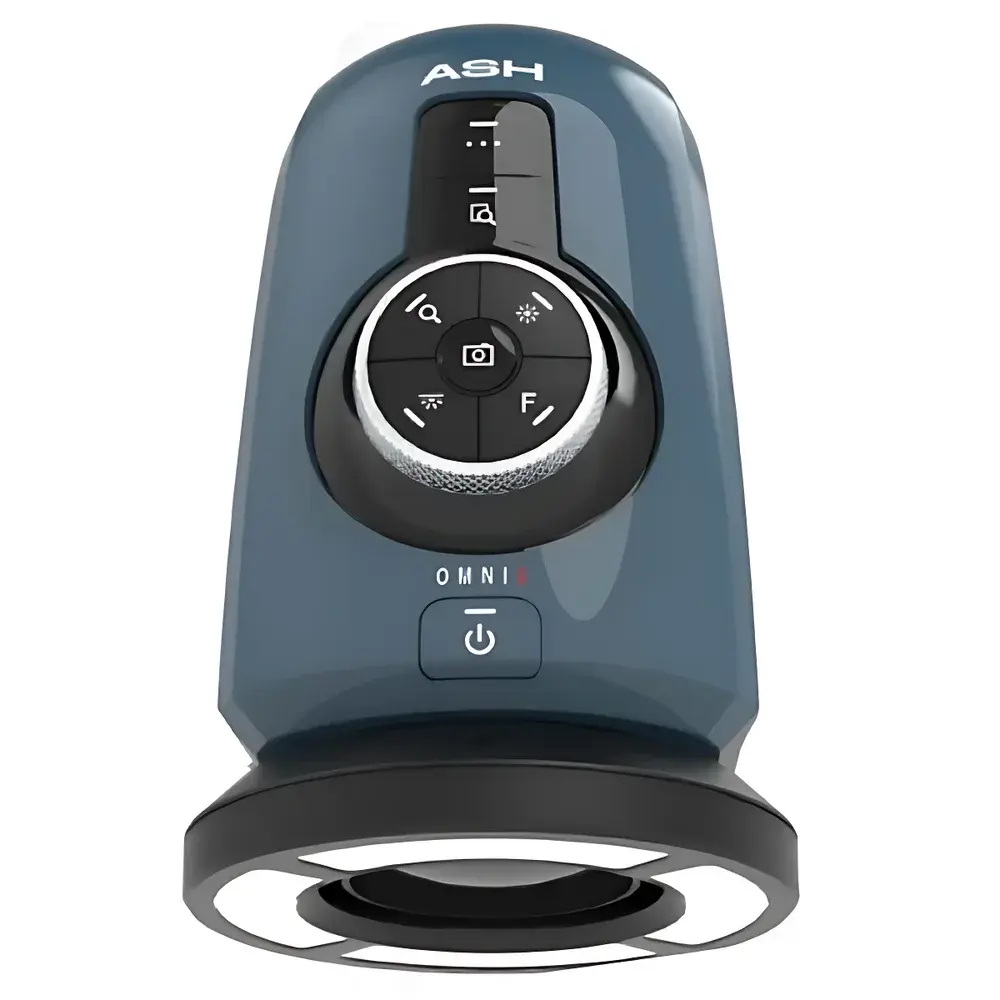

ASH TECHNOLOGIES Omni3 Third-Generation Standalone High-Definition Microscopic Image Analysis System
| Brand | ASH TECHNOLOGIES |
|---|---|
| Origin | Ireland |
| Manufacturer Type | Authorized Distributor |
| Origin Category | Imported |
| Model | Omni3 Third-Generation |
| Price Range | USD 2,500–2,800 |
Overview
The ASH TECHNOLOGIES Omni3 is a third-generation, standalone high-definition microscopic image analysis system engineered for precision industrial quality control and laboratory-grade morphological evaluation. Unlike conventional PC-dependent microscopes, the Omni3 integrates a fully embedded real-time computing platform—eliminating external host dependencies while maintaining deterministic latency performance. Its core architecture leverages digital optical metrology principles: high-resolution CMOS imaging (≥1920 × 1080 @ 60 fps), synchronized with motorized Z-axis actuation and real-time focus tracking algorithms to enable true 3D surface profiling within a single optical path. The system operates on a calibrated photometric foundation compliant with CIE 1931 color space standards, ensuring traceable colorimetric fidelity across illumination modalities—including white LED, polarized, UV-A (365 nm), and multi-angle ring/hemispherical lighting configurations. Designed for ISO/IEC 17025-aligned environments, the Omni3 supports audit-ready operation through built-in timestamped metadata logging and GLP/GMP-compliant workflow enforcement.
Key Features
- Standalone embedded processing unit with Linux-based real-time OS—no external PC required for acquisition, measurement, or reporting.
- Automated Z-axis height measurement (resolution: ≤0.5 µm) synchronized with XY coordinate mapping for full 3D topographic reconstruction.
- RTLDC™ Real-Time Lens Distortion Correction engine—compensates for radial/tangential aberrations dynamically per frame, preserving geometric accuracy at all magnifications.
- Multi-focus stack synthesis (up to 99 layers) with depth-map-guided fusion—produces artifact-free extended-depth-of-field (EDOF) images without motion blur.
- Intelligent object detection: color-space segmentation (HSV/L*a*b*), adaptive thresholding, and morphology-based filtering for contaminant/foreign particle identification.
- DXF import/export capability with overlay registration—enables direct comparison between live image and CAD reference geometry under user-defined tolerances.
- AshCal™ Permanent Calibration Protocol—stores lens-specific calibration matrices in non-volatile memory; eliminates recalibration after power cycle or lens swap.
- Role-based access control (RBAC) with AES-256 encrypted credential storage—supports up to 32 user profiles with granular permissions for measurement tools, report generation, and system configuration.
Sample Compatibility & Compliance
The Omni3 accommodates flat, reflective, translucent, and moderately scattering specimens ranging from semiconductor wafers (≤300 mm diameter) to PCB assemblies, medical device components, and composite material cross-sections. It complies with IEC 61000-4 electromagnetic immunity standards and meets CE marking requirements for Class I laboratory equipment. Measurement traceability aligns with ISO 10360-7 (coordinate measuring machines) and ASTM E2917 (digital image analysis for particle sizing). Optional FDA 21 CFR Part 11 compliance package available—including electronic signature support, audit trail with immutable timestamps, and secure user authentication logs.
Software & Data Management
The integrated AshVision™ software suite provides native support for TIFF, PNG, and proprietary .OMNI binary formats—with embedded EXIF-like metadata fields (user ID, timestamp, magnification, illumination mode, calibration ID). All measurements are stored with SI-unit annotations and uncertainty estimates derived from pixel-to-length conversion validation. Reports export as PDF/A-1b or CSV with configurable templates; email integration uses TLS 1.2–secured SMTP. Network storage options include SMB/CIFS shares and SFTP endpoints. Raw image archives support incremental backup via rsync-compatible protocols, and local SSD storage retains ≥10,000 full-resolution frames with indexing by acquisition time and operator ID.
Applications
- Aerospace: Inspection of turbine blade coatings, bondline integrity assessment, and foreign object debris (FOD) detection on critical surfaces.
- Automotive electronics: Solder joint void analysis, wire bond alignment verification, and conformal coating thickness estimation via edge-detection Z-profiles.
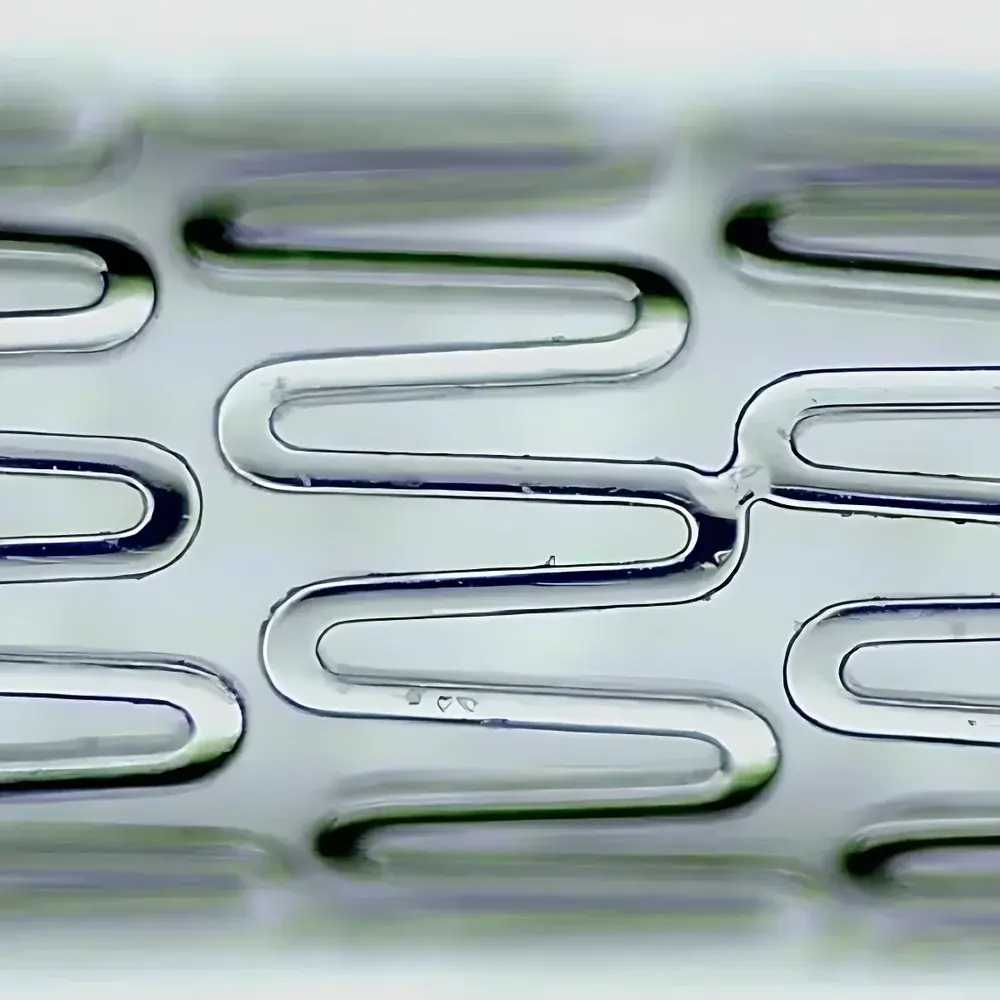
- Medical device manufacturing: Biocompatible polymer surface roughness mapping, microfluidic channel dimensional validation, and particulate contamination quantification per USP .
- Advanced packaging: Die attach inspection, underfill fillet characterization, and wafer-level bump coplanarity evaluation using multi-point Z-height deviation heatmaps.
- Academic research: Time-lapse morphological tracking of corrosion progression, grain boundary evolution in metallurgical samples, and colloidal aggregation kinetics analysis.
FAQ
Does the Omni3 require periodic recalibration?
No—AshCal™ ensures permanent calibration retention across power cycles and lens changes. Revalidation is only necessary following physical impact or environmental shock exceeding 5 g acceleration.
Can measurement data be exported to statistical process control (SPC) platforms?
Yes—CSV exports include ISO-standard column headers (e.g., “X_Position_mm”, “Z_Height_um”, “Confidence_Score_%”) compatible with Minitab, JMP, and custom Python/Pandas pipelines.
Is remote diagnostics supported?
Yes—the system includes a dedicated service port with encrypted VNC-over-HTTPS access, enabled only upon authenticated technician request and logged in the audit trail.
What is the maximum supported working distance for macro-mode imaging?
With optional 0.5× telecentric adapter, the working distance extends to 120 mm at 0.7× magnification, maintaining ±0.1% distortion across the full FOV.
How does the system handle reflective glare on metallic samples?
Polarized illumination mode combined with dynamic HDR exposure bracketing (±3 EV range) suppresses specular artifacts while preserving subsurface feature contrast.





