
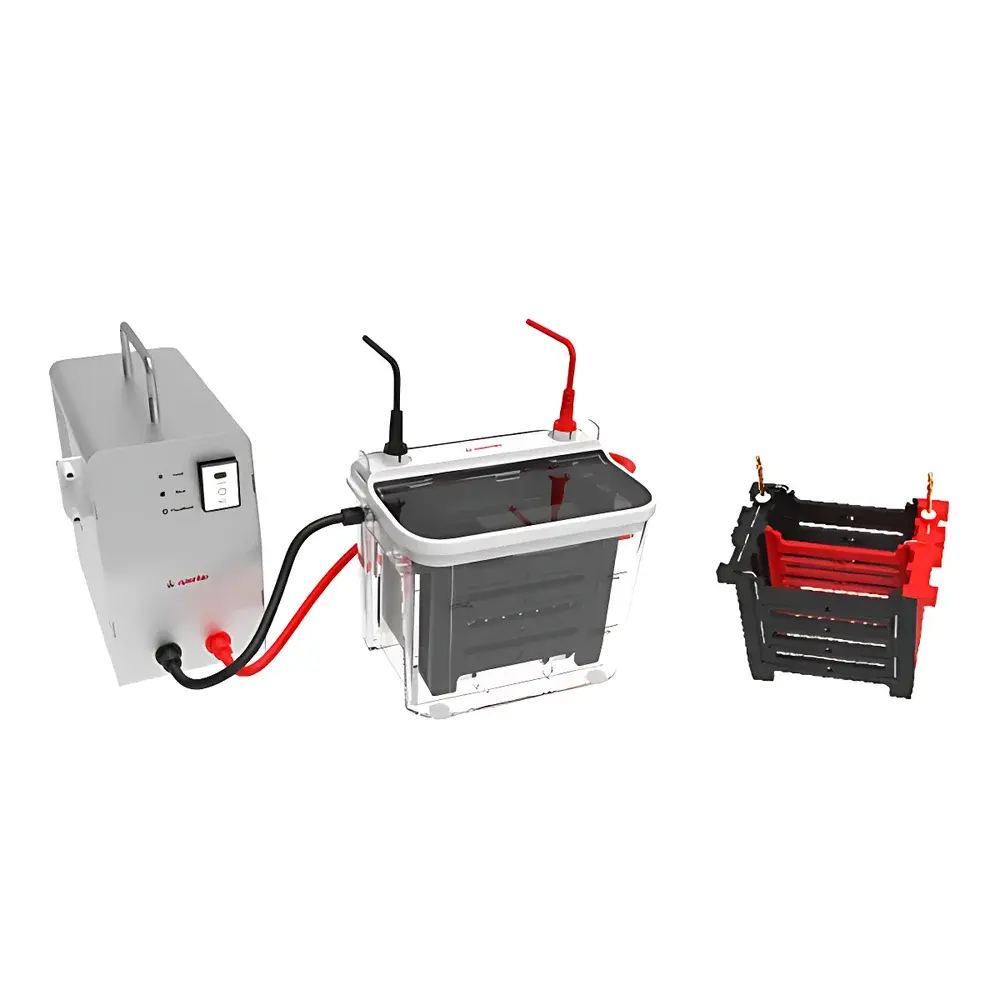
Aperbio CycleBlot Semi-Automatic Wet Transfer System
| Brand | Aperbio |
|---|---|
| Origin | Jiangsu, China |
| Manufacturer Type | Manufacturer |
| Product Category | Domestic |
| Model | CycleBlot |
| Instrument Type | Protein Transfer System |
| Automation Level | Semi-Automatic |
| Transfer Method | Wet Transfer |
| Transfer Dimensions | 110 × 90 mm |
| Gel Capacity | 1–4 mini gels |
| Molecular Weight Range | 5–200 kDa |
| Transfer Time | 20 min |
| Cooling System | Peltier-based recirculating cooling |
| Reagent Compatibility | Standard transfer buffers (e.g., Tris-Glycine, CAPS, Bicine) |
Overview
The Aperbio CycleBlot Semi-Automatic Wet Transfer System is an engineered solution for rapid, reproducible electrophoretic transfer of proteins from polyacrylamide gels to solid supports—primarily nitrocellulose or PVDF membranes—under fully submerged (wet) conditions. Based on classical electrophoretic principles, the system applies a controlled DC electric field across a buffer-saturated sandwich assembly (gel–membrane–filter paper stack), driving negatively charged proteins from the gel matrix onto the membrane surface via electroendosmosis and electrophoretic mobility. Unlike semi-dry or dry transfer methods, wet transfer ensures uniform thermal management and optimal buffer ion mobility, enabling high-fidelity transfer of both low- and high-molecular-weight proteins—including challenging targets in the 5–200 kDa range—without significant loss of resolution or integrity.
Key Features
- Rapid transfer cycle: Achieves complete protein transfer from 1–4 mini gels (up to 110 × 90 mm) in ≤20 minutes under standardized conditions—significantly reducing hands-on time without compromising transfer efficiency.
- Peltier-based active cooling: Integrated thermoelectric (TEC) module maintains stable buffer temperature during operation, eliminating the need for external ice baths or cold rooms while preventing Joule heating-induced protein degradation or gel distortion.
- Modular cassette design: Precision-machined transfer chamber accommodates standard mini-gel formats with consistent electrode alignment and uniform current distribution across all gel positions.
- Semi-automatic workflow: Motor-assisted lid actuation and pre-configured voltage/time presets streamline setup; user retains full control over transfer parameters (voltage, current limit, duration) via intuitive front-panel interface.
- Buffer compatibility: Optimized for conventional transfer buffers—including Tris-Glycine, CAPS, and Bicine systems—supporting both standard and low-pH or high-pH protocols required for specific epitope preservation or post-translational modification analysis.
Sample Compatibility & Compliance
The CycleBlot system supports transfer of proteins across a broad molecular weight spectrum (5–200 kDa), validated using benchmark standards including prestained molecular weight markers and endogenous cellular lysates. Its wet transfer architecture ensures reliable recovery of hydrophobic, basic, or large proteins that often exhibit poor transfer efficiency in semi-dry systems. The device complies with general laboratory safety standards for Class I electrical equipment (IEC 61010-1) and is designed for use in GLP-compliant environments where procedural consistency and documentation are essential. While not FDA-cleared as a diagnostic instrument, its operational repeatability aligns with internal QC requirements for western blotting in academic, pharmaceutical, and contract research laboratories.
Software & Data Management
The CycleBlot operates via embedded firmware with non-volatile parameter storage, allowing users to save and recall up to 10 custom transfer protocols. Though it does not feature network connectivity or cloud integration, all run logs—including date/time stamp, selected protocol ID, actual voltage/current profiles, and runtime—are retained in internal memory for manual audit review. This local logging capability supports traceability in regulated settings where electronic records must be retrievable for GLP/GMP audits per 21 CFR Part 11 guidelines (when paired with appropriate lab notebook documentation).
Applications
- High-throughput western blotting in proteomics workflows requiring parallel processing of multiple mini-gel replicates.
- Validation of antibody specificity and signal-to-noise optimization in immunoassay development.
- Transfer of phosphorylated, glycosylated, or ubiquitinated proteins where buffer pH and temperature stability directly impact epitope accessibility.
- Preparative transfer for downstream mass spectrometry analysis, where membrane-bound protein integrity and minimal diffusion are critical.
- Teaching laboratories seeking robust, entry-level wet transfer instrumentation with low maintenance overhead and clear operational feedback.
FAQ
What types of gels and membranes are compatible with the CycleBlot system?
Standard SDS-PAGE mini gels (10 × 10 cm or smaller) and commercially available nitrocellulose or PVDF membranes (cut to 110 × 90 mm) are fully supported.
Does the system support constant current, constant voltage, or constant power modes?
It operates in constant voltage mode with adjustable current limiting—optimized for predictable transfer kinetics across varying gel thicknesses and buffer conductivities.
Can the CycleBlot be used for RNA or DNA transfer?
While primarily validated for protein transfer, nucleic acid transfer (e.g., Northern/Southern blotting) is feasible using appropriate alkaline or neutral transfer buffers—but requires independent protocol validation by the user.
Is service and technical support available outside China?
Aperbio provides international distributor networks and remote application support; hardware service contracts and spare parts logistics are coordinated regionally through authorized partners.
How is temperature stability maintained during extended runs?
The Peltier cooling module actively regulates buffer temperature within ±2°C of setpoint (typically 15–25°C), verified by integrated thermistor feedback and independent calibration against NIST-traceable reference probes.





