
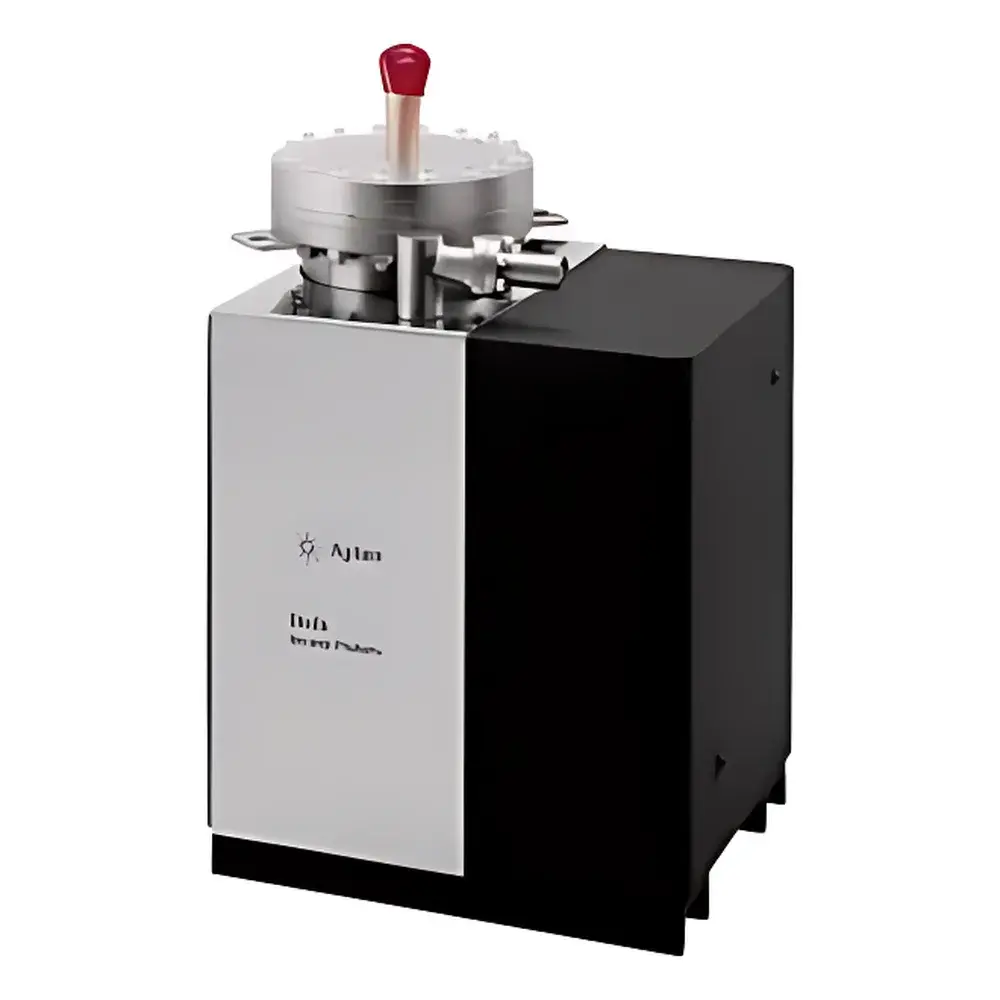
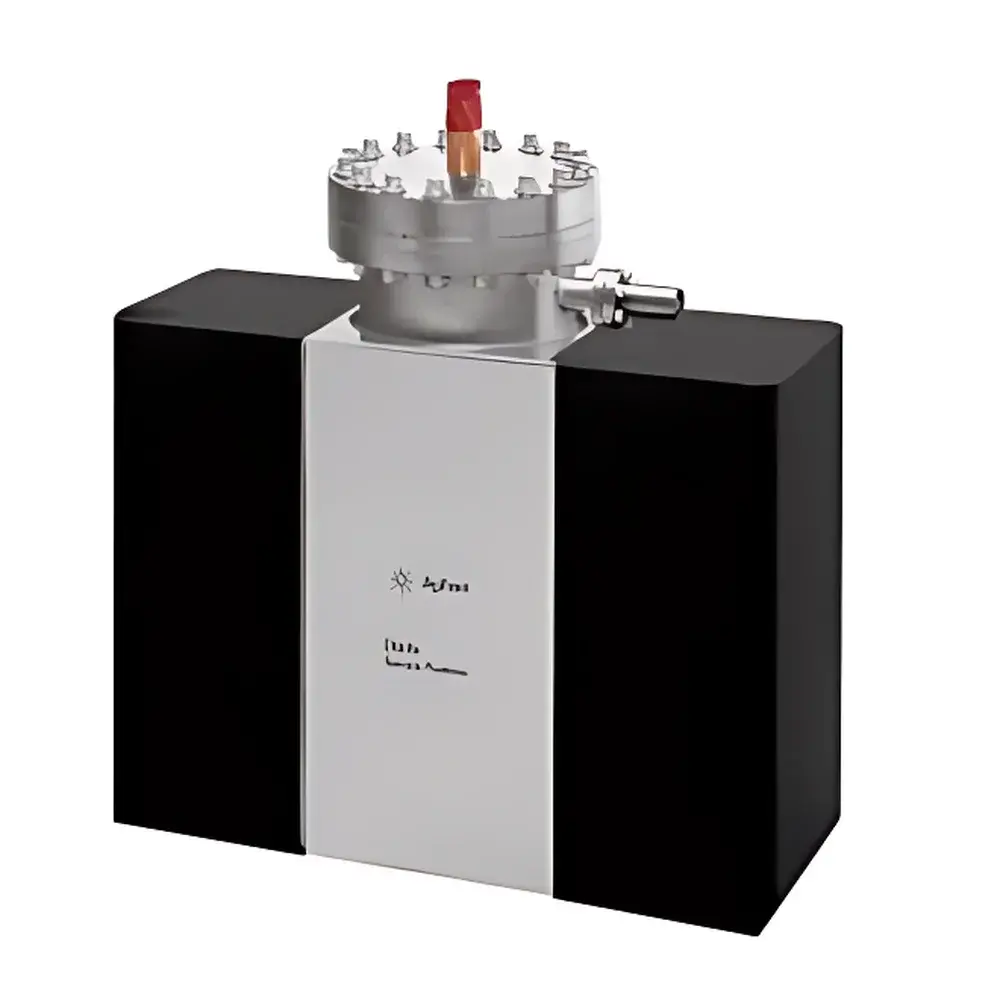
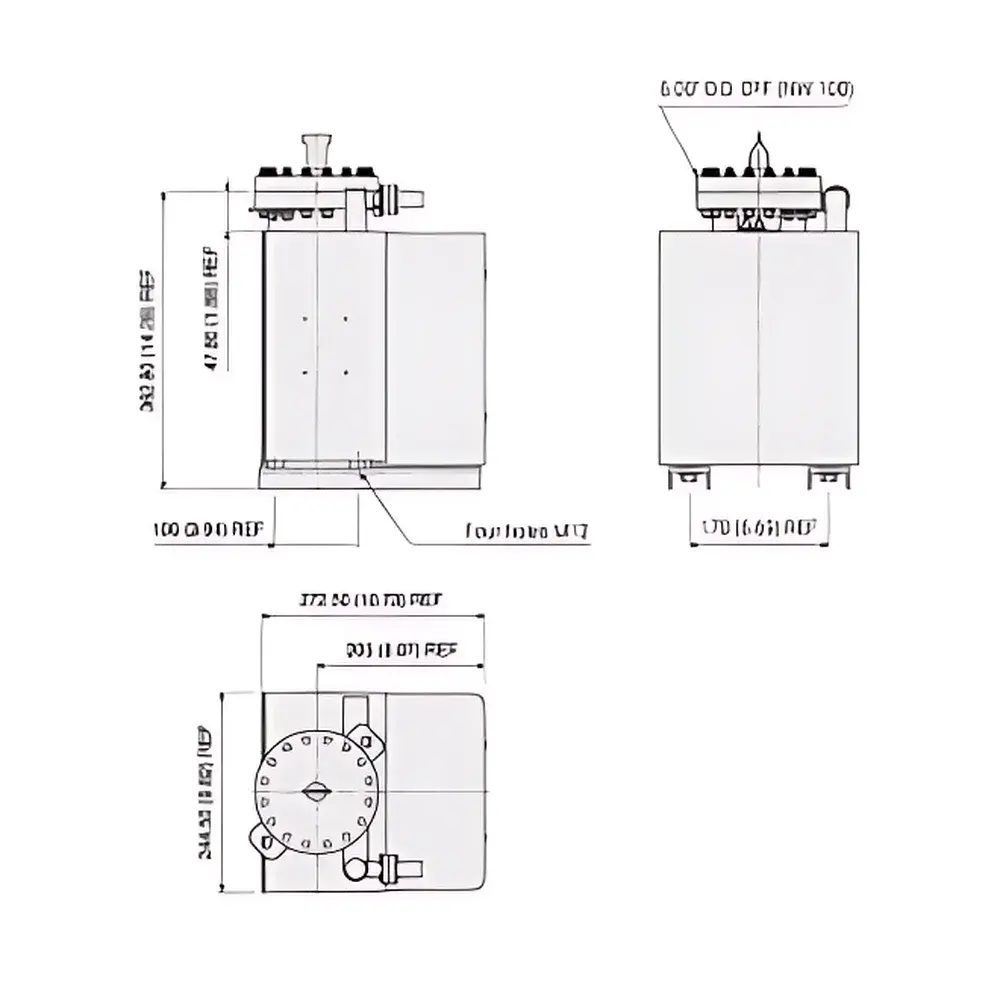
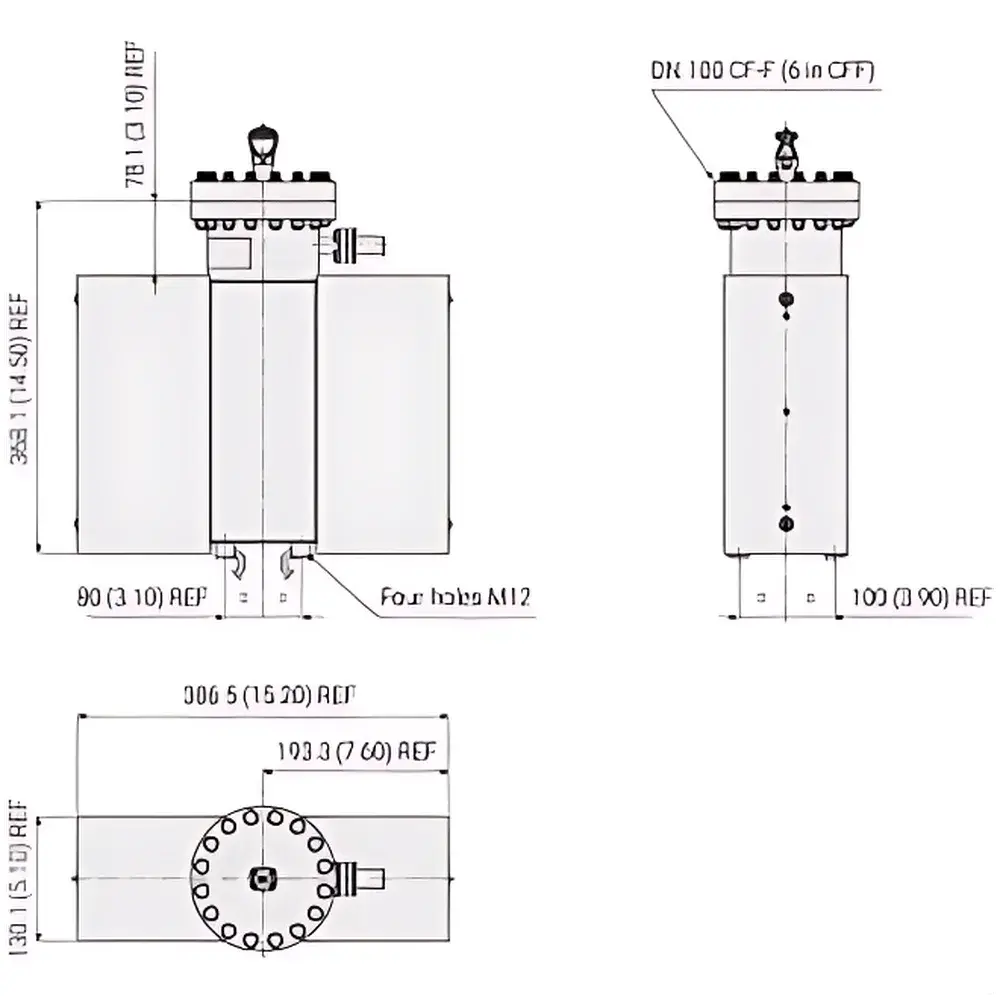
Agilent VacIon Plus 150 Ion Pump
| Brand | Agilent Technologies |
|---|---|
| Origin | USA |
| Manufacturer Type | Original Equipment Manufacturer (OEM) |
| Product Category | Imported Vacuum Pump |
| Model | VacIon Plus 150 Ion Pump |
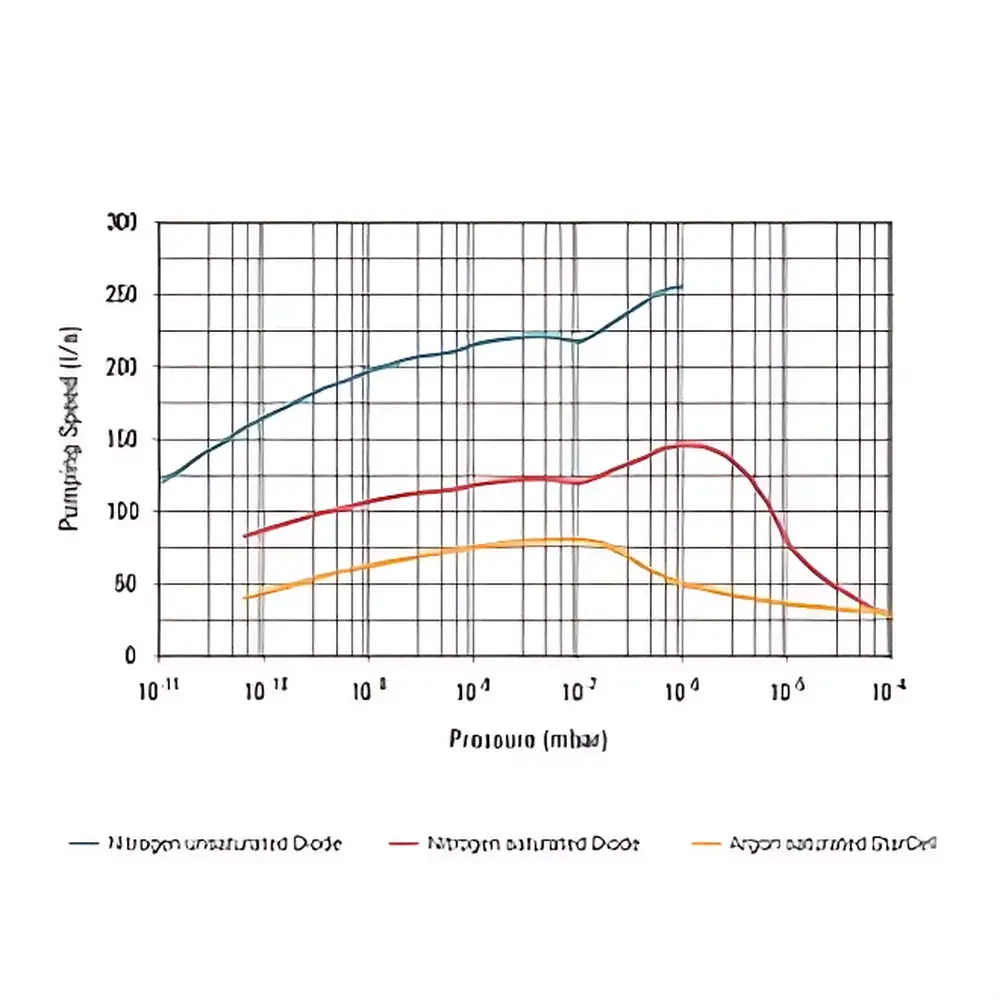
| Pumping Speed | 150 L/s (for N₂) |
| Ultimate Pressure | < 1 × 10⁻¹¹ mbar |
| Weight | 43 kg |
| Flange | 6-inch ConFlat (non-rotating) |
| Pumping Unit Configurations | Triode, Diode, and Inert-Gas-Optimized Diode Cells |
| Operating Temperature (Bakeout) | Up to 400 °C |
| Magnetic Field Strength | Low-field design (< 80 mT at pump surface) |
| Leakage Current | < 1 pA (SEM-grade version) |
Overview
The Agilent VacIon Plus 150 Ion Pump is a high-performance, non-evaporable getter (NEG)-assisted sputter-ion vacuum pump engineered for ultra-high vacuum (UHV) and extreme-high vacuum (XHV) environments—typically operating in the 10⁻⁹ to <10⁻¹¹ mbar range. Based on the principle of ionization and momentum transfer via magnetically confined electron trajectories, it utilizes a combination of titanium sputtering and gas ion burial to achieve continuous, vibration-free pumping without moving parts. Unlike turbomolecular or cryogenic pumps, the VacIon Plus 150 requires no oil, no bearings, and no external cooling—making it ideal for applications where electromagnetic interference, mechanical vibration, or hydrocarbon contamination must be strictly avoided. Its compact 6-inch ConFlat flange interface enables seamless integration into UHV systems used in surface science, particle accelerators, synchrotron beamlines, and advanced electron microscopy platforms.
Key Features
- Three interchangeable pumping cell architectures: standard diode (optimized for H₂ and reactive gases), triode (enhanced inert gas capacity for Ar, He, CH₄), and inert-gas-optimized diode (maximized sputter yield for noble gas removal)
- Low-leakage-current electronics (<1 pA typical, SEM-grade certified) ensure minimal electron beam perturbation in scanning electron microscopes and low-energy electron diffraction (LEED) systems
- Low magnetic field design (<80 mT at outer housing) minimizes deflection of charged particle beams and avoids interference with adjacent magnetic sensors or SQUID detectors
- Pre-baked and valve-sealed at >400 °C under vacuum, guaranteeing ultra-clean installation and eliminating outgassing risks during system commissioning
- Modular flange configuration: includes primary 6-inch non-rotating ConFlat port, auxiliary 6-inch blank-off port, dual-port and side-port options, plus customizable feedthroughs (Fischer, King, DESY, Varian, Safeconn)
- Optional accessories include optical baffles (to suppress thermal radiation), external resistive heaters (for in-situ bakeout extension), magnetic shielding sleeves, and custom pump body geometries for space-constrained UHV chambers
Sample Compatibility & Compliance
The VacIon Plus 150 is compatible with all standard UHV-compatible materials (316L stainless steel, oxygen-free copper, alumina ceramics) and conforms to ASTM E575–21 (Standard Practice for Reporting Results of Surface Analysis) for residual gas composition stability. It supports GLP-compliant vacuum system qualification when paired with Agilent’s 7010B Residual Gas Analyzer and adheres to ISO 20483:2022 (Vacuum technology — Vocabulary) definitions for pumping speed and ultimate pressure. While not intrinsically rated for hazardous locations, its solid-state architecture meets IEC 61000-6-3 (EMC emission limits) and UL 61010-1 safety requirements for laboratory equipment. No regulatory certification is required for standalone operation under USP or FDA 21 CFR Part 11, though audit trails for vacuum parameter logging may be implemented via optional RS-232/RS-485 or Ethernet-enabled controllers.
Software & Data Management
The pump operates autonomously but integrates with Agilent’s VACUUM CONTROL SUITE v4.2+ for remote monitoring of voltage, current, pressure trends, and cell aging diagnostics. Real-time data streams support timestamped CSV export and OPC UA connectivity for SCADA-level system integration. All operational logs—including bakeout cycles, current thresholds, and interlock events—are stored with SHA-256 hash integrity verification, satisfying ALCOA+ principles for data reliability in regulated research environments. Optional firmware upgrades enable automated pressure-regulated pumping mode (via analog input from capacitance manometers) and predictive maintenance alerts based on cumulative sputter charge accumulation.
Applications
- Ultra-high vacuum chambers for X-ray photoelectron spectroscopy (XPS), Auger electron spectroscopy (AES), and molecular beam epitaxy (MBE)
- Beamline front-ends and insertion device sections in synchrotron light sources (e.g., APS, ESRF, PETRA III)
- Scanning electron microscope (SEM) and transmission electron microscope (TEM) columns requiring sub-pA leakage current and zero-vibration operation
- Gravitational wave detector vacuum systems (e.g., LIGO, Virgo) where magnetic and vibrational noise must remain below 10⁻¹⁸ m/√Hz
- Quantum computing testbeds using superconducting qubits, where residual gas-induced decoherence must be minimized
- Space simulation chambers requiring long-term, maintenance-free operation under thermal cycling conditions
FAQ
What gases does the VacIon Plus 150 pump most efficiently?
It achieves peak pumping speeds for hydrogen (~150 L/s), nitrogen (~120 L/s), and argon (~90 L/s) depending on cell configuration; triode cells deliver up to 3× higher inert gas capacity than standard diode cells.
Can it be used without a backing pump?
Yes—ion pumps are self-starting and require no forevacuum stage, provided initial chamber pressure is ≤10⁻³ mbar (achievable via roughing pump or NEG strip activation).
Is bakeout required before first use?
No—the unit ships pre-baked and sealed; however, full-system bakeout to 150–250 °C is recommended after installation to accelerate water desorption from chamber walls.
How often does the pump require maintenance or replacement?
Under typical UHV conditions (30% reduction in pumping speed or inability to reach specified ultimate pressure after bakeout.
Does Agilent provide calibration certificates traceable to NIST?
Yes—optional factory calibration includes pumping speed verification per ISO 3529-2 and ultimate pressure validation using calibrated Bayard-Alpert gauges referenced to NIST SRM 2052.



