
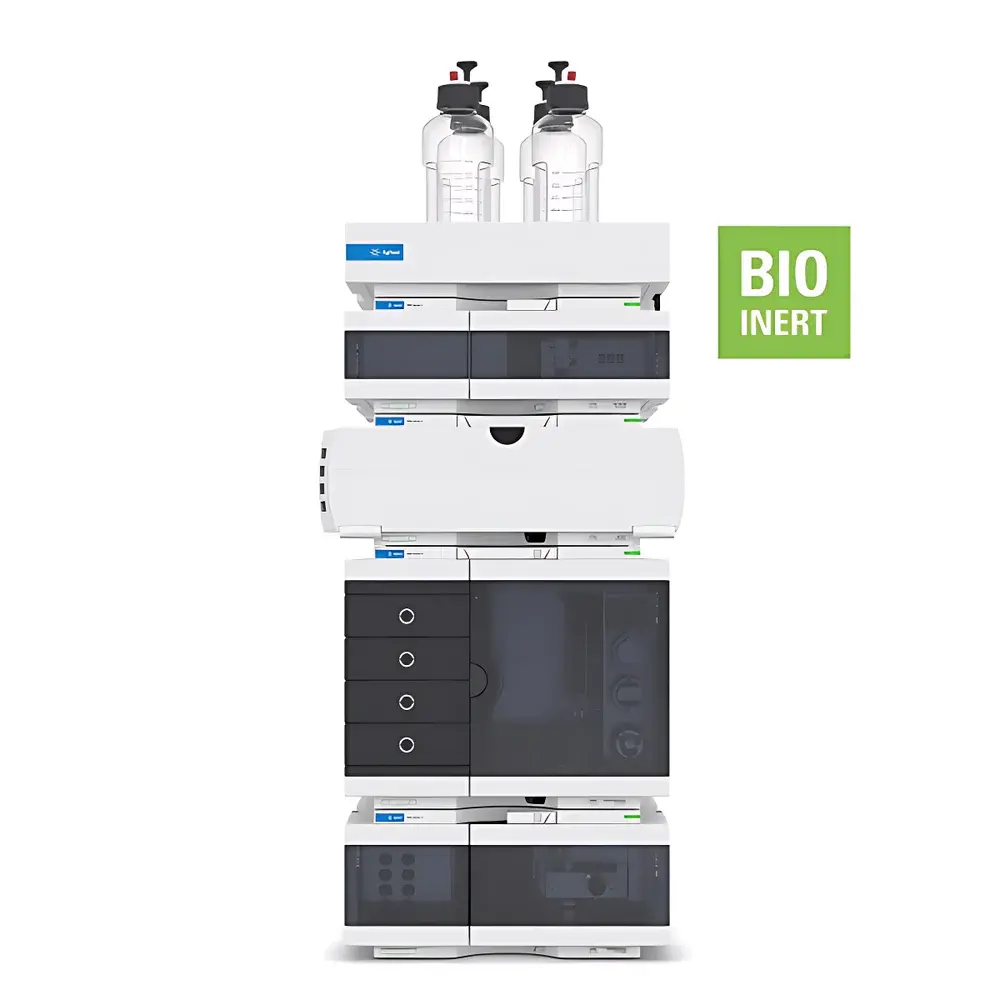
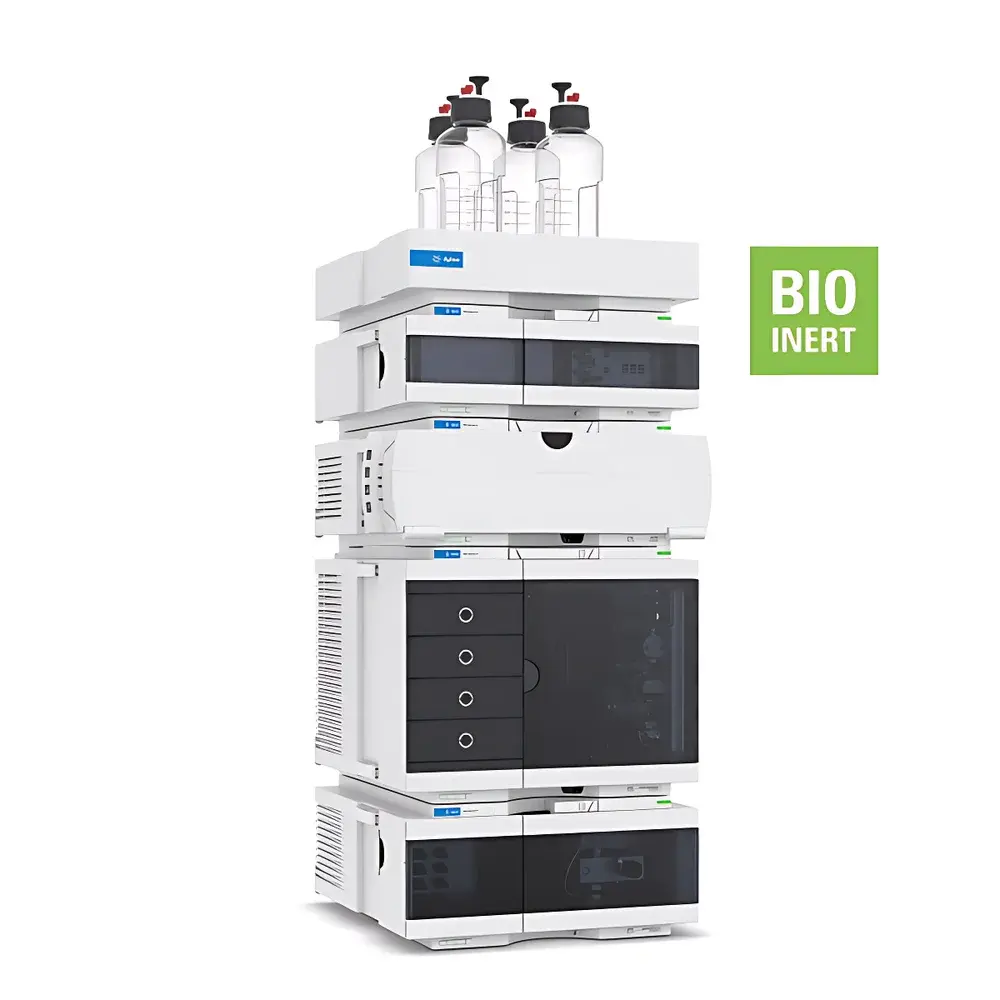
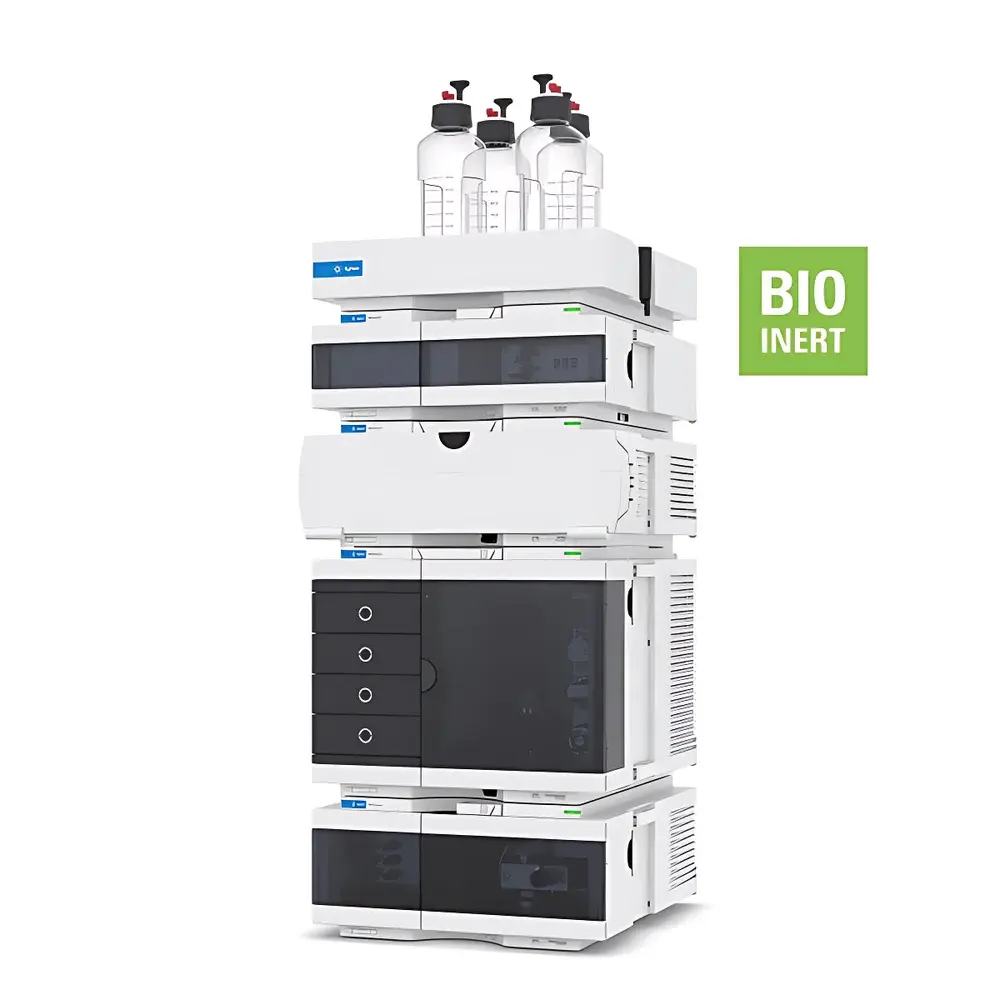
Agilent 1260 Infinity II Bio-Inert Liquid Chromatography System
| Brand | Agilent Technologies |
|---|---|
| Origin | Germany |
| Manufacturer | Agilent Technologies |
| Origin Category | Imported |
| Model | 1260 Infinity II Bio-Inert |
| Instrument Type | Ultra-High Performance Liquid Chromatograph (UHPLC) |
| Application Scope | Universal for Biomolecular Analysis |
| Flow Rate Range | 0.2–10 mL/min |
| Maximum Pressure | up to 600 bar |
| Injection Volume Range | 0.1–100 µL |
Overview
The Agilent 1260 Infinity II Bio-Inert Liquid Chromatography System is an engineered UHPLC platform specifically designed for the robust, reproducible, and contamination-free analysis of sensitive biomolecules—including monoclonal antibodies (mAbs), recombinant proteins, peptides, and oligonucleotides. Unlike conventional HPLC systems, its fully bio-inert fluidic path eliminates metallic surfaces (e.g., stainless steel, iron, or nickel alloys) throughout the entire sample flow path—from autosampler needle seat and pump head to detector flow cell and column connections. This design prevents metal-catalyzed oxidation, adsorption, aggregation, or leaching-induced degradation—critical for maintaining structural integrity, conformational stability, and quantitative accuracy in biopharmaceutical characterization workflows.
Key Features
- Fully metal-free fluidic architecture using PEEK, titanium, and ceramic components across all high-pressure zones, validated for compatibility with aggressive mobile phases (e.g., high-salt buffers, extreme pH solvents)
- Pressure capability up to 600 bar enables use of sub-2 µm particle-size columns for high-resolution separations in size-exclusion chromatography (SEC), ion-exchange chromatography (IEX), reversed-phase LC (RPLC), and peptide mapping
- Integrated Bio-Inert Multisampler with active needle wash and dual-stage solvent rinsing reduces carryover to <9 ppm—even after high-concentration mAb injections
- InfinityLab Quick Connect fittings and Quick Turn column connectors ensure leak-free, repeatable, tool-free installation—minimizing downtime and operator variability
- UV/Vis and fluorescence detectors equipped with bio-inert flow cells (e.g., sapphire windows, PEEK-lined capillaries) eliminate catalytic surface interactions during detection
- Four-channel quaternary gradient mixing with active seal-wash functionality supports complex multi-step buffer gradients required for IEX method development
Sample Compatibility & Compliance
The system accommodates a broad operational pH range (pH 1–13; short-term exposure up to pH 14) and high ionic strength conditions (up to 2 mol/L NaCl or ammonium acetate), making it suitable for native and denaturing biopolymer analyses under GLP/GMP-regulated environments. All hardware and software modules comply with 21 CFR Part 11 requirements when configured with Agilent OpenLab CDS or MassHunter software, supporting electronic signatures, audit trails, and secure user access control. Method transfer between legacy Agilent 1100/1200 platforms and this system is fully supported per ASTM E2687 and ISO 17025 guidelines for analytical instrument qualification.
Software & Data Management
Agilent’s Buffer Advisor software streamlines IEX method development by calculating optimal buffer pKa/pH combinations, predicting elution profiles, and generating ready-to-deploy gradient methods—reducing manual trial-and-error by >50%. When paired with OpenLab CDS 2.x or MassHunter Workstation, the system provides full traceability from raw data acquisition through peak integration, system suitability testing (SST), and report generation. All chromatographic events—including pressure spikes, valve actuations, and injection sequences—are timestamped and logged with immutable audit trails. Raw data files adhere to AIA/ANDI standards and are compatible with third-party processing tools used in regulatory submissions (e.g., FDA eCTD, EMA Common Technical Document).
Applications
- Size-exclusion chromatography (SEC) for aggregate/fragment quantification in therapeutic protein formulations
- Ion-exchange chromatography (IEX) for charge variant profiling of mAbs and Fc-fusion proteins
- Reversed-phase LC for peptide mapping and post-translational modification (PTM) analysis
- Hydrophobic interaction chromatography (HIC) for higher-order structure assessment
- Method development and validation per ICH Q5A(R2), Q5B, and Q2(R2) guidance documents
- Stability-indicating assays supporting shelf-life studies and comparability protocols
FAQ
Is the 1260 Infinity II Bio-Inert system compatible with SEC columns packed with sub-2 µm particles?
Yes—its 600 bar pressure rating and low-dispersion fluidic design support high-efficiency SEC separations on columns such as Agilent AdvanceBio SEC-3 or TSKgel UP-SW3000.
Can this system be integrated into a regulated QC laboratory environment?
Yes—it supports 21 CFR Part 11 compliance when deployed with OpenLab CDS and configured with role-based access control, electronic signatures, and full audit trail functionality.
What is the maximum salt concentration the bio-inert flow path can withstand?
The system is validated for continuous operation at up to 2 mol/L sodium chloride or ammonium sulfate, with no observed corrosion or performance drift over extended runs.
Does the Bio-Inert Multisampler require special maintenance for low carryover?
No—its dual-rinse protocol (organic solvent + aqueous buffer) and inert needle seat materials eliminate routine preventive maintenance beyond standard column flushing and seal replacement per manufacturer schedule.
How does the system support method transfer from older Agilent LC platforms?
Agilent provides automated method conversion utilities within OpenLab CDS that adjust dwell volume compensation, gradient delay, and dwell time parameters—ensuring retention time reproducibility across generations without re-optimization.





