
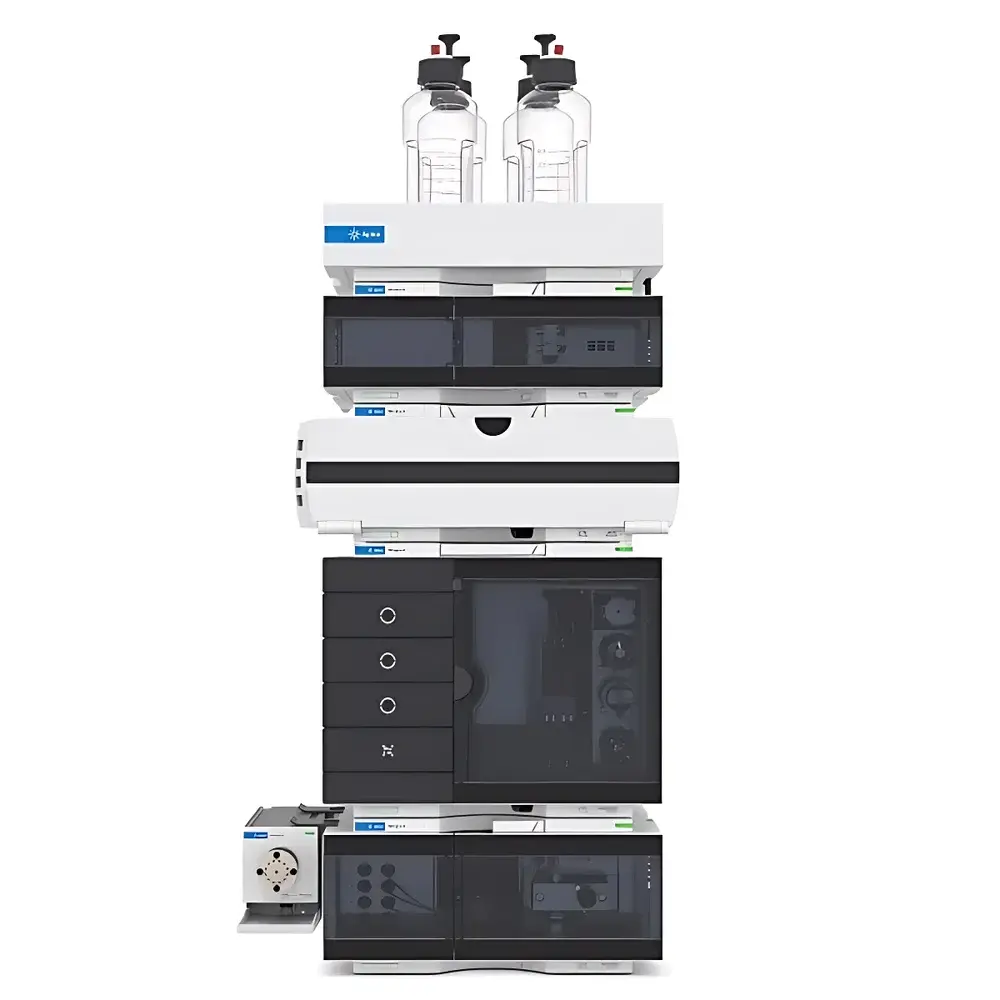
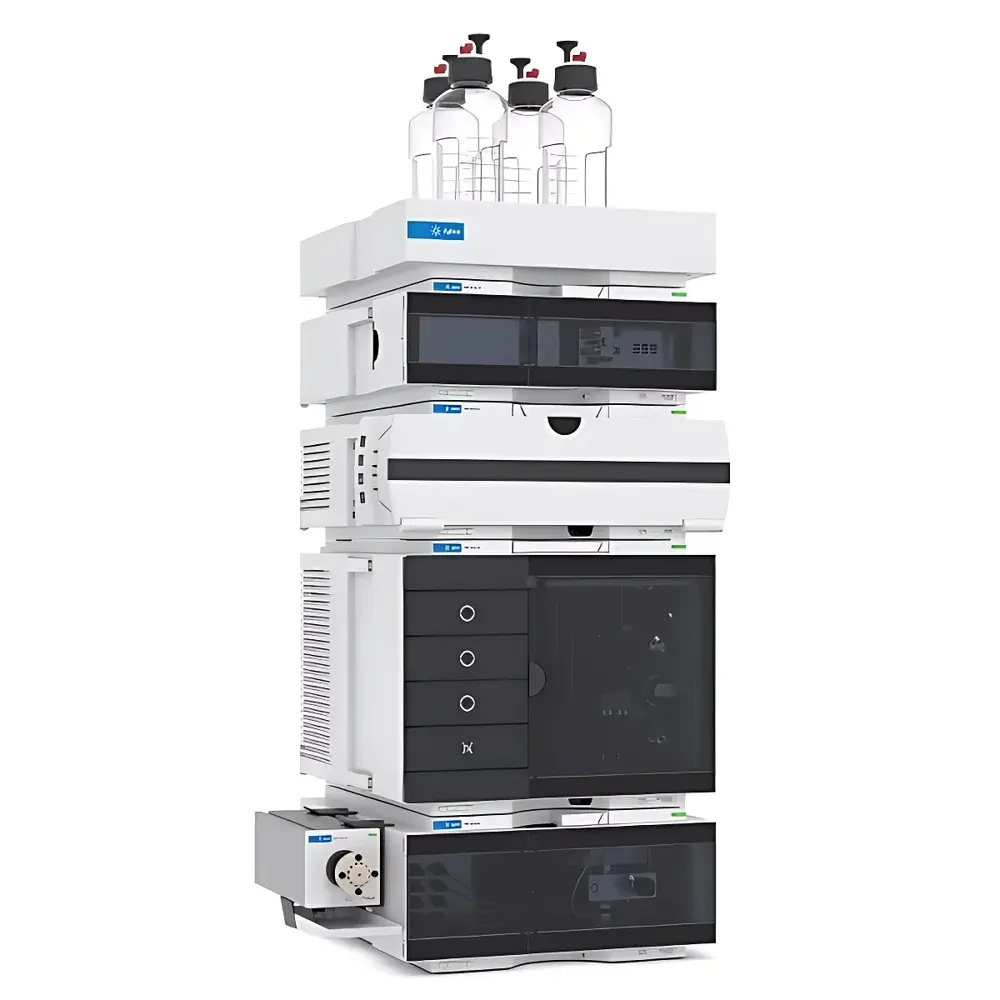
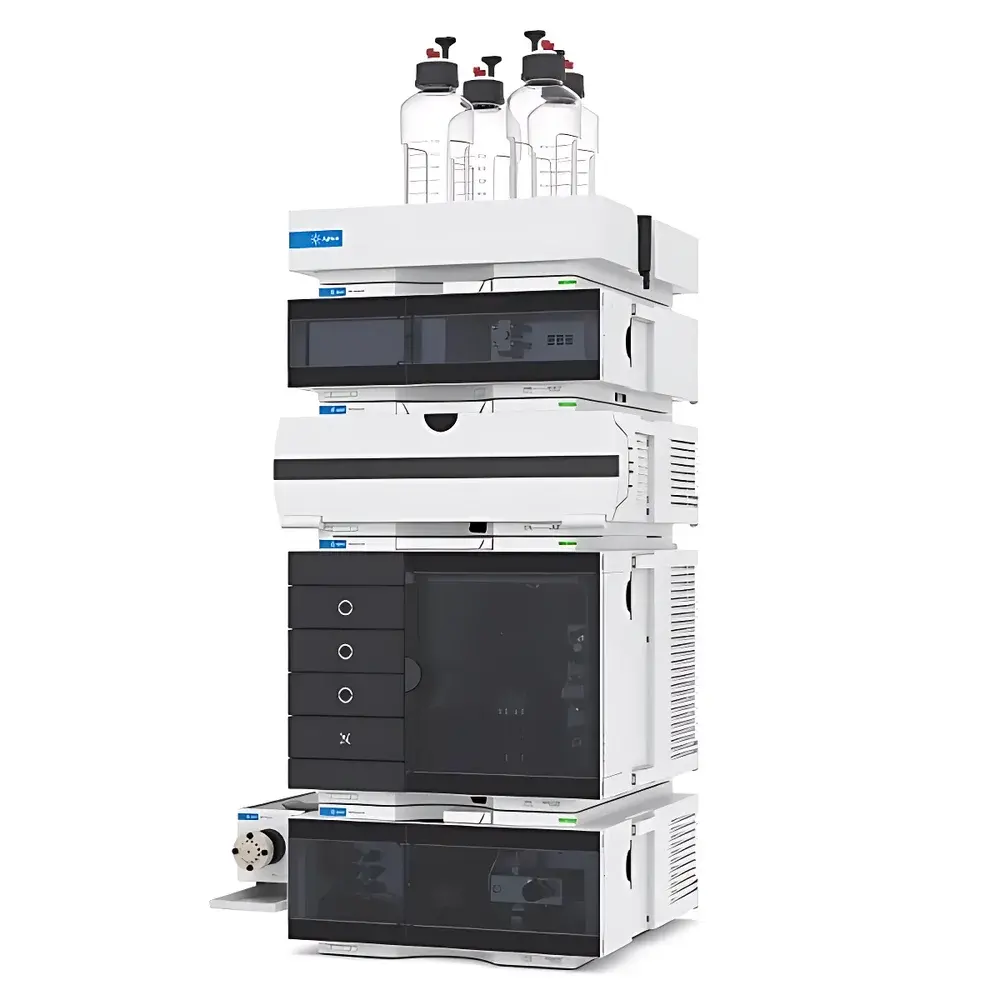
Agilent 1260 Infinity III Method Development System
| Brand | Agilent Technologies |
|---|---|
| Origin | Germany |
| Manufacturer | Agilent Technologies |
| Import Status | Imported |
| Model | 1260 Infinity III Method Development |
| Instrument Type | Conventional High-Performance Liquid Chromatograph (HPLC) |
| Application Scope | General-purpose |
| Flow Rate Range | up to 5 mL/min (with G7104C, G7112B) |
| Maximum Operating Pressure | up to 800 bar |
| Injection Volume Range | 0.1–100 µL |
Overview
The Agilent 1260 Infinity III Method Development System is a purpose-engineered high-performance liquid chromatography (HPLC) platform designed for automated, systematic, and reproducible chromatographic method development. Built upon the robust architecture of the 1260 Infinity III Prime LC system, it integrates hardware modularity, intelligent fluidic control, and software-driven experimental design to accelerate the identification of optimal separation conditions—without manual reconfiguration or system downtime. At its core, the system operates on classical reversed-phase, normal-phase, and HILIC chromatographic principles, leveraging precise gradient elution, column-switching, and solvent-selection logic to explore multidimensional parameter spaces (e.g., mobile phase composition, pH, temperature, column chemistry, and flow rate). Its 800-bar pressure capability supports both conventional 3–5 µm particle columns and select sub-3-µm fully porous or superficially porous particles—enabling resolution enhancement while maintaining compatibility with legacy method transfer requirements.
Key Features
- Automated multi-column and multi-solvent screening: Two independent temperature-controlled zones support concurrent operation of up to four columns and selection from up to 15 solvents via external solvent selection valve (recommended configuration).
- Intelligent System Emulation Technology (ISET): Real-time emulation of retention time and gradient delay volume from other Agilent and third-party HPLC systems—including 1100/1200 Series, 1290 Infinity II, and select Waters and Shimadzu platforms—facilitating seamless method transfer and cross-platform validation.
- 1260 Infinity III Universal Pump: Binary, quaternary, and universal pump configurations available; delivers stable flow from 0.001 to 10 mL/min with ≤0.1% RSD and pressure pulsation <1% at 1 mL/min (G7110B/G7111A/G7111B); maximum operating pressure up to 800 bar.
- Autosampler with extended injection range: 0.1–100 µL standard; expandable to 0.1–1500 µL using multiple draw-and-inject kit (G7129B), supporting both low-volume trace analysis and preparative-scale scouting injections.
- Column ID reader option (G7152A): Enables automatic recognition and logging of column dimensions, packing material, and lot number—critical for audit-ready GLP/GMP workflows and electronic lab notebook (ELN) integration.
- BlendAssist technology (G7104C): Delivers real-time solvent blending correction for improved gradient accuracy and reduced dwell volume variability across diverse mobile phase combinations.
Sample Compatibility & Compliance
The system is compatible with standard stainless steel, PEEK, and titanium HPLC components and supports a broad range of sample matrices—including small molecules, peptides, natural products, pharmaceutical intermediates, and stability-indicating impurity profiles. While not inherently bioinert, optional inert-flow-path configurations (e.g., titanium pump heads, PEEKsil tubing, and passive check valves) are available for sensitive biomolecules. The platform conforms to ISO/IEC 17025:2017 calibration traceability requirements and supports full compliance with FDA 21 CFR Part 11 through Agilent OpenLab CDS software (audit trail, electronic signatures, role-based access control). It is validated for use in GxP environments and aligns with ICH Q2(R2) and USP guidelines for method development and robustness testing.
Software & Data Management
The system operates natively with Agilent OpenLab CDS (ChemStation Edition or EZChrom Edition), enabling full method setup, execution scheduling, and raw data acquisition. When paired with Agilent Method Scouting Wizard, users define parameter ranges (e.g., %B, temperature, column set, gradient time) and execute fully autonomous screening sequences—generating structured .cdf files with embedded metadata. Integration with third-party QbD tools—including ChromSwordAuto (S-Matrix) and Fusion QbD—is achieved via standardized .csv/.xlsx export and OpenLab API endpoints. All instrument logs, method versions, and audit trails are retained for ≥30 days by default and configurable for long-term archival per organizational SOPs.
Applications
- Rapid screening of orthogonal column chemistries (C18, phenyl-hexyl, HILIC, pentafluorophenyl) and mobile phase modifiers (formic acid, ammonium acetate, TFA, TEA) for forced degradation studies.
- Robustness evaluation per ICH Q5E and Q8(R2), including DoE-based assessment of critical process parameters (CPPs) affecting resolution (Rs) and tailing factor (Tf).
- Early-phase formulation analysis requiring simultaneous quantification of active pharmaceutical ingredient (API), degradants, and excipients across variable pH and organic strength gradients.
- Method lifecycle management: From scouting to validation to routine QC, with consistent hardware performance verified annually per Agilent’s Performance Qualification (PQ) protocol.
- Sustainability-aligned operation: Certified with My Green Lab ACT Label (v2.0), confirming transparency in energy consumption (≤120 W standby), recyclability (>85% component mass), and supply chain environmental accountability.
FAQ
Can the 1260 Infinity III Method Development System be used for UHPLC methods?
Yes—while classified as an HPLC platform, its 800-bar pressure rating and low-system-volume configuration (e.g., with G7112B pump and micro-bore tubing) support method transfer and scouting with sub-2-µm particles under optimized dwell volume and dispersion control.
Is ISET compatible with non-Agilent instruments?
ISET emulates only Agilent systems natively; however, empirical dwell volume and gradient delay calibration enable approximate emulation of select Waters and Shimadzu systems when combined with OpenLab’s custom system definition module.
What validation documentation is provided?
Agilent supplies IQ/OQ protocols, PQ templates, and 21 CFR Part 11 readiness reports. Installation qualification includes pressure calibration, flow accuracy verification (per ASTM D7217), and gradient linearity testing (per USP ).
Does the system support column oven stacking?
Yes—the dual-zone column compartment accommodates stacked ovens (G7116A + G7116B) for independent thermal control of guard column and analytical column, enabling temperature-programmed selectivity tuning.
How is solvent consumption minimized during screening?
Method Scouting Wizard incorporates intelligent gradient termination, flow-rate ramping, and post-run purge optimization—reducing average solvent use by ~35% compared to fixed-sequence screening without sacrificing peak capacity or resolution reproducibility.





