
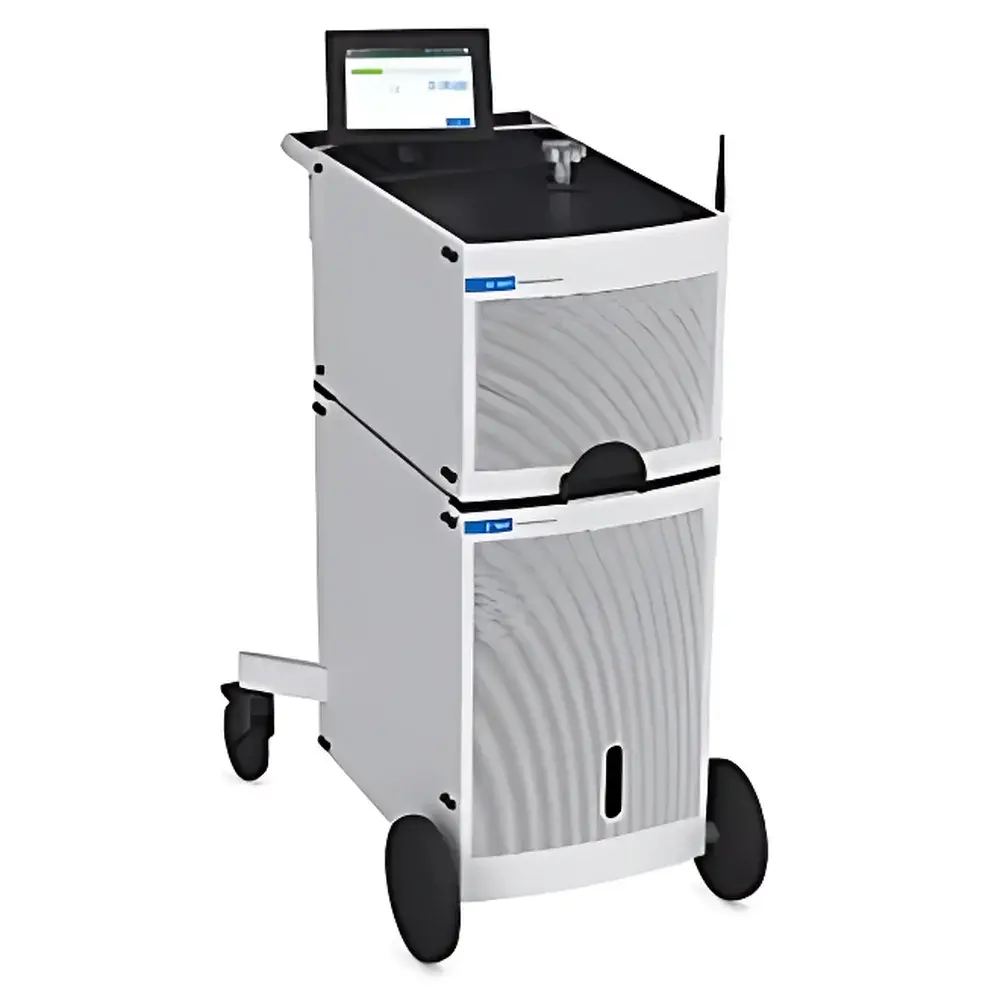
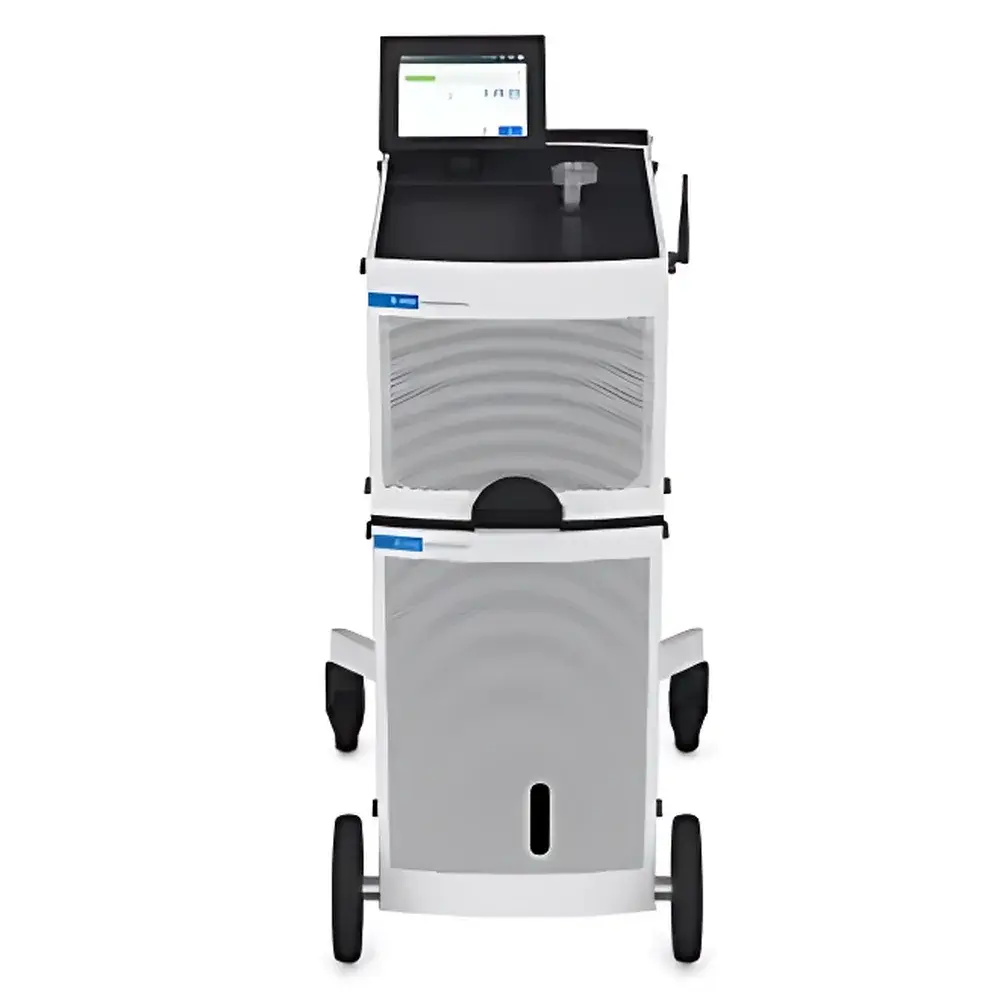
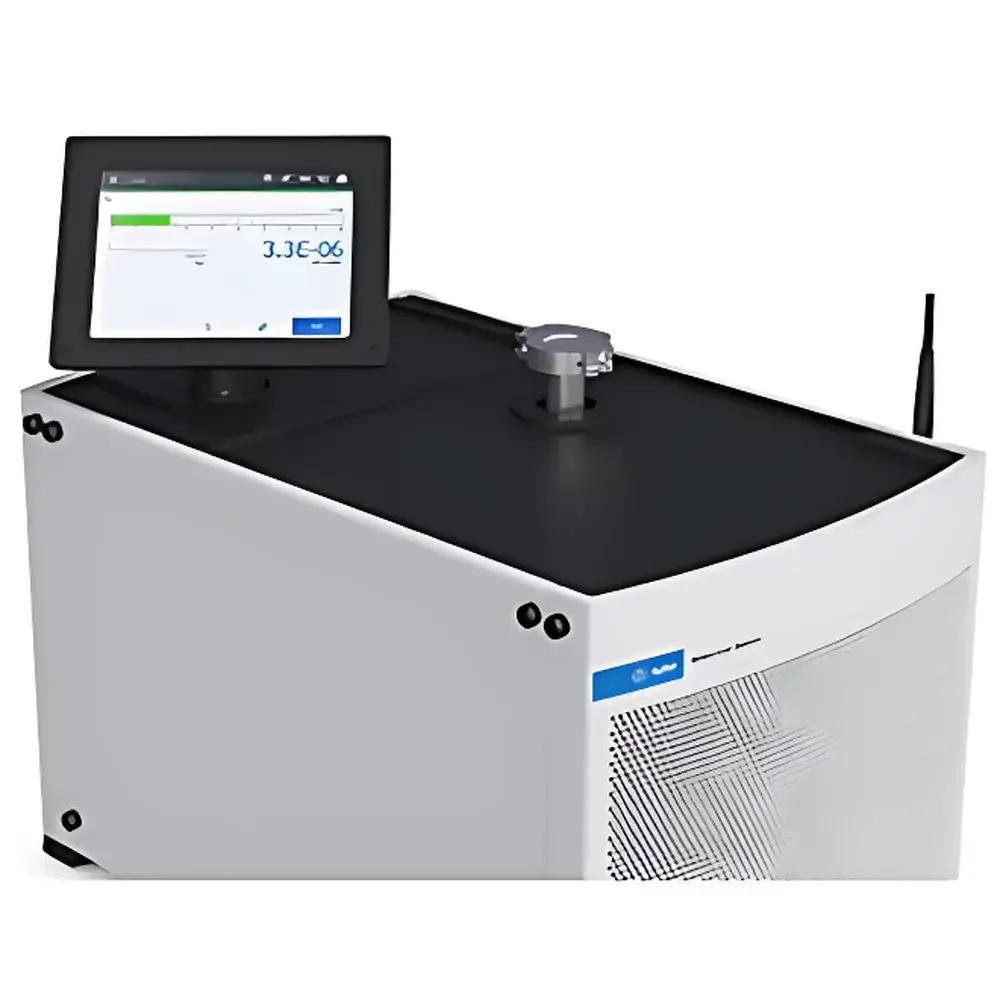
Agilent HLD MR15 Mobile Helium Mass Spectrometer Leak Detector
| Brand | Agilent Technologies |
|---|---|
| Origin | USA |
| Manufacturer Type | Original Equipment Manufacturer (OEM) |
| Import Status | Imported |
| Model | HLD MR15 |
| Pricing | Available Upon Request |
Overview
The Agilent HLD MR15 is a fully integrated, mobile helium mass spectrometer leak detector engineered for high-sensitivity quantitative leak detection in vacuum and pressurized systems. It operates on the principle of magnetic sector mass spectrometry, selectively detecting helium-4 ions (m/z = 4) with high mass resolution and minimal interference from background gases such as hydrogen or water vapor. As a dedicated helium-based tracer gas system, it delivers detection limits down to <1 × 10⁻¹² mbar·L/s (typical), making it suitable for critical applications in semiconductor fabrication, aerospace component validation, vacuum chamber integrity testing, and pharmaceutical packaging qualification. The instrument combines a robust vacuum architecture—including a 15 m³/h oil-sealed rotary vane pump (Agilent DS-302)—with a high-stability turbomolecular pump, enabling rapid system evacuation, fast helium clearance between test cycles, and stable ion current measurement under dynamic operating conditions.
Key Features
- Integrated mobility platform with heavy-duty casters and ergonomic handle—designed for repeated repositioning across production floors, cleanrooms, and field service environments.
- 180° rotatable industrial-grade capacitive touchscreen display with anti-glare coating and glove-compatible operation—optimized for visibility in varied lighting and spatial constraints.
- Six preconfigured application wizards (e.g., vacuum chamber check, pressure decay mode, sniffer probe mapping, accumulation testing, residual gas analysis support, and calibration verification)—each guiding users through pump-down timing, helium injection protocols, threshold setting, and pass/fail logic.
- Enhanced data visualization suite including real-time dual-axis plots: leakage rate (log scale, mbar·L/s) vs. time and chamber pressure (mbar) vs. time—with zoomable trace windows, color-coded alarm thresholds, and overlay-capable historical comparison.
- Expanded benchtop surface (≥600 mm × 450 mm) with integrated cable management channels and accessory mounting points—accommodating large test fixtures, custom adapters, and auxiliary gauges without external workbenches.
- Intelligent shutdown sequence: automatically maintains turbomolecular pump rotor speed during cooldown, preserves spectrometer chamber vacuum (<1 × 10⁻⁶ mbar), and prevents hydrocarbon backstreaming—extending pump lifetime and minimizing reconditioning intervals.
Sample Compatibility & Compliance
The HLD MR15 supports both vacuum-integrated and local-sniffer leak detection modalities. It is compatible with standard CF, KF, and ISO-K vacuum flanges (up to DN100), and accepts common helium delivery interfaces including regulated flow controllers (0–100 sccm), calibrated leak standards (1 × 10⁻⁹ to 1 × 10⁻⁵ mbar·L/s), and handheld sniffer probes with adjustable sensitivity modes. The system meets electromagnetic compatibility requirements per EN 61326-1:2013 and safety standards per IEC 61010-1:2010. Its software architecture supports audit trail generation, user-level access control, and electronic signature capability—enabling compliance with FDA 21 CFR Part 11, EU Annex 11, and GLP/GMP documentation requirements when deployed in regulated manufacturing environments.
Software & Data Management
Control and analysis are managed via Agilent’s proprietary LeakTest Suite v3.x, a Windows-based application supporting local and networked deployment. The software provides automated test sequencing, multi-channel data logging (leak rate, pressure, temperature, pump status), CSV/Excel export, and configurable PDF report generation—including test ID, operator credentials, environmental conditions, and pass/fail summary per ASTM E493-22 and ISO 10079-2. All configuration changes, measurement events, and user logins are timestamped and stored with immutable audit trails. Remote monitoring is supported via Ethernet (TCP/IP) or optional Wi-Fi module, allowing integration into centralized facility SCADA or CMMS platforms.
Applications
- Leak integrity verification of vacuum vessels, cryogenic systems, and ultra-high vacuum (UHV) beamlines in research and industrial settings.
- Production-line acceptance testing of hermetically sealed devices—including MEMS sensors, medical implants, lithium-ion battery enclosures, and laser diode packages.
- Root-cause analysis of intermittent leaks in HVAC chillers, heat exchangers, and refrigerant circuits using localized helium spray and real-time response mapping.
- Validation of sterilization cycle integrity in steam autoclaves and VHP (vaporized hydrogen peroxide) chambers per ISO 14644-3 and USP .
- Calibration and performance verification of secondary leak detectors and pressure decay instruments using certified reference leaks traceable to NIST.
FAQ
What is the minimum detectable leak rate under standard vacuum-integrated testing conditions?
Typical base sensitivity is ≤5 × 10⁻¹³ mbar·L/s when operated with optimal pumping speed, low background helium, and stabilized spectrometer parameters—verified per ASTM E1514-21 Annex A1.
Can the HLD MR15 be used for pressurized testing with helium charging?
Yes—it supports both vacuum-mode (test part evacuated, helium sprayed externally) and pressure-mode (test part pressurized with helium, exhaust sampled via vacuum line), with automatic mode recognition and parameter adaptation.
Is the DS-302 rotary vane pump included and serviceable in-field?
Yes—the DS-302 is factory-integrated and features quick-release oil drain/fill ports, replaceable vanes, and an onboard oil mist filter; routine maintenance can be performed without specialized tools.
Does the system support automated calibration with certified reference leaks?
Yes—LeakTest Suite includes guided calibration workflows compliant with ISO/IEC 17025, with automatic drift compensation and uncertainty budgeting per EURACHEM/CITAC Guide CG4.
What vacuum level must be achieved before initiating a leak test?
The turbomolecular pump must reach ≤1 × 10⁻⁵ mbar in the spectrometer chamber; the system monitors this autonomously and inhibits test initiation until stability is confirmed over a 30-second window.





