
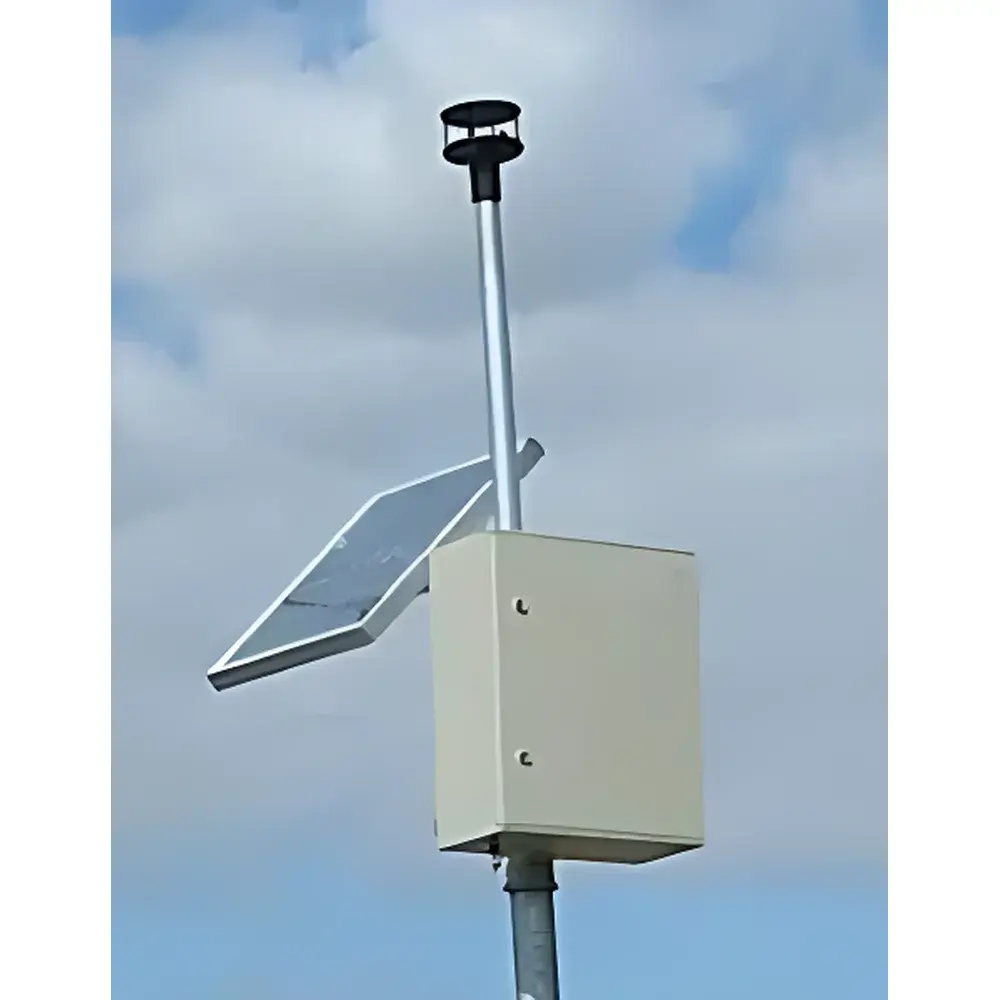
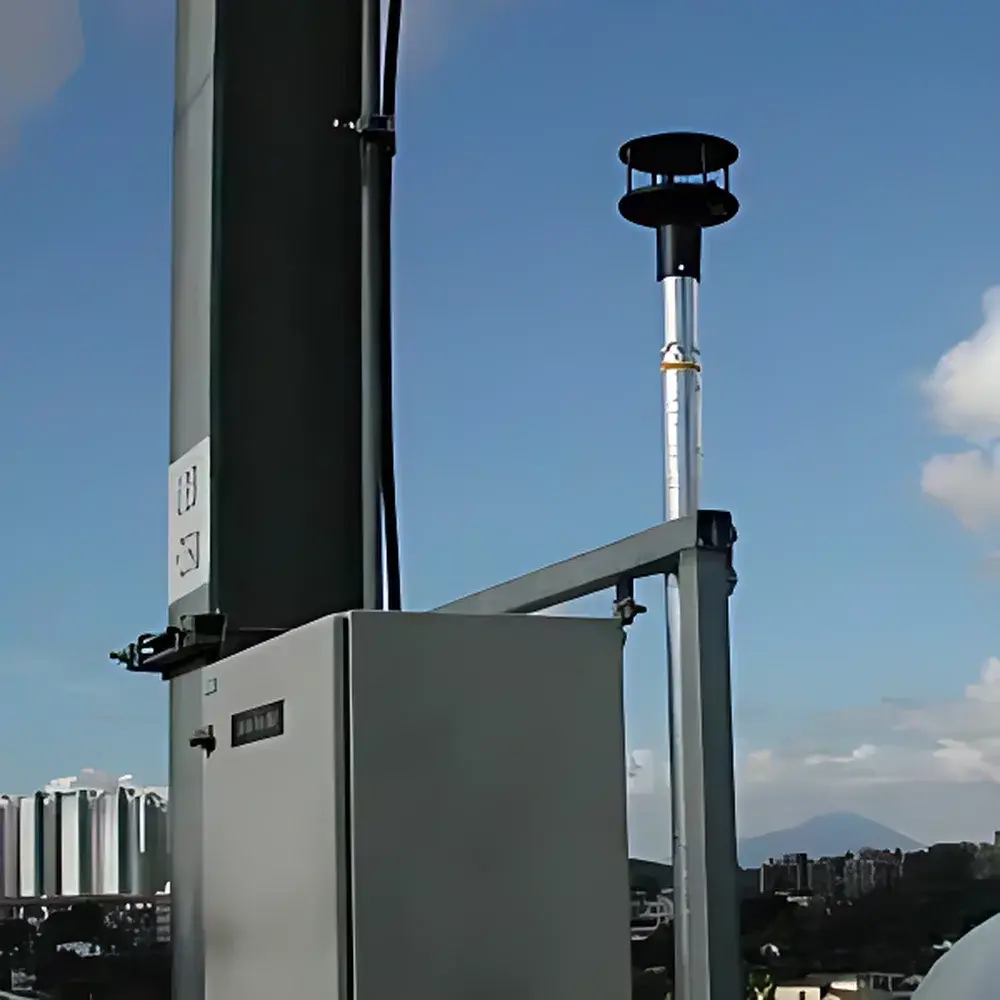
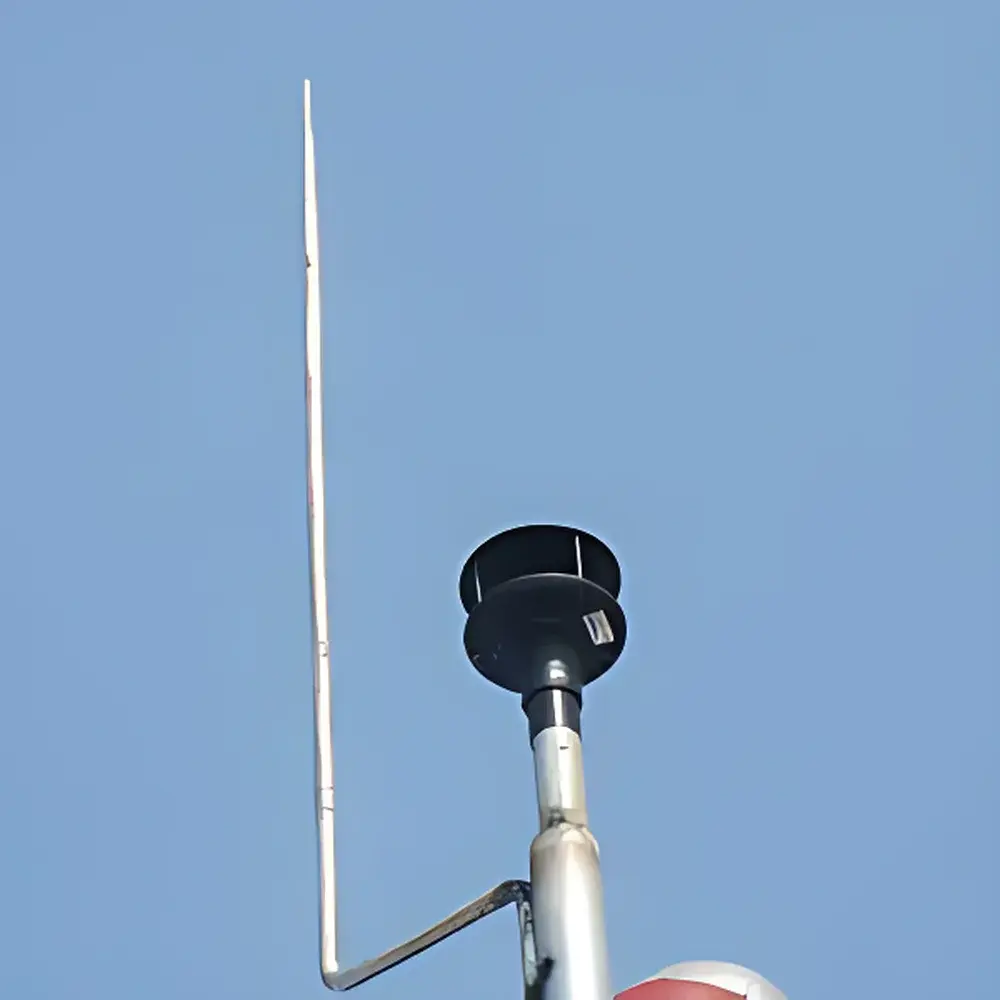
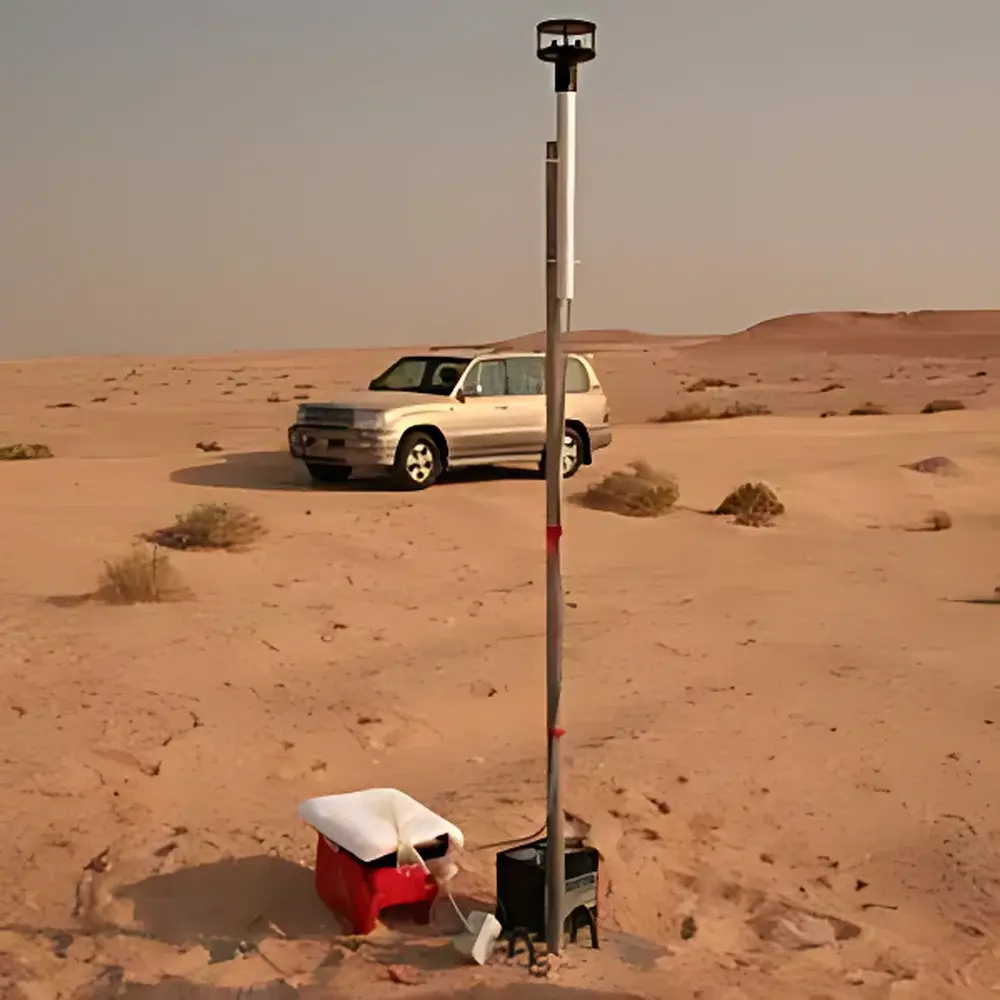
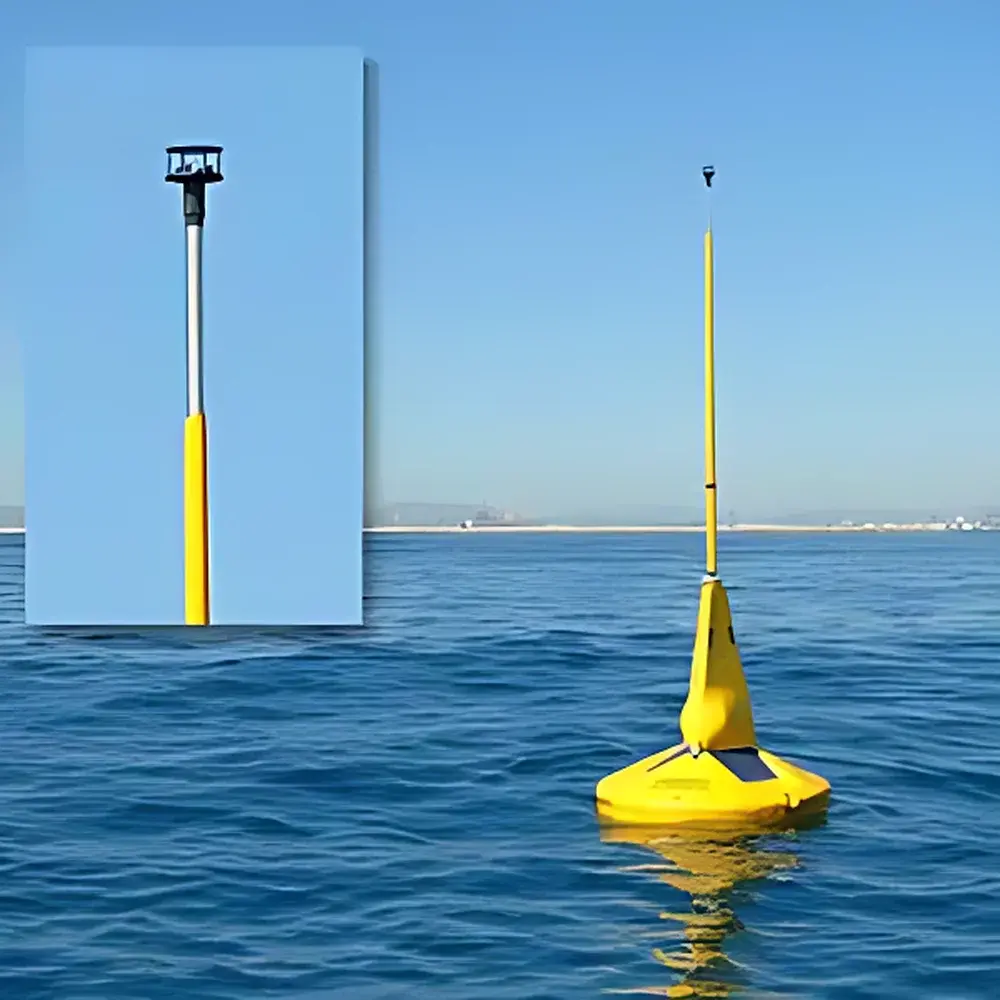
RPR WS15A Ultrasonic Anemometer and Wind Direction Recorder
| Brand | RPR |
|---|---|
| Origin | United Kingdom |
| Model | WS15A |
| Sensor Type | Ultrasonic (no moving parts) |
| Measurement Range | Wind Speed 0.02–60 m/s |
| Wind Direction | 0–360° continuous |
| Output Interfaces | RS232 (≤15 m), RS232/422/485 (≥15 m or EMI-prone environments), Optional Analog Output (0–5 V / 4–20 mA) |
| Data Storage | WindLogger with MMC card (up to 2 GB) |
| Display | Integrated WS-15A real-time LCD display |
| Alarm Output | Configurable digital alarm relay |
| Start-up Threshold | 0.02 m/s |
| Enclosure Rating | IP66 |
| Operating Temperature | −30°C to +70°C |
| Compliance | CE, RoHS, EN 61326-1 (EMC), EN 61000-6-2/6-3 |
Overview
The RPR WS15A Ultrasonic Anemometer and Wind Direction Recorder is a maintenance-free, high-reliability environmental monitoring system engineered for continuous, unattended wind vector measurement in demanding outdoor and industrial settings. Unlike mechanical cup-and-vane anemometers, the WS15A employs a solid-state ultrasonic time-of-flight principle: two pairs of transducers alternately transmit and receive high-frequency acoustic pulses across fixed orthogonal paths. By precisely measuring the differential transit times of sound waves traveling with and against the wind, the instrument computes both horizontal wind speed and direction with sub-degree resolution and no mechanical wear. This physics-based approach ensures true 0–360° azimuthal coverage without dead zones, eliminates bearing drift and icing-related errors, and delivers stable performance across extreme temperature gradients and turbulent flow regimes. Designed for long-term deployment, the system integrates seamlessly into meteorological networks, structural health monitoring platforms, and occupational safety systems where data continuity, low power consumption, and immunity to particulate fouling are critical.
Key Features
- Solid-state ultrasonic sensing with zero moving parts — eliminates mechanical failure modes, calibration drift, and routine maintenance
- Ultra-low start-up threshold of 0.02 m/s — enables detection of subtle air movement in low-wind environments such as urban canyons, indoor ventilation shafts, or controlled agricultural enclosures
- True 360° wind direction measurement — achieved via phase-coherent dual-axis acoustic path geometry; no blind sectors or directional hysteresis
- Integrated WS-15A local display unit — provides real-time wind speed (m/s, knots, mph, km/h) and direction (degrees, cardinal points) with configurable refresh rate and backlight control
- Configurable alarm output — programmable relay triggers on user-defined wind speed/direction thresholds, supporting OSHA-compliant site shutdown protocols or crane operation interlocks
- Ruggedized IP66-rated housing — corrosion-resistant aluminum alloy sensor head and UV-stabilized polycarbonate display enclosure rated for −30°C to +70°C ambient operation
- Flexible communication architecture — supports RS232 (short-range), RS422/485 (long-haul, noise-immune), and optional analog outputs (0–5 V or 4–20 mA) for PLC/SCADA integration
Sample Compatibility & Compliance
The WS15A is validated for use across heterogeneous environmental and industrial sampling conditions, including coastal salt-laden atmospheres, dusty construction sites, humid agricultural greenhouses, and vibration-intensive bridge decks. Its ultrasonic transducers are insensitive to non-condensing aerosols, light rain, and airborne particulates that would impede mechanical sensors. The system complies with EU directives CE and RoHS, and meets electromagnetic compatibility requirements per EN 61326-1 and immunity/emission standards EN 61000-6-2 (industrial environment) and EN 61000-6-3 (residential/commercial). While not certified to IEC 61400-12-1 for turbine-grade power curve validation, its measurement uncertainty profile aligns with ISO 16614-1 (wind resource assessment) for Class C applications and ASTM D5096 (field calibration of anemometers) when deployed with traceable reference instrumentation.
Software & Data Management
Data acquisition is managed via the optional WindLogger module, which logs timestamped wind vectors at user-selectable intervals (1 Hz to 1-hour averages) onto industrial-grade MMC cards (up to 2 GB capacity). The logger implements cyclic overwrite logic and supports FAT16/FAT32 file systems for direct drag-and-drop transfer to Windows/macOS/Linux workstations. Raw binary files are convertible to CSV or NetCDF format using RPR’s open-source WindLog Utility (v3.2+), which includes metadata tagging, gap-filling interpolation, and basic turbulence statistics (σu, σv, σw). Audit trails, configuration change logs, and firmware version stamps are embedded in each dataset to support GLP-aligned data integrity workflows. For networked deployments, WindLogger optionally supports Modbus RTU over RS485, enabling integration with third-party SCADA systems compliant with IEC 61850 or OPC UA frameworks.
Applications
- Structural health monitoring of bridges, towers, and tall buildings — correlating wind loading with strain gauge or accelerometer readings
- Crane and heavy-lift operations — real-time wind alerts integrated with lifting permit systems to enforce OSHA 1926.1431 wind speed limits
- Port and maritime terminal safety — wind vector input for berth occupancy algorithms and container stack stability modeling
- Agricultural microclimate studies — boundary-layer profiling above orchards, vineyards, and greenhouse complexes
- Tunnel ventilation control — feedback signal for variable-speed fan modulation based on cross-sectional airflow asymmetry
- Urban air quality networks — co-location with PM2.5/NOx sensors to resolve pollutant dispersion pathways
- Renewable energy site assessment — preliminary wind resource screening prior to mast-based IEC-compliant measurements
FAQ
Does the WS15A require periodic recalibration?
No — ultrasonic time-of-flight measurement is inherently self-referencing; factory calibration remains stable over the sensor’s service life. Field verification against a NIST-traceable reference anemometer is recommended annually for QA/QC purposes.
Can the WS15A operate in freezing conditions with snow accumulation?
Yes — the transducer face geometry and active surface heating (optional accessory) prevent ice bridging. The IP66 enclosure and −30°C minimum rating ensure functionality in sustained sub-zero environments.
Is the WindLogger module compatible with SD cards?
No — only MultiMediaCard (MMC) format is supported due to deterministic write timing requirements; SD/SDHC cards are electrically incompatible and will not initialize.
What is the maximum cable length between the WindSonic sensor and WS-15A display?
For RS232 operation, the maximum is 15 meters. For extended runs or electrically noisy locations, RS422/485 interface kits (sold separately) support distances up to 1,200 meters with galvanic isolation.
Does the system support NMEA 0183 output protocol?
No — the WS15A uses proprietary ASCII framing over serial interfaces. Custom NMEA translation firmware is available under OEM agreement but not included in standard configurations.
Related Products







