
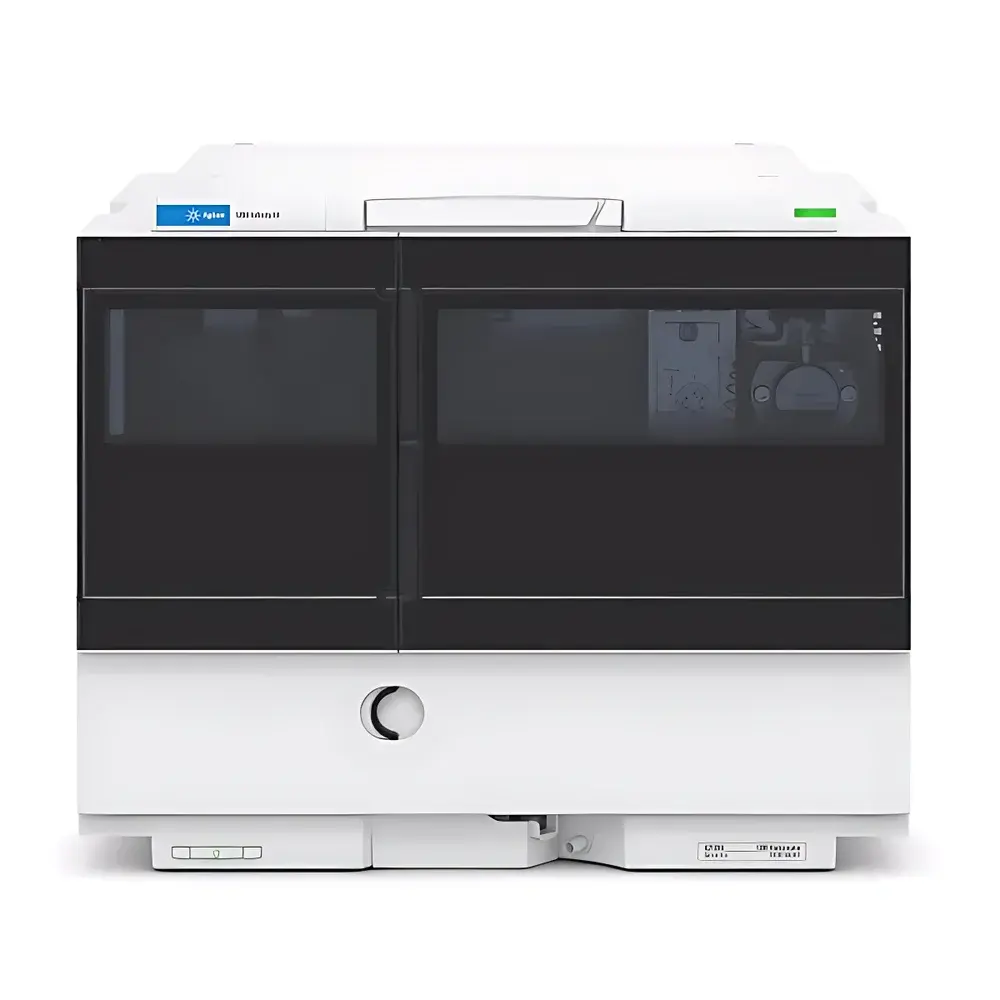
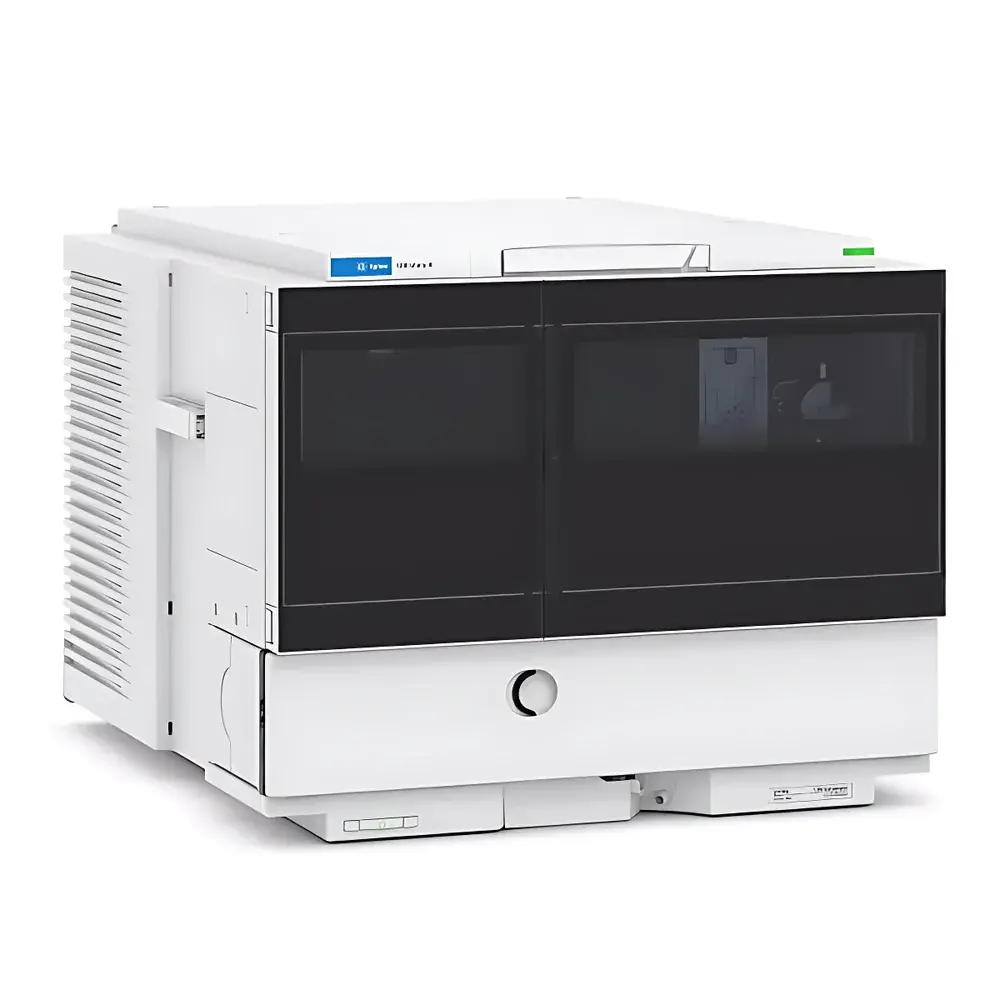
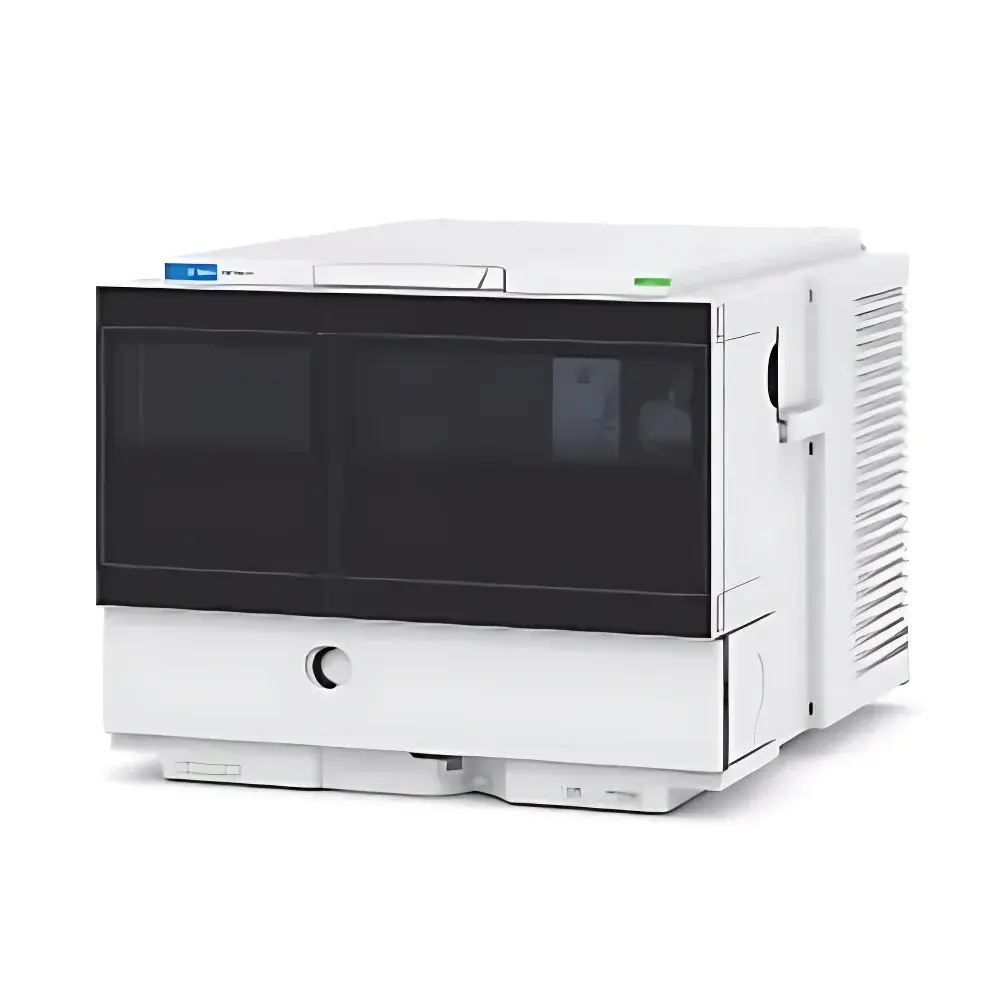
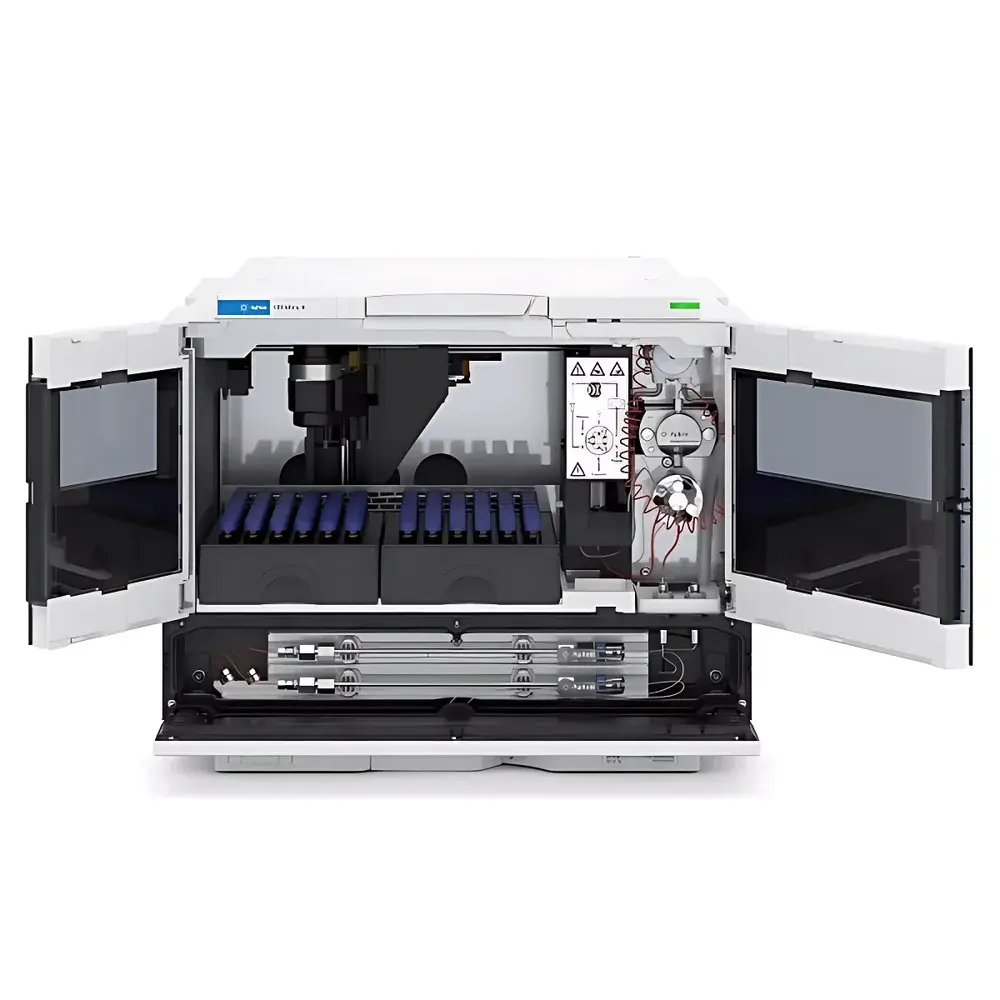
Agilent 1290 Infinity III Sample Bottle Autosampler
| Brand | Agilent Technologies |
|---|---|
| Origin | Germany |
| Manufacturer Type | Original Equipment Manufacturer (OEM) |
| Product Origin | Imported |
| Model | 1290 Infinity III Sample Bottle Autosampler |
| Instrument Type | HPLC Autosampler |
| Maximum Sample Capacity | 132 × 2 mL vials or 36 × 6 mL vials |
| Pressure Rating | 1300 bar |
| Injection Volume Range | Up to 1500 µL |
| Needle Wash Port | External surface rinse capability |
| Optional Integrated Column Oven | Temperature range 5–80 °C above ambient, accommodates two columns up to 30 cm length |
| Optional Integrated Sample Thermostat | Temperature control from 4–40 °C |
| Internal System Volume | Minimized design with bypass mode available |
| Overlapped Run/Injection Cycle | Enabled for throughput optimization |
| Programmable Sequence Logic | Supports pre-injection sample conditioning and advanced scheduling |
Overview
The Agilent 1290 Infinity III Sample Bottle Autosampler is a high-pressure, multifunctional liquid chromatography autosampler engineered for seamless integration into Agilent’s 1290 Infinity III LC platform. It operates on a dual-actuation syringe-based injection principle, delivering precise, low-diffusion sample introduction under ultra-high-pressure conditions up to 1300 bar—enabling compatibility with sub-2-µm particle columns and UHPLC methodologies. Unlike conventional autosamplers that separate sample handling and column management functions, this module unifies vial-based sample loading, needle-based aspiration/injection, and thermally controlled column storage within a single compact architecture. Its modular design supports both routine QC workflows and method-development environments requiring reproducible retention time stability, minimal carryover, and scalable injection volume flexibility—from nanoliter-scale analytical injections to 1500 µL semi-preparative transfers.
Key Features
- High-capacity sample staging: Accommodates up to 132 standard 2 mL screw-thread vials or 36 × 6 mL vials in a single tray configuration, minimizing manual intervention during unattended operation.
- Ultra-low carryover design: Integrated external needle wash port cleans the needle’s outer surface between injections using selectable solvents, significantly reducing cross-contamination risk without compromising cycle time.
- Minimal internal volume architecture: Optimized fluidic path geometry reduces system dwell volume; optional “bypass” mode further suppresses extra-column dispersion—critical for narrow-bore and microfluidic column applications.
- Overlapped execution logic: Enables concurrent sample aspiration, column equilibration, and detector data acquisition, improving instrument utilization and shortening total analysis time per batch.
- Modular thermal management: Optional integrated column oven maintains two columns (≤30 cm each) at stable temperatures from 5 °C above ambient to 80 °C, supporting gradient robustness and method transfer consistency.
- Programmable sample conditioning: User-defined sequence scripts allow pre-injection steps such as vortex mixing, incubation, dilution, or derivatization—facilitating complex sample preparation protocols directly within the autosampler workflow.
Sample Compatibility & Compliance
The autosampler accepts ANSI/SIL standard 2 mL and 6 mL screw-thread vials (e.g., Agilent 5182-0715, 5182-0716), crimp-top vials with silicone/PTFE septa, and compatible 96-well microplates via optional adapters. All wetted materials—including the syringe barrel, needle, valve rotor seal, and wash lines—are chemically inert (e.g., sapphire, PEEK, and stainless steel), ensuring compatibility with aggressive mobile phases (e.g., TFA, HFIP, high-pH buffers) and organic solvents. The system complies with ISO 9001-certified manufacturing practices and meets mechanical safety requirements per IEC 61010-1. When configured with audit-trail-enabled software and electronic signature modules, it supports GLP/GMP environments aligned with FDA 21 CFR Part 11 and EU Annex 11 expectations for data integrity.
Software & Data Management
Controlled exclusively through OpenLab CDS (ChemStation Edition or EZChrom Edition), the autosampler integrates bidirectionally with instrument methods, sequence tables, and calibration databases. Method parameters—including injection volume, wash solvent selection, thermostat setpoints, and column oven ramp profiles—are stored as versioned objects with full metadata tracking. Audit trail functionality records all user actions, parameter changes, and hardware events with timestamp, operator ID, and reason-for-change fields. Raw data files include embedded instrument configuration snapshots, enabling full traceability for regulatory submissions. Remote monitoring and diagnostic alerts are supported via Agilent’s Instrument Manager web interface, facilitating centralized lab asset oversight.
Applications
This autosampler serves critical roles across pharmaceutical QC (e.g., assay, dissolution, stability-indicating assays per USP ), biopharmaceutical characterization (mAb aggregation profiling, peptide mapping), environmental testing (EPA Methods 8081B, 8270), and food safety analysis (pesticide residue screening per EU 2021/2007). Its pressure rating and thermal stability make it suitable for 2D-LC coupling, heart-cutting workflows, and high-resolution separations on superficially porous particles (SPPs) or monolithic columns. The programmable conditioning capability supports automated solid-phase extraction (SPE) elution, enzymatic digestion, or pH-adjusted derivatization—reducing manual handling errors in regulated bioanalysis.
FAQ
Does the autosampler support partial-loop injection mode?
Yes—configurable via OpenLab CDS, enabling precise volumetric delivery independent of loop fill volume.
Can the column oven accommodate guard columns simultaneously with analytical columns?
Yes—the dual-column chamber allows installation of one analytical column and one guard column per channel, with independent temperature monitoring.
Is remote firmware update capability available?
Firmware updates require local USB connection and validated Agilent-provided update packages; remote push is not supported for security and validation integrity.
What is the maximum allowable viscosity for samples injected without clogging risk?
While no formal upper limit is specified, successful operation has been demonstrated with solutions up to 20 cP when filtered (0.22 µm) and degassed prior to loading.
How is needle position accuracy verified during qualification?
Verified using certified depth gauges and gravimetric volume checks per Agilent’s IQ/OQ protocol (document number G1329-90020), traceable to NIST standards.




