
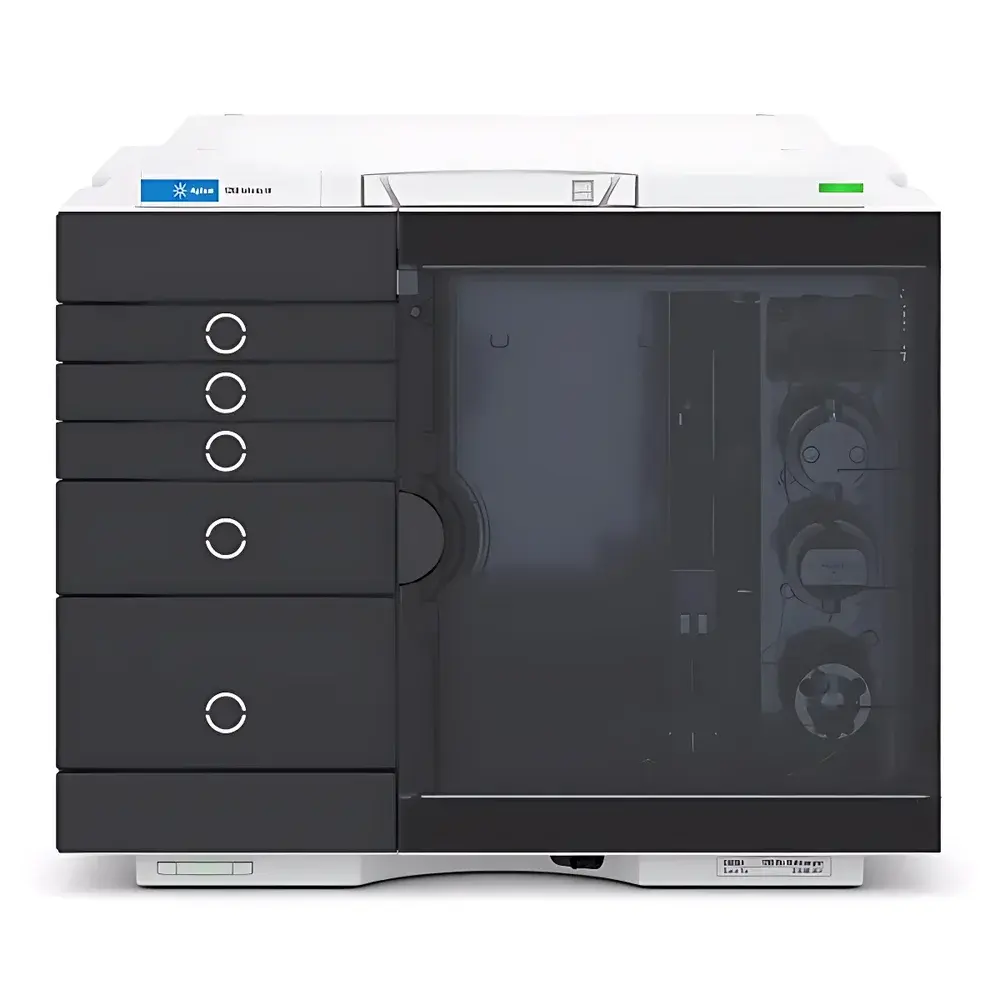
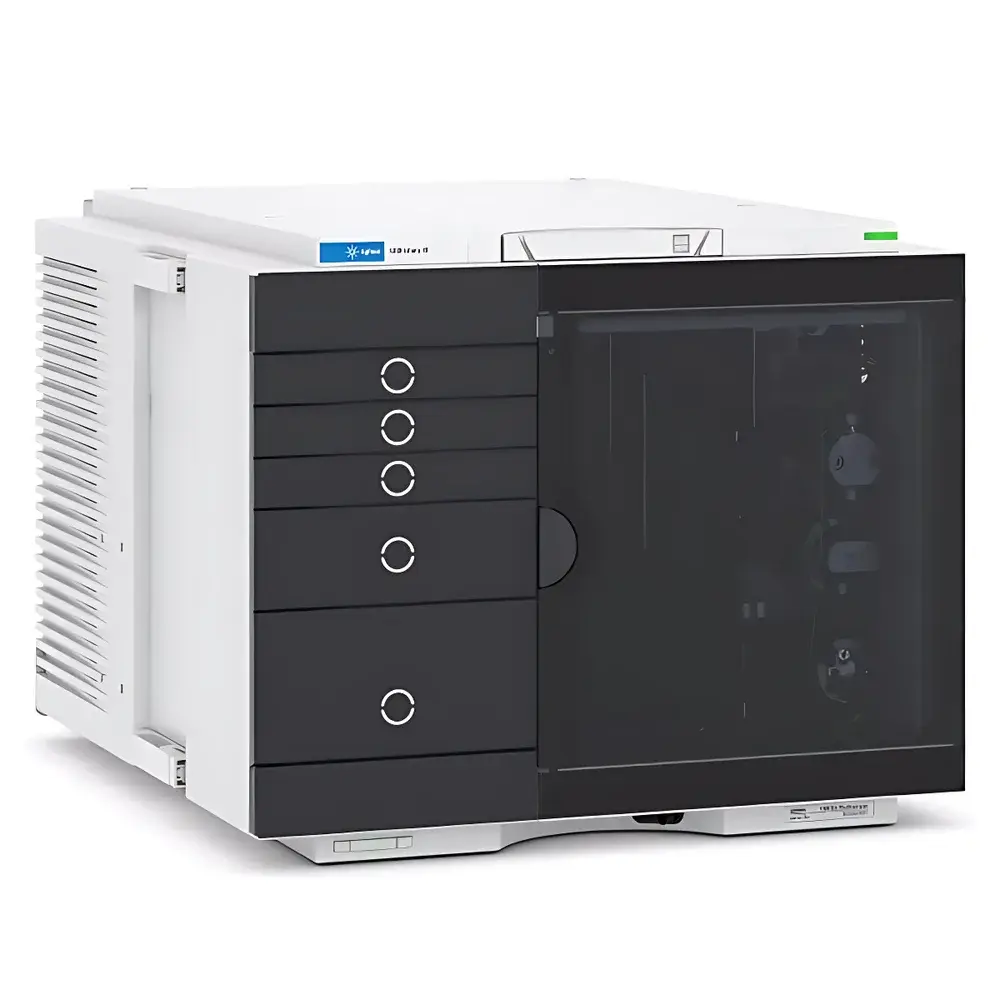
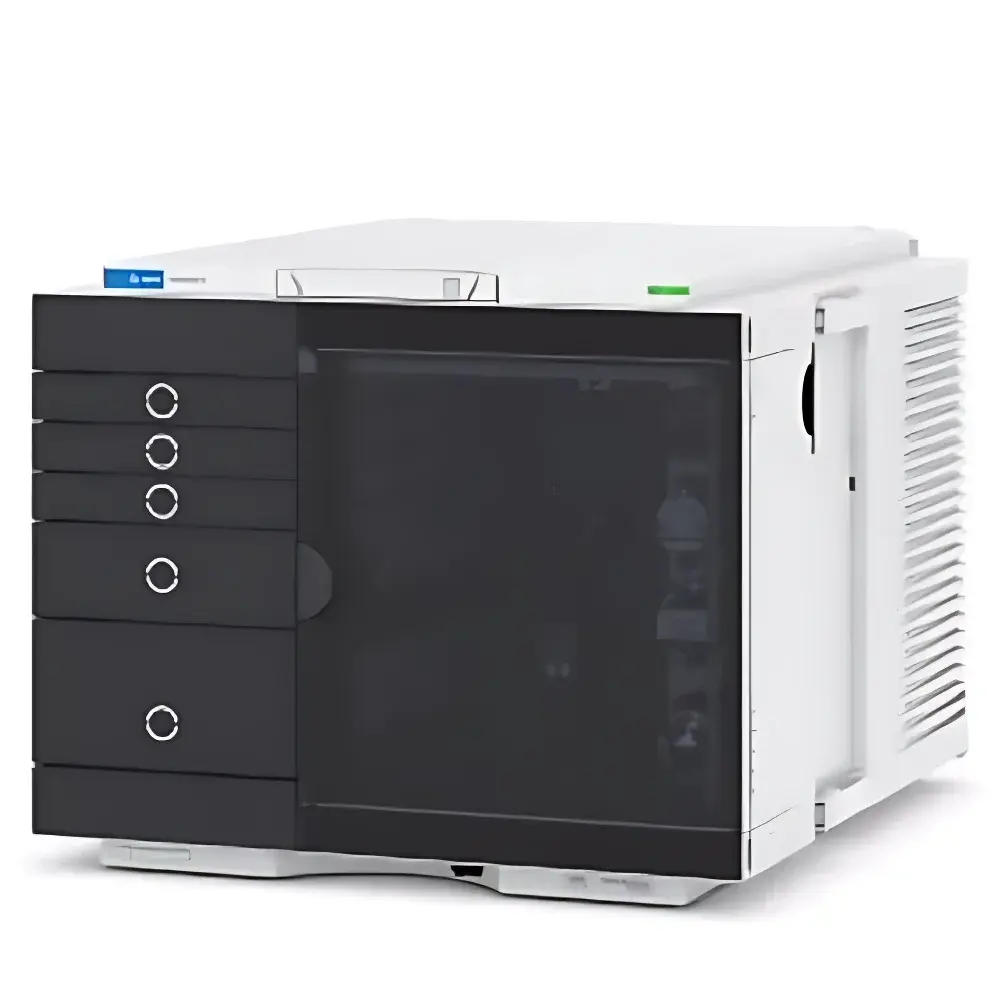
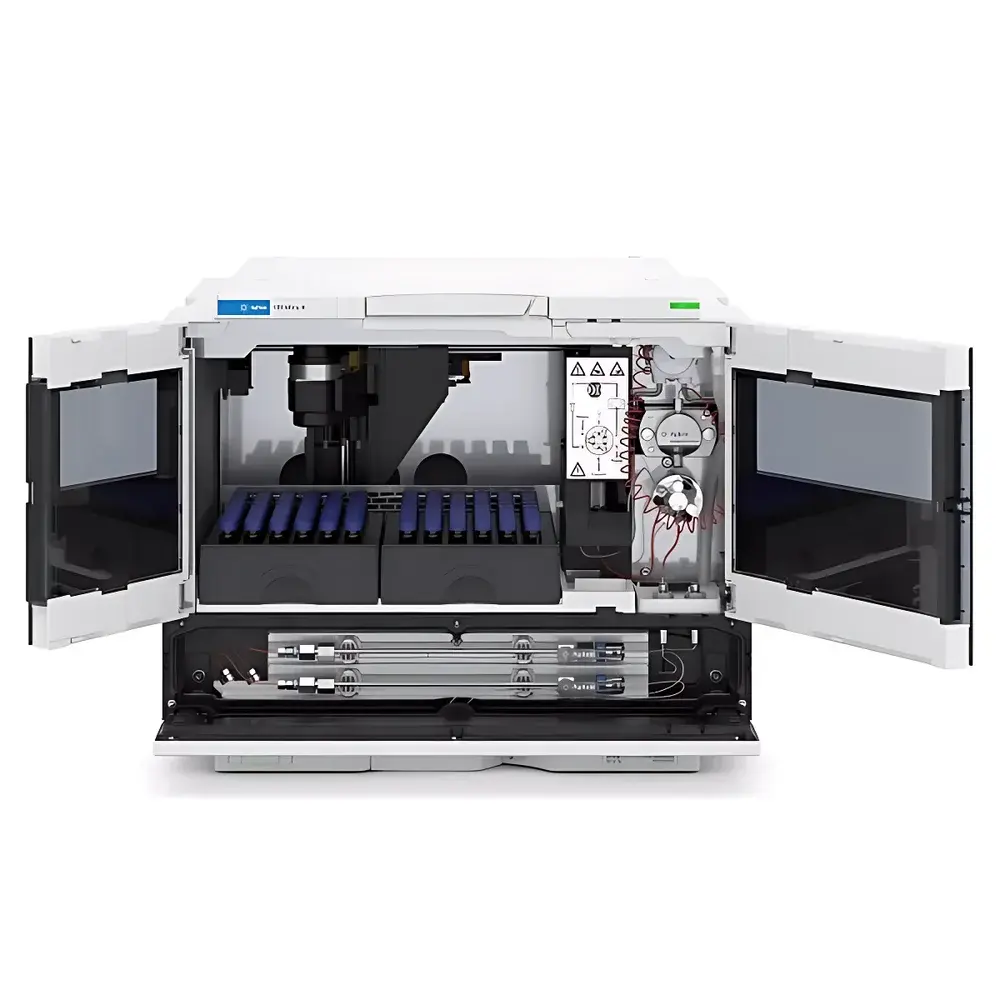
Agilent 1260 Infinity III Bio-Inert Multisampler
| Brand | Agilent Technologies |
|---|---|
| Origin | Germany |
| Manufacturer Type | Original Equipment Manufacturer (OEM) |
| Product Category | Imported Instrument |
| Model | 1260 Infinity III Bio-Inert Multisampler |
| Instrument Type | HPLC Autosampler |
| Maximum Sample Capacity | 6144 |
| Operating Pressure | Up to 600 bar |
| Carryover | <9 ppm |
| Temperature Control Range (Optional) | 4–40 °C |
| Flow Path Materials | Ceramic needle, PEEK needle seat, stainless-steel-coated PEEK capillary |
| Intended Use | Research Use Only (RUO), Not for Diagnostic Purposes |
Overview
The Agilent 1260 Infinity III Bio-Inert Multisampler is a high-capacity, pressure-rated autosampling system engineered for ultra-low carryover and maximal biomolecular integrity in liquid chromatography workflows. Designed specifically for demanding bioanalytical applications—including monoclonal antibody (mAb) characterization, intact protein analysis, peptide mapping, and oligonucleotide quantification—the instrument employs a fully metal-free fluidic path to eliminate surface-induced adsorption, oxidation, or catalytic degradation of labile analytes. Its operational pressure rating of up to 600 bar ensures full compatibility with modern sub-2-µm particle UHPLC columns and high-efficiency 2D-LC configurations. The system integrates seamlessly into Agilent’s 1260 Infinity III LC platform, supporting method transfer, gradient synchronization, and real-time status monitoring via Agilent OpenLab CDS software.
Key Features
- Fully bio-inert sample pathway constructed from ceramic needle, PEEK needle seat, and stainless-steel-coated PEEK capillary—eliminating metallic contact points that compromise protein stability or nucleic acid integrity
- Triple-solvent needle wash combined with needle seat backflushing reduces carryover to <9 ppm, validated per ICH Q5E and USP <621> guidelines for trace-level biotherapeutic quantitation
- Modular drawer architecture supports three vertical height configurations, enabling simultaneous loading of vials (1.5–30 mL), microtiter plates (96-, 384-, and 1536-well), and custom sample containers
- High-density microplate drawer accommodates up to 16 standard microplates, delivering a total capacity of 6144 samples—optimized for large-scale bioprocess monitoring, stability studies, and HTS screening campaigns
- Integrated refrigerated/heated sample compartment (optional) maintains temperature uniformity across the entire drawer (4–40 °C, ±0.5 °C), critical for thermolabile proteins, enzymes, and RNA conjugates
- Robust robotic arm with precision linear encoders ensures repeatable positioning accuracy (<±0.1 mm) and long-term mechanical stability under continuous 24/7 operation
Sample Compatibility & Compliance
The 1260 Infinity III Bio-Inert Multisampler is validated for use with a broad spectrum of biological matrices—including cell culture supernatants, plasma, serum, lysates, purified mAbs, fusion proteins, ADCs, siRNA, and antisense oligonucleotides. Its inert flow path meets ASTM E2656-20 requirements for biomolecule handling systems and aligns with ICH Q5C stability testing recommendations. For regulated environments, the system supports 21 CFR Part 11-compliant electronic signatures, audit trails, and user access controls when deployed with Agilent OpenLab CDS 2.x or later. All hardware components are manufactured in Agilent’s ISO 9001-certified facility in Waldbronn, Germany, and conform to RoHS 2011/65/EU and WEEE 2012/19/EU directives.
Software & Data Management
Control and method management are executed through Agilent OpenLab CDS, which provides centralized scheduling, sequence validation, and real-time error logging. The software enables automated method parameter inheritance (injection volume, wash cycles, dwell time) across heterogeneous sample types, reducing manual configuration errors. Audit trail functionality records all user actions—including sequence edits, calibration events, and maintenance logs—with immutable timestamps and operator IDs. Raw data files (.d files) are stored in vendor-neutral formats compatible with third-party processing tools (e.g., MassHunter Quant, Protein Metrics Byos). Optional integration with LIMS platforms (e.g., Thermo Fisher SampleManager, LabVantage) supports end-to-end sample tracking from receipt to report generation.
Applications
- High-throughput characterization of biosimilars and novel biologics under GMP-aligned research conditions
- Stability-indicating assays for forced degradation studies (thermal, oxidative, acidic/basic stress)
- Pharmacokinetic (PK) sample analysis in nonclinical studies requiring low carryover and high reproducibility
- Quality-by-Design (QbD) development of purification processes for mAbs and Fc-fusion proteins
- Automated fraction collection and re-injection workflows in 2D-LC–MS for deep proteome profiling
- Support of DOE-driven method optimization for HILIC, SEC, and IEX separations of charged biomolecules
FAQ
Is the 1260 Infinity III Bio-Inert Multisampler compatible with non-Agilent LC systems?
Yes—via analog/digital I/O or RS-232 interface, though full feature support (e.g., dynamic pressure compensation, intelligent carryover mitigation) requires native integration with Agilent 1260 Infinity III or 1290 Infinity II LC modules.
Can the system be retrofitted with temperature control after initial installation?
Yes—the refrigerated/heated sample drawer is available as a field-upgrade kit (part number G7129A), including controller module, thermal sensors, and firmware update.
What validation documentation is provided for GxP environments?
Agilent supplies Installation Qualification (IQ) and Operational Qualification (OQ) protocols compliant with ASTM E2500-13 and EU Annex 11. Performance Qualification (PQ) templates are customizable per client SOPs.
Does the multisampler support partial loop injection and variable volume sampling?
Yes—supports precise partial-loop injections from 0.1 µL to 100 µL with programmable needle penetration depth and aspiration speed, minimizing sample waste and improving precision for precious biologics.
How is carryover performance verified during routine operation?
Built-in system suitability tests include blank injection sequences with post-run peak area monitoring; results are automatically logged and trended in OpenLab CDS for statistical process control (SPC) analysis.




