
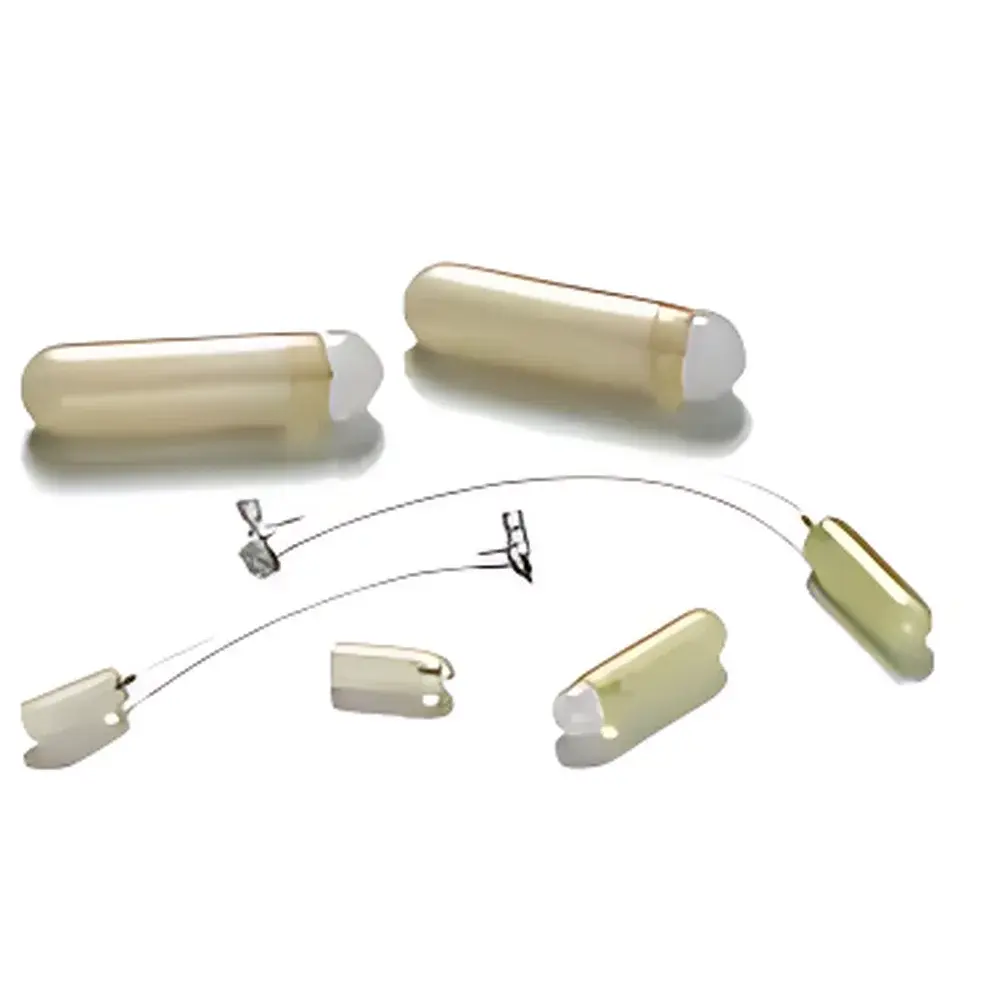
Alzet® Model 2004 Implantable Osmotic Pump
| Brand | Alzet |
|---|---|
| Origin | USA |
| Type | Implantable Osmotic Delivery Device |
| Dimensions | ~19.7 mm × 5.6 mm (cylindrical capsule) |
| Delivery Duration | Up to 28 days (model-dependent) |
| Flow Rate Range | 0.11–10.0 µL/h (varies by model) |
| Reservoir Volume | 100–200 µL (model-dependent) |
| Material Compliance | USP Class VI-certified ethylene-vinyl acetate (EVA) and polyurethane |
| Sterilization | Ethylene oxide (EtO) |
| Biocompatibility | ISO 10993-1 tested |
| Operating Temperature | 37 °C (in vivo) |
| Accuracy | ±10% over specified duration |
Overview
The Alzet® Model 2004 Implantable Osmotic Pump is a miniaturized, osmotically driven delivery system engineered for precise, continuous, and unattended administration of test compounds in awake, freely moving laboratory animals. Based on the principle of osmotic pressure differentials across a semi-permeable membrane, the pump operates without batteries, electronics, or external connections—relying solely on water influx from surrounding tissue fluid to drive drug release at a predetermined, near-zero-order rate. This mechanism eliminates pharmacokinetic fluctuations associated with bolus dosing, enabling sustained therapeutic or subtherapeutic exposure critical for modeling chronic disease states, evaluating time-dependent pharmacodynamics, and assessing long-term toxicological endpoints. Designed specifically for rodent applications—including mice, rats, and hamsters—the Model 2004 integrates seamlessly into longitudinal in vivo studies where consistency, reproducibility, and animal welfare are paramount.
Key Features
- Osmotic engine architecture ensures passive, pulse-free delivery independent of animal activity, posture, or circadian rhythm.
- USP Class VI-certified EVA reservoir and polyurethane outer shell provide proven biocompatibility and mechanical stability during subcutaneous or intraperitoneal implantation.
- Pre-calibrated flow rates (e.g., 0.25 µL/h, 0.5 µL/h, 1.0 µL/h) are validated under physiological conditions (37 °C, isotonic environment) per ASTM F2129 electrochemical corrosion testing protocols.
- Compact cylindrical form factor (19.7 mm × 5.6 mm) permits implantation in neonatal mice and juvenile rats without compromising mobility or inducing surgical site complications.
- Compatible with catheter-based delivery configurations for targeted administration to CNS (intracerebroventricular, intrathecal), vascular, hepatic, or tumor microenvironments.
- Single-use, sterile, EtO-processed units arrive ready for aseptic implantation—no user calibration or priming required.
Sample Compatibility & Compliance
The Model 2004 supports a broad spectrum of aqueous- and solvent-compatible compounds, including peptides, monoclonal antibodies, small-molecule inhibitors, antisense oligonucleotides, siRNA formulations, chemotherapeutics, steroids, and neuroactive agents. It has been successfully employed with solutions containing ≤20% DMSO, ≤10% ethanol, and buffered saline systems (PBS, HEPES, citrate). All materials comply with ISO 10993-1 (Biological Evaluation of Medical Devices) and USP Class VI requirements for systemic implantation. The device meets GLP-relevant design controls as defined in OECD Principles of Good Laboratory Practice (Annex V), and its use aligns with FDA Guidance for Industry on Nonclinical Safety Studies for Development of Human Pharmaceuticals (2020). Documentation packages include full material traceability, lot-specific sterility validation reports, and extractables/leachables summaries per USP .
Software & Data Management
As a passive mechanical device, the Model 2004 requires no firmware, drivers, or software integration. Its operational parameters are fixed at manufacture and documented in the Certificate of Conformance supplied with each lot. For experimental traceability, users are advised to record implantation date, pump lot number, nominal flow rate, reservoir fill volume, and compound concentration in electronic lab notebooks compliant with 21 CFR Part 11 when used in regulated toxicology or IND-enabling studies. Integration with institutional LIMS or ELN platforms is achieved via manual entry of these metadata fields; no proprietary API or cloud interface is involved.
Applications
- Chronic disease modeling: Sustained hypertension induction (angiotensin II), Parkinson’s disease progression (6-OHDA or MPTP co-infusion), type 1 diabetes (streptozotocin + insulin modulation).
- Neuropharmacology: Intracerebroventricular delivery of BDNF, GDNF, or CRISPR-Cas9 ribonucleoprotein complexes for region-specific gene editing.
- Oncology: Localized, low-dose chemotherapy infusion into orthotopic tumor models to mimic metronomic scheduling.
- Immunomodulation: Continuous IL-2 or anti-CTLA-4 delivery to assess T-cell exhaustion kinetics in syngeneic transplant models.
- Toxicokinetics: Steady-state exposure assessment of high-clearance compounds where IV infusion is impractical in rodents.
- Endocrinology: Pulsatile vs. continuous corticosterone replacement to dissect HPA axis feedback mechanisms.
FAQ
What is the maximum recommended implantation duration for the Model 2004?
The validated delivery duration is 28 days at 37 °C. Performance beyond this window is not characterized and may result in declining flow rates due to osmotic saturation or membrane fouling.
Can the pump be refilled or reused after implantation?
No. The Model 2004 is a single-use, sealed, non-refillable device. Refilling compromises structural integrity and sterility, violating ISO 13485 manufacturing controls.
Is catheter attachment supported out-of-the-box?
Yes—Alzet offers OEM-compatible catheter kits (e.g., Brain Infusion Kit #0007901) with integrated flow restrictors and biocompatible PE/PU tubing. Catheter length and gauge must be selected based on target anatomy and viscosity of the formulation.
How does ambient temperature affect delivery accuracy?
Flow rate exhibits a Q₁₀ temperature coefficient of ~2.0. At 25 °C, output decreases by ~40% relative to 37 °C; thus, all calibration data assume in vivo core temperature conditions.
Are there alternatives for larger animals or longer durations?
For rabbits, dogs, or non-human primates, consider the Alzet Model 1007D (7-day) or Model 2ML4 (28-day, 2 mL reservoir), or transition to programmable external pumps (e.g., CADD-legacy® PLUS or 3D MicroBT™) with 21 CFR Part 11-compliant software suites.




