
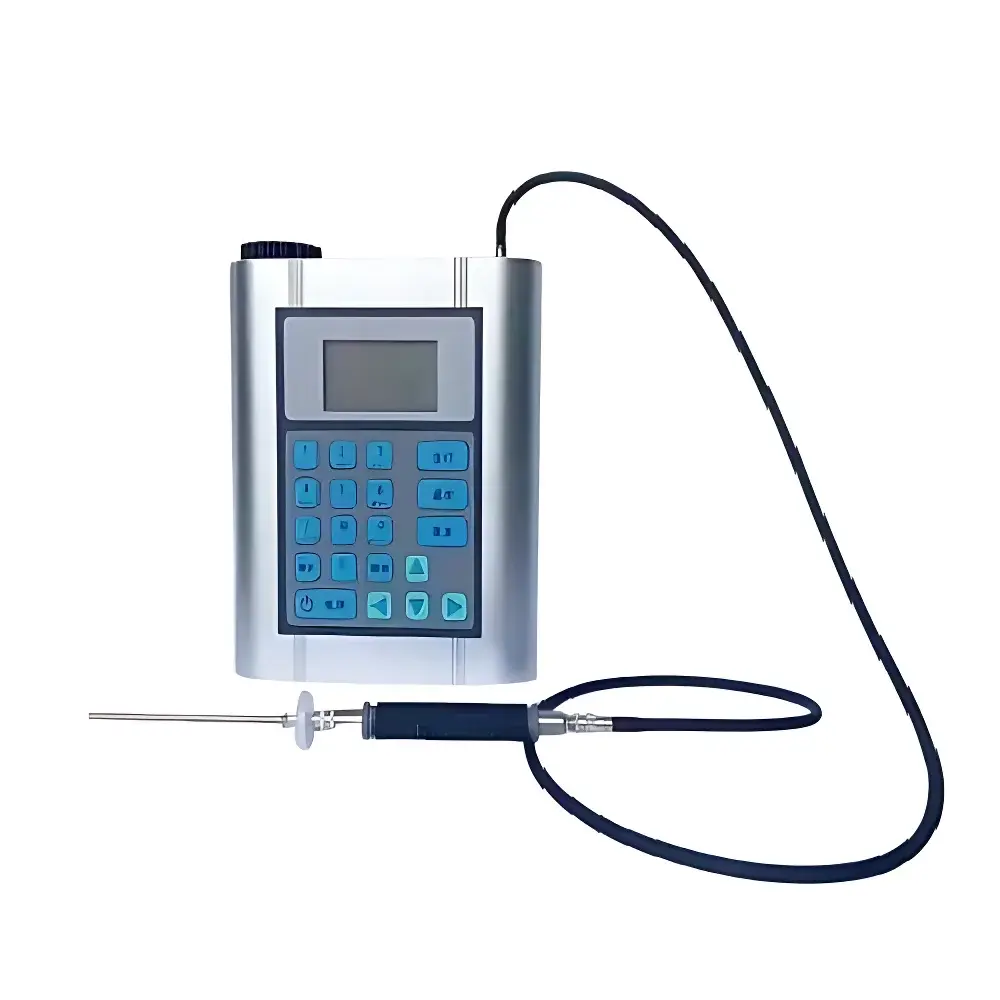
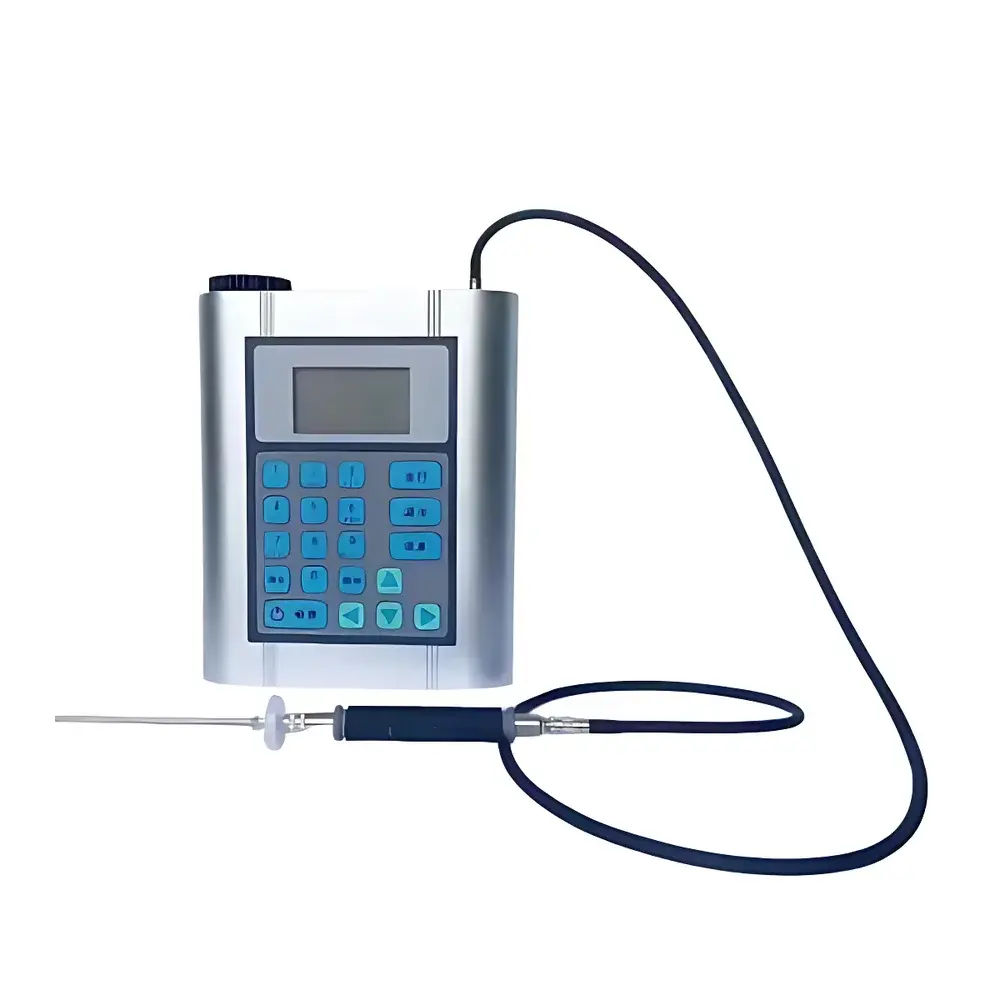
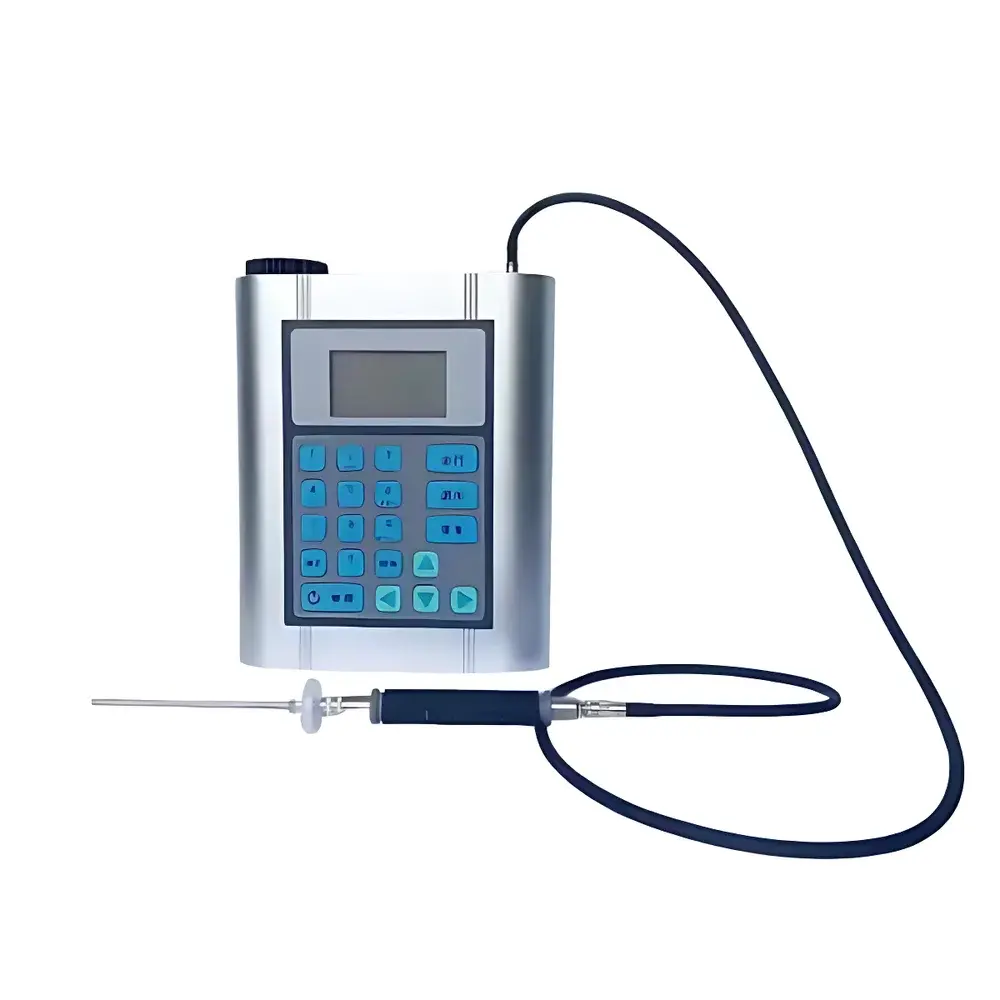
Annuo THB-8021 Portable GC-FID Based Methane and Non-Methane Hydrocarbons (NMHC) Analyzer
| Brand | Annuo |
|---|---|
| Origin | Henan, China |
| Model | THB-8021 |
| Instrument Type | Portable |
| Detection Principle | Gas Chromatography with Flame Ionization Detection (GC-FID) |
| Measurement Range | 1.0–50,000 ppm (as methane or propane equivalent) |
| Detection Limit | 0.5 ppm (FID, ethane |
| Repeatability | ±2% at 100 ppm methane (FID) |
| Accuracy | ±10% of reading or ±1.0 ppm (FID, whichever is greater) |
| Response Time (FID) | ≤3.5 s to 90% of final value (10,000 ppm CH₄) |
| Recovery Time (FID) | ≤4.5 s to within 10% of baseline (10,000 ppm CH₄) |
| Dynamic & Linear Range (FID) | 1.0–50,000 ppm |
| Detector Lifetime (FID) | >5,000 h (with routine maintenance) |
| Power Supply | Internal rechargeable battery (10 h operation, 4 h charge) |
| Dimensions | 219 × 260 × 70 mm |
| Weight | 4.1 kg |
| Operating Temperature | −10 to +50 °C |
| Data Output | USB (TXT format), Bluetooth, optional 4G/GPS |
| Intrinsic Safety | Certified for Class I, Division 1 hazardous areas (per IECEx/ATEX standards) |
| Compliance | Designed to support LDAR (Leak Detection and Repair) programs per US EPA Method 21, ASTM D6420, and ISO 16000-29 |
Overview
The Annuo THB-8021 is a field-deployable, GC-FID–based analyzer engineered for quantitative measurement of total hydrocarbons (THC), methane (CH₄), and non-methane hydrocarbons (NMHC) in ambient air and process gas streams. It implements dual-column gas chromatography coupled with a flame ionization detector to achieve selective separation and high-sensitivity detection—enabling reliable discrimination between methane and NMHC fractions in real time. Unlike single-sensor PID or catalytic bead instruments, the THB-8021 delivers speciated quantification aligned with regulatory requirements for fugitive emission monitoring, particularly under Leak Detection and Repair (LDAR) programs mandated by environmental agencies including the U.S. EPA, China’s MEP (now MEE), and the EU Industrial Emissions Directive (IED). Its compact, intrinsically safe architecture allows direct use in Zone 1 hazardous locations—including refinery valve manifolds, compressor seals, storage tank vents, and loading arm interfaces—without requiring external sampling systems or dilution.
Key Features
- Integrated dual-detector capability: FID for NMHC quantification (1.0–50,000 ppm) and optional PID module for broad-spectrum VOC screening (0.5–2,000 ppm)
- On-board GC separation with inertized capillary columns ensuring minimal adsorption and carryover—critical for accurate low-concentration measurements at leak sources
- Self-diagnostic firmware with real-time status monitoring of hydrogen supply pressure, detector temperature, flame stability, and column oven integrity
- 3.2-inch sunlight-readable TFT display with multilingual UI (English, Chinese, Spanish, Arabic) and intuitive navigation for field technicians
- Intrinsically safe design certified to IECEx/ATEX standards (Ex ib IIB T4 Gb), enabling deployment in classified hazardous areas without additional barriers
- Modular hydrogen supply: supports both high-pressure metal cylinders (8 h runtime) and solid-state metal hydride cartridges (18 h runtime), minimizing refueling downtime
- Wireless control via ruggedized PDA or mobile app over Bluetooth; optional 4G LTE module enables remote firmware updates and live telemetry upload
- Internal data logger with 32 GB flash memory stores timestamped chromatograms, GPS coordinates (if enabled), operator ID, and ambient conditions—fully traceable per GLP/GMP audit requirements
Sample Compatibility & Compliance
The THB-8021 is validated for direct sampling of undiluted process gases, stack effluents, and ambient air across industrial sectors including petroleum refining, petrochemical manufacturing, pharmaceutical synthesis, and coal chemical processing. Its inert flow path—constructed from SilcoNert®-treated stainless steel and fused silica tubing—prevents analyte adsorption and catalytic decomposition, preserving integrity of reactive NMHC species (e.g., alkenes, dienes, aromatics). The instrument meets performance criteria specified in U.S. EPA Method 21 (VOC Leak Detection), ASTM D6420-18 (GC-FID analysis of gaseous hydrocarbons), and ISO 16000-29 (indoor air—determination of NMHC). Data output formats comply with EPA LDAR reporting templates and support integration into enterprise-level environmental management systems (EMS) such as Enviance, Intelex, or custom SQL-based platforms.
Software & Data Management
Data acquisition and post-processing are managed through Annuo’s proprietary THB-Link software, compatible with Windows 10/11 and macOS 12+. The software supports automated peak integration using retention time locking and library matching against NIST-certified hydrocarbon spectra. All raw chromatograms, calibration logs, and QA/QC records are stored with SHA-256 checksums and immutable timestamps. Audit trails record user login/logout events, method changes, calibration verifications, and data export actions—meeting FDA 21 CFR Part 11 electronic record and signature requirements when configured with role-based access control and digital certificate authentication. Export options include CSV, TXT, PDF reports, and XML schema-compliant files for direct ingestion into regulatory portals (e.g., China’s National Emission Permit Management Platform).
Applications
- LDAR program execution: Quantitative screening of valves, flanges, pumps, compressors, pressure relief devices, and open-ended lines per regulatory frequency schedules
- Process safety audits: Verification of seal integrity prior to startup/shutdown and after maintenance interventions
- Emission inventory development: Site-wide NMHC mass balance calculations using measured concentrations, flow rates, and duration data
- Refinery flare gas characterization: Real-time assessment of methane slip and unburned hydrocarbon content during combustion efficiency testing
- Environmental compliance verification: Supporting Title V permit reporting, REACH substance tracking, and VOC abatement system performance validation
- Research-grade field studies: Mobile mapping of fugitive plumes using synchronized GPS-tagged readings and geospatial interpolation
FAQ
Does the THB-8021 require external calibration gas cylinders during routine field use?
No—built-in electronic calibration verification (ECV) checks detector response and GC retention time stability daily using internal reference pulses. Certified span gas challenges are required only quarterly or after maintenance, per EPA Method 21 QA/QC protocols.
Can the instrument distinguish between methane and ethane in mixed streams?
Yes—the dual-column GC configuration resolves C₁–C₅ hydrocarbons with baseline separation; methane elutes first, followed by ethane, propane, and higher homologs, enabling compound-specific quantification.
Is the data logger compliant with 21 CFR Part 11 for regulated laboratories?
When deployed with THB-Link v3.2+ and configured with PKI-based user authentication, electronic signatures, and audit trail logging, it satisfies all technical controls outlined in FDA 21 CFR Part 11 Subpart B.
What maintenance intervals are recommended for the FID?
FID nozzle cleaning and jet inspection every 200 operational hours; ceramic igniter replacement every 5,000 h; column bake-out weekly if exposed to high-boiling contaminants.
How does the THB-8021 handle high-humidity or particulate-laden samples?
Integrated heated sample line (maintained at 120 °C) and dual-stage particle filtration (0.3 µm PTFE membrane + activated carbon scrubber) prevent condensation and filter clogging without compromising response time.
Related Products







