
Bio-Logic VSP 5-Channel Research-Grade Electrochemical Workstation
| Brand | Bio-Logic |
|---|---|
| Origin | France |
| Model | VSP |
| Channel Count | 5 independent channels |
| Current Range | 1 nA to 100 A (with external amplifier) |
| Current Resolution | 76 fA |
| Potential Accuracy | ±5 µV |
| Potentiostatic Range | ±10 V |
| Galvanostatic Range | ±4 A (built-in), up to ±100 A (with external current booster) |
| EIS Frequency Range | 10 µHz – 1 MHz |
| Data Acquisition Rate | 200,000 points/s |
| Voltage Resolution | 300 µV (dynamic adjustment down to 5 µV) |
| Supported Techniques | CV, LSV, CA, CP, EIS (potentiostatic/galvanostatic/step-mode), DPV, SWV, NPV, Mott-Schottky, ZRA/ZVC, corrosion polarization, GITT, PITT, constant-power discharge, potentiometric titration, and multi-step sequence protocols |
Overview
The Bio-Logic VSP is a high-precision, modular, 5-channel electrochemical workstation engineered for advanced research in academia, national laboratories, and industrial R&D environments. Built upon a robust digital signal processing architecture and galvanically isolated channel design, the VSP implements true potentiostatic/galvanostatic control using real-time feedback loops with sub-microsecond latency. Its core measurement principle relies on four-terminal sensing with active analog front-end filtering, enabling stable low-current detection (down to 76 fA) and high-fidelity impedance acquisition across seven decades of frequency (10 µHz–1 MHz). Designed for reproducible electrochemical characterization under controlled environmental conditions, the VSP supports simultaneous multi-electrode experiments—each channel operating independently with full parameter autonomy—while maintaining strict electrical isolation to prevent crosstalk. This architecture meets the stringent requirements of battery cycling, fuel cell durability testing, corrosion monitoring, and biosensor development where long-term stability, trace-level current resolution, and phase-accurate EIS are non-negotiable.
Key Features
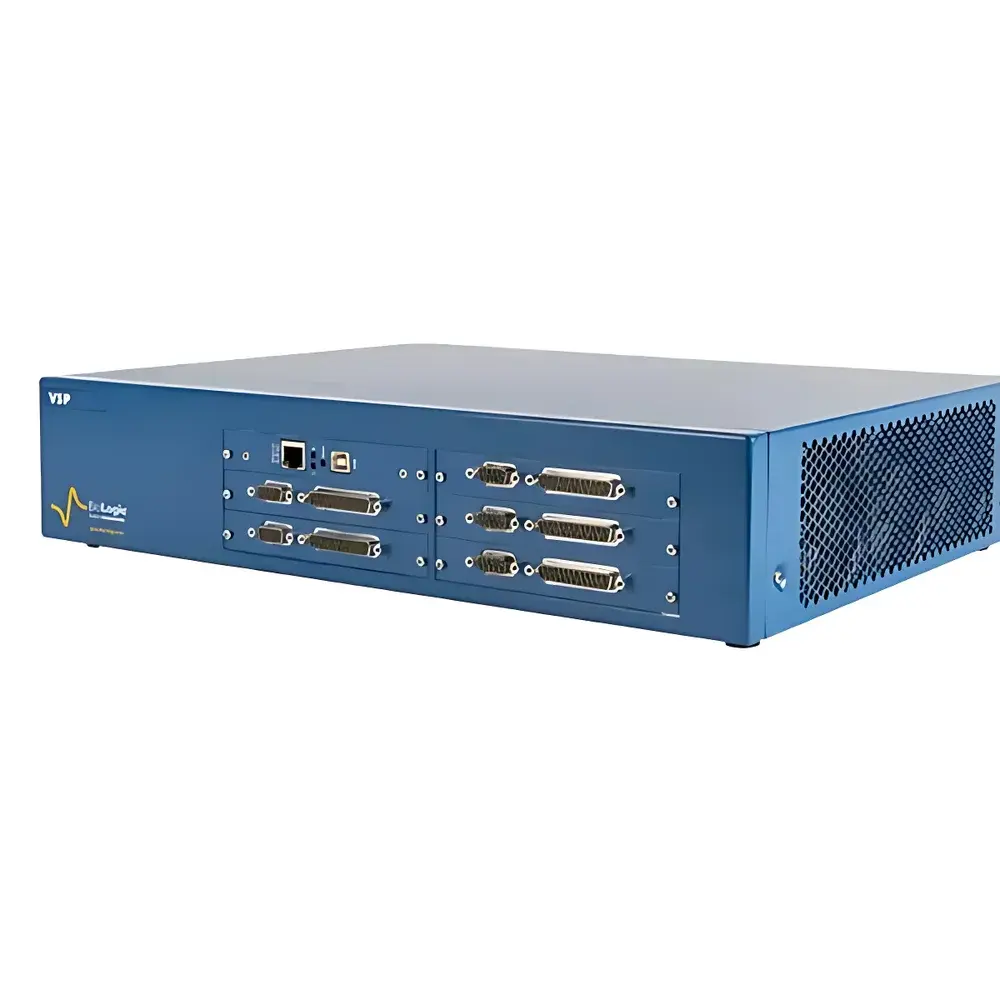
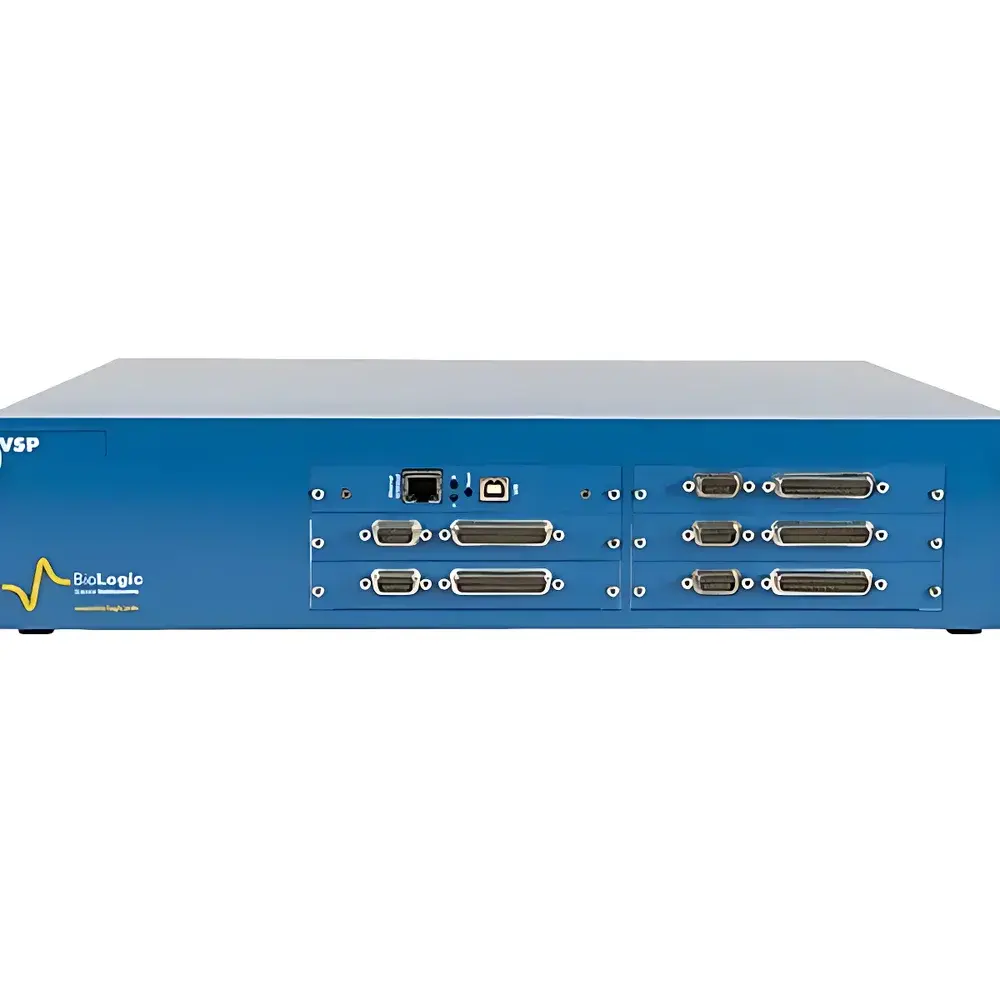
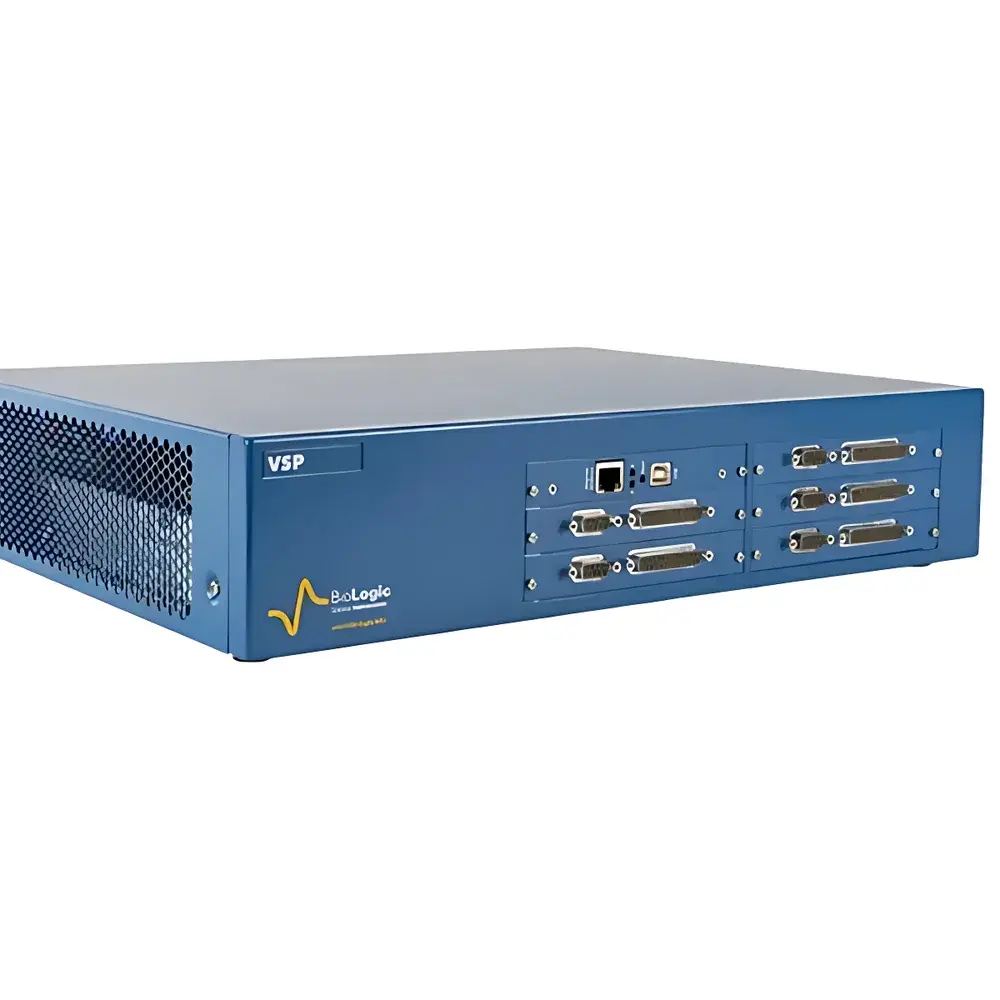
- Five fully independent, electrically isolated channels housed in a single chassis—enabling parallel experiments or multi-electrode array studies without shared reference or counter electrode constraints.
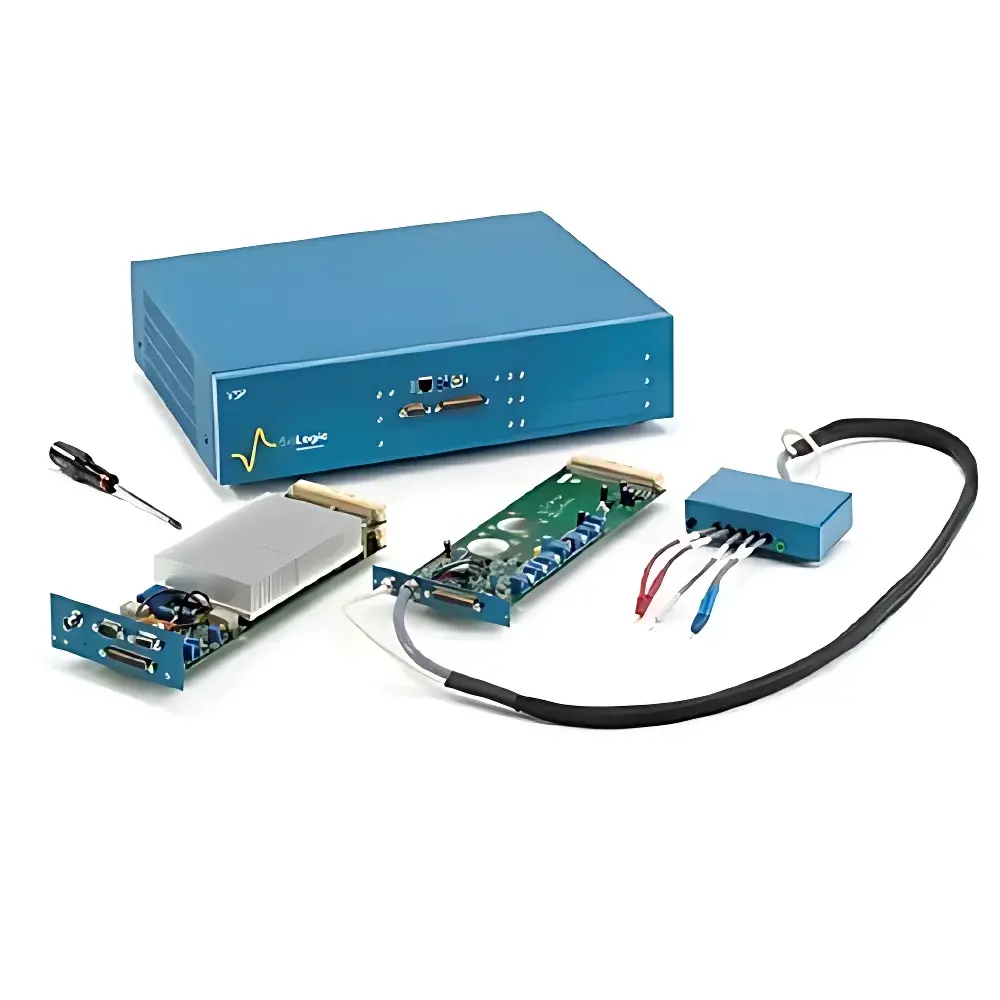
- Modular hardware configuration: users may combine base potentiostat/galvanostat modules, low-current (1 nA) modules, impedance-capable modules, and built-in ±4 A current boosters—all installed as hot-swappable cards within the mainframe.
- Ultra-low current detection capability (76 fA RMS noise floor) optimized for microelectrode kinetics, enzymatic biosensors, and ultra-thin film redox processes.
- Extended current range via external current amplifiers (2 A to 100 A), certified for high-power battery module testing and industrial electroplating process validation.
- Simultaneous dual-electrode EIS: measures impedance between working and auxiliary electrodes while maintaining independent potential control—critical for studying electrode/electrolyte interphases in solid-state batteries.
- Real-time data acquisition at 200 kS/s per channel with 24-bit ADC resolution and adaptive dynamic range adjustment (down to 5 µV effective resolution).
Sample Compatibility & Compliance
The VSP accommodates a broad spectrum of electrochemical cells—from standard three-electrode beaker configurations to custom-designed flow cells, rotating disk electrodes (RDE), and segmented battery pouch cells. Its hardware and software comply with ISO/IEC 17025 calibration traceability requirements when used with NIST-traceable reference standards. EC-Lab® software supports audit trails, electronic signatures, and user-access controls aligned with FDA 21 CFR Part 11 and EU Annex 11 for regulated environments. All firmware and driver stacks undergo annual third-party cybersecurity assessment per IEC 62443-3-3. The system is CE-marked and conforms to EN 61326-1 (EMC) and EN 61010-1 (safety) standards. For corrosion applications, it supports ASTM G5, G59, G102, and G106 protocols out-of-the-box; for battery testing, it implements IEEE 1188 and IEC 62660-1 compliant charge/discharge profiles.
Software & Data Management
EC-Lab® software serves as the primary interface—offering over 50 pre-validated electrochemical techniques, including advanced EIS modeling tools based on Levenberg-Marquardt and Simplex optimization algorithms. Users can construct complex multi-step sequences combining potentiodynamic sweeps, chronoamperometric holds, and frequency-domain perturbations—all synchronized across channels with sub-millisecond timing precision. EC-Lab® Express provides a streamlined GUI for routine QC testing, supporting automated report generation in PDF/XLS formats with embedded metadata (operator ID, timestamp, instrument serial number, calibration history). Raw data is stored in open-format .mpt files (ASCII-based, schema-documented), ensuring long-term readability and compatibility with MATLAB®, Python (via biologic_tools library), and OriginLab. All software versions include integrated GLP/GMP compliance features: change logs, version-controlled method templates, and exportable audit trails meeting ISO 13485 documentation requirements.
Applications
- Battery R&D: In-situ and operando EIS during Li-ion, Na-ion, and solid-state battery cycling; GITT/PITT analysis for diffusion coefficient mapping; multi-channel stack-level monitoring of thermal runaway precursors.
- Fuel Cells & Electrolysers: High-current polarization curve acquisition with IR compensation; accelerated stress testing (AST) under variable humidity and temperature; membrane degradation tracking via low-frequency impedance.
- Corrosion Science: Zero-resistance ammetry (ZRA) for galvanic coupling studies; electrochemical noise analysis (ENA); localized pitting detection via micro-potential mapping.
- Biosensors & Bioelectrochemistry: Amperometric detection of neurotransmitters at carbon nanotube-modified electrodes; enzyme kinetics modeling using mediated electron transfer; impedance-based DNA hybridization assays.
- Electrocatalysis & Photoelectrochemistry: Dual-working-electrode photoelectrochemical cells (PEC); transient photocurrent analysis under chopped illumination; Mott-Schottky analysis for semiconductor band-edge determination.
FAQ
Can the VSP perform true multi-electrode EIS with shared reference and counter electrodes?
Yes—the VSP supports “shared auxiliary/reference” mode where up to five working electrodes connect to a single counter and reference electrode pair, while maintaining independent current/potential control and impedance measurement on each WE.
Is external current amplification compatible with all built-in techniques?
All galvanostatic and hybrid techniques (e.g., GITT, CP, EIS under current control) remain fully functional with external amplifiers; current range scaling is automatically applied in EC-Lab®.
Does the system support temperature-controlled cell integration?
The VSP includes dedicated analog I/O ports (±10 V, 16-bit) for interfacing with commercial temperature controllers and environmental chambers, enabling closed-loop thermal regulation during experiments.
How is calibration traceability maintained across channels?
Each channel undergoes individual factory calibration using metrologically traceable standards; calibration certificates (ISO/IEC 17025 accredited) are provided per channel, with recalibration intervals recommended every 12 months or after 2000 operational hours.
Can EC-Lab® data be imported into third-party modeling platforms like COMSOL or DigiElch?
Yes—raw time-series and frequency-domain datasets export in CSV and ASCII formats; EC-Lab® also provides native .mpt-to-.mat conversion utilities and documented API access for programmatic data ingestion.



