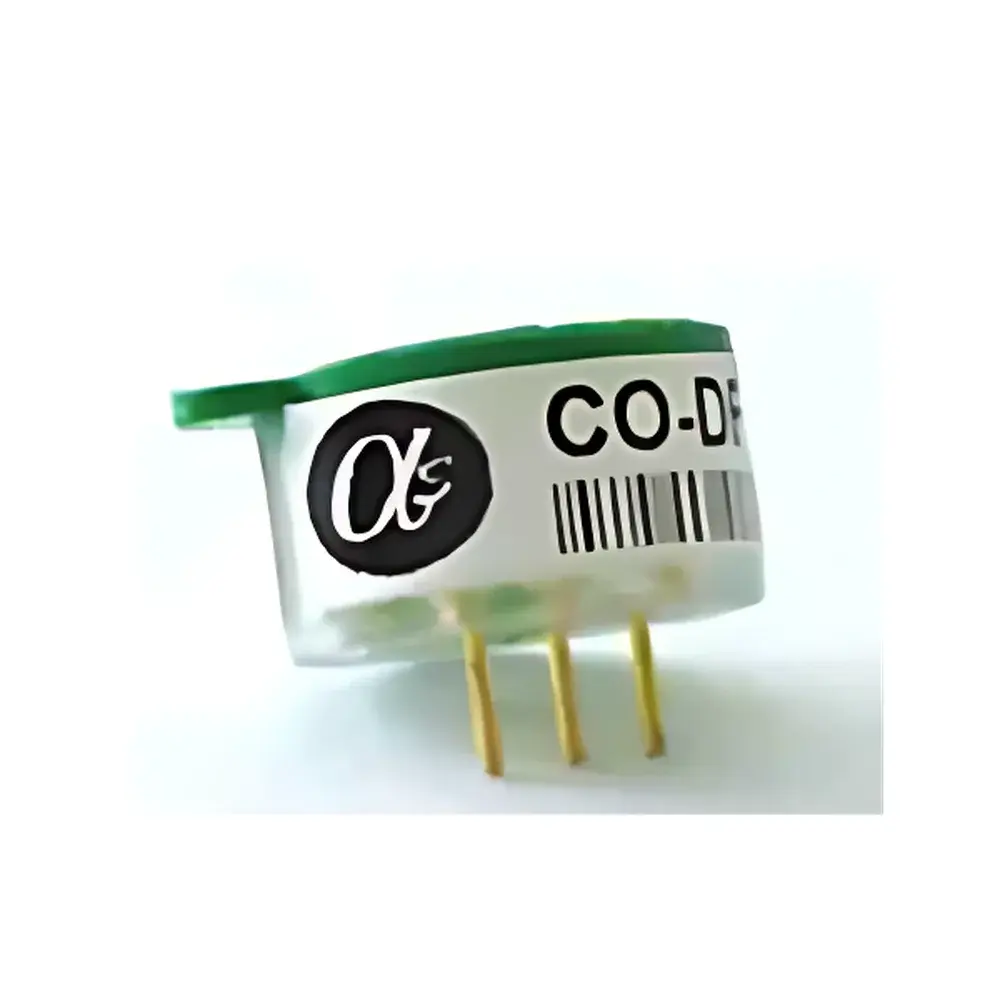
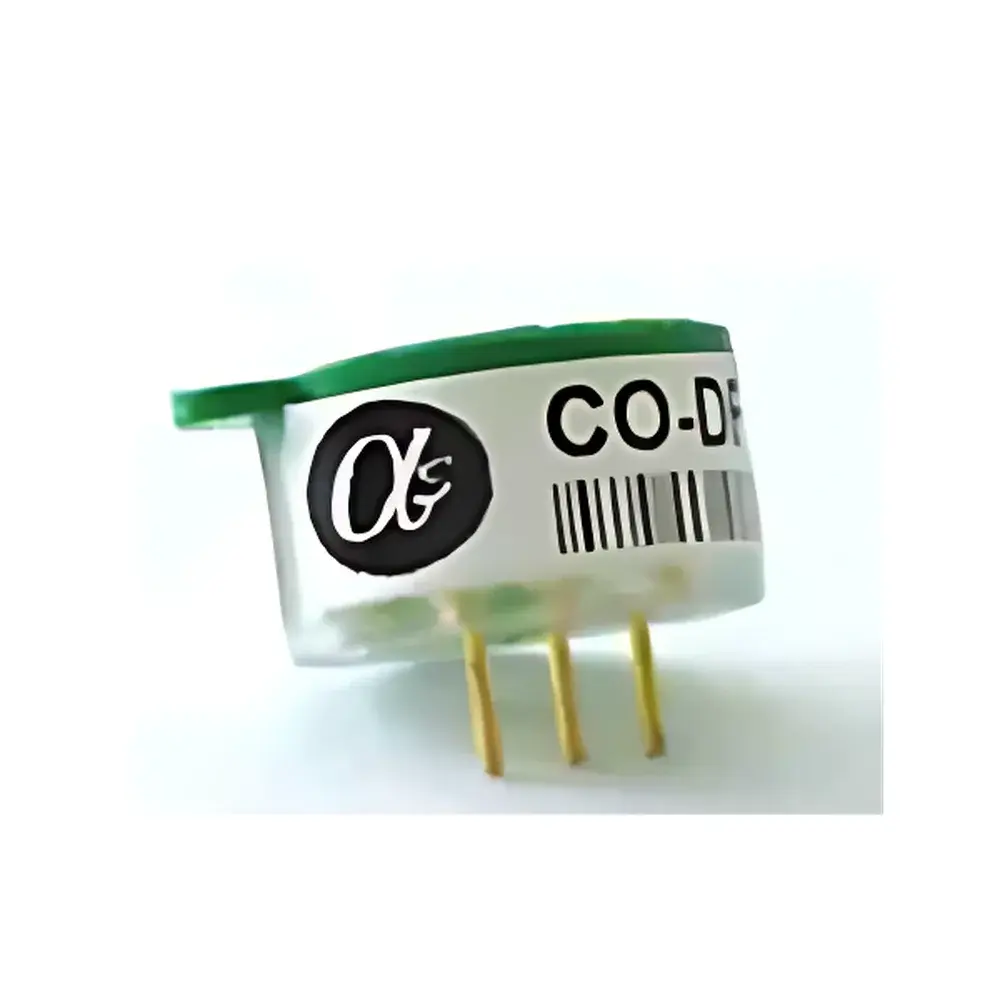
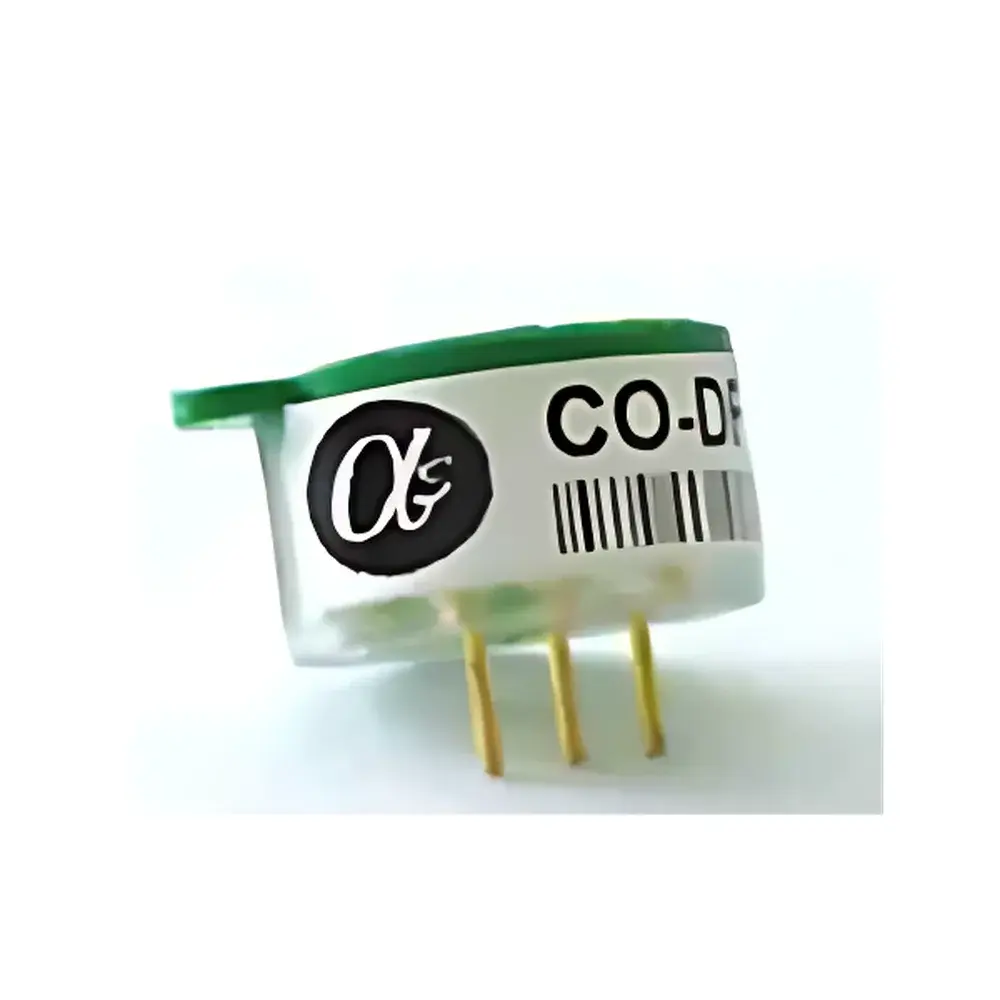
Alphasense CO-DF Miniature Electrochemical Carbon Monoxide Sensor
| Brand | Alphasense (UK) |
|---|---|
| Origin | France |
| Model | CO-DF (Miniature) |
| Sensitivity | 33–48 nA/ppm |
| Response Time (t₉₀) | <20 s |
| Measurement Range | 0–1000 ppm |
| Overload Capacity | 2000 ppm |
| Dimensions | Ø14.5 × 8.4 mm |
| Expected Operational Life | 2 years |
| Output Signal | Current (nA) proportional to CO concentration |
| Operating Temperature | −20 °C to +50 °C |
| Storage Temperature | −40 °C to +70 °C |
| Humidity Range | 15–90 % RH (non-condensing) |
| Zero Current | <±5 nA |
| Baseline Stability | <2 nA/month |
| Cross-Sensitivity to H₂ | <−5 % @ 100 ppm |
| Compliance | CE marked, RoHS compliant, meets IEC 60079-29-1 for gas detection performance |
Overview
The Alphasense CO-DF is a miniature electrochemical carbon monoxide (CO) sensor engineered for high-reliability integration into portable gas detectors, fixed-point environmental monitors, and OEM instrumentation platforms. Based on a three-electrode electrochemical cell architecture, the sensor operates via selective oxidation of CO at the working electrode in an aqueous electrolyte, generating a linear current output (nA) directly proportional to ambient CO concentration. Its compact cylindrical form factor (Ø14.5 × 8.4 mm) enables space-constrained deployments without compromising analytical integrity. Designed for continuous operation under variable environmental conditions, the CO-DF delivers stable baseline performance and low drift across its full 0–1000 ppm measurement range, with overload tolerance up to 2000 ppm—critical for transient exposure monitoring in industrial hygiene and indoor air quality applications.
Key Features
- Miniaturized footprint: Optimized mechanical design (Ø14.5 × 8.4 mm) facilitates seamless integration into handheld analyzers, wearable safety devices, and multi-gas modules.
- High sensitivity & linearity: Nominal sensitivity of 33–48 nA/ppm ensures robust signal-to-noise ratio across low- and mid-range CO concentrations, supporting accurate quantification down to sub-ppm levels when paired with precision current-to-voltage conversion circuitry.
- Rapid response dynamics: t₉₀ response time <20 seconds enables real-time tracking of CO fluctuations in dynamic environments such as vehicle cabins, boiler rooms, or confined-space entry zones.
- Long-term stability: Two-year operational lifespan under standard conditions (23 °C, 50 % RH), with baseline drift <2 nA/month and zero-current offset <±5 nA—reducing calibration frequency and maintenance overhead.
- Controlled cross-sensitivity: Engineered electrode catalyst formulation limits interference from hydrogen (H₂), exhibiting <−5 % response at 100 ppm H₂—essential for applications where H₂ coexistence is possible (e.g., battery charging areas).
- Environmental resilience: Validated performance across −20 °C to +50 °C operating temperature and 15–90 % RH (non-condensing), meeting field-deployment requirements for both indoor and outdoor monitoring systems.
Sample Compatibility & Compliance
The CO-DF sensor is compatible with ambient air sampling without pre-conditioning or filtration under typical indoor and light industrial settings. For high-particulate or corrosive atmospheres (e.g., near combustion sources or chemical processing lines), integration with hydrophobic PTFE membrane filters (0.2 µm pore size) is recommended to prevent electrolyte contamination and extend service life. The device complies with CE marking directives and RoHS 2011/65/EU. Its electrochemical performance aligns with IEC 60079-29-1:2016 for combustible gas detection systems, and it supports traceable calibration per ISO 17025-accredited protocols when used within validated instrument architectures. While not intrinsically safe on its own, the CO-DF is routinely deployed in ATEX-certified transmitters when incorporated into appropriately designed electronics enclosures.
Software & Data Management
As a passive analog current-output sensor, the CO-DF requires external signal conditioning—including low-noise transimpedance amplification, temperature compensation (via integrated NTC thermistor), and analog-to-digital conversion—to generate calibrated digital readings. Alphasense provides comprehensive technical documentation, including calibration certificates, temperature compensation coefficients, and aging profiles, enabling developers to implement traceable firmware algorithms compliant with ISO 80000-9 and ASTM D5402–18 for gas sensor data handling. When embedded in instruments subject to regulatory oversight (e.g., workplace exposure monitoring per OSHA 29 CFR 1910.1200 or EU Directive 2004/37/EC), the sensor supports audit-ready data logging—including timestamped calibration events, zero/span verification records, and environmental metadata—facilitating GLP/GMP-aligned reporting frameworks.
Applications
- Personal and area CO monitoring in occupational health and safety systems
- OEM integration into HVAC air quality controllers and smart building management platforms
- Portable multi-gas detectors for fire investigation, emergency response, and utility maintenance
- Indoor air quality (IAQ) analyzers for residential, educational, and healthcare facilities
- Automotive cabin air sensors and exhaust leak detection modules
- Research-grade environmental monitoring networks requiring long-term sensor stability and low power consumption
FAQ
What is the recommended operating temperature range for the CO-DF sensor?
The sensor is specified for continuous operation between −20 °C and +50 °C. Performance outside this range may result in reduced sensitivity, increased response time, or accelerated electrolyte evaporation.
Does the CO-DF require external temperature compensation?
Yes. The sensor incorporates an integrated NTC thermistor; accurate CO quantification necessitates real-time temperature correction using Alphasense-provided coefficients in the host system’s firmware.
Can the CO-DF be used in high-humidity environments?
It is rated for 15–90 % RH (non-condensing). Prolonged exposure to condensation or >90 % RH may compromise seal integrity and electrolyte stability.
Is factory calibration provided with each unit?
Each CO-DF sensor ships with a batch-specific calibration certificate referencing 200 ppm CO in synthetic air, traceable to NIST-standard gas mixtures.
How often should field calibration be performed?
Under typical use conditions, zero and span calibration is recommended every 3–6 months; frequency increases in harsh environments or after exposure to over-range concentrations.
What electrical interface does the CO-DF use?
It outputs a microampere-level current signal (nA) proportional to CO concentration; users must implement a precision transimpedance amplifier and ADC stage for digitization.